
For most of the twentieth century, the question of who painted the first abstract picture had a settled answer. Then, in 2018, a New York museum filled its spiral ramp with canvases that a Swedish woman had painted decades earlier and forbidden anyone to show, and the answer had to change. These twelve artists decided what a painting without a subject could be.
Cool Stories About Art is a newsletter to learn art the fun way.
Join 170,000+ readers and get:
10 new art stories / month
The entire archive of content (1,000+ articles)
Comment, ask questions, and chat with other readers
Why Paint Nothing at All?
An abstract painting shows nothing from the visible world, only color, line and shape on a flat surface. Around 1910 the idea was close to unthinkable, because for centuries a painter's job had been to show something, a saint or a bowl of fruit.
So the first thing these artists needed was a reason to make such a picture at all. A canvas could carry a spiritual message, colors could act on the mind the way sounds do, and a grid could stand for a universal order.
A practical question followed. Once the subject was gone, nothing obliged a painter to keep the brush, the easel or even the frame. After the Second World War, that experiment moved to New York, which is why half of the artists on this page lived there at some point.
Fame alone did not earn a place here. Each artist changed something about abstract painting that never changed back: why such a picture is made, how the paint reaches the canvas, what the picture is made of, where abstraction is allowed to go, or the year in which it began.
12. Hilma af Klint (1862 to 1944)
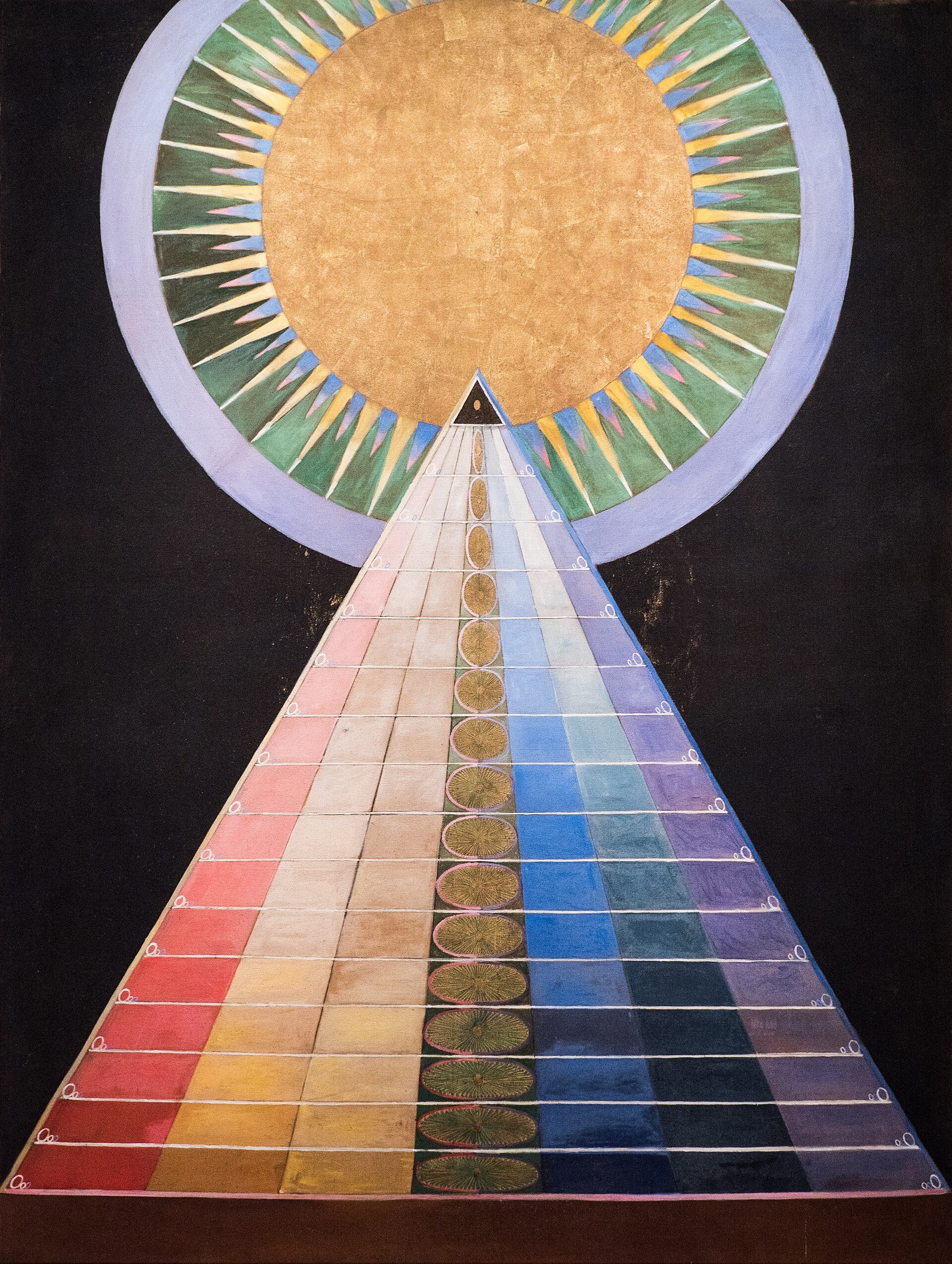
A disc of gold hangs high on a tall, dark canvas. Below it, a stepped triangle of colored bands climbs toward the disc. The canvas dates from 1915, and its painter, Hilma af Klint, had been making pictures like it since 1906, several years before the men whom history would credit with inventing abstract painting.
Nothing in her training pointed that way. She had studied at Stockholm's Royal Academy of Fine Arts, then earned her living painting portraits and landscapes.
The pictures came from her other life, which began in 1896. With four other women, she held regular séances to receive messages from spirits. According to her, one of those spirits asked her for a cycle of paintings, and between 1906 and 1915 she completed 193 paintings and works on paper under a single title, The Paintings for the Temple.
The canvas with the gold disc closes that cycle, one of three altarpieces nearly 240 centimeters high, all built on the same rising movement.
Showing the cycle was another matter. In 1908 she brought the paintings to the spiritual teacher Rudolf Steiner, whose verdict was that no one should see them for fifty years. She went further than he had asked. Her will barred anyone from showing them until two decades after her death.
She died in 1944, and the paintings were first shown only in 1986. In 2018 the Guggenheim gave her a full retrospective, and around 600,000 visitors came, more than for any show the museum had held in sixty years.
She had painted for a public that did not exist yet. A history of abstract art now has to start with her, in 1906, with pictures almost nobody saw for eighty years.
At a Glance
Born: 1862, Stockholm, Sweden
Died: 1944, Djursholm, Sweden
Nationality: Swedish
Known for: The Paintings for the Temple, abstract cycles begun in 1906
Where to see the work: Hilma af Klint Foundation, Stockholm, lent to major exhibitions
11. Sophie Taeuber-Arp (1889 to 1943)
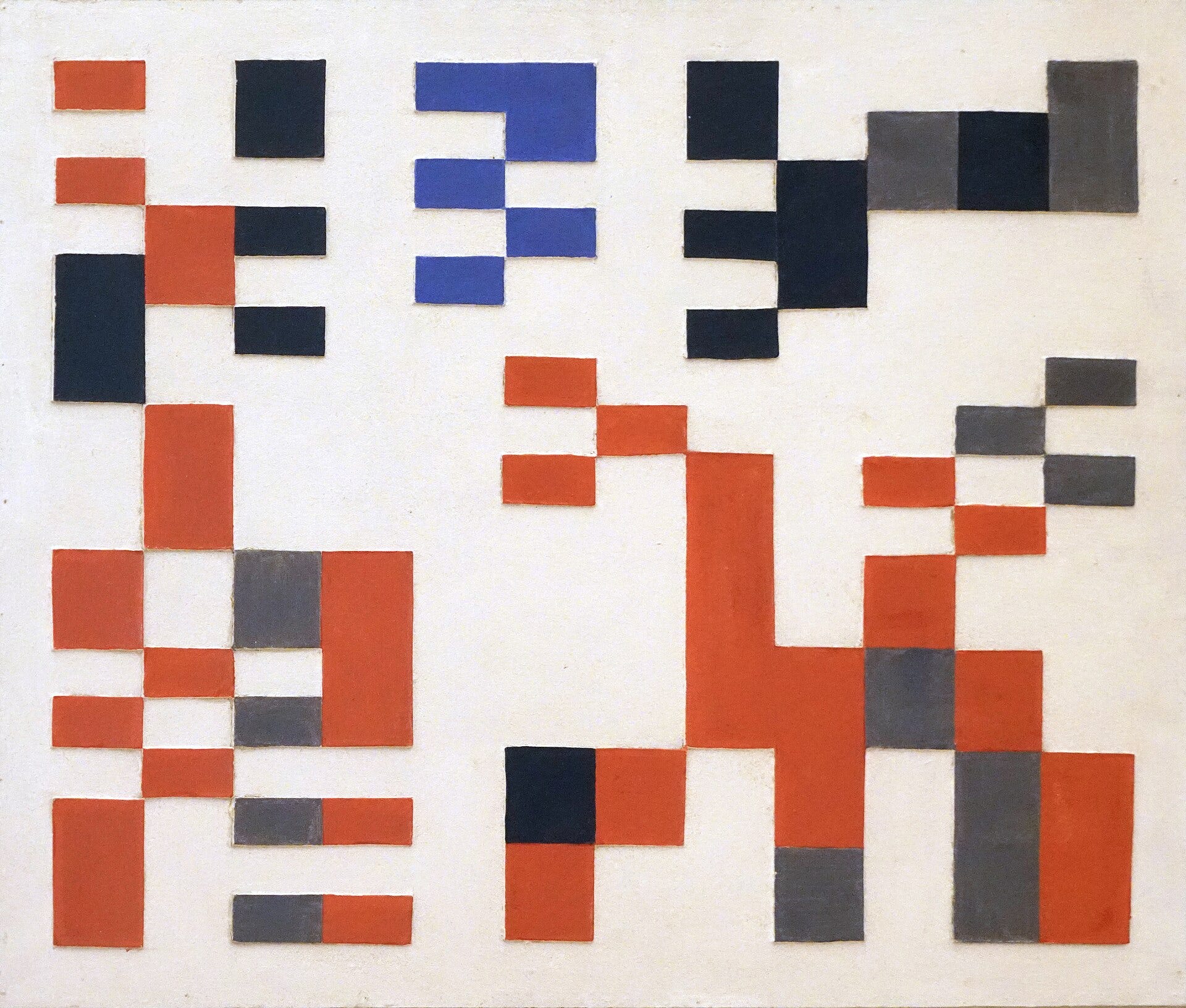
In February 1928, Strasbourg celebrated the opening of the Aubette, an entertainment complex in the center of the city. The people who came in for a drink sat inside abstract compositions. One of the three artists who had designed those rooms, Sophie Taeuber-Arp, earned her living teaching textiles in Zurich. Ten years later, part of what the three of them had made there was destroyed.