
The United States declared its independence in 1776, yet for almost two centuries its painters crossed the ocean to learn their trade, first in London, then in Paris. The artists who changed American art did something harder than leaving. They looked closely at what was at home, until, after 1945, Europe turned around and began to look at New York.
Cool Stories About Art is a newsletter to learn art the fun way.
Join 200,000+ readers and get:
10 new art stories / month
The entire archive of content (1,000+ articles)
Comment, ask questions, and chat with other readers
What America Asked of Its Artists
A young republic needed something Europe already had: a picture of itself. In colonial times there was no royal court to order one and no academy to teach how to make it. So every American artist met the same question. What, in this country, deserved a long look?
Here an American artist is one who did the decisive work in the United States, wherever he or she was born.
Each of the twelve, between the colonial years and the 1960s, answered that question by looking at something close at hand in a way no one had before.
12. Horace Pippin (1888 to 1946)
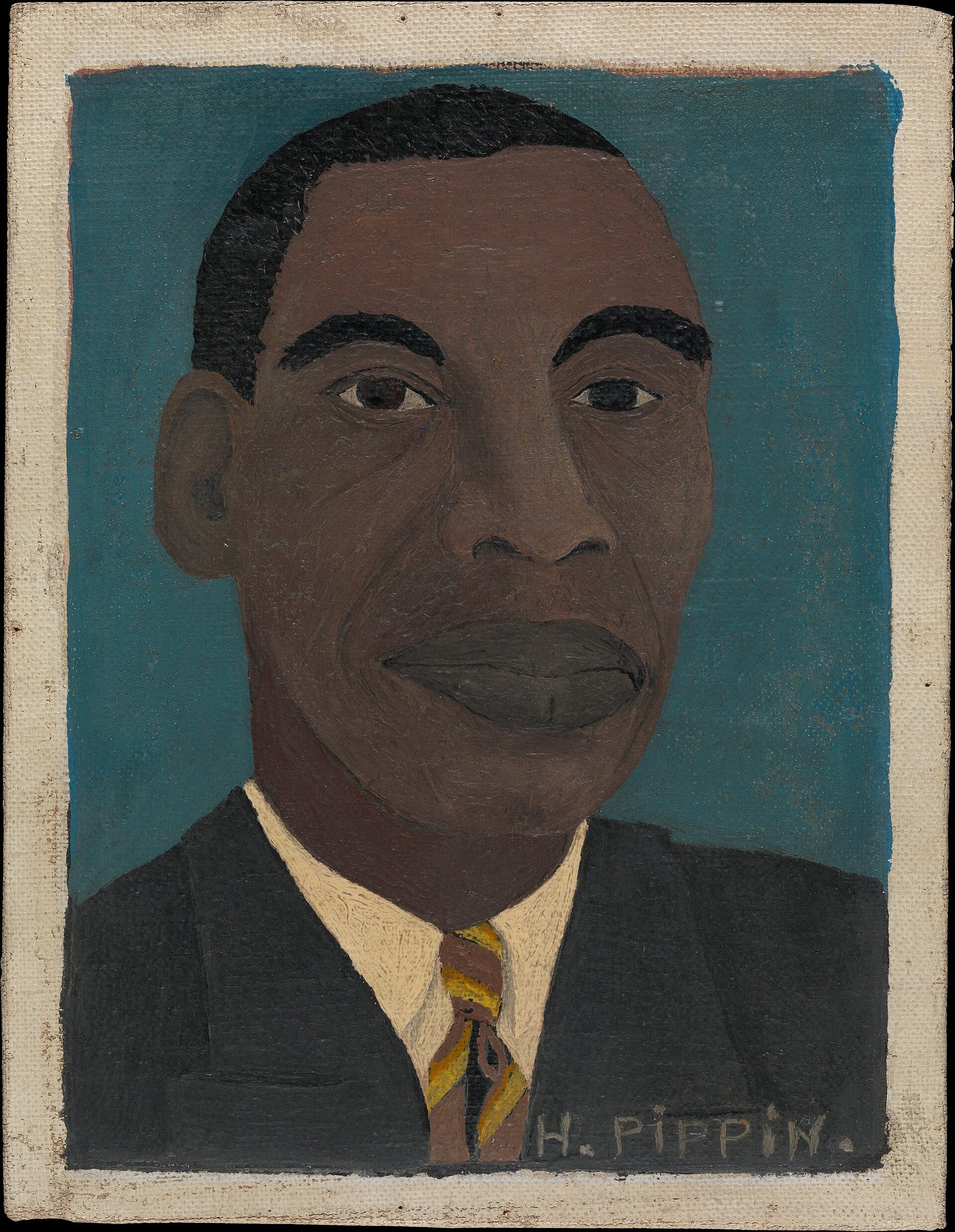
Self-Portrait II, from 1944, shows a man in a brown suit and a striped tie looking out with perfect calm. Nothing in it shows the right arm that had nearly kept Horace Pippin from ever making a picture.
That arm carried a war wound. Pippin served with the Harlem Hellfighters, a Black regiment, and in France in 1918 a bullet went through him. "He clipped my neck and got me throu my shoulder and right arm," he wrote in his memoirs. He came home with a steel plate in the shoulder.
To make images again, he burned drawings into wooden panels with a red-hot poker and painted inside the scorched lines. Later, in oil, he steadied his right wrist with his left hand. No school taught him. He painted what he knew in West Chester, Pennsylvania: the rooms and Sunday dinners of Black families, and American history seen from below.
At the time, a painter without training did not enter a museum, and the daily life of Black families barely did either. Pippin brought both inside. In 1938 the Museum of Modern Art in New York chose him for its exhibition Masters of Popular Painting. After him, museums began to treat self-taught Black painters such as Bill Traylor and Clementine Hunter as artists rather than curiosities.
His first self-portrait, painted in 1941, shows the wounded arm openly. In the second, painted once collectors wanted his work, the arm is out of sight. Once the country was looking at him, Pippin chose what it would see.
At a Glance
Born: 1888, West Chester, Pennsylvania
Died: 1946, West Chester, Pennsylvania
Nationality: American
Known for: Self-taught paintings of Black family life, war, history and the Bible
Where to see the work: Philadelphia Museum of Art, Pennsylvania Academy of the Fine Arts, The Metropolitan Museum of Art (New York)
About This Artist
How many paintings did Horace Pippin make?
At least 140, according to the most recent study of his work, by the art historian Anne Monahan.
11. John Singleton Copley (1738 to 1815)
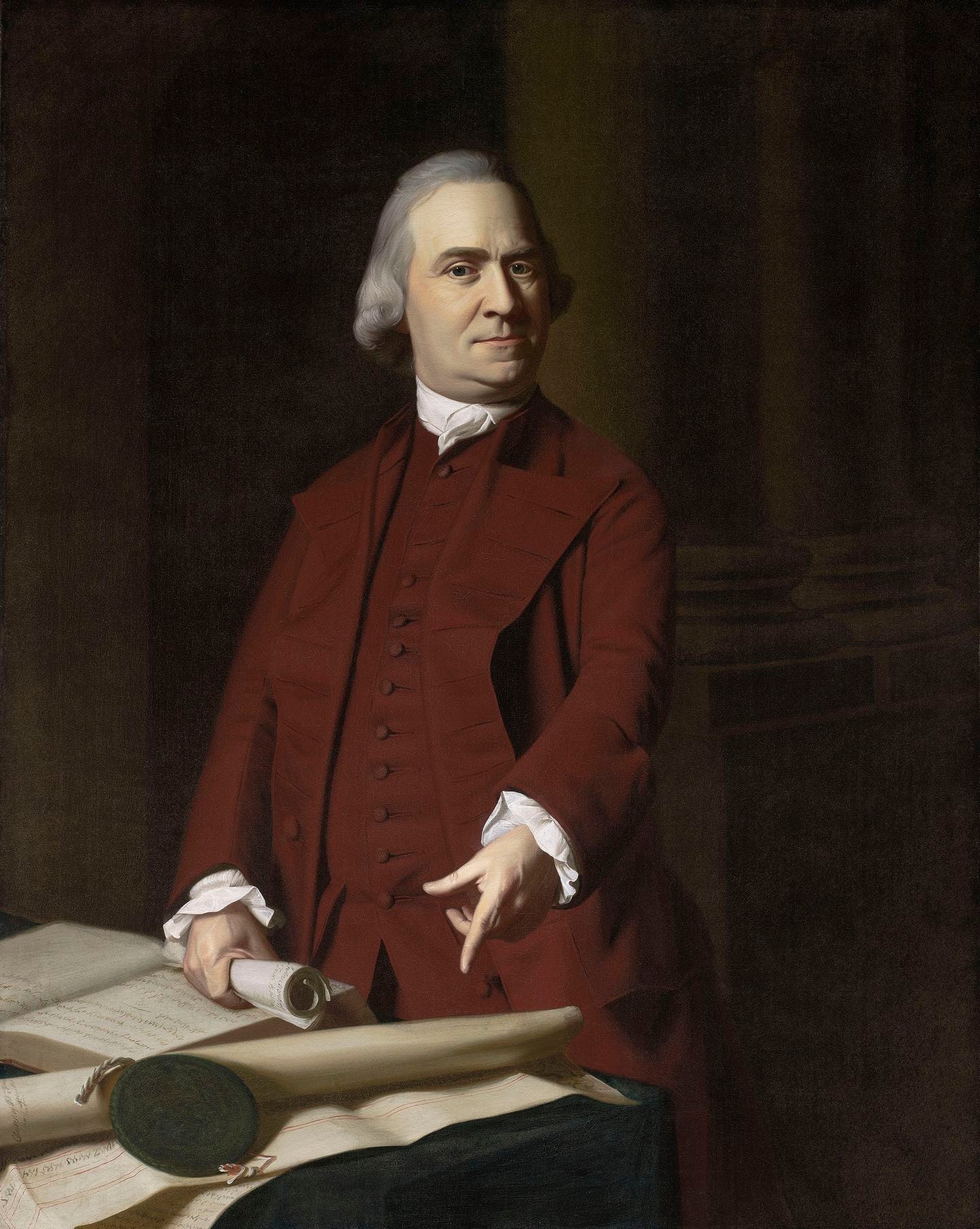
Samuel Adams presses one finger on a sheet of paper and grips another in his fist in the portrait John Singleton Copley made of him. Both papers come from a morning in Boston. On March 5, 1770, British soldiers had fired into a crowd there. The next day Adams walked into the governor's council and demanded that both regiments leave. The acting governor, Thomas Hutchinson, had the army behind him. Adams had only paper, and he meant to make the governor back down.