
Marble is heavy and slow to cut, and yet in the villas and churches of Rome it runs, twists, swoons and turns into leaves. The man who made it behave that way also saw a crack open across a cardinal's forehead as he polished it, and carved a portrait that a king later wanted destroyed.
Cool Stories About Art is a newsletter to learn art the fun way.
Join 200,000+ readers and get:
10 new art stories / month
The entire archive of content (140+ articles)
Comment, ask questions, and chat with other readers
The Instant in the Marble
Gian Lorenzo Bernini worked in Rome for close to sixty years, and one problem kept bringing him back to the block: how to stop a figure at the exact second something happens to it. A stone is about to leave a sling. A skin is turning into bark.
That problem took him into three trades. He carved marble groups for the villas of collectors, he turned chapels into small stages with their own lighting and their own audience, and he gave the squares of Rome monuments big enough to fill them.
The twelve chosen cover all three trades and the whole career, from his first large group, carved at about twenty beside his father, to a rider he finished close to eighty for a king he never saw again.
12. Equestrian Statue of Louis XIV (1671 to 1677)
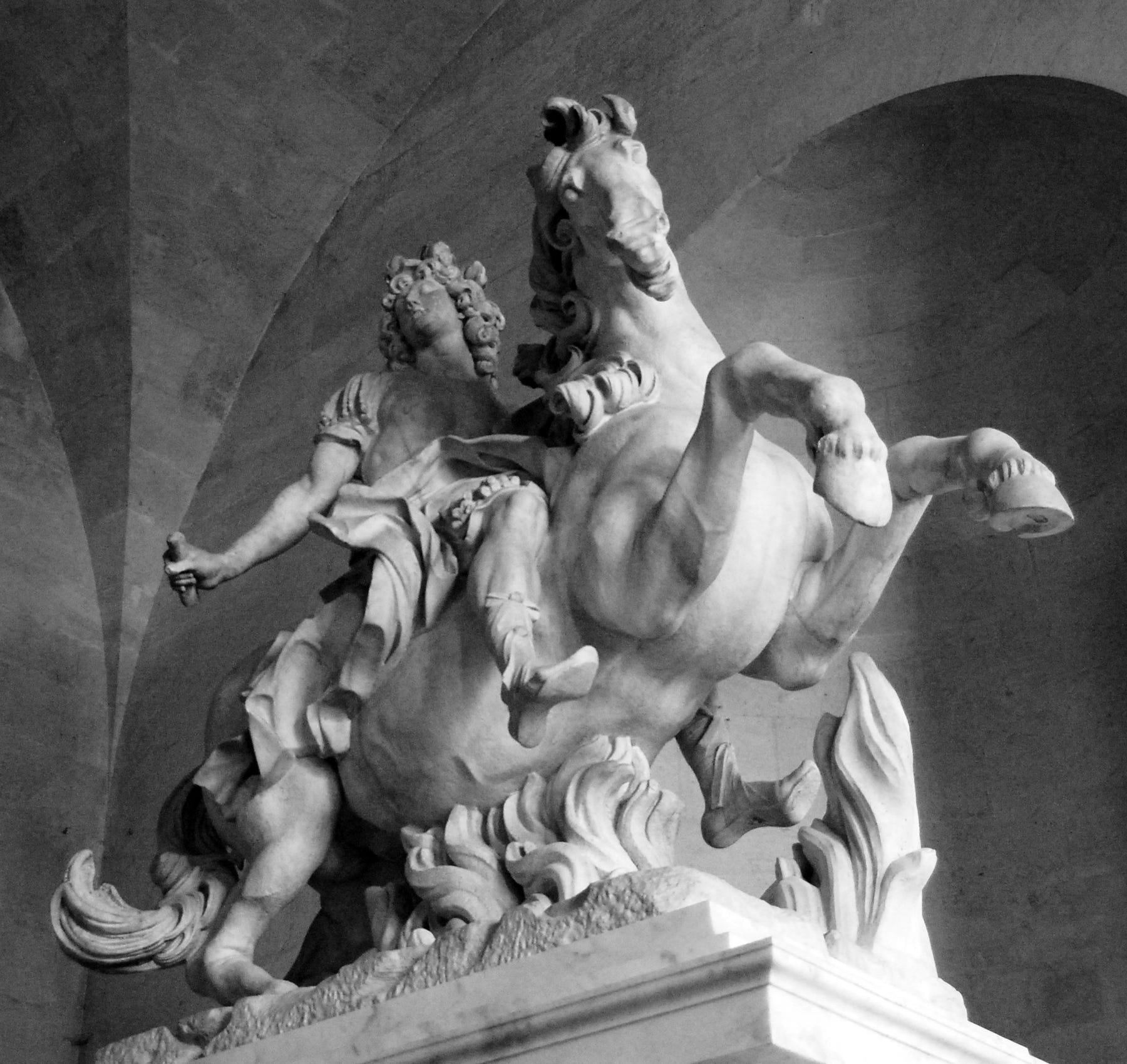
Carved flames rise under the hooves of this rearing horse, and its rider wears a Roman helmet. Neither belonged to the original design. The Equestrian Statue of Louis XIV began as a portrait of the king of France, and it took a second sculptor, working after Bernini's death, to turn the rider into someone else.
The idea went back to 1665, when Bernini spent several months in Paris. He offered to make a statue of the king on horseback, and nobody answered at the time, as Fréart de Chantelou, the courtier who accompanied him, noted in his diary. The answer came in December 1667, in a letter from the king's minister, Jean-Baptiste Colbert.
From then on the work moved slowly. The block reached the workshop in Rome in the summer of 1669, and carving began only in 1671. Colbert agreed that students of the French Academy in Rome would do most of the cutting, while Bernini kept the face for himself. His terracotta model, in the Galleria Borghese, shows the king in a breastplate, scepter in hand, on a horse lifted by a mass of rock.
Bernini never saw the marble leave Rome. He died in 1680 with the statue still waiting to be shipped, and when Louis XIV finally saw it, in 1685, he disliked it and asked for it to be destroyed. In the end he let the French sculptor François Girardon turn it into Marcus Curtius, the hero of Roman legend who rode his horse into a chasm that had opened in the Forum.
Girardon changed what a viewer notices first. The rocks became the flames of that chasm, a Roman helmet went on the rider's head, and the long royal hair was cut short. He also recut the face, nose included, which was the one part Bernini had kept for his own chisel.
At a Glance
Artist: Gian Lorenzo Bernini (1598 to 1680)
Carved: 1671 to 1677 or 1678, altered by François Girardon after 1685
Medium: Marble
Size: Not published
Where to see it: Palace of Versailles, Versailles (the original marble). A cast stands in the Cour Napoléon of the Louvre, Paris.
11. Bust of Scipione Borghese (1632)
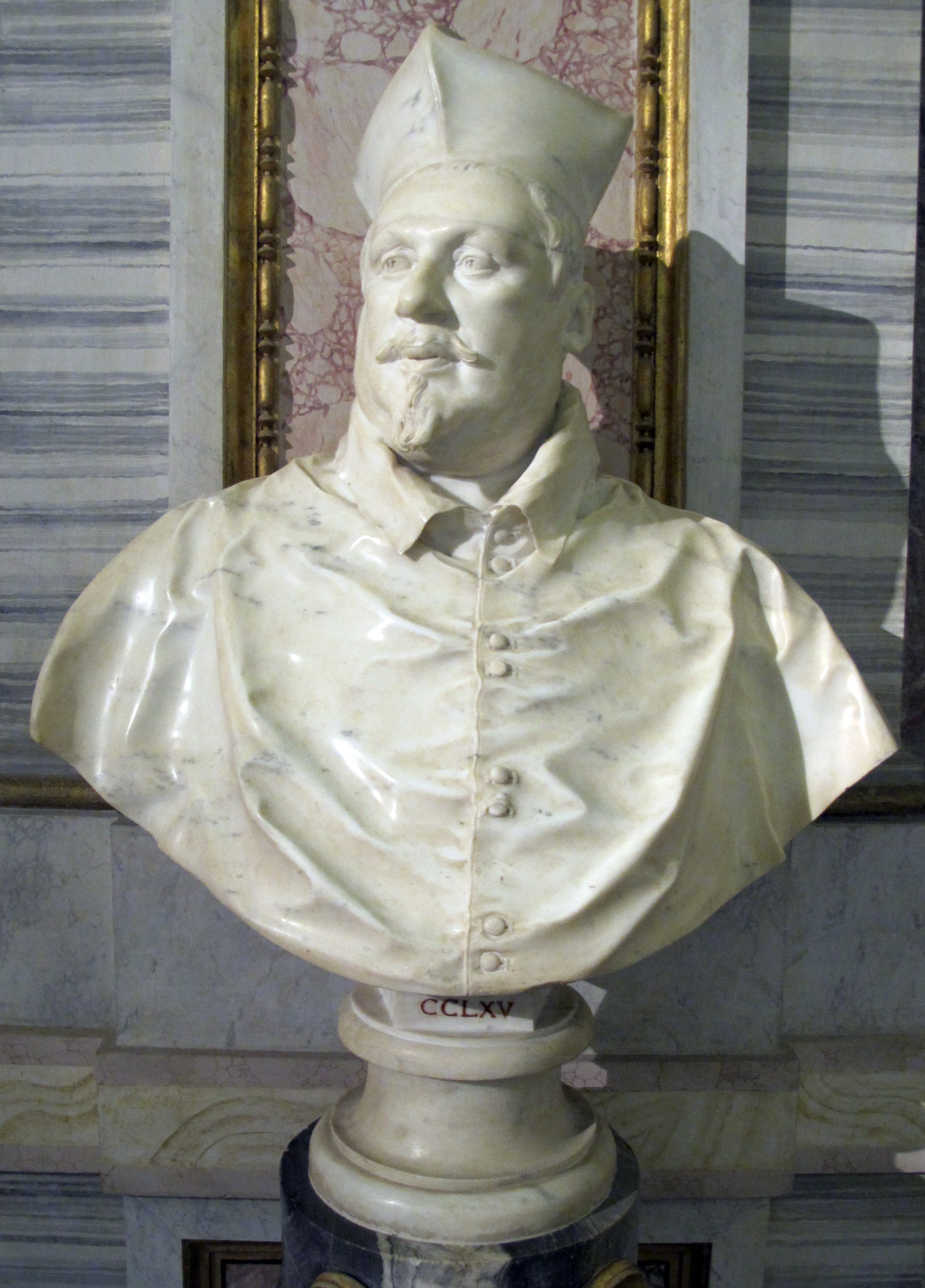
A heavy man in a cardinal's skullcap turns his head slightly, lips parted on the first word of a sentence. The sculptor had nearly finished him and was polishing the marble when a thin crack opened across the forehead.