
The French painter Berthe Morisot (1841 to 1895), one of the founders of Impressionism, painted what stood close to her, and almost nothing dramatic happens in her pictures. Her models were the people she lived with and the women her household employed, posed in rooms, gardens and parks.
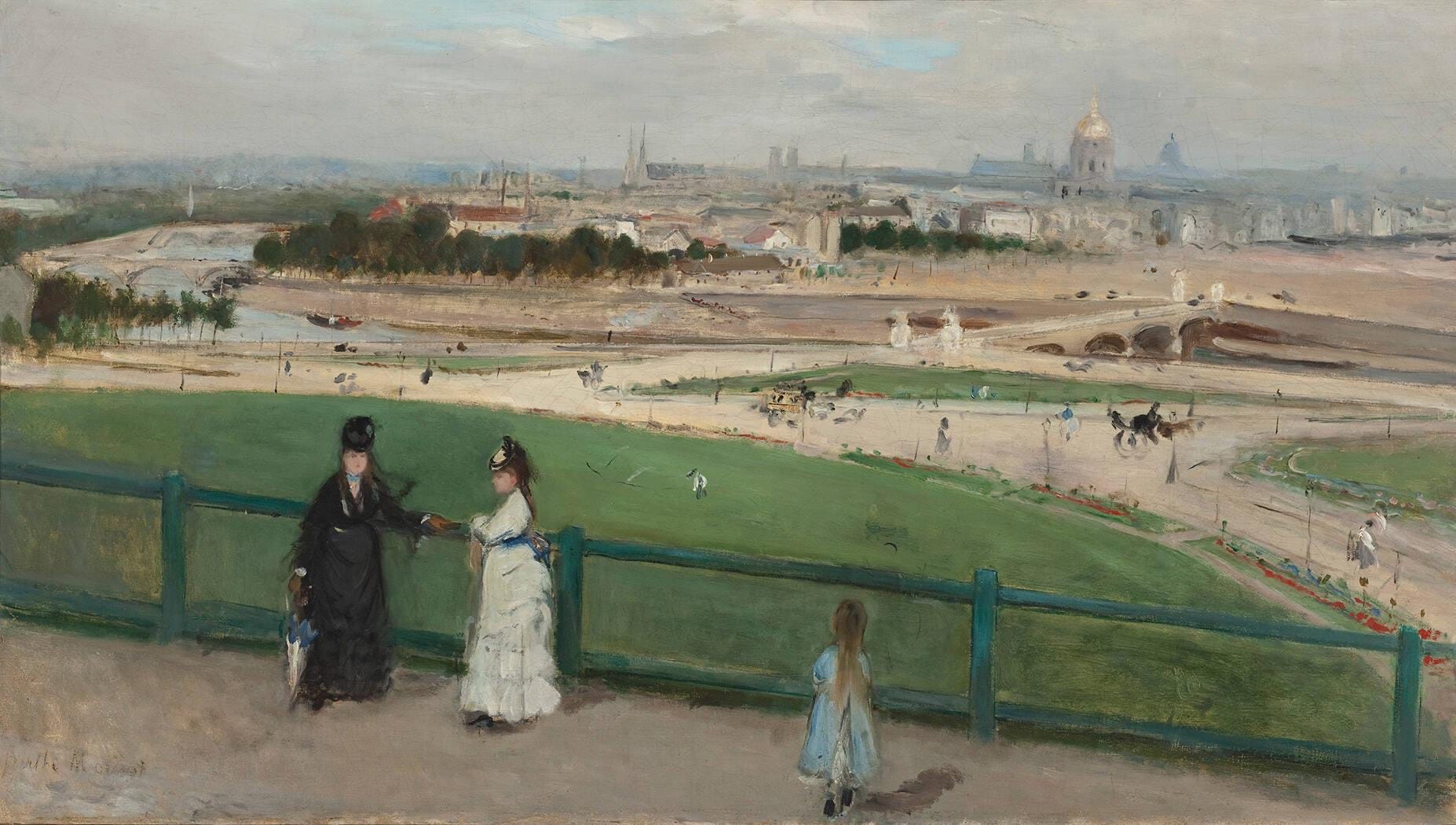
Yet one of her calmest scenes was carried out of a London gallery under a man's arm in 1956.
Cool Stories About Art is a newsletter to learn art the fun way.
Join 200,000+ readers and get:
10 new art stories / month
The entire archive of content (140+ articles)
Comment, ask questions, and chat with other readers
A Painter Who Worked Close to Home
In her day, a young lady of her class was not expected to walk through the center of the city without a chaperone, so she painted at home, in gardens and in parks.
Inside those limits, she helped found a movement. Impressionism, as it came to be called, gathered painters who tried to catch light and passing moments with quick, visible strokes.
In 1874 they decided to show their work outside the official Salon, the exhibition the French state held once a year, so they needed walls of their own. They found them in the former studio of the photographer Nadar, and Morisot was the only woman painter among them.
Between 1869 and 1893, two years before her death, her paintings followed her life at home, from her sister's marriage to her daughter's teenage years. From the end of her own street, she also painted the whole city spread out beneath her.
12. The Harbor at Lorient (1869)
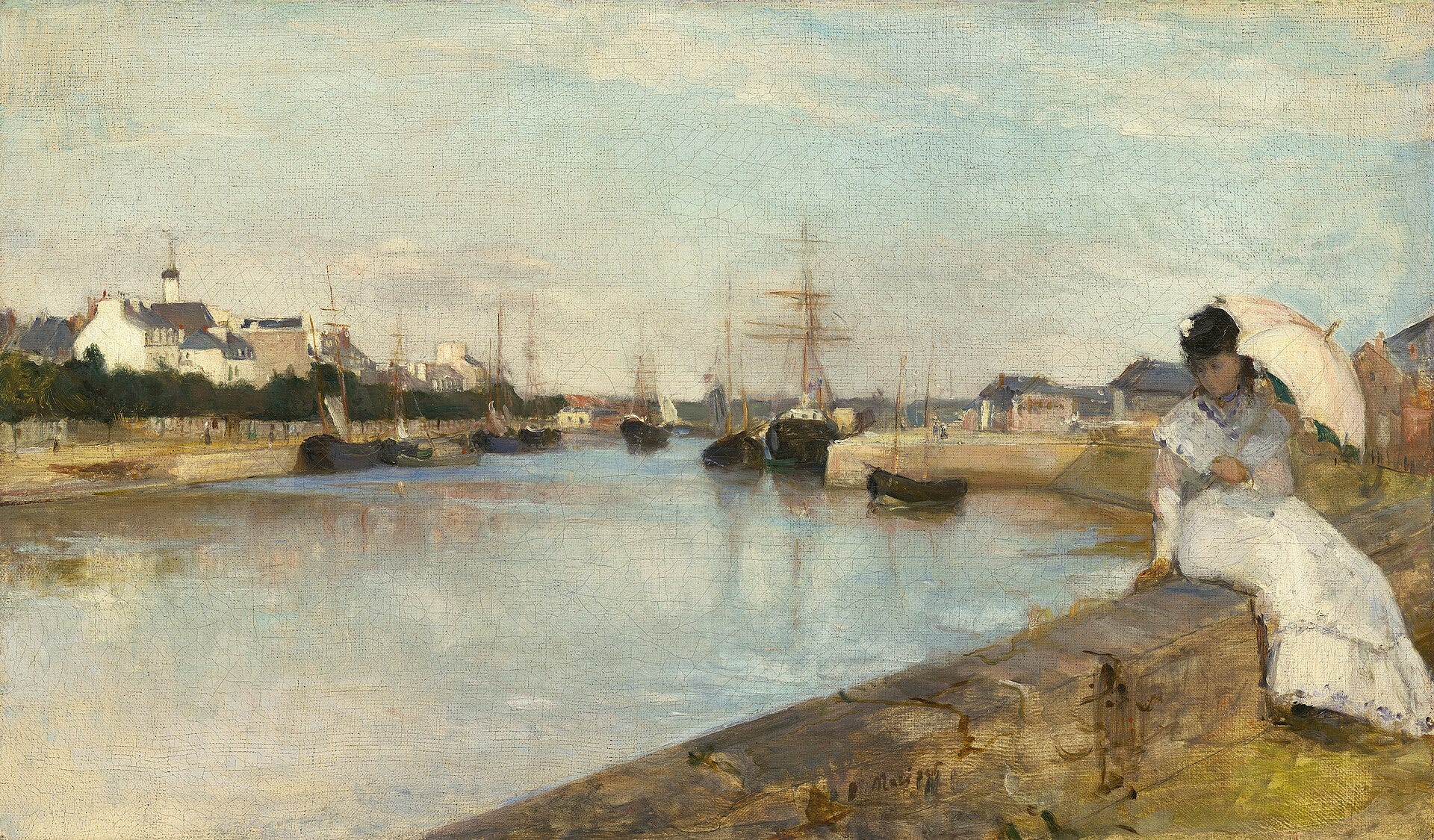
A pale pink parasol shades a young woman in white, seated on the stone wall of a quay with her eyes lowered. Beside her, the water takes up nearly the whole canvas, a wide harbor with moored sailing ships and a line of houses on the opposite shore.
The young woman is Edma Morisot, the painter's older sister. The two had learned to paint side by side, until 1869, when Edma married a naval officer, Adolphe Pontillon, and followed him to Lorient, the navy port in Brittany.
Until then the sisters had never needed to write to each other. Now they did. As a married woman Edma had stopped painting, and she missed it. Berthe answered with firm advice: "Do not revile your fate."
That summer Berthe went to stay with her and painted The Harbor at Lorient, with Edma on the quay. Back in Paris, she gave the picture to the painter Édouard Manet, a friend whose younger brother, Eugène, she would later marry.
Four years later, late in 1873, the painter Edgar Degas was gathering artists for an exhibition of their own. Writing to the sisters' mother, Madame Morisot, he wondered whether Edma would remember "that she was a painter like her sister, and could be again."
Edma sent nothing to that first Impressionist exhibition, which opened in 1874. She was in it all the same, as the woman on the quay, in a picture hung under a title that did not name her: Marine, French for seascape.
Manet himself had refused to show with the group, but the canvas Berthe had given him was on its walls.
At a Glance
Artist: Berthe Morisot (1841 to 1895)
Painted: 1869
Medium: Oil on canvas
Size: 43.5 × 73 cm (17 1/8 × 28 3/4 in)
Where to see it: National Gallery of Art, Washington
11. The Wet Nurse (1879)
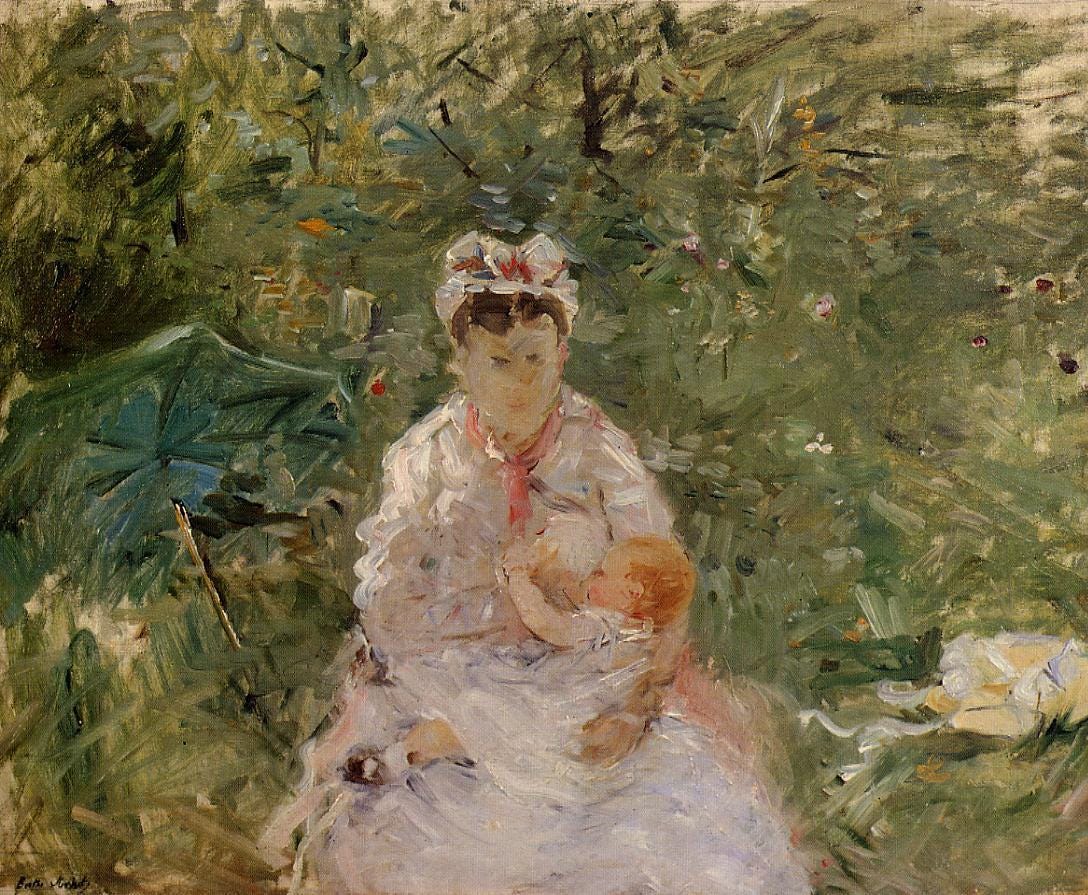
Under a white hat trimmed with red, a woman nurses a baby in a sunlit garden. The grass, the leaves and her white dress are made of the same quick, loose strokes, with no sharp line where one ends and the next begins. The child is the painter's own daughter. The woman feeding her is not her mother.