
For most of American history, Black people entered paintings and statues as someone else's subject: a slave kneeling to beg for freedom, a grinning banjo player on a sheet-music cover. This page follows the artists who took up the chisel and the brush themselves, and what each of them changed. A marble queen carved by one of them spent decades guarding a racehorse's grave.
Cool Stories About Art is a newsletter to learn art the fun way.
Join 170,000+ readers and get:
10 new art stories / month
The entire archive of content (1,000+ articles)
Comment, ask questions, and chat with other readers
Twelve Answers to the Same Problem
This page stays with painting, sculpture and printmaking, and with artists born in the United States, where the question has its own long history.
For a Black artist in America, the first obstacle was training, since schools and fellowships turned people away for their color. The second came afterward: what to paint. Painting Black life risked being filed away as a specialist, and painting anything else meant being asked why.
Every artist here had to answer that question, and the answers fall roughly into two groups. Some mastered the forms that carried the most prestige, marble, landscape, Salon painting, the grand history picture, and were judged inside them. Others brought in what museums looked down on, a quilt, a cheap print, words written on a wall, and made museums take it in. Each one changed something that stayed changed, a way of making pictures or the people pictures were allowed to show. The countdown ends with the best known name of all, at number 1.
12. Edmonia Lewis (about 1844 to 1907)
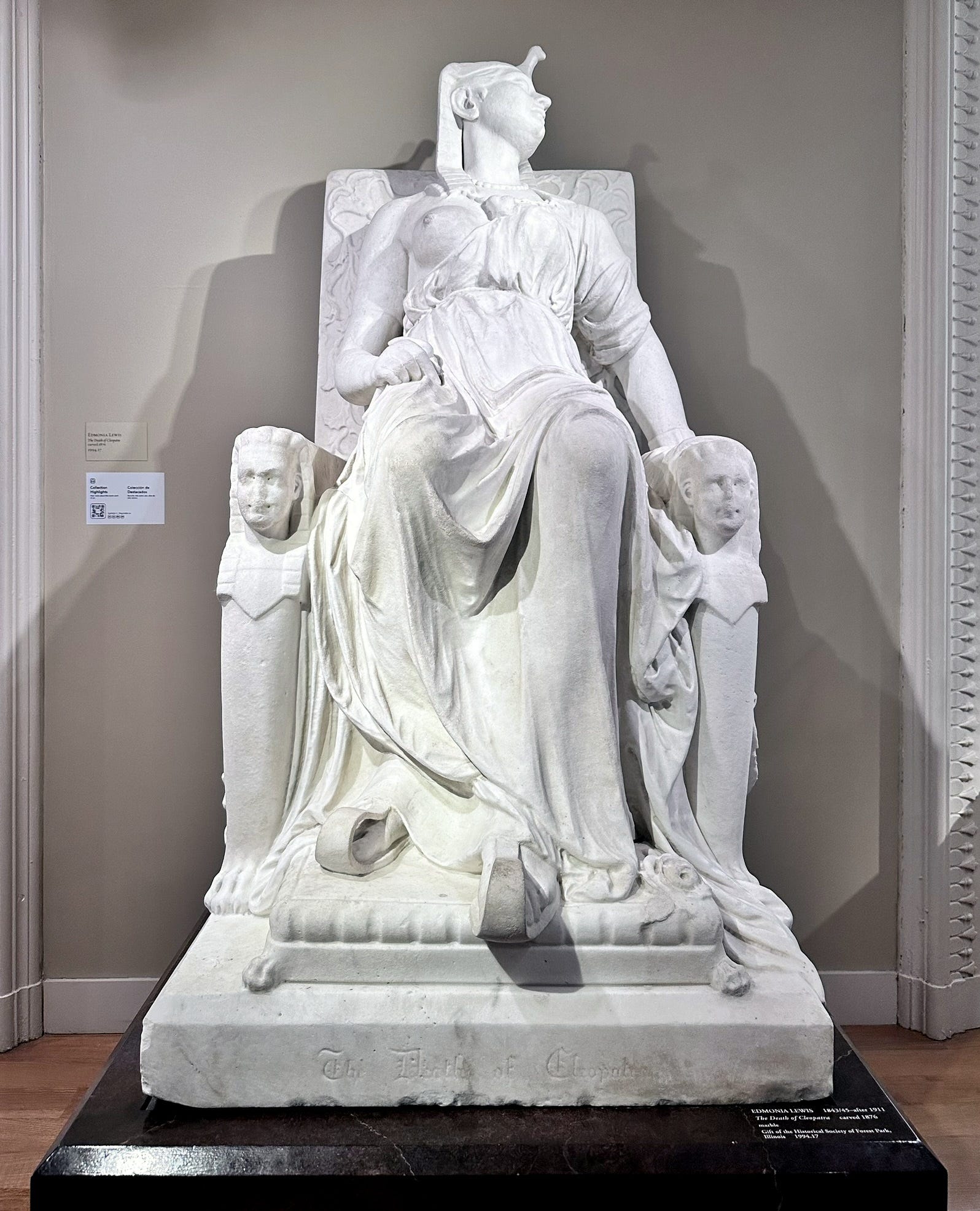
The queen is already dead. Cleopatra sits slumped on her throne, head thrown back, arms gone slack, and on each armrest a carved head stands for one of the twins she bore Mark Antony. Sculptors of the day usually showed her alive, still deciding whether to take her own life. Edmonia Lewis carved the moment after the venom had done its work.
That choice broke the rules of a closed world. Around 1850, ambitious American sculpture was made in Rome, in white marble, in the manner of ancient Greece. The sculptors were almost all white men, and Black people appeared in their work mostly as slaves on their knees.
Lewis, a woman of African and Native American descent, settled in Rome in 1865 and took that language whole, the white stone, the calm drapery, the classical poses, and turned it toward Black and Native American history, which made her the first sculptor of her background with an international reputation.
Cleopatra was her biggest gamble. She sent it to the Centennial Exhibition in Philadelphia in 1876. Some critics called it the most impressive American sculpture in the show, others found it ghastly, and what made it new, a death shown as a death, was exactly what put them off.
Then nobody bought it. A gambler known as "Blind John" Condon set the queen over the grave of his racehorse, also named Cleopatra, at his racetrack near Chicago. She was still on the grounds decades later, after the track had become a golf course. Lewis herself had vanished from the record so completely that her death, in London in 1907, was only established in 2011.
At a Glance
Born: About 1844, upstate New York
Died: 1907, London
Nationality: American
Known for: Neoclassical marble sculpture, The Death of Cleopatra
Where to see the work: Smithsonian American Art Museum, Washington
11. Augusta Savage (1892 to 1962)
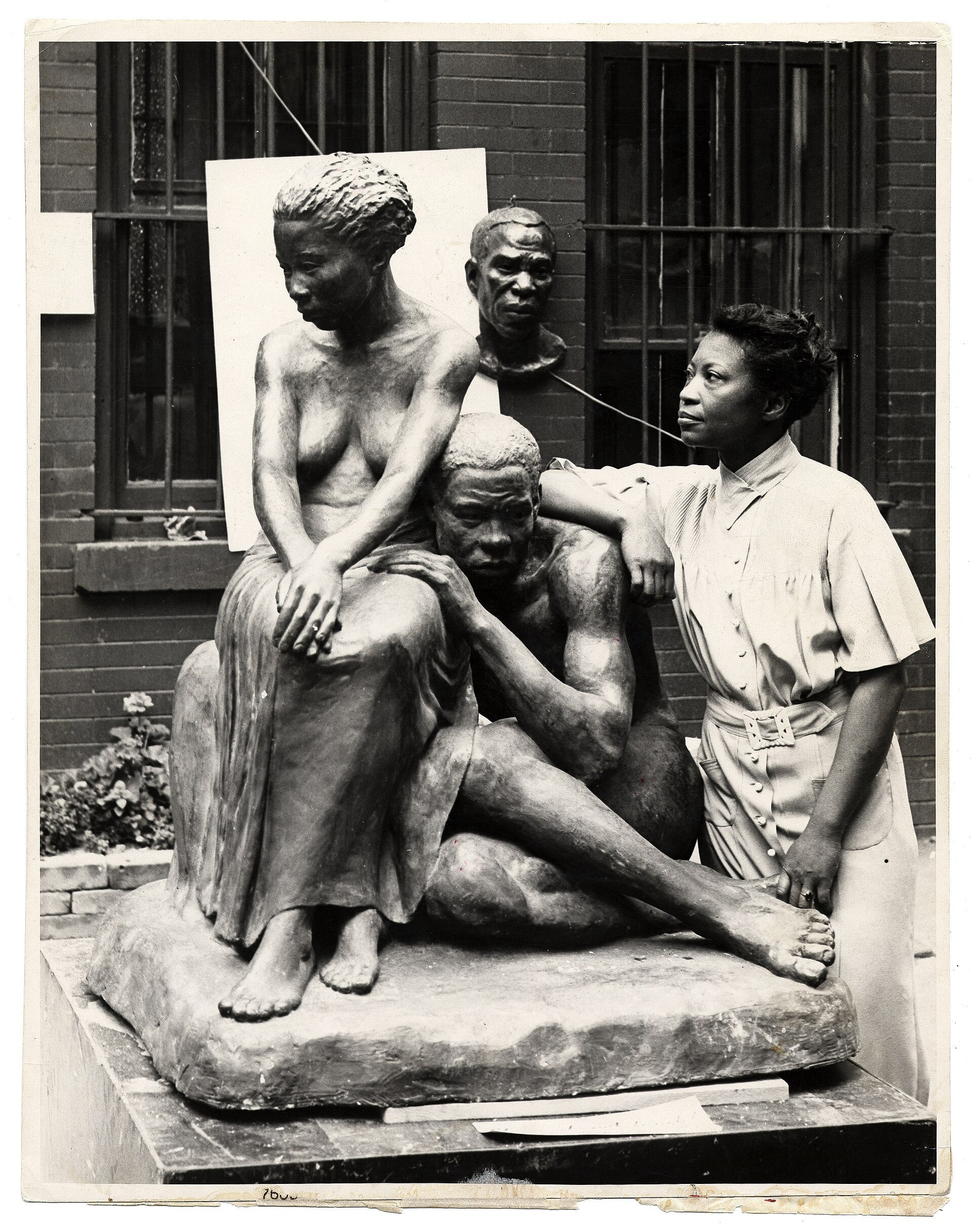
In 1923, a summer art school at Fontainebleau, outside Paris, awarded Augusta Savage a fellowship. Then it took the award back. The other Americans chosen were white, and once they learned she was Black, her place was gone. She was a young sculptor from Florida, two years in New York.