
Botticelli was about twenty-five when he painted his first documented work, and he was still painting at fifty-five, in a Florence that had driven out the Medici. These twelve pictures cover the thirty years between, from one panel in another painter's commission to a picture dated 1500, by way of a fresco in Rome.
Cool Stories About Art is a newsletter to learn art the fun way.
Join 200,000+ readers and get:
10 new art stories / month
The entire archive of content (140+ articles)
Comment, ask questions, and chat with other readers
Twelve Pictures, Thirty Years
A Florentine painter of the 1400s sold whatever his city needed: an altarpiece for a church, a panel for a newlywed couple's house, a likeness for a family to show off. Botticelli's workshop supplied all of it for thirty years.
The twelve are chosen to follow that career step by step: a first commission, a way into the Medici circle, a stay in Rome, a run of subjects from ancient myth, and the years when a preacher shook the city. Famous pictures stand next to little-known ones, so that no stage is missing.
Three cities hold them all. Nine belong to one museum in Florence, two hang in a London gallery, and the last is a fresco still on its wall in Rome.
12. Fortitude (1470)
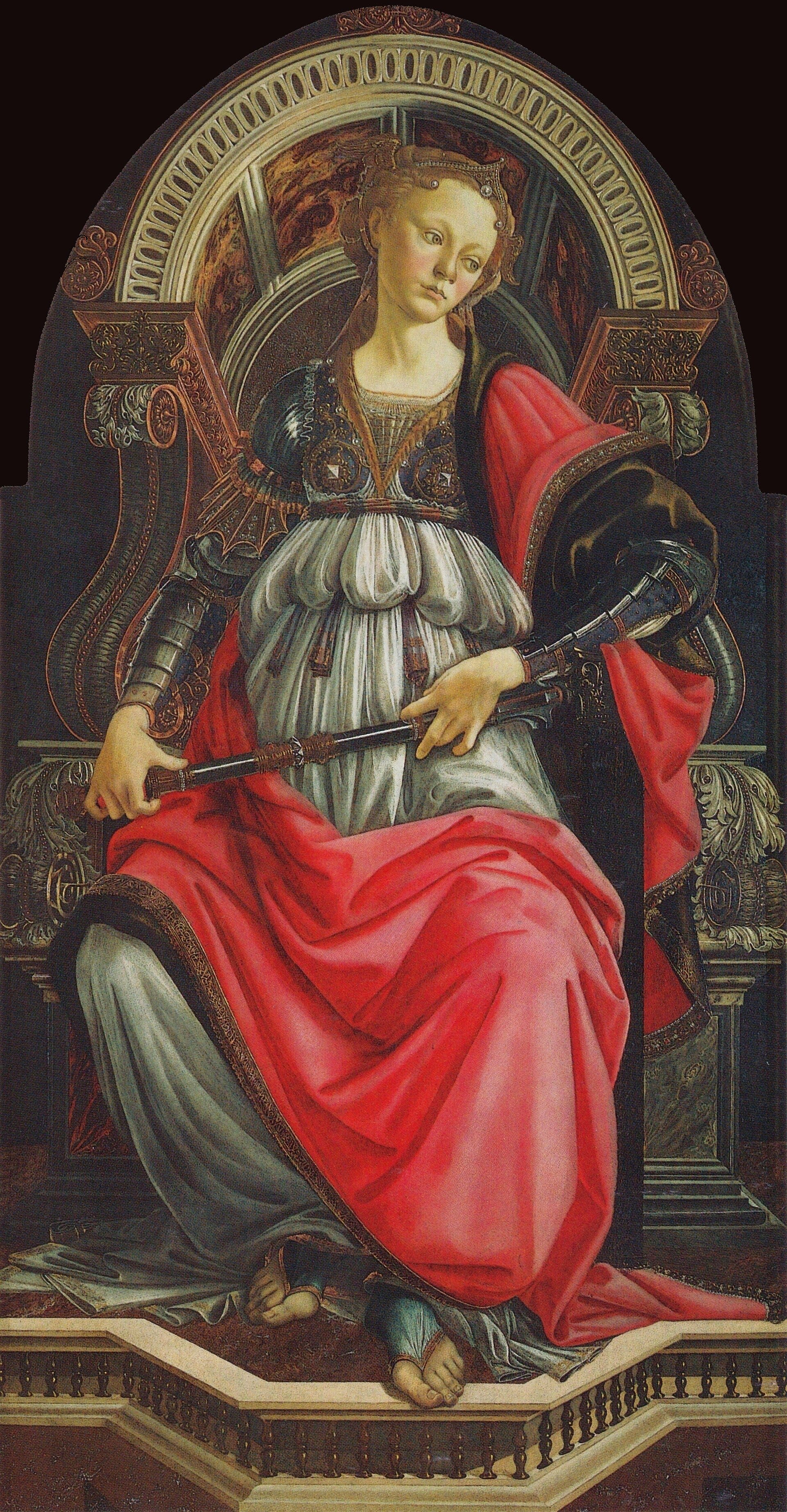
Carved more richly than the benches in the six other panels of her set, the marble bench under Fortitude is the first sign of a different hand. The figure is a young woman in armor over a long dress who holds a short scepter and turns her head slightly aside.
The set was a commission. In 1469 the merchants' tribunal of Florence, which sat on the Piazza della Signoria, ordered a cycle of seven Virtues from Piero del Pollaiolo, a leading painter of the city. One panel went to Botticelli, then about twenty-five. Pollaiolo protested, and Botticelli was held to that one figure.
The wood marks the difference too. The other Virtues are on cypress, and his is on poplar, a wood commonly used for panels in Tuscany. Even in this borrowed slot, the long, swaying body and the languid, melancholy face are already the ones he would give to women for years afterward.
At a Glance
Artist: Sandro Botticelli (about 1445 to 1510)
Painted: 1470
Medium: Tempera on wood (poplar)
Size: 167 × 87 cm (65.75 × 34.25 in)
Where to see it: Uffizi Galleries, Florence
11. Portrait of a Man with a Medal of Cosimo the Elder (about 1475)
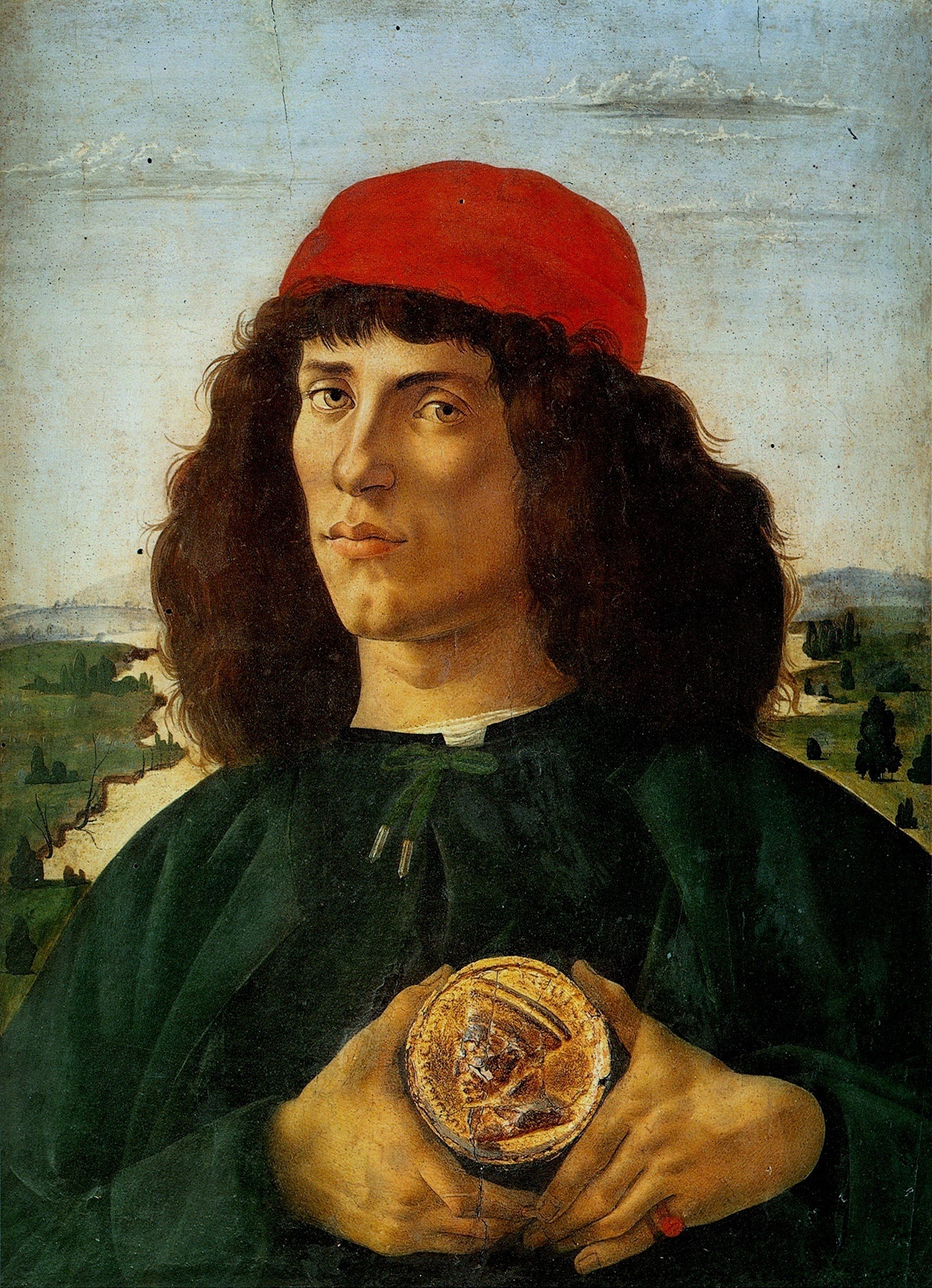
A round medal sits between a young man's fingers in Portrait of a Man with a Medal of Cosimo the Elder, and nobody painted it. It is gilded stucco, fixed to the panel, and the profile on it is that of Cosimo de' Medici, the banker whose family ran Florence. Cosimo had been dead for roughly a decade. The young man who holds the medal has no name at all.