
Bronze is easy to melt down, and most of the great bronzes ever cast went back into the furnace. The twelve statues here are survivors, and luck had more to do with it than care. On this page, one of them is hauled away on 900 camels, and an emperor is spared because Rome took him for somebody else.
Cool Stories About Art is a newsletter to learn art the fun way.
Join 200,000+ readers and get:
10 new art stories / month
The entire archive of content (140+ articles)
Comment, ask questions, and chat with other readers
How These Were Chosen
A bronze statue starts as something softer. The sculptor models the figure in clay or wax, a mold is built around it, and molten metal is poured in. The cooled metal keeps every detail, can reach out into empty air where marble would snap, and can be poured again from the same model.
The same metal makes old bronzes rare. It can always be melted back down, for coins in antiquity or weapons in wartime. Only 100 to 200 bronzes survive from the three centuries after Alexander the Great, and in 1941 Vichy France destroyed about 1,700 of its metal statues.
So a statue earned its place here when its metal shaped its story. It escaped the furnace or was sold for scrap, was stolen or carried off, exists in several casts, or does something stone could not do.
12. Auguste Rodin, The Thinker (1880, enlarged 1902 to 1904)
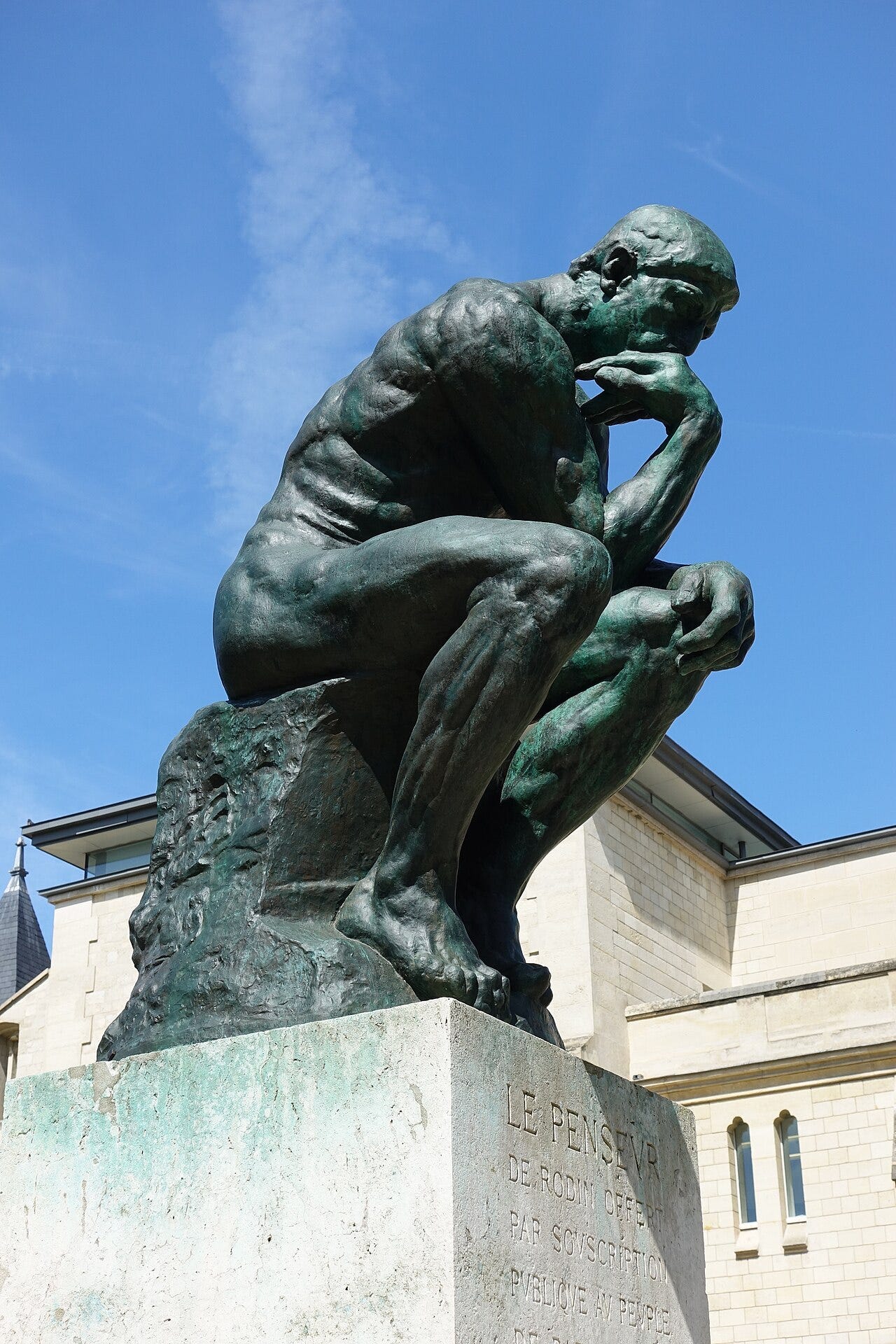
Hunched on a rock, a naked bronze man props his chin on the back of his right hand. His right elbow rests on his left thigh, so the whole body twists into a knot around that one gesture. Auguste Rodin modeled the first version in Paris in 1880, about 70 centimeters high, as a figure to sit above the doorway of his Gates of Hell.
That small figure is not the one most people picture. The famous Thinker is an enlargement, close to three times the height, made between 1902 and 1904 by Henri Lebossé, a specialist who scaled Rodin's sculptures up and down for him.
Lebossé used a pantograph, a machine that copies points from a small model onto a larger one at a fixed ratio. Rodin did not cast his own bronzes either, and the enlarged figure was poured in 1904 at the Paris foundry of Alexis Rudier.
Because the plaster model survived, the mold could be filled again, and the Thinker exists in several bronzes. Fewer than ten large ones were cast while Rodin was alive. One of them, bought through Rodin himself, was given to the Cleveland Museum of Art in 1917 by Ralph King, a local donor.
It is the Cleveland cast that was attacked. At about 1 a.m. on 24 March 1970, a bomb went off at its foot. The blast destroyed the pedestal, shattered the lower legs and threw the figure onto its face. The words "Off the ruling class" were left spray painted at the scene, and the attack was never solved.
Sherman Lee, the museum's director, chose not to repair it. The damaged statue, he said, would "draw wider attention to this senseless attack on our cultural heritage." So the footless figure went back up on a bronze armature, over a tall granite pedestal inscribed with the date of the attack. The ragged metal where its shins end is the one part of the Cleveland Thinker that Rodin never modeled.
At a Glance
Artist: Auguste Rodin (1840 to 1917)
Made: Modeled 1880, enlarged 1902 to 1904
Medium: Bronze, cast from a plaster model
Size: About 190 cm (75 in) high for the enlarged figure, with slight differences from cast to cast
Where to see it: Musée Rodin, Paris (garden), and other authorized casts in cities including Cleveland, Tokyo, Detroit, Philadelphia and Copenhagen
11. Jérôme Duquesnoy the Elder, Manneken Pis (1619)
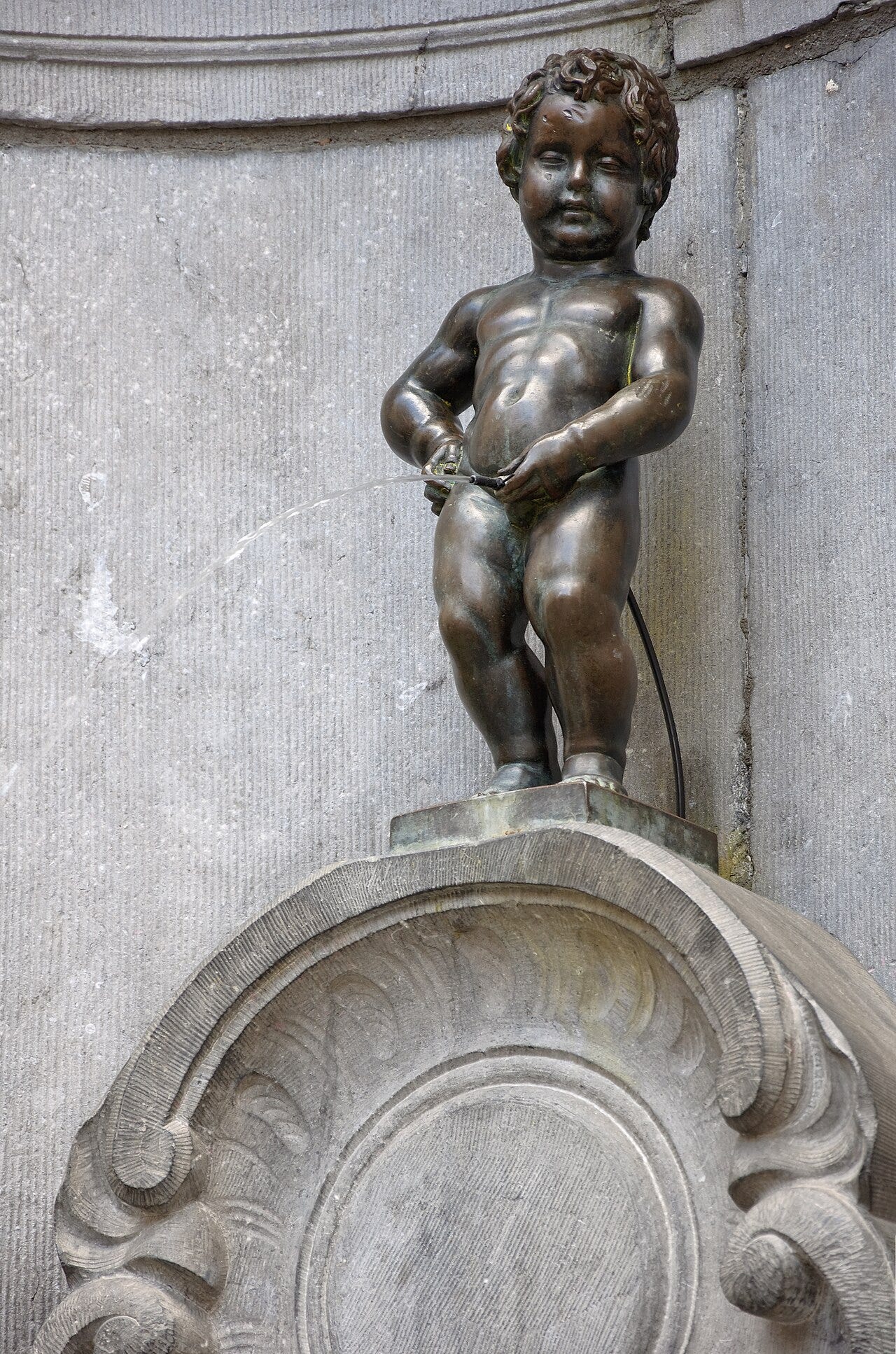
On a stone ledge at a street corner in the old center of Brussels, a small naked bronze boy pushes his belly forward and pees a thin stream into a basin below. Jérôme Duquesnoy the Elder made him for the city authorities in 1619. Four centuries later, the boy on that corner is no longer the one Duquesnoy made, and the thieves who took him once left behind only his feet.