
Long before graveyards became Halloween scenery, painters went to them for what was really there: names cut in stone, a church tower, the fields where the dead had worked. Most of the cemeteries on this page can still be visited, and one of the painters lies today in the graveyard whose gate he painted.
Cool Stories About Art is a newsletter to learn art the fun way.
Join 200,000+ readers and get:
10 new art stories / month
The entire archive of content (140+ articles)
Comment, ask questions, and chat with other readers
What a Graveyard Asks of a Painter
A graveyard is a hard subject for a painter, because nothing happens in it. The dead do not move, and the living come there to stand still. The place has to carry the picture, through the hour, the weather and the distance between graves and sky.
Painters went back anyway. A churchyard showed how a village lived and died, and a lone tomb raised the question of what anyone leaves behind. Most of the painters here started from real graves, then moved a church, added a mountain or set a coffin in a boat.
The page keeps to graveyards and tombs painted on canvas, panel or paper, and leaves aside the murals of ancient tombs and funeral scenes, where the ceremony matters more than the place.
12. Joseph Wright of Derby, Miravan Breaking Open the Tomb of His Ancestors (1772)
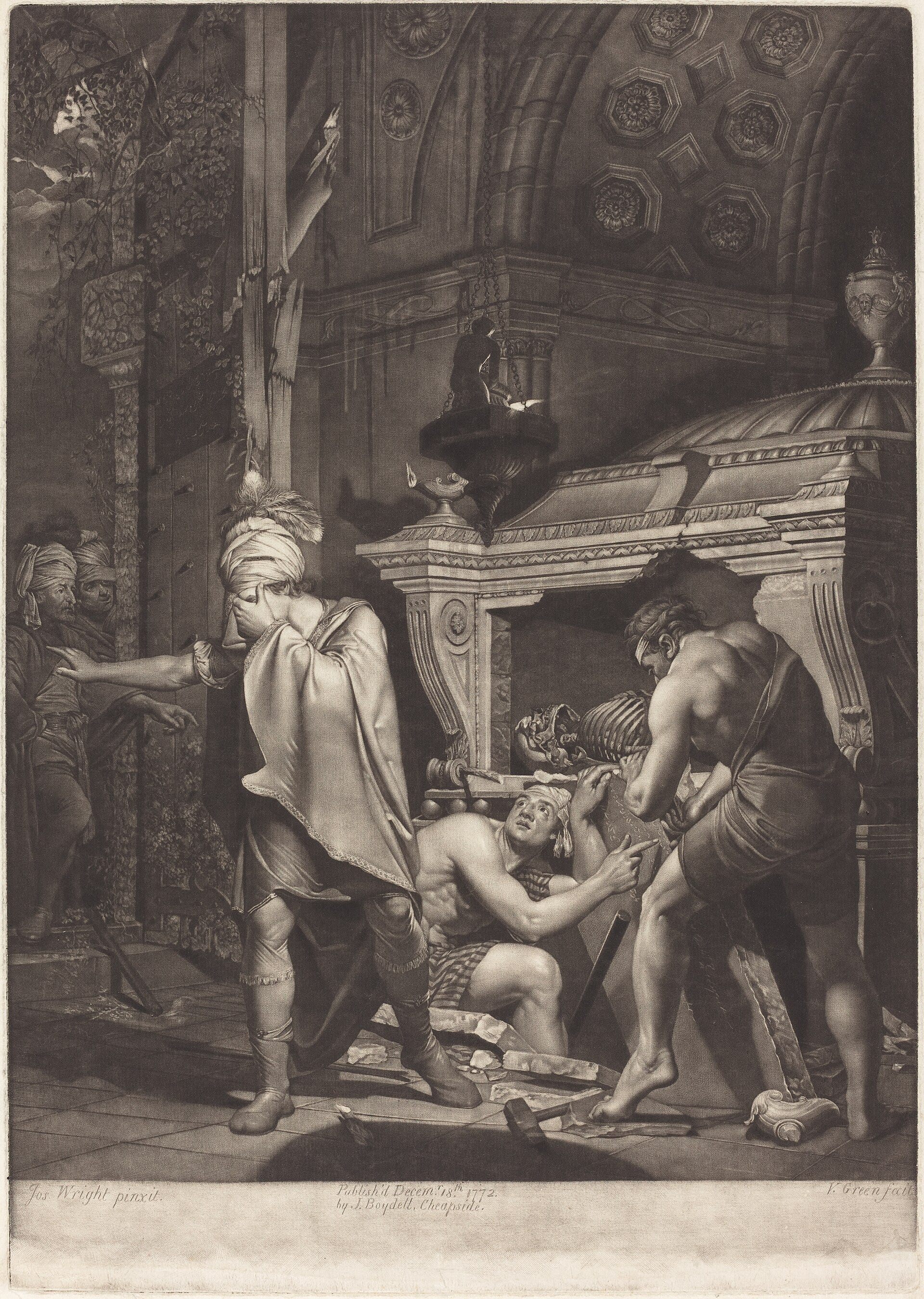
The stone door of the tomb lies smashed on the ground. At the opening stands a young man in a turban and rich robes, frozen, while his servants hold up a torch and the tools that broke the door. Inside there is no gold, only a heap of bones.
The scene comes from a short tale by the English poet John Gilbert Cooper, published in 1755 in his Letters Concerning Taste. Its hero, Miravan, a rich nobleman of the East, finds an inscription on the tomb of an ancestor. It promises a treasure greater than any owned by Croesus, the ancient king whose name still means wealth.
Greed does the rest. Miravan has the tomb forced and finds only bones, and a second inscription telling him that a man who disturbs his ancestors for gold will never know rest himself.
Cooper had borrowed a very old trick. The Greek historian Herodotus already tells of Darius, king of Persia, who opened the tomb of a queen of Babylon for the money its inscription promised, and found only her body and a message that blamed his greed.
In 1772, Joseph Wright of Derby chose the moment Miravan understands. Moonlight falls on the open grave and on his face, and the torches behind him have nothing left to show. The image here is the mezzotint the engraver Valentine Green made from the painting that same year, a print worked in velvety blacks. It is a grave opened by force, and the dead still manage to answer.
At a Glance
Artist: Joseph Wright of Derby (1734 to 1797)
Painted: 1772
Medium: Oil on canvas
Size: 127 × 101.6 cm (50 × 40 in)
Where to see it: Derby Museum and Art Gallery, Derby
11. John Everett Millais, The Vale of Rest (1858 to 1859)
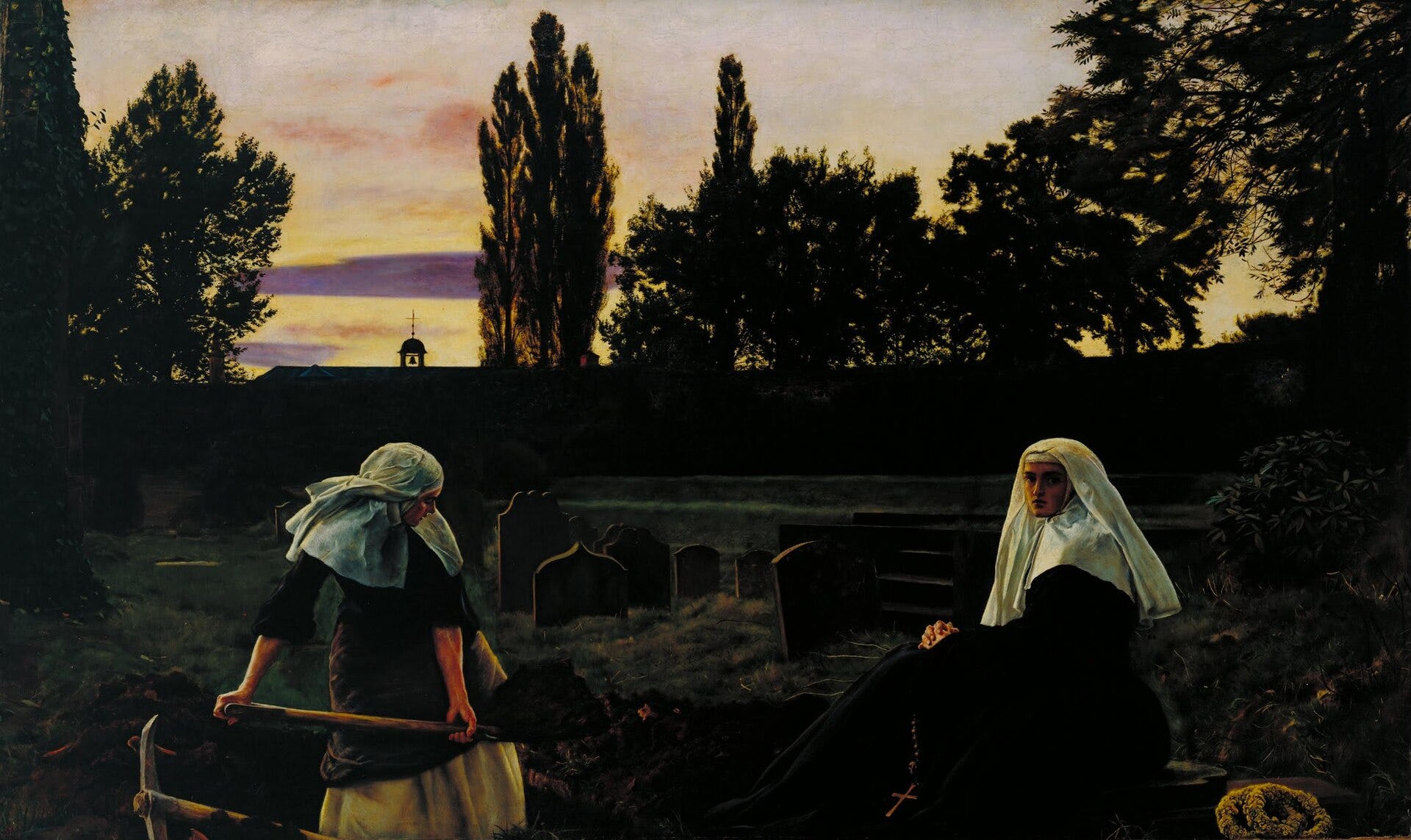
In a walled graveyard at sunset, a young nun in a black habit digs a grave with a spade. Beside the hole, an older nun sits on a tombstone with a rosary in her hands. She is not watching the digging. Her eyes are turned out of the canvas, toward us. Nothing in the painting says who the grave is for.