
The Gospels tell the first Christmas in a few dozen lines. They mention a manger, shepherds awake at night, a star and travelers from the East, but no snow, no stable and no date in December. Much of what people now picture on Christmas night was added later, and painters supplied a large share of it.
Cool Stories About Art is a newsletter to learn art the fun way.
Join 170,000+ readers and get:
10 new art stories / month
The entire archive of content (1,000+ articles)
Comment, ask questions, and chat with other readers
What Christmas Asked of Painters
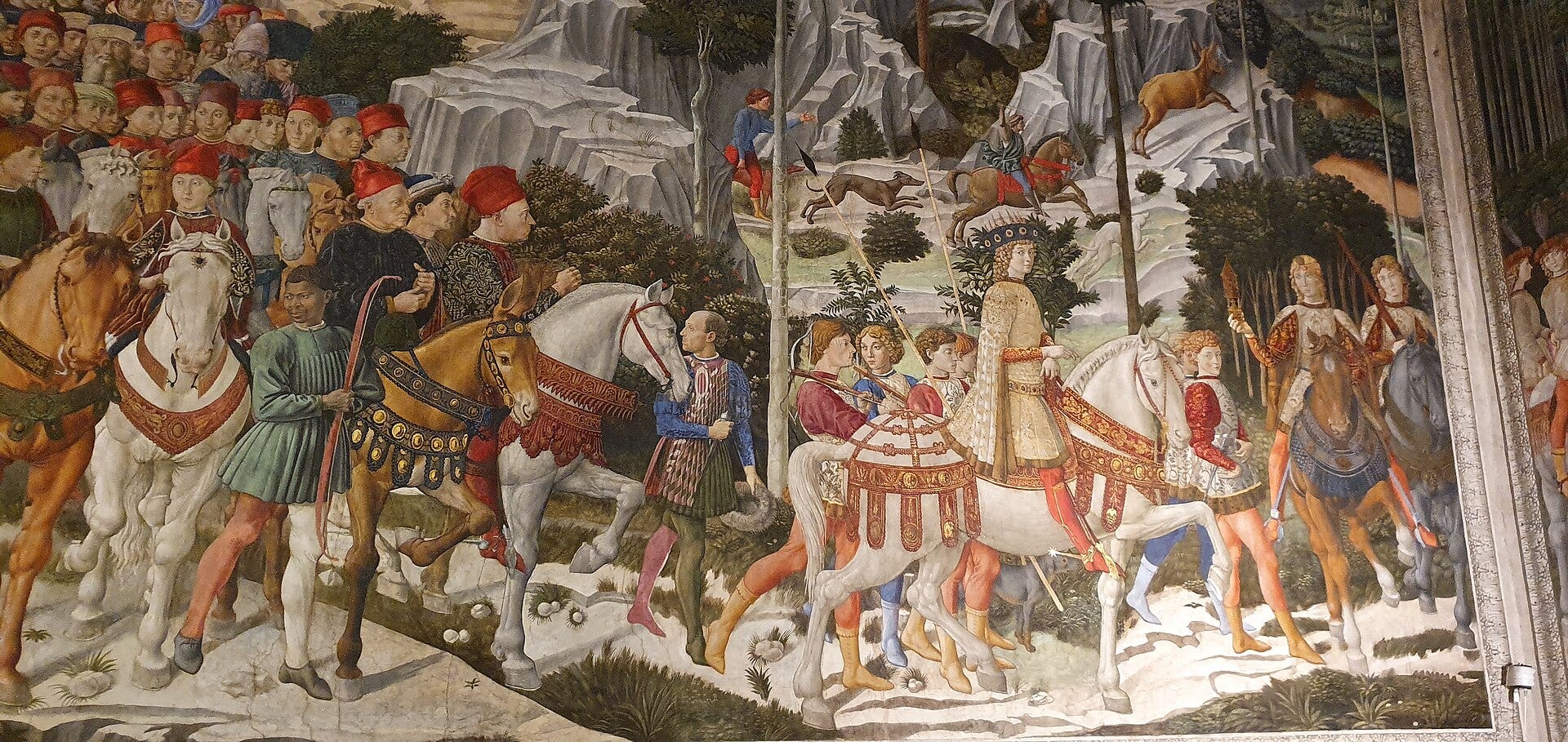
For most of its history, a Christmas painting was something a church ordered. A family paid for an altarpiece in its chapel, and the painter had to turn a few lines from Luke and Matthew into a scene people would kneel before. The Gospels say the shepherds were watching their flocks by night, but not what a newborn God looks like in the dark. They say wise men followed a star from the East, but not how many there were or what they wore.
Each silence left the painter a question. A night scene forced him to decide where the light came from. The travelers from the East made room for horses, brocade and the faces of the patrons, the shepherds for unshaven working men. Later, painters in the north moved Bethlehem into their own villages, snow included, and by the 1800s the Christmas picture reached the illustrated magazines, along with a figure who appears in no Gospel at all.
The twelve pictures below each answer one of those questions, about the birth, the shepherds, the kings, the road to Bethlehem or the gift-bringer of the modern holiday. The countdown closes on the best known of them, and each one adds something the Gospels leave out, which is where its story starts.
12. Gerrit van Honthorst, The Adoration of the Shepherds (1619 to 1620)
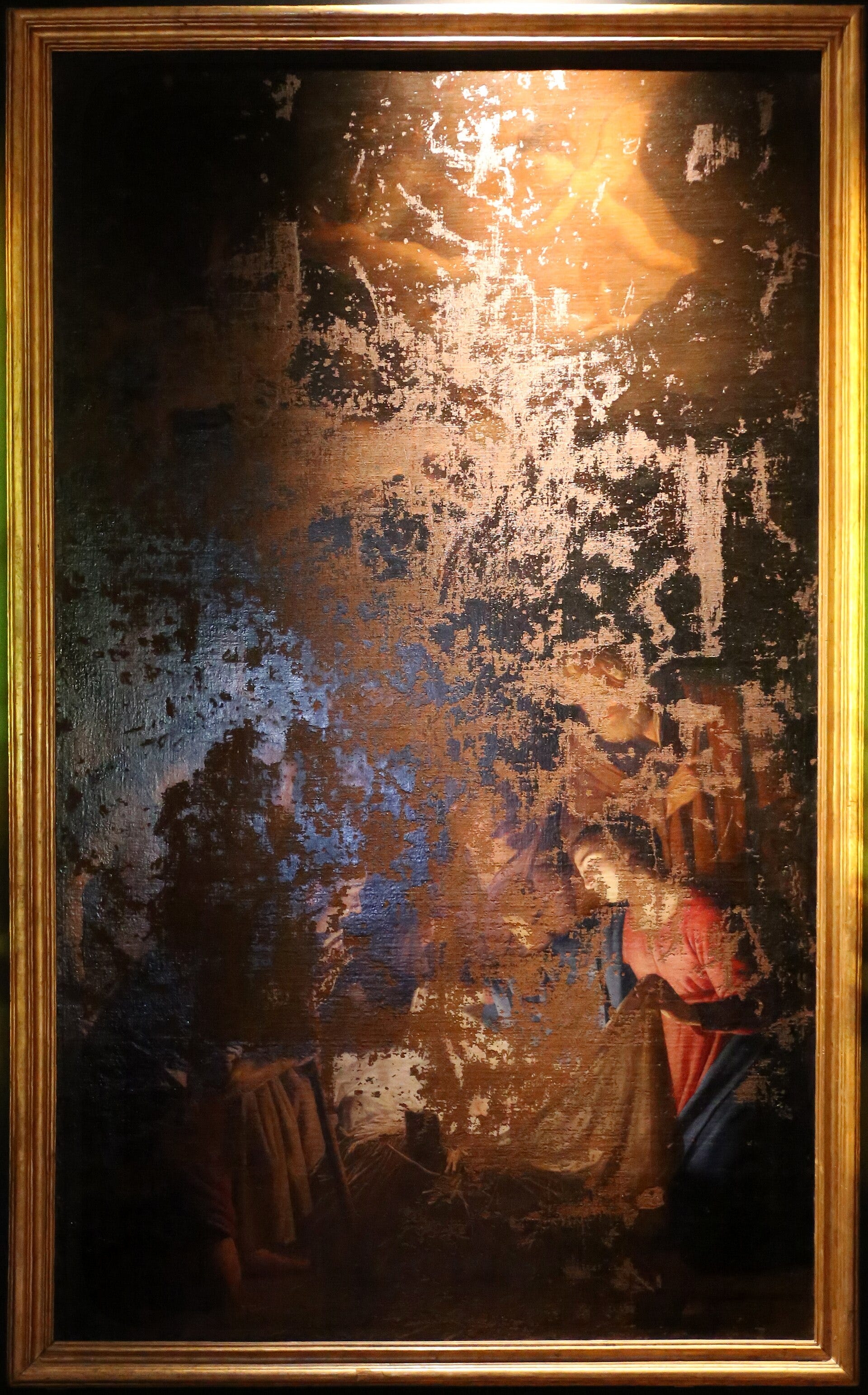
In the middle of this tall canvas, where the newborn should be, there is only bare cloth. Large patches of paint have been torn away. On the right, the Virgin, robed in red and blue, still kneels toward the manger, but the child she is looking at is gone.
What disappeared with him was the light of the picture. Gerrit van Honthorst, a young Dutchman working in Italy, painted it between 1619 and 1620. The Italians called him Gherardo delle Notti, Gerard of the Nights. In his night nativities, the child himself is the lamp, and every face around the manger takes its light from him. This one was ordered by the diplomat Piero Guicciardini for a family chapel in Santa Felicita, a church in Florence.
In 1973 the canvas was hung in the Uffizi, the great museum of Florence, at the entrance to the Vasari Corridor, a covered passage above the streets. Twenty years later, that spot turned out to be the wrong one. On May 27, 1993, a Mafia bomb exploded in Via dei Georgofili, a narrow street against the museum. It killed five people, among them a baby and a nine-year-old child.
The Honthorst was among the paintings most badly burned. The blast did its worst exactly where the figures crowded around the manger, and the small figure of the child vanished completely. In 2003 the canvas went back to its place with the hole still at its center.
To me, that empty center says more about the bombing than any plaque could. The Virgin still turns toward the source of the light, and the source is the one thing missing.
At a Glance
Artist: Gerrit van Honthorst (1592 to 1656)
Painted: 1619 to 1620
Medium: Oil on canvas
Size: 338.5 x 198.5 cm (133.3 x 78.1 in)
Where to see it: Uffizi Galleries, Florence
11. Thomas Nast, Merry Old Santa Claus (1881)
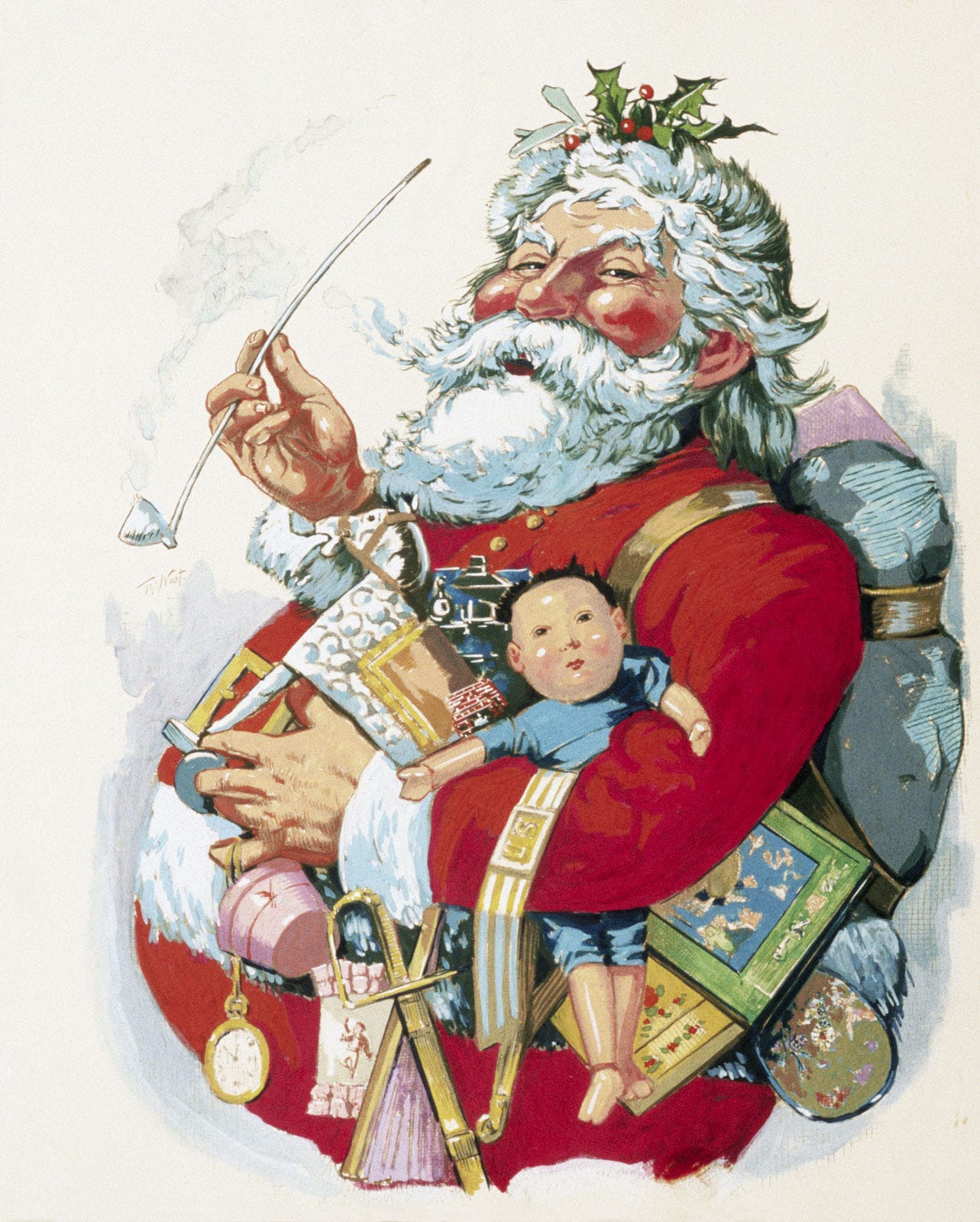
A sword sticks out of the armful of toys this Santa Claus is carrying, and a pocket watch hangs at his belt. Those are strange presents for children, and they were not chosen by chance. Thomas Nast, the cartoonist who drew this page in 1881, had first drawn Santa Claus eighteen years earlier, in the middle of a war, and the war was still on his mind.