Crying in Art: 12 Famous Paintings of Tears and Grief
The most famous paintings of crying make grief physical. Rogier van der Weyden painted the exact weight of a fainting body, Giotto gave the sky itself weeping angels, and Munch painted a sister dying while another wept beside her. Here are twelve to know, and where to see them.
Tears are almost impossible to paint. A single drop can tip a picture into sentiment. Yet grief is one of the oldest subjects in art, from the mourning over the dead Christ to a child weeping over a dead bird. The twelve below each found a way to make sorrow real without making it cheap.
Use this as a quick tour:
The lamentations: van der Weyden, Giotto and Botticelli, mourning the dead Christ.
The private griefs: Greuze and Munch, tears in an ordinary room.
The penitents: El Greco and Reni, weeping for their sins.
Where to see them: a museum list at the end, grouped by city.
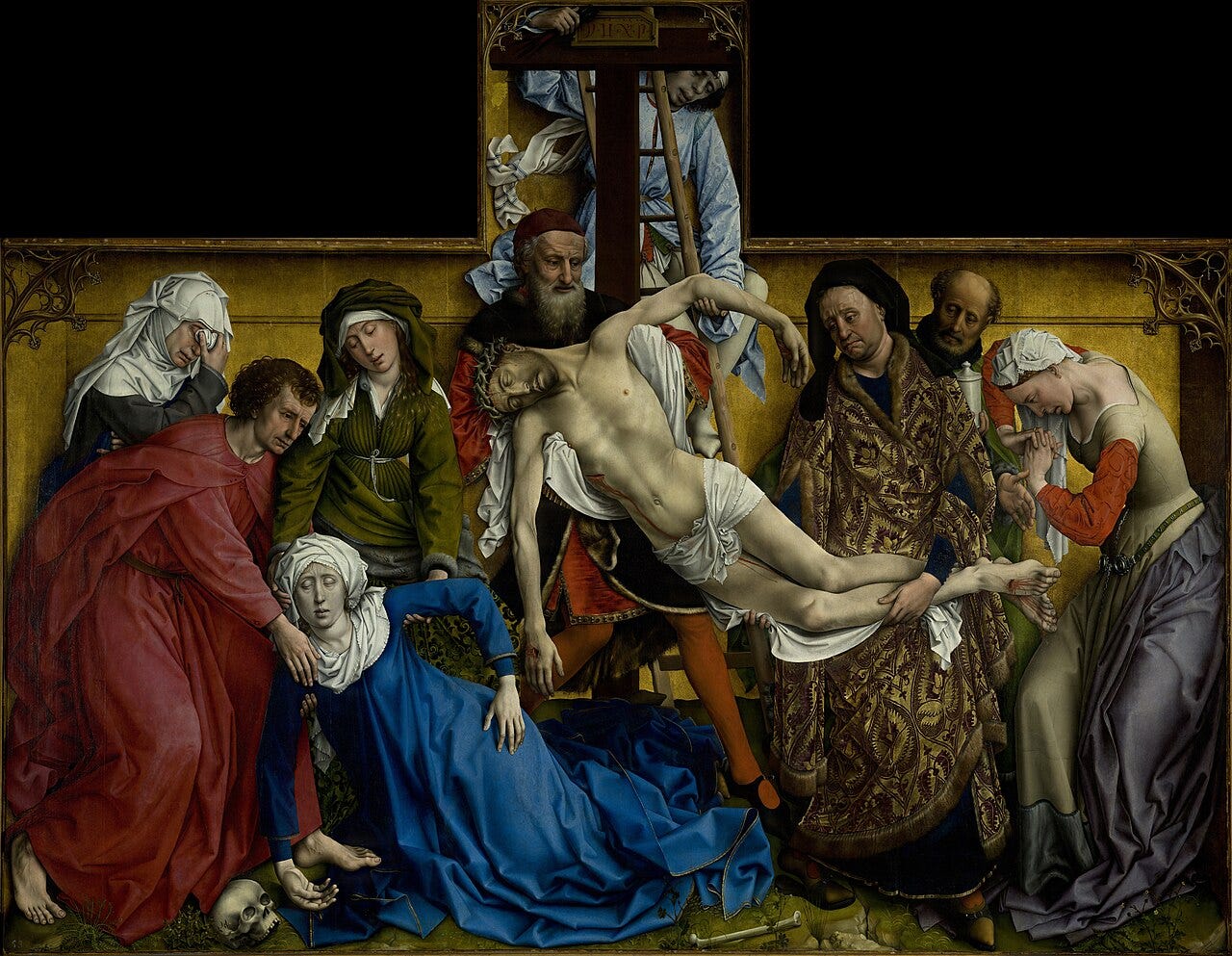
Rogier van der Weyden, The Descent from the Cross
Rogier van der Weyden painted The Descent from the Cross around 1435, and it is a wall of grief. The dead Christ is lowered while the mourners weep, tears clearly visible on their cheeks.
Van der Weyden lets the Virgin faint in a curve that exactly echoes her dead son’s body, so mother and child grieve as one shape. His oil technique makes every tear a jewel.
It hangs at the Prado in Madrid. Few paintings pack this much raw sorrow into so small a space, ten figures crying in a shallow golden box.
Giotto, The Lamentation
Giotto painted The Lamentation around 1305 on the walls of the Scrovegni Chapel in Padua. Around the dead Christ, mourners bend and weep, and in the sky small angels twist in agony.
This was something new. Giotto gave his figures real weight and real feeling, faces crumpling with grief, decades before the Renaissance proper. The weeping angels are almost unbearable.
It is in the Scrovegni Chapel in Padua. Giotto changed painting here, making holy figures cry like human beings for the first time.
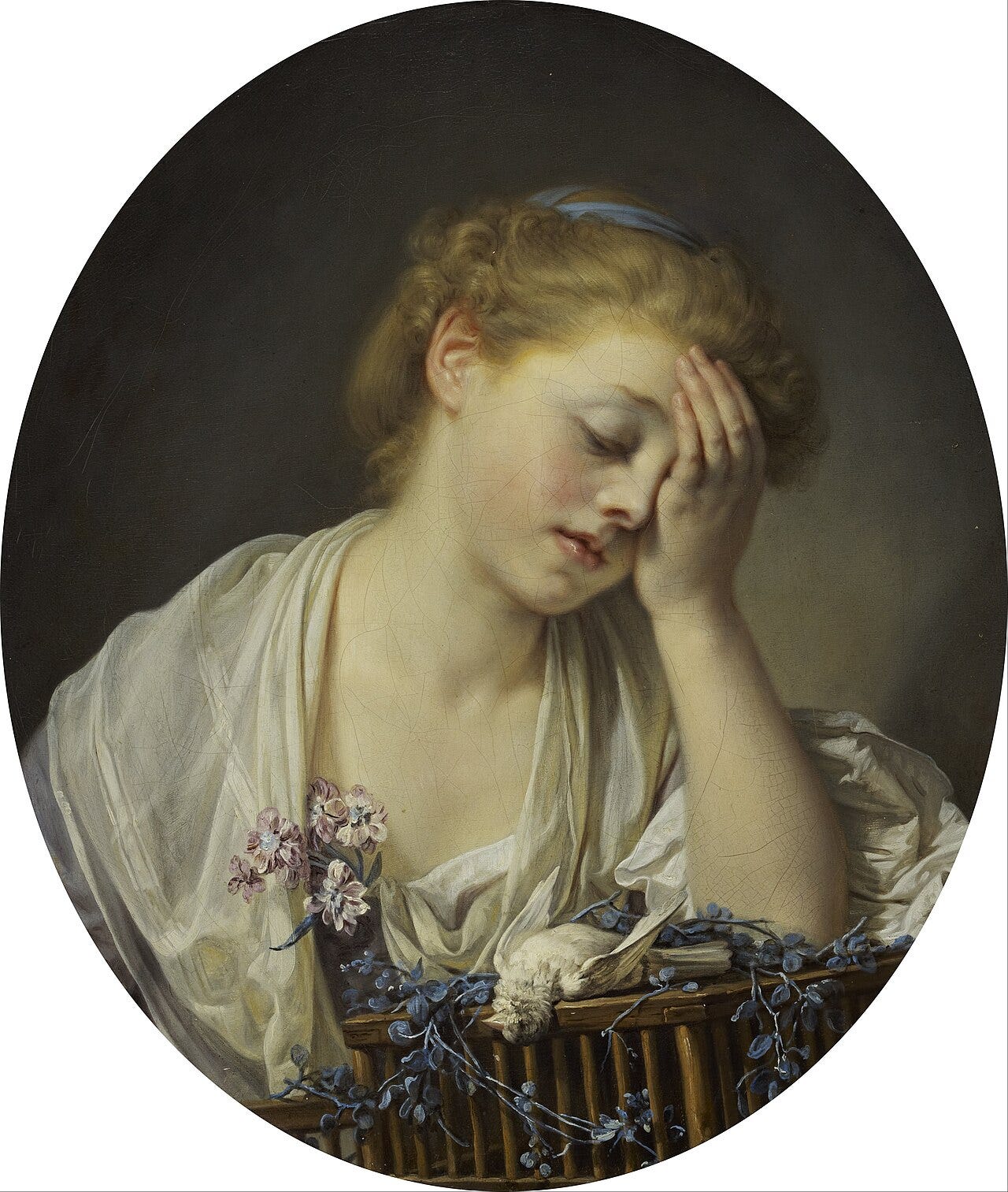
Jean-Baptiste Greuze, A Girl Weeping over her Dead Bird
Jean-Baptiste Greuze painted this weeping girl in 1765, slumped over a dead canary, her eyes red and wet. It looks like a simple scene of childhood sorrow.
It was also read as something more knowing, the dead bird standing for lost innocence. Audiences wept in front of it, exactly as Greuze intended.
It hangs at the National Galleries of Scotland in Edinburgh. Greuze built a whole career on making viewers cry, and this small grieving girl was one of his greatest hits.
Rembrandt, Jeremiah Lamenting the Destruction of Jerusalem
Rembrandt painted the prophet Jeremiah in 1630, slumped in despair, head on his hand, as the holy city of Jerusalem burns in the dark behind him. He is only twenty three when he paints it.
Rembrandt does not show tears so much as the whole body of grief, the bowed head, the heavy silence. His deep chiaroscuro pushes the burning city into shadow so the sorrow fills the light.
It hangs at the Rijksmuseum in Amsterdam. It is one of the most moving images of despair ever made by a painter barely out of his teens.
Edvard Munch, The Sick Child
Edvard Munch painted The Sick Child around 1885, a dying red haired girl in bed turning to comfort a grieving woman who bows her head beside her. It shows his own sister Sophie, who died of illness at fifteen.
Munch scraped and reworked the paint until it looked raw and wounded, matching the grief. He returned to this scene again and again all his life, unable to leave it alone.
It hangs at the National Museum in Oslo. It is one of the truest paintings of watching someone you love die, grief painted from the inside.
William Bouguereau, The First Mourning
William Bouguereau painted The First Mourning in 1888, Adam and Eve cradling the dead body of their son Abel, the first human being to die. It is grief at the very beginning of the world.
Eve buries her face against the body while Adam stares out, hollow with shock. Bouguereau, who had lost several of his own children, poured real bereavement into it.
It hangs at the National Museum of Fine Arts in Buenos Aires. The polished surface only makes the raw subject harder, the first parents holding the first corpse.
Sandro Botticelli, Lamentation over the Dead Christ
Sandro Botticelli painted this Lamentation around 1490, the mourners collapsing in a tight knot of grief around the dead Christ, the Virgin fainting beneath his body.
Late in life Botticelli fell under the spell of the fiery preacher Savonarola, and his art grew darker and more anguished. This crush of weeping figures belongs to that grieving final phase.
It hangs at the Alte Pinakothek in Munich. The famous painter of spring and beauty ended by painting some of the most desolate grief of the Renaissance.
William Bouguereau, Pieta
Bouguereau returns with his Pieta of 1876, the Virgin in black clutching the dead Christ, ringed by a choir of weeping angels. He painted it the year his own son died. It draws on centuries of religious imagery.
The Virgin stares straight out, dry eyed and frozen, while the angels around her sob. That contrast, a grief too deep for tears surrounded by open weeping, is the whole force of it.
It is held in a private collection. Bouguereau turned his private loss into one of the most tear soaked religious paintings of the nineteenth century.
Paul Delaroche, The Execution of Lady Jane Grey
Paul Delaroche painted The Execution of Lady Jane Grey in 1833, the blindfolded teenage queen groping for the block while two of her ladies weep and turn away, unable to watch.
The tears belong to the women at the edges. Their open grief tells you exactly how to feel about the calm, doomed girl at the centre, moments from death.
It hangs at the National Gallery in London, one of its most loved paintings. The weeping attendants make it almost impossible to look at with dry eyes.
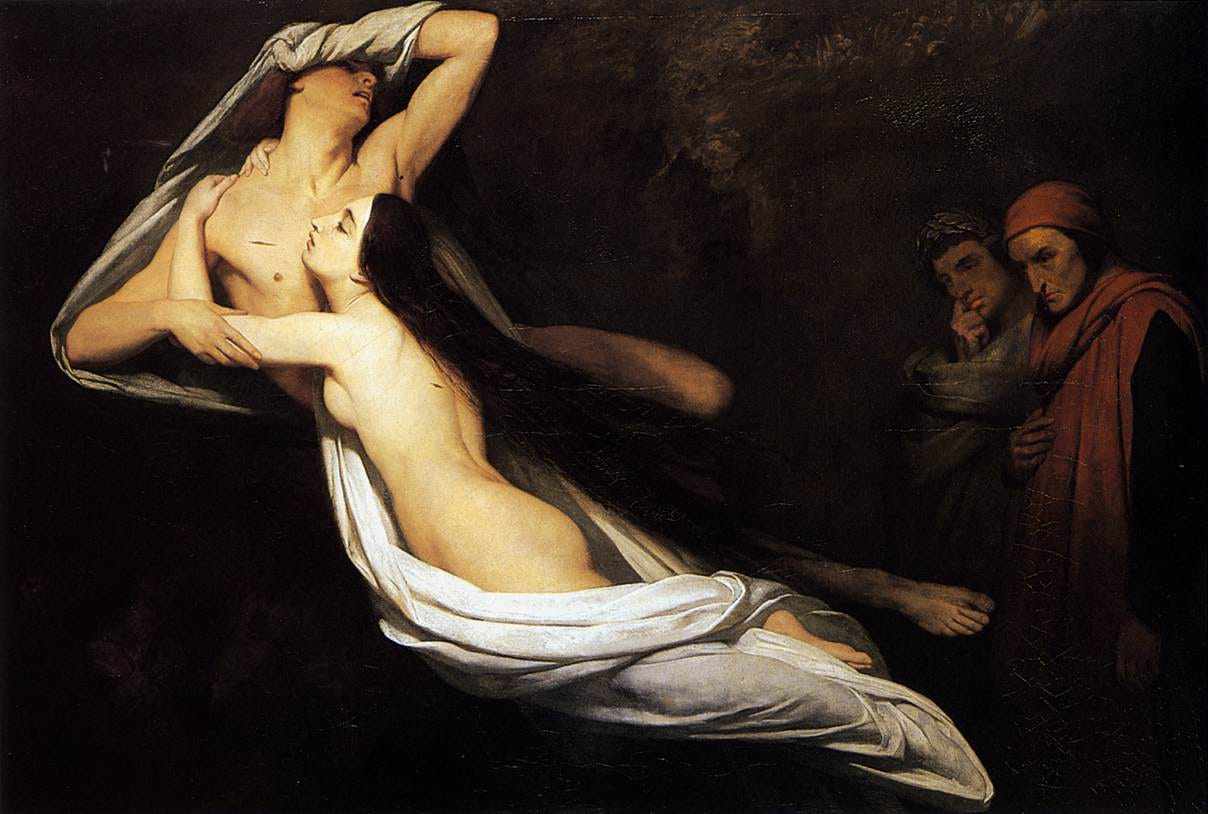
Ary Scheffer, Francesca da Rimini
Ary Scheffer painted the doomed lovers Paolo and Francesca around 1835, drifting weeping through the dark underworld of Dante’s poem while the poet looks on in pity.
Condemned for their love, the pair cling together in endless grief. Scheffer makes their sorrow soft and pale, tears in a world of shadow.
It hangs at the Wallace Collection in London and in other versions across Europe. It became one of the great Romantic images of love and weeping joined forever.
Anthony van Dyck, The Lamentation
Anthony van Dyck painted this Lamentation around 1635, the Virgin lifting her tear stained face to heaven over the pale body of her son, angels grieving around them. It is high Baroque sorrow.
Van Dyck, the great portraitist, brings all his elegance to grief, the Virgin’s upturned face wet and open, appealing straight to God. Nothing is held back.
His Lamentations hang in Antwerp, Munich and other collections. He made weeping beautiful without making it false, tears as an act of faith.
El Greco, The Tears of Saint Peter
El Greco painted The Tears of Saint Peter around 1590, and returned to it many times. Peter, who denied Christ three times, looks up to heaven with clasped hands and wet, reddened eyes.
These are tears of remorse, not loss. El Greco made Peter’s guilt physical, the old face streaked and pleading, a whole painting about crying for what you have done.
Versions hang in museums including the Bowes Museum in England. It may be the first great painting to make a single weeping saint the entire subject.
Questions people ask about crying in paintings
Why is crying so hard to paint? A single tear can tip a picture into sentiment, so painters usually show grief through the whole body, a bowed head or a fainting figure, rather than the tears themselves.
What is the most famous painting of grief? Rogier van der Weyden The Descent from the Cross and Giotto Lamentation are among the most famous, along with Munch The Sick Child.
Who painted the first truly weeping figures? Giotto, around 1305, gave holy figures real human grief, with angels twisting and weeping in the sky.
Why is Munch The Sick Child so personal? It shows his own sister Sophie, who died of illness at fifteen, and he returned to the grieving scene again and again all his life.
What are the tears in The Tears of Saint Peter? Remorse. Peter weeps because he denied Christ three times, so it is a painting about crying for one’s own guilt.
Where to see them
Prado, Madrid: Rogier van der Weyden The Descent from the Cross.
Scrovegni Chapel, Padua: Giotto The Lamentation.
National Gallery, London: Delaroche The Execution of Lady Jane Grey.
National Museum, Oslo: Munch The Sick Child.
Rijksmuseum, Amsterdam: Rembrandt Jeremiah Lamenting the Destruction of Jerusalem.
Keep exploring
If the grief pulled you in, three more paths from here. Walk through the whole haunted life behind The Sick Child in Edvard Munch, the complete story, learn to read the hidden clues in famous canvases in seven secrets hidden in famous paintings, or start with the basics of iconography.
One last thing. A smile is easy to fake, in life and in paint. A tear is not. When a painter gets grief right, the picture stops being a picture and becomes a person, crying, in front of you. These twelve still do.