
Edgar Degas refused to be called an Impressionist, rarely painted outdoors and insisted that nothing in his pictures should look like chance. Chance caught up with them anyway, since a good number of these pictures were slashed, hidden, lost or renamed after they left his hands. Together they follow him from his twenties in Italy to the pastels of his sixties, made as his eyesight failed.
Cool Stories About Art is a newsletter to learn art the fun way.
Join 200,000+ readers and get:
10 new art stories / month
The entire archive of content (140+ articles)
Comment, ask questions, and chat with other readers
A Life Told in Twelve Pictures
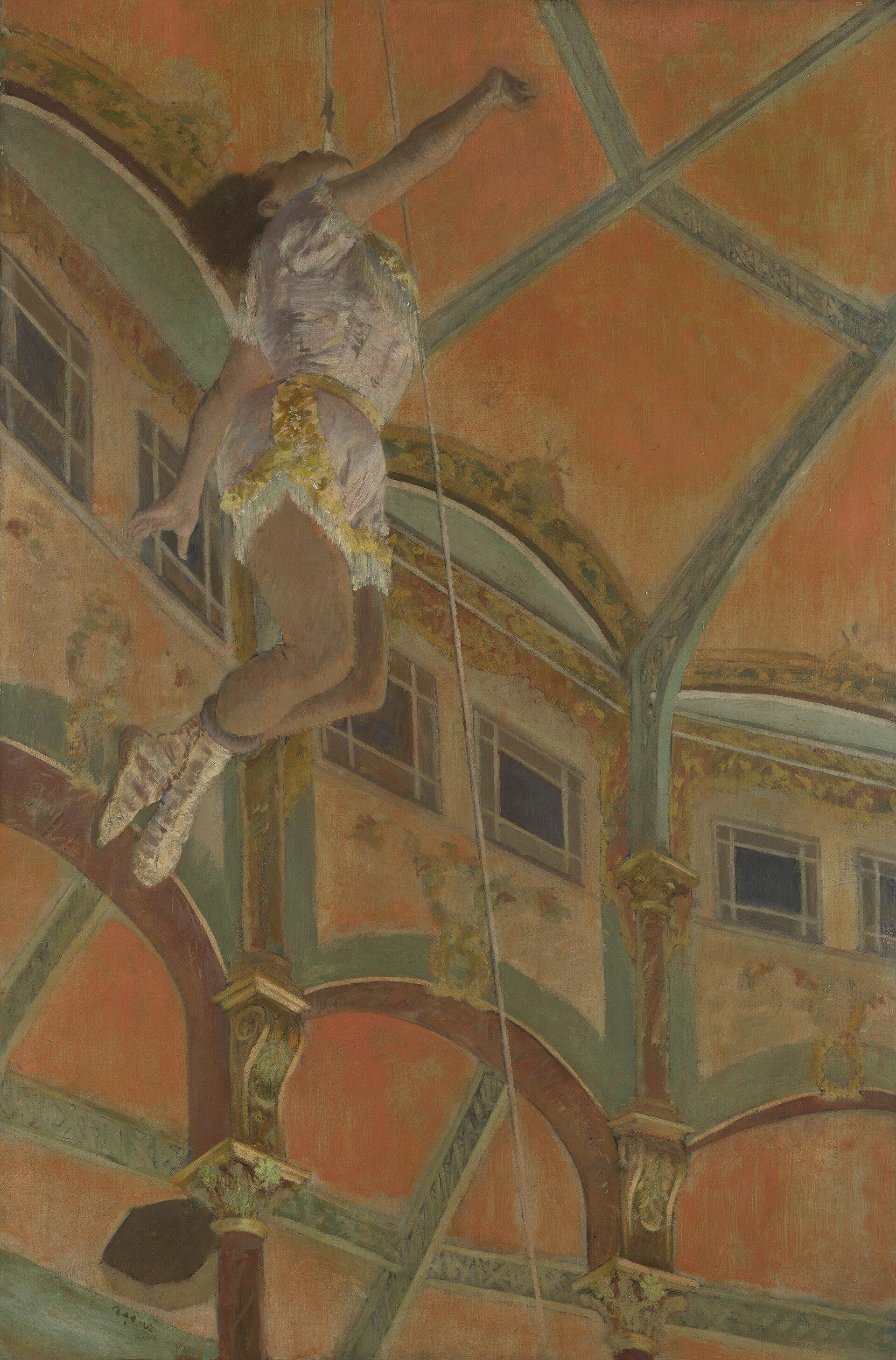
Degas wanted to paint modern Paris at work and at rest, seen from the odd angles a camera might catch. Yet he built those pictures indoors, from memory and sketches, often under gaslight. That is why the Impressionist label never fit him. He called himself a Realist, or simply independent.
The ballet offered him what he most wanted to study. Its performers drilled the hardest movements until they looked effortless, under artificial light, surrounded by teachers, musicians and the wealthy men who paid for access. He returned to it until he stopped working.
The twelve cover the whole career, not just the famous ballet years: a portrait begun in his twenties, the seasons he spent beside the Impressionists, Paris at work and at leisure, and the last pastels. Each entry says where he stood in his life when he made the work.
12. Monsieur and Madame Édouard Manet (about 1868 to 1869)
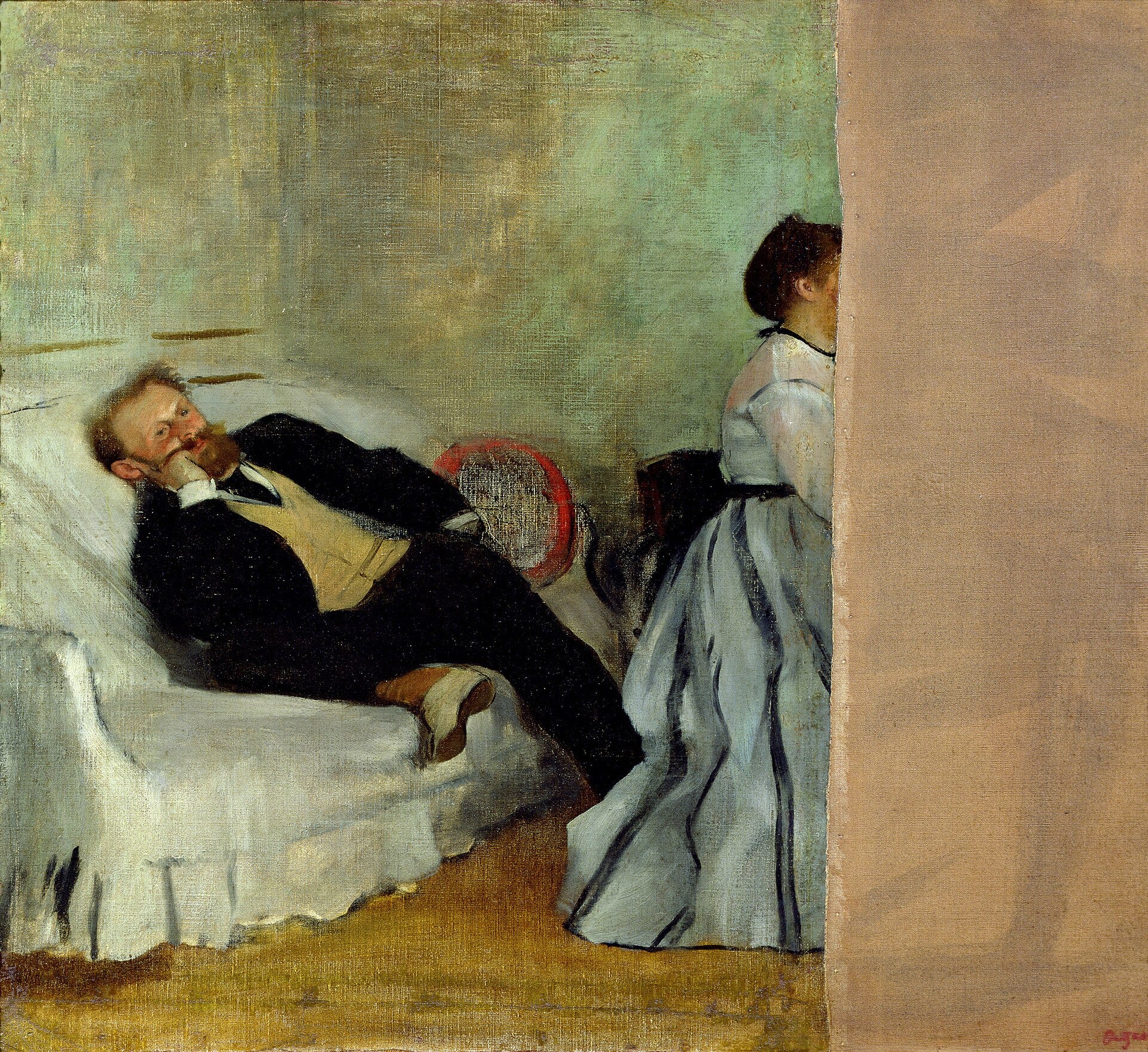
Dressed in a dark suit, a man lies back on a sofa, one hand behind his head, listening. On the right, where his wife sat at the piano, the picture simply stops, and a strip of bare canvas takes her place. Monsieur and Madame Édouard Manet is a portrait that one painter gave to another, and the friend who received it cut it.
To understand that cut, it helps to know what bound the two painters. Degas, in his mid-thirties, lived in Paris, and Manet, two years older, was the painter he saw most. They had reportedly met at the Louvre, where Degas was making an etching after a portrait then believed to be by Velázquez. Over the next years they argued, admired each other and traded pictures.
This canvas was one of those exchanges. Degas painted it from the memory of an evening at the Manets' home, with Suzanne Manet at the keyboard and her husband stretched out to listen. Then he gave it to the couple.
At some point Manet slashed through the right part of the picture and cut his wife's face away. Nobody knows why. The most common guess is that he disliked the way Degas had painted her profile. Some think he answered with a picture of his own, Suzanne at the piano, as a kind of correction.
Degas replied by taking the painting back and returning a small still life that Manet had once given him. Yet he did not throw the fragment away. It hung in his private apartment until he died. A blank strip of canvas was later added on the right, perhaps because he meant to repair the picture, though nobody knows when or by whom.
The quarrel did not last. After Manet died in 1883, Degas bought his works and patiently gathered the pieces of The Execution of Maximilian, a large canvas of Manet's that had been cut up and scattered. The man whose gift had been sliced spent years putting another man's painting back together.
At a Glance
Artist: Edgar Degas (1834 to 1917)
Painted: About 1868 to 1869, Paris
Medium: Oil on canvas
Size: 65 × 71 cm (25 9/16 × 27 15/16 in)
Where to see it: Kitakyushu Municipal Museum of Art, Kitakyushu, Japan
About This Painting
Who was Édouard Manet's wife?
Suzanne Manet, a pianist. She is the woman Degas placed at the keyboard in this portrait.
11. Place de la Concorde (1875)
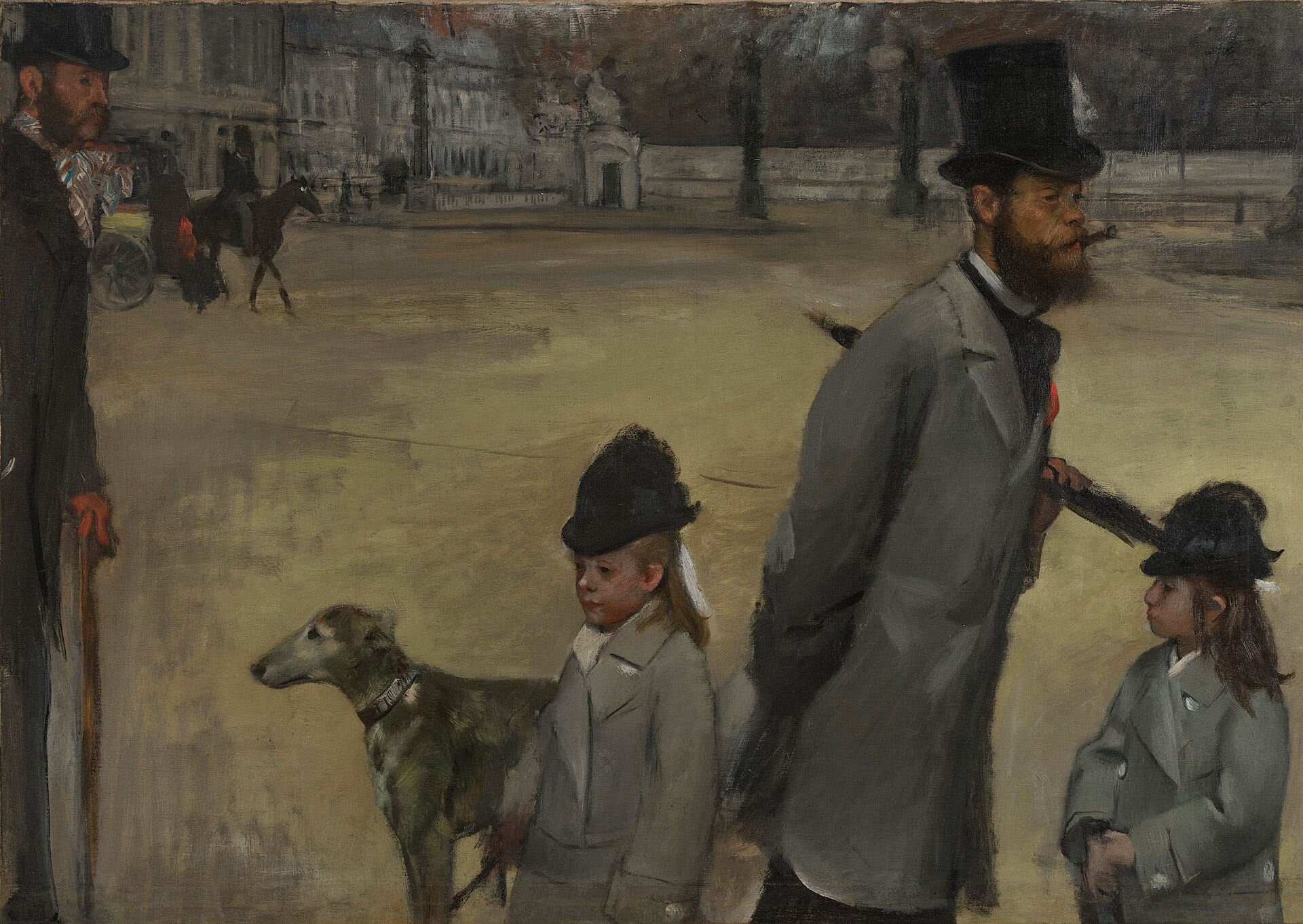
Nearly half of the canvas is empty pavement. A man in a tall hat strides across a Paris square with a cigar, an umbrella under his arm, while his two small daughters and their dog head off in other directions, and a man at the left edge is cut in two by the picture's edge. Place de la Concorde looks like a moment nobody meant to record. After the Second World War, art books listed it as missing, believed destroyed.