
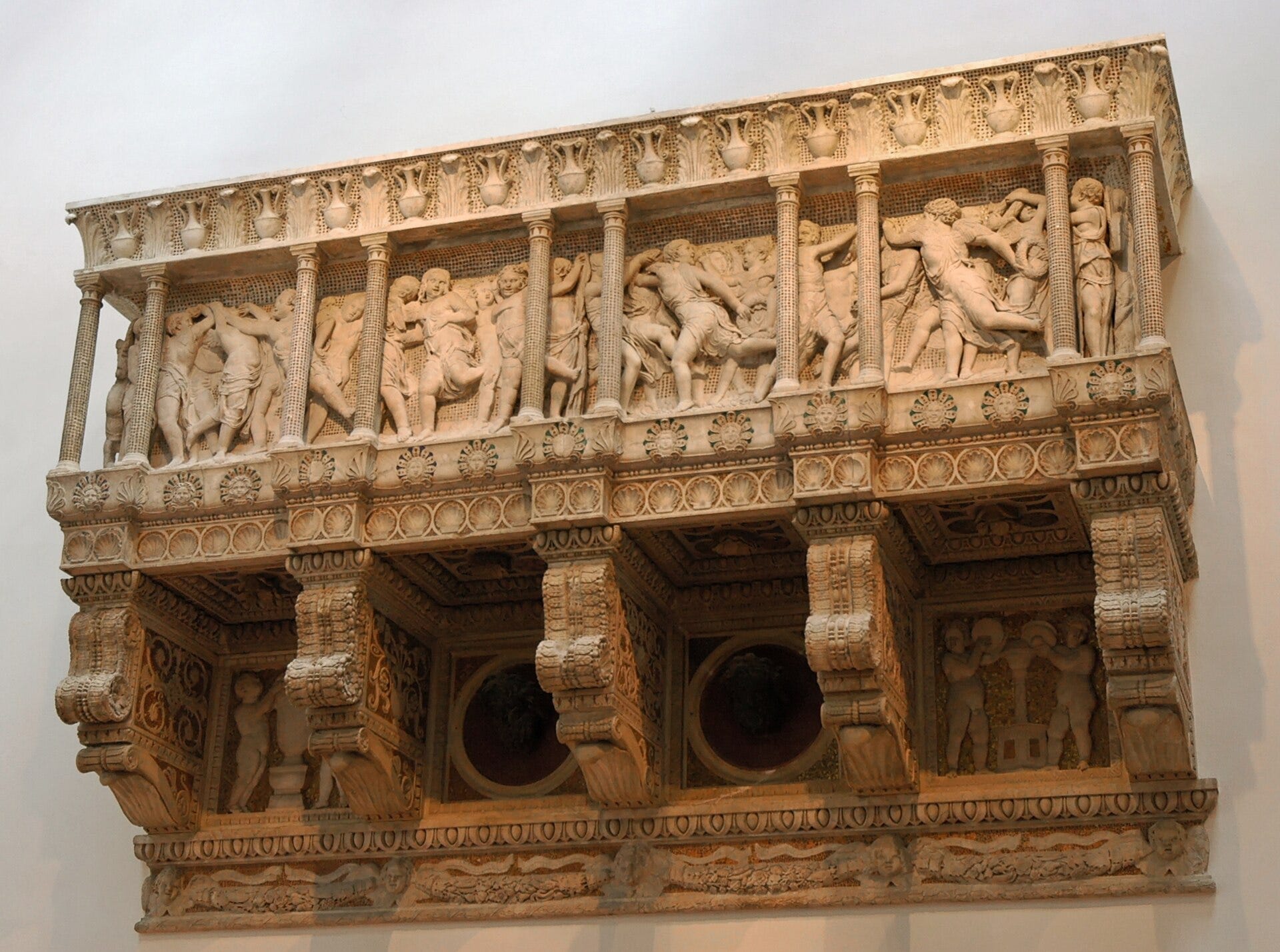
Much of what Donatello carved and cast in Florence was meant to be looked up at, from a street, a church floor or a courtyard, by people who would never come close. Most of it now stands at eye level in museums, and up close a few of these figures look rough or oddly stretched. Some historians explain this by the distance they were made for.
Cool Stories About Art is a newsletter to learn art the fun way.
Join 200,000+ readers and get:
10 new art stories / month
The entire archive of content (140+ articles)
Comment, ask questions, and chat with other readers
Who Paid for Donatello's Statues
Florence in the early 1400s gave its sculptors unusual clients. Each trade guild owned a niche on the outside of Orsanmichele, a grain hall turned into a shrine, and the city ordered the guilds to fill their niches within ten years or lose them. The cathedral, for its part, wanted prophets for its bell tower and a balcony for its singers.
Donatello (about 1386 to 1466) worked for all of them, and later for bankers, a deposed pope and the heirs of a soldier. He worked in wood, marble and bronze, and most of what he made is still in Florence, with a few pieces in Siena, Padua and London.
The twelve sculptures chosen here run from a figure he carved around 1408 to a bronze group he worked on in his seventies, and each of his three main materials appears more than once.
12. The Chellini Madonna (about 1450)
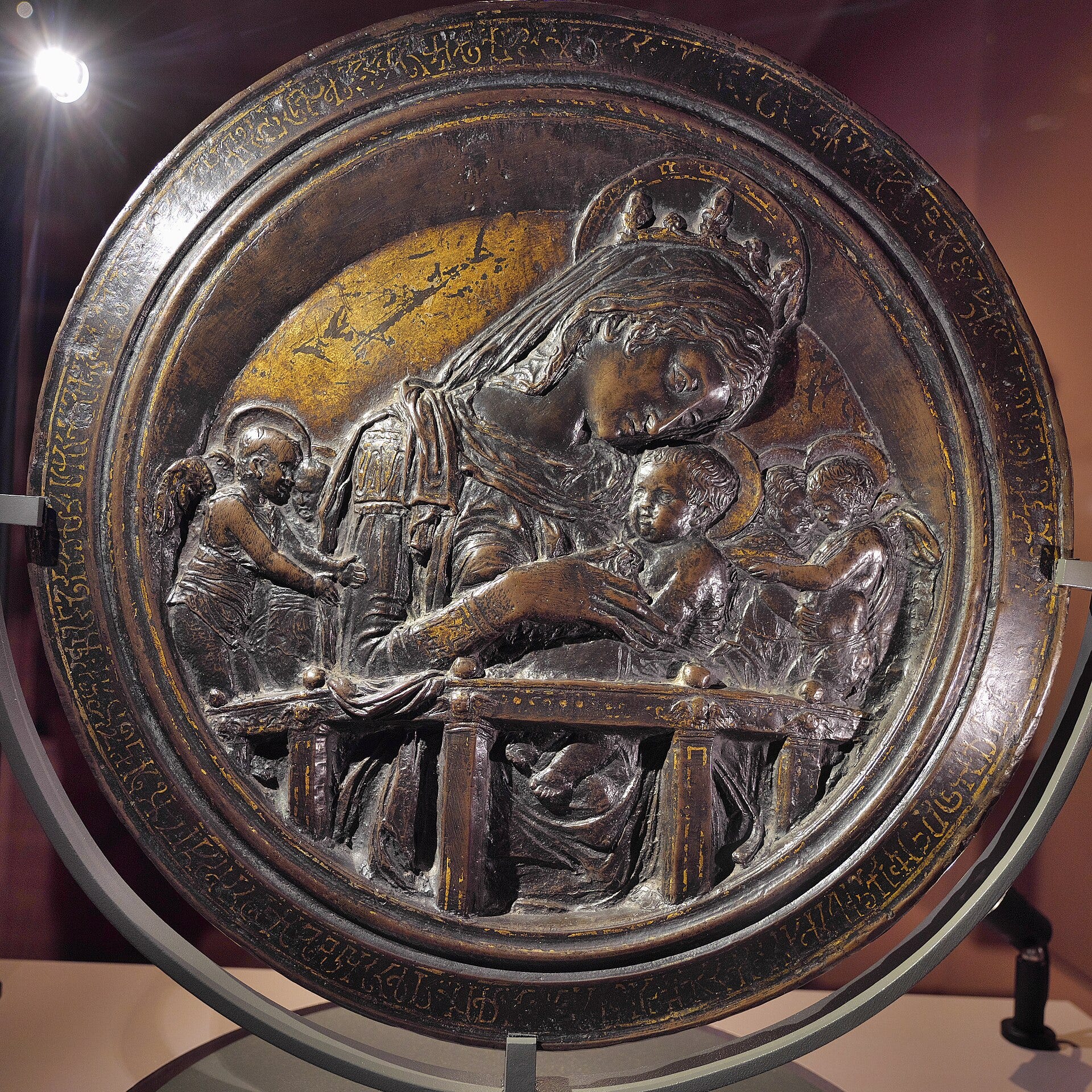
In this small bronze roundel, the Virgin presses her cheek against the Child's, and two angels on each side lean in behind a low railing. The back of the disc is stranger than the front. It is hollowed out, and the same figures are sunk into the metal in reverse, like the inside of a mould.
That hollow back is explained by the man who first received it. The Chellini Madonna takes its name from Giovanni Chellini, a Florentine doctor. On August 27, 1456, he wrote in his account book that Donatello, then his patient, had given him a roundel "the size of a trencher", a wooden plate, with the Virgin, the Child and two angels on each side, all in bronze, as thanks for his care.
Chellini also wrote down what the back was for. It had been made "so that melted glass could be cast on to it and would make the same figures as those on the other side." The bronze was therefore a mould as well as a relief, and the doctor could have copies made in glass.
That purpose may also explain where the roundel was made. It could date from Donatello's years in Padua, between 1443 and 1453, when Venice and its glassmakers were close by, and so it was perhaps not made for Chellini at all.
For a long time, historians doubted that the back had ever been used for glass. They thought that only copies in stucco had been taken from it, and no glass cast from it in the fifteenth century has survived.
The question was finally settled by trying. When the Victoria and Albert Museum in London tested Chellini's description, a mould taken from the back produced copies in glass. One of them is shown next to the bronze, and visitors are allowed to touch it.
At a Glance
Artist: Donatello (about 1386 to 1466)
Made: About 1450, given away in 1456
Medium: Bronze, partly gilded
Size: 28.5 cm in diameter (11.2 in)
Where to see it: Victoria and Albert Museum, London (Room 64A)
11. Crucifix of Santa Croce (about 1408 to 1409)
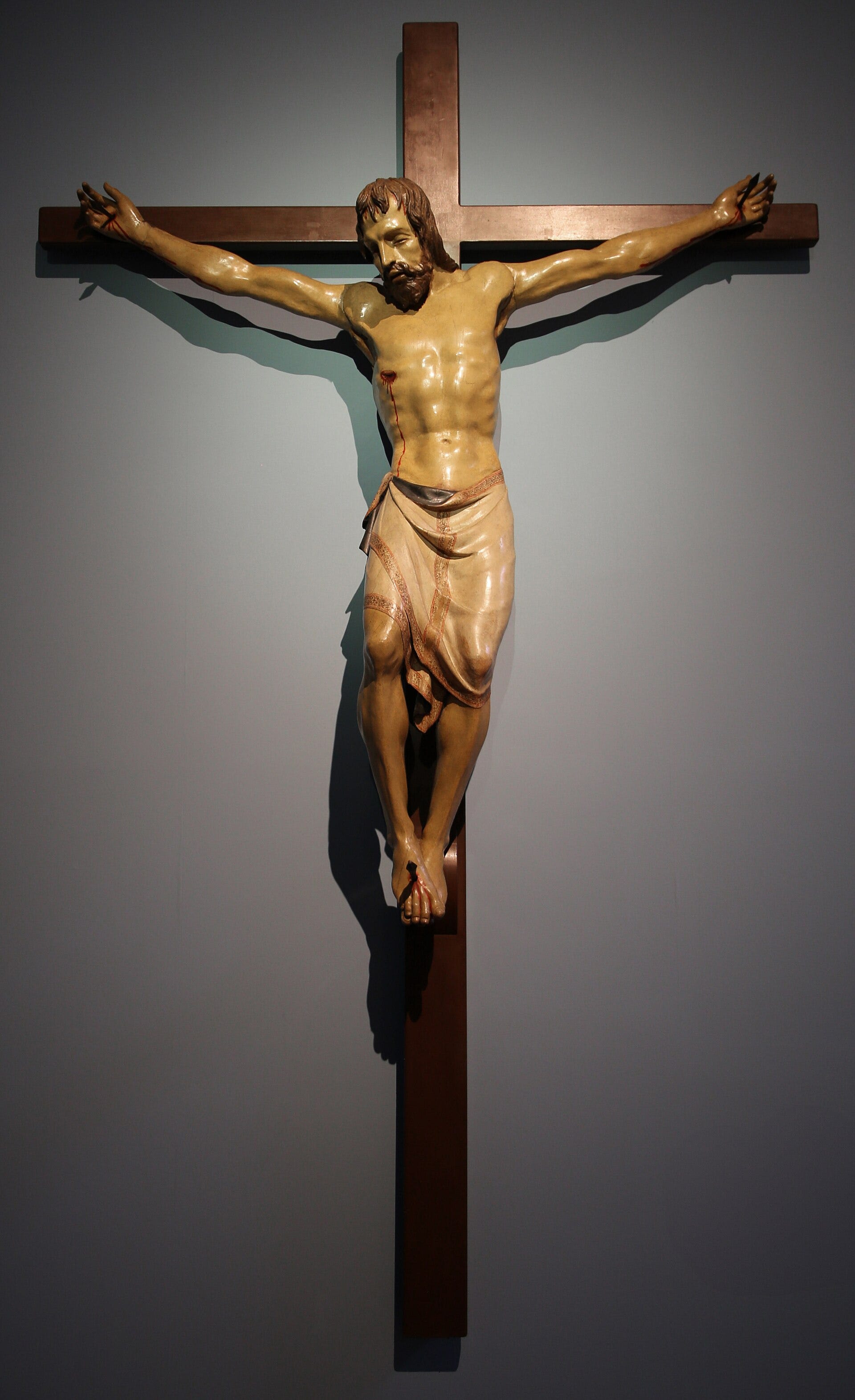
A wooden Christ hangs on the cross, his head dropped onto his chest. The body is thick through the waist and legs, under a short white loincloth. He was barely past twenty when he carved it, and he showed the figure to the man whose judgment he trusted most, his closest friend. The friend did not like what he saw.