
Nobody has ever seen a dragon, so every painter who wanted one had to build it from nothing. In Christian Europe the beast was a monster waiting for a saint's lance. In China it brought the rain and could carry a dead man's soul to the sky. And one of these dragons spent more than four centuries under the whitewash of a Welsh church.
Cool Stories About Art is a newsletter to learn art the fun way.
Join 200,000+ readers and get:
10 new art stories / month
The entire archive of content (140+ articles)
Comment, ask questions, and chat with other readers
Why Painters Kept Inventing Dragons
Why do dragons fill so many old paintings? In Christian Europe, the dragon was the enemy that saints and angels defeat, and churches wanted that victory on their altars and walls.
In China and Japan, the dragon lived in the sky and the water. Painters there showed it flying through cloud or coiling over waves, and in China it was tied to the rain.
Every work chosen here puts the dragon at the heart of the image. Together, the twelve move between two traditions, the dragon that must die and the dragon nobody tries to kill.
12. Anonymous, Silk Painting of a Man Riding a Dragon (Warring States period, 5th to 3rd century BC)
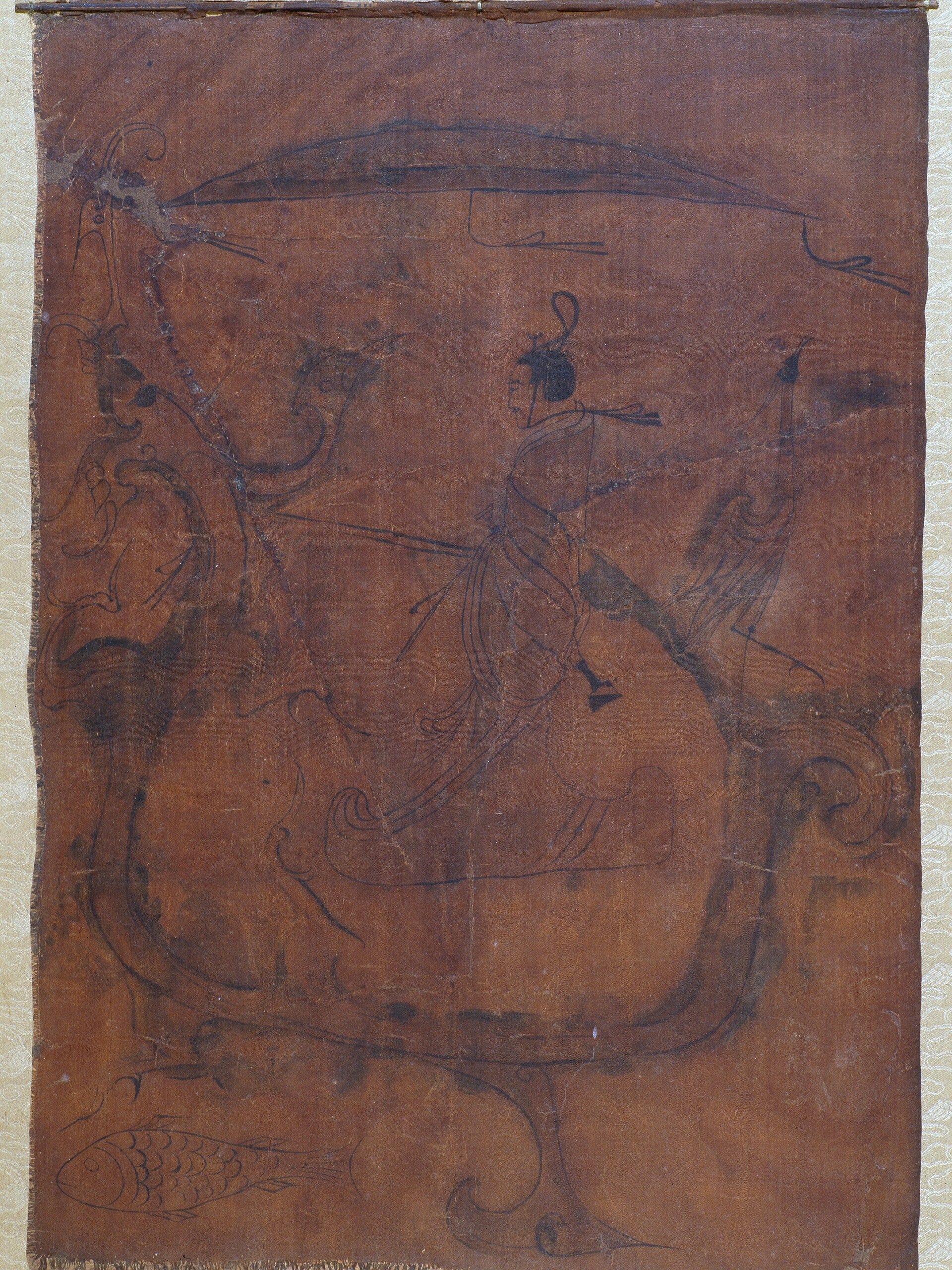
The animal under the rider has the shape of a boat. It is a dragon, long and curved, with a crane perched on its tail and a fish swimming beneath it. Standing on its back, a man in a long robe and a high hat holds the reins.
This Silk Painting of a Man Riding a Dragon comes from Chu, a state of southern China, between the fifth and the third century BC. Only one other painting on silk is known to survive from that period.
Its tomb, at Zidanku near the city of Changsha, was opened twice. In 1942, grave robbers broke in and carried off the oldest silk manuscripts known in China.
But the robbers had missed something. When archaeologists excavated the tomb again in 1973, they found this painting under the lid of the coffin. It was a funeral banner, placed there to guide the soul of the dead toward the world of the immortals.
That purpose explains the rider. Many archaeologists believe he is the aristocrat buried in the tomb. If so, the dragon is a carriage, painted to take its passenger out of the coffin and up to the sky.
At a Glance
Artist: Unknown painter of the state of Chu
Painted: Warring States period (475 to 221 BC)
Medium: Ink on silk
Size: 37.5 × 28 cm (14 3/4 × 11 in)
Where to see it: Hunan Museum, Changsha
11. Anonymous, Saint George and the Dragon, Saint Cadoc's Church, Llancarfan (late 15th century)
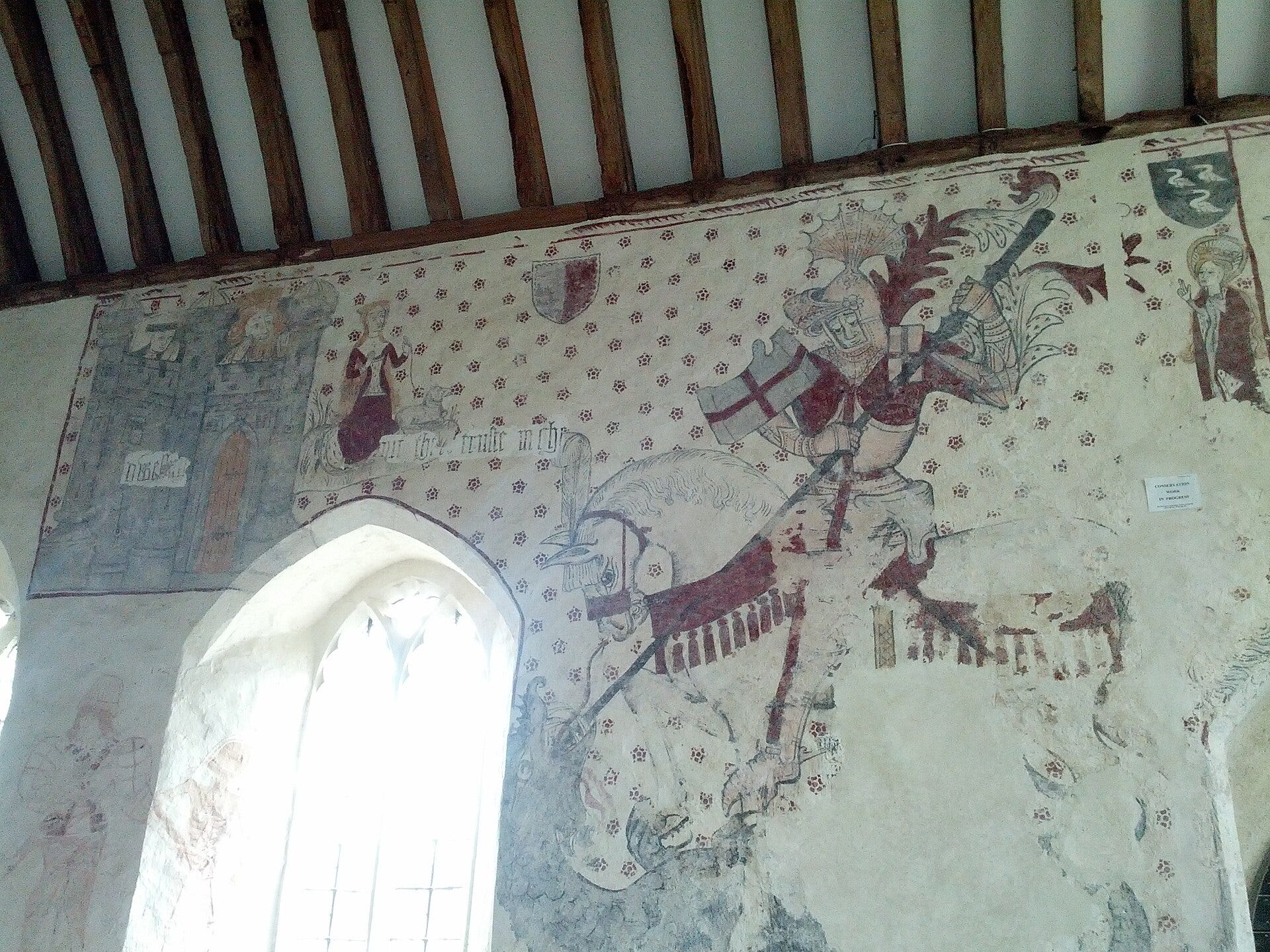
High on the south wall of a village church in Wales, where a little whitewash had flaked off near the rafters, an architect working on repairs noticed a thin red line. Specialists were called in. They began taking the limewash off the wall, coat after coat, to find out where the line would lead.