
For four centuries, a woman who wanted to paint could buy paint and canvas. What she could not easily get was a teacher, a license to open a workshop or a wall in an official exhibition. The women on this page found their way around those refusals, and one of them did it in trousers, with a permit from the Paris police.
Cool Stories About Art is a newsletter to learn art the fun way.
Join 200,000+ readers and get:
10 new art stories / month
The entire archive of content (1,000+ articles)
Comment, ask questions, and chat with other readers
How These Were Chosen
For most of the four centuries covered here, a woman who wanted to paint met closed doors. Guilds licensed who could run a workshop, academies decided who counted as a recognized painter, and teachers kept women out of drawing from the nude.
Each woman on this list changed something in the art of her time: a rank no woman had held, a new kind of picture, or a new way of putting work in front of the public.
Each entry starts from what stood in her way, a rule, a family or a reputation, and shows one work in which she answered it. The countdown runs from twelve to one by how often each name is searched in the United States.
12. Elisabeth Vigée Le Brun, Self-Portrait in a Straw Hat (around 1782)
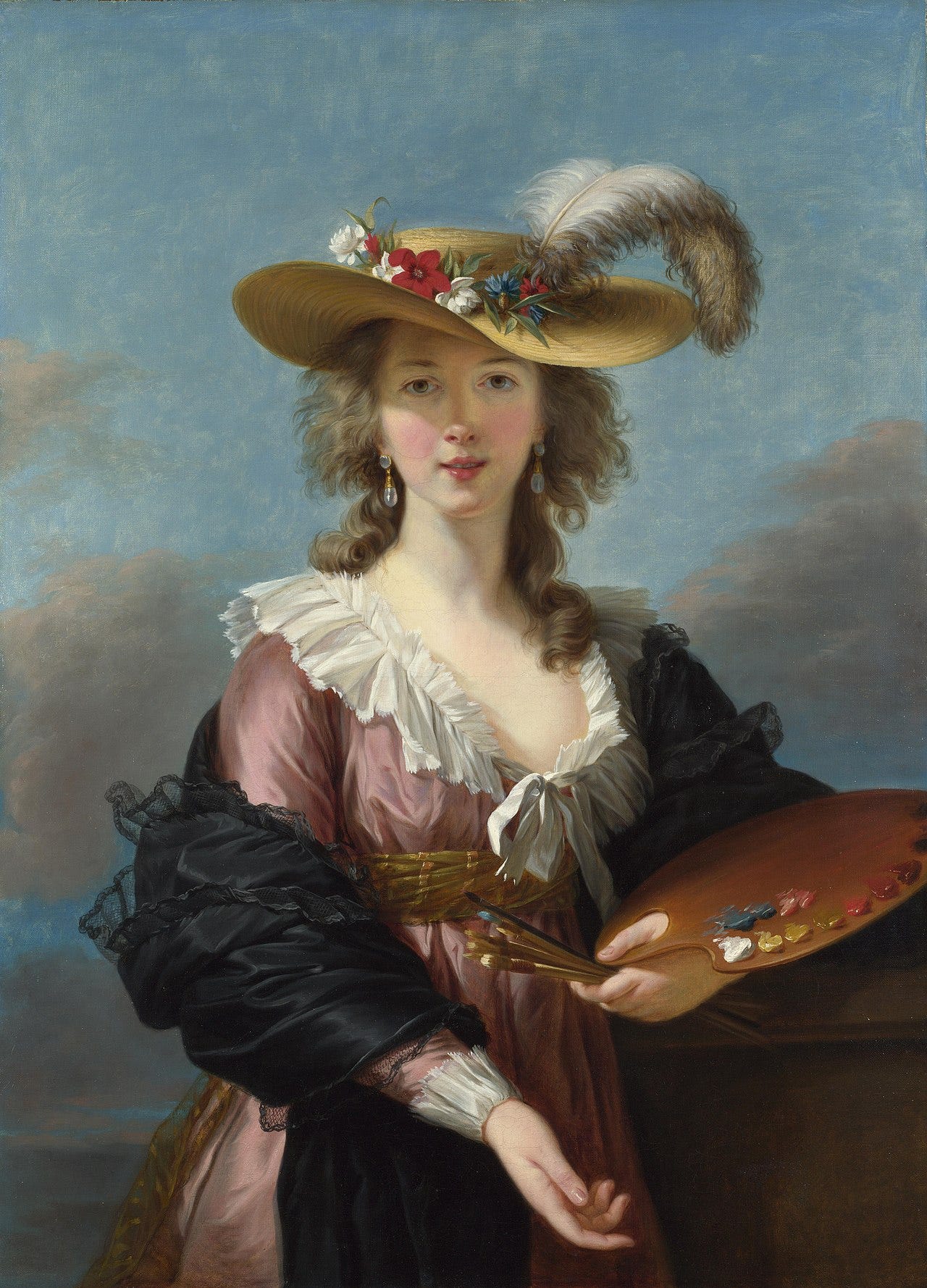
Under the brim of a straw hat trimmed with an ostrich feather and wild flowers, Elisabeth Vigée Le Brun smiles out of her own portrait. Her hair is her own and unpowdered, the palette in her hand carries fresh dabs of white, blue, yellow and red, and she stands in two lights at once, plain daylight and direct sun.
Portraits of fashionable women in the 1780s often showed powdered hair and silk. This one shows a woman painter in the open air with her tools in hand, and the two lights on one face are the problem she chose to take on.
Vigée Le Brun took the idea from Rubens. Shortly before painting Self-Portrait in a Straw Hat, around 1782, she traveled to Antwerp with her husband, the picture dealer Jean-Baptiste Pierre Le Brun, and saw the Rubens portrait then known as The Straw Hat, which sets the same two lights against each other. Back home, she put on a real straw hat, went outdoors and painted herself.
Her way into the Académie royale de peinture et de sculpture, the royal art academy that decided who counted as a recognized painter in Paris, was closed twice over. Its rules shut out anyone tied to the art trade, and her marriage to a dealer theoretically barred her.
The straw hat was shown at the Salon de la Correspondance in 1782 and at the Salon of 1783. The king and queen then intervened on her behalf, and the Académie received her on May 31, 1783, on the same day as another portraitist, Adélaïde Labille-Guiard.
At a Glance
Artist: Elisabeth Vigée Le Brun (1755 to 1842)
Painted: Around 1782
Medium: Oil on canvas
Size: 97.8 × 70.5 cm (38.5 × 27.8 in)
Where to see it: National Gallery, London
11. Judith Leyster, Self-Portrait (around 1630)
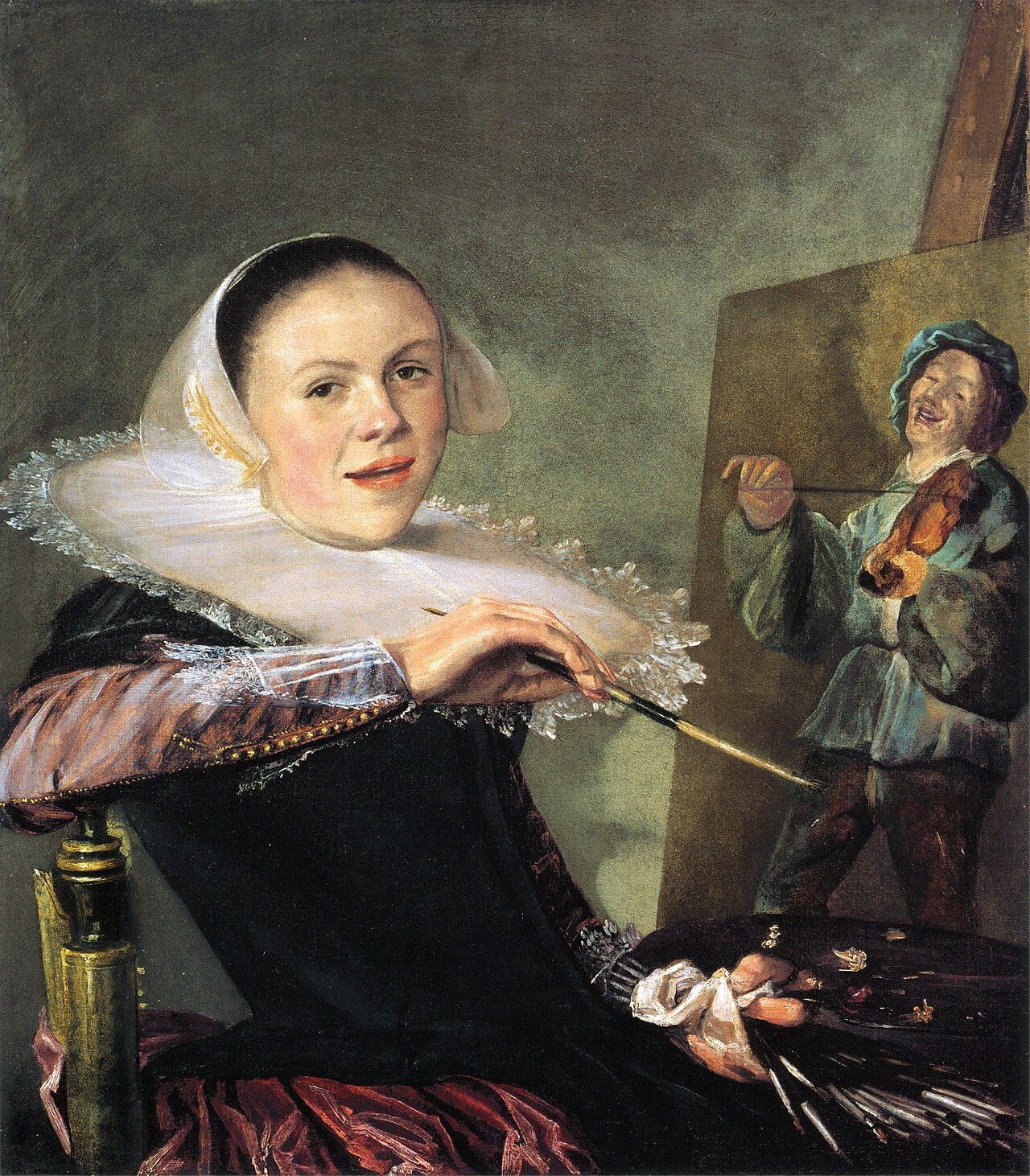
A young woman in a starched lace collar turns from her easel and smiles, her raised brush almost parallel to the bow of the laughing fiddler on her canvas. She is Judith Leyster, around 1630, and by 1633 she was a master of the Guild of Saint Luke in Haarlem, apparently the first woman admitted at that rank.
She signed her pictures, and in her lifetime Haarlem knew her name. A few generations later, nobody did, and the pictures she had signed were hanging under another painter's name.