
For more than two centuries, a few academicians in Paris decided what good art looked like in France: which subjects deserved a large canvas, how a body should stand, what a nude could be. Every great French artist worked inside those rules or around them. Each artist here changed one of them, and only one of those changes was ever undone.
Cool Stories About Art is a newsletter to learn art the fun way.
Join 200,000+ readers and get:
10 new art stories / month
The entire archive of content (1,000+ articles)
Comment, ask questions, and chat with other readers
What the Academy Asked of French Artists
Those academicians formed the Royal Academy of Painting and Sculpture, founded in 1648. It ran a public exhibition in Paris, later called the Salon, where a jury of its members chose the works on show. A painter who wanted state commissions or a name had to be seen there.
The Academy also ranked subjects. History painting, drawn from the Bible, ancient myth and the past, stood highest. The portrait ranked second, scenes of daily life third, landscape fourth, and still life sat lowest. Drawing counted for more than color, and a figure was expected to stand like an ancient statue. Those rules gave French art its discipline, and they gave every ambitious artist something to push against.
The selection rests on one question: did French art work differently after this artist? Three of the twelve are missing from most popular rankings, yet the Academy's story has gaps without them.
12. Élisabeth Vigée Le Brun (1755 to 1842)
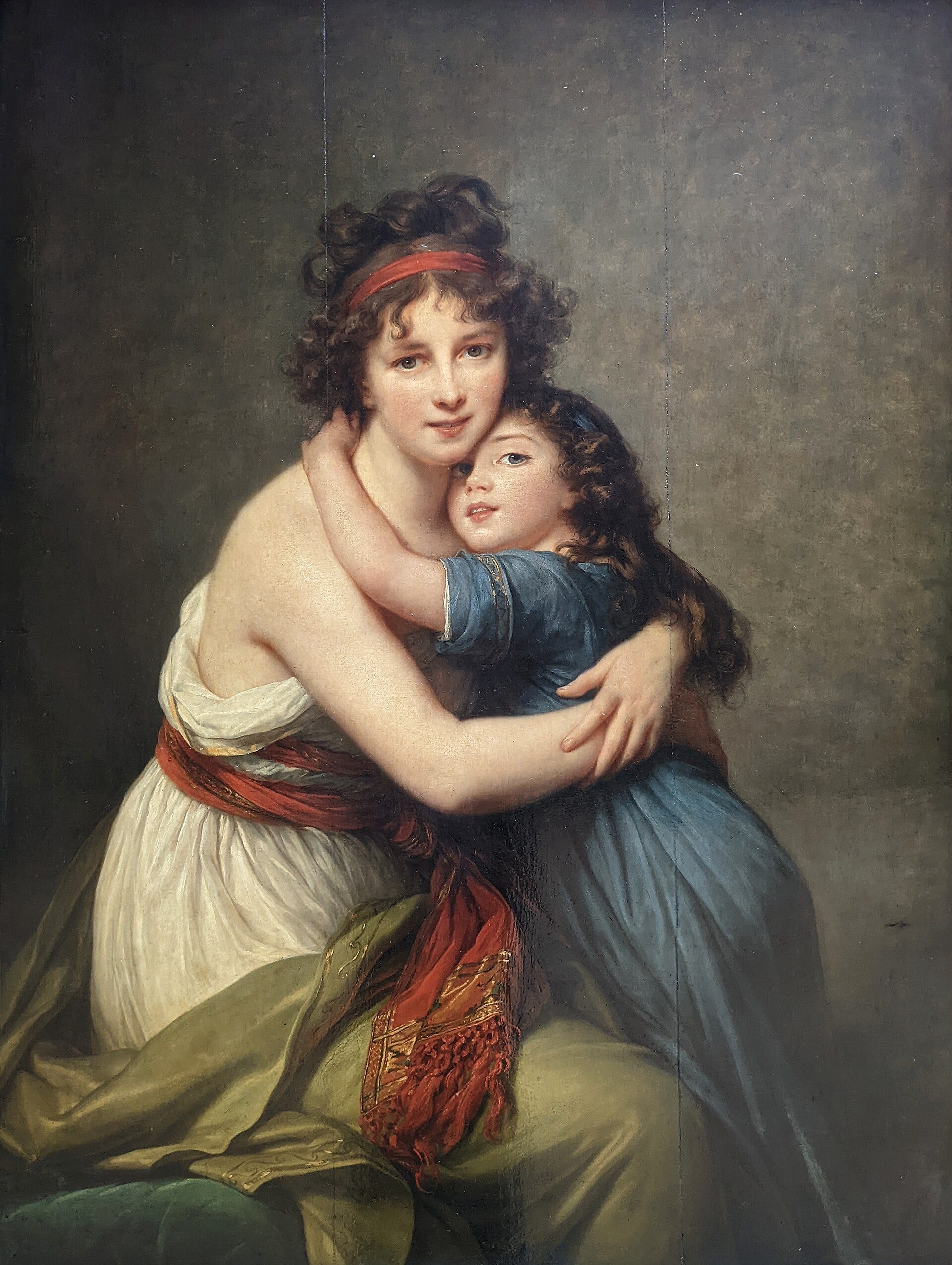
A thin line of white teeth shows between the parted lips of a young mother as she holds her small daughter close. Élisabeth Vigée Le Brun painted this portrait of herself and her daughter Julie for the Salon of 1787, and those few teeth caused a scandal. An anonymous commentator complained that "in smiling she shows her teeth," a habit "particularly out of place in a mother."
The rule she broke was older than the Academy. Since antiquity, an open mouth in a picture had marked the common people, children or the mad, while a king's closed lips expressed power. A portrait hung at the Salon kept its mouth shut.
Getting onto those walls had already cost her a fight. The Royal Academy rarely accepted women, and her marriage to an art dealer should have kept her out. She was admitted in 1783 only because the king and queen stepped in.
The queen had her reasons. Called to Versailles in 1778, Vigée Le Brun became Marie Antoinette's portraitist and painted her and her family more than thirty times. In 1783 she exhibited the queen in a plain muslin dress, a picture soon replaced by a version in silk. Portrait after portrait, she brought into official painting what it had kept out: the simple dress, the tender gesture, the open face.
The Revolution undid it. In 1789 she fled Paris in disguise and spent more than twelve years in exile. For the historian Colin Jones, the open smile had been spreading through Paris since the 1740s until the Terror wiped it off French faces, and the official portrait returned to closed lips for more than a century. I find hers the most moving change on this page, because it is the only one history took back.
At a Glance
Born: 1755, Paris, France
Died: 1842, Paris, France
Nationality: French
Known for: Portraits of Marie Antoinette, self-portraits with her daughter, European court portraits
Where to see the work: Musée du Louvre, Paris, Palace of Versailles, Metropolitan Museum of Art, New York, and National Gallery of Art, Washington
11. Rosa Bonheur (1822 to 1899)
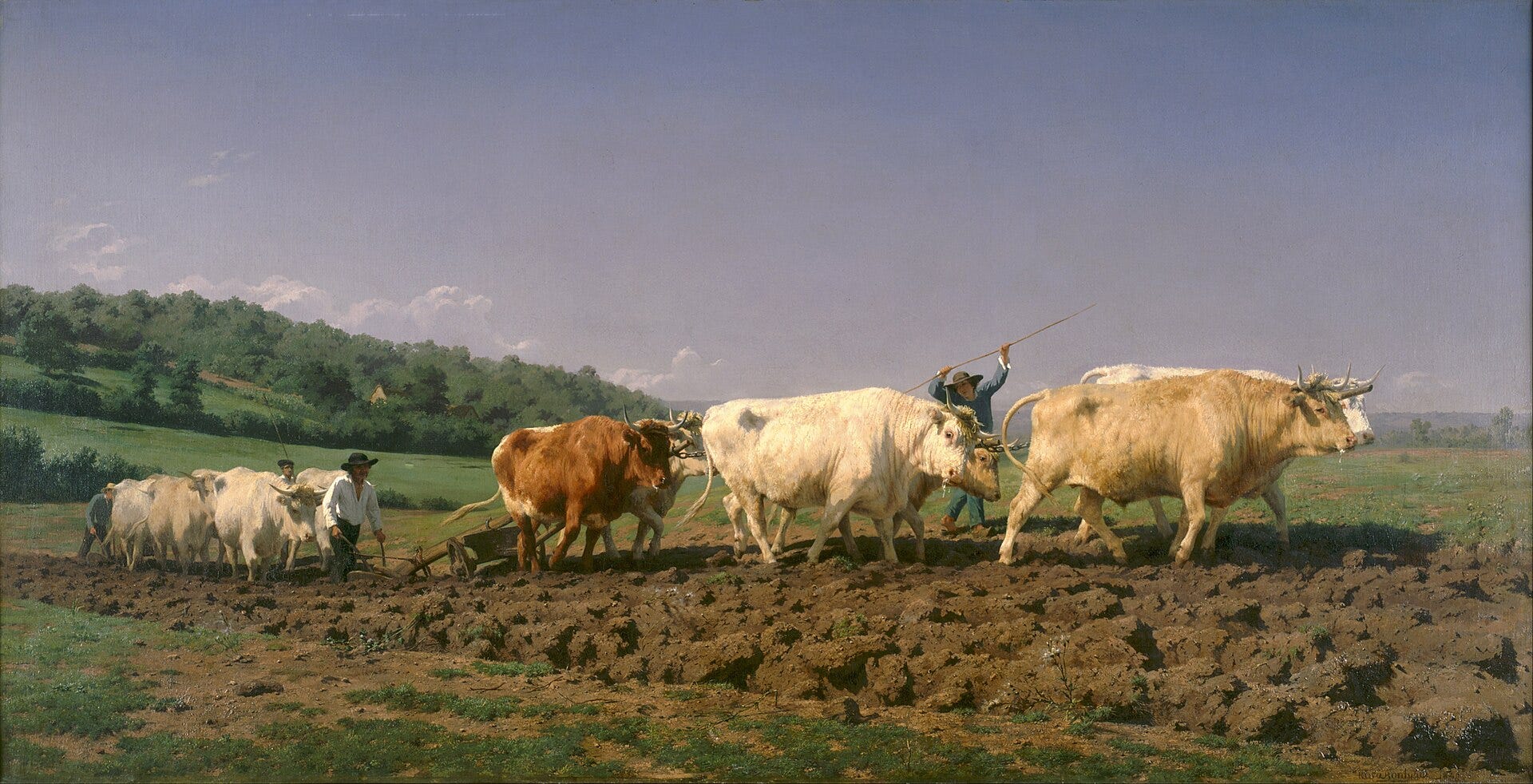
Twice a week for some eighteen months, a woman painter in trousers set up her sketchbook at the boulevard de l'Hôpital horse market in Paris. In her pocket she carried a permit from the police. That paper allowed her to dress like a man, so that she could work among the dealers and their animals without being bothered.