
Famous funeral paintings include a burial so ordinary it started a scandal, an island of the dead that hung in Hitler’s office, and a Spanish count buried by two saints in person. Twelve funerals on canvas, and the one that changed painting forever.
Learn art the fun way
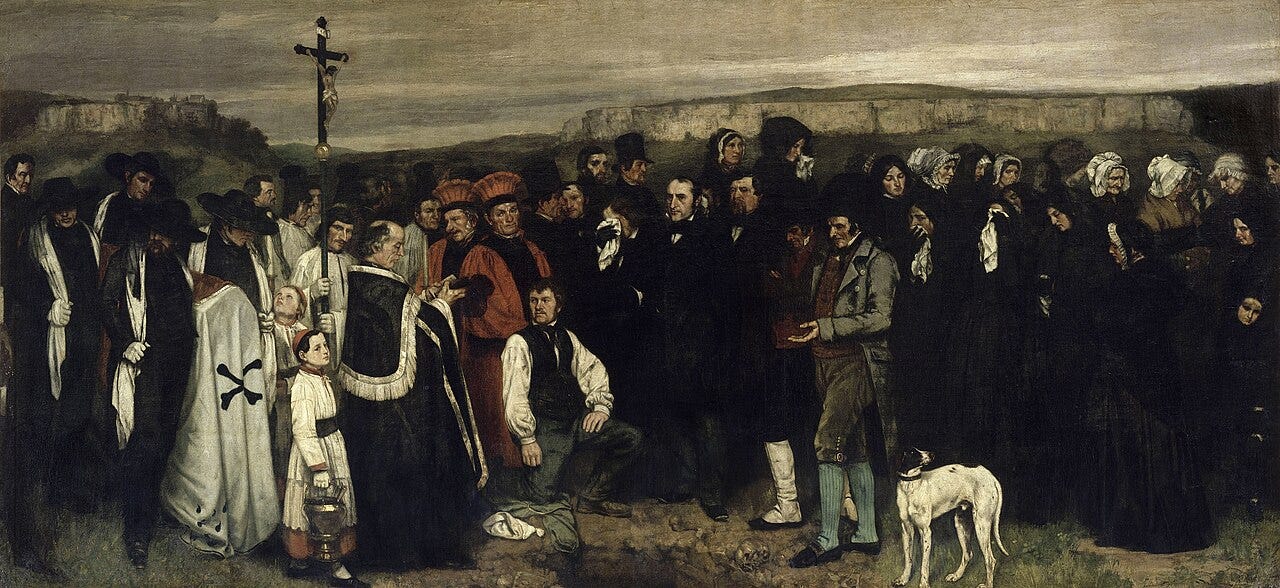
1 | A Burial at Ornans, Gustave Courbet (1850)
Seven meters of canvas for the funeral of an unremarkable man in a small French town, painted at the scale reserved for kings and battles.
Critics were outraged that peasants and a dog got history painting treatment. The man who did it on purpose I go into it in Gustave Courbet.
2 | The Burial of the Count of Orgaz, El Greco (1586)
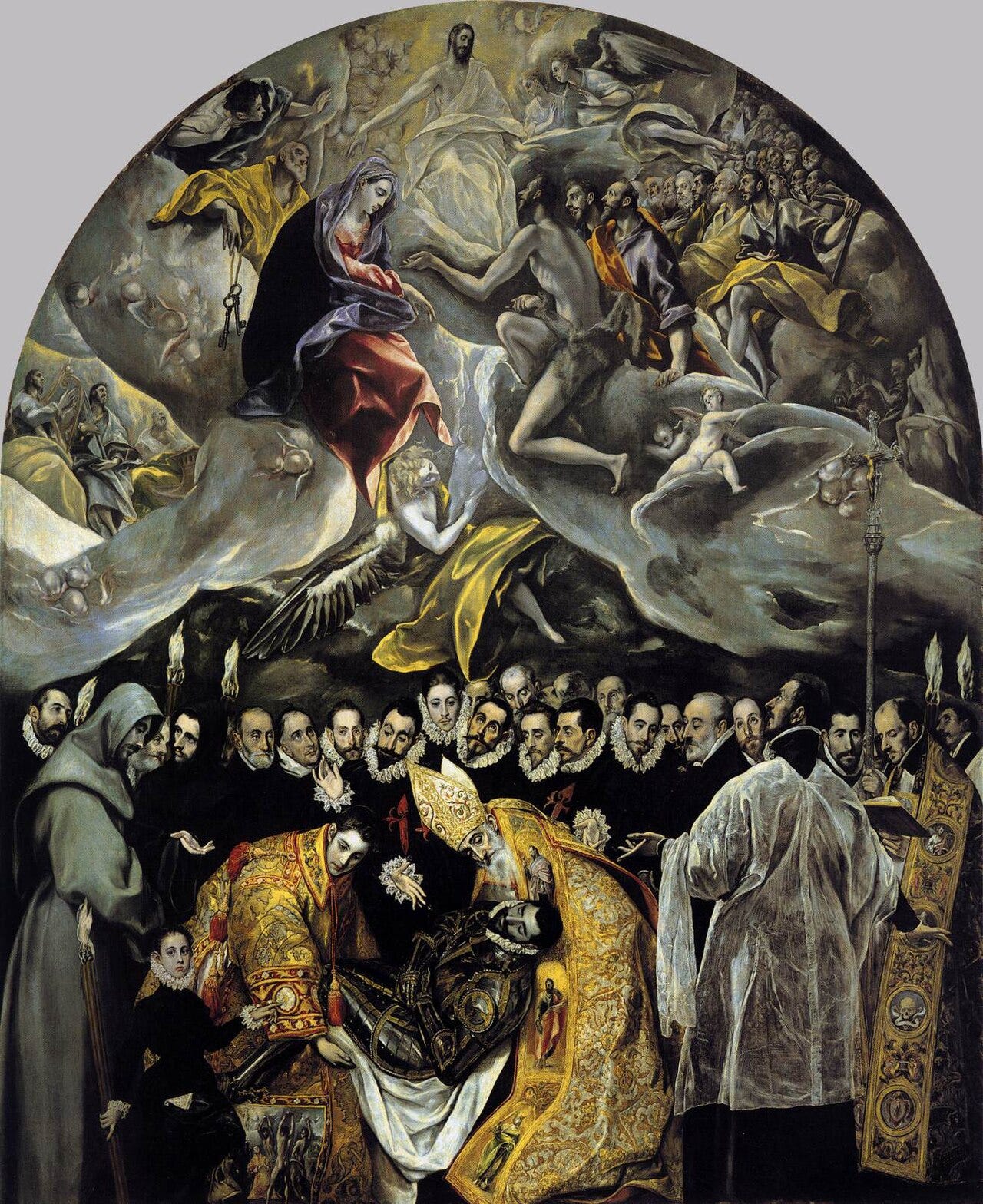
Saint Augustine and Saint Stephen descend in person to lower a Toledo nobleman into his grave, while the local gentry watch in black ruffs.
El Greco painted his own son as the page and put his signature on the boy’s handkerchief. It still hangs in the church it was made for: El Greco.
3 | Isle of the Dead, Arnold Bocklin (1880 to 1886)
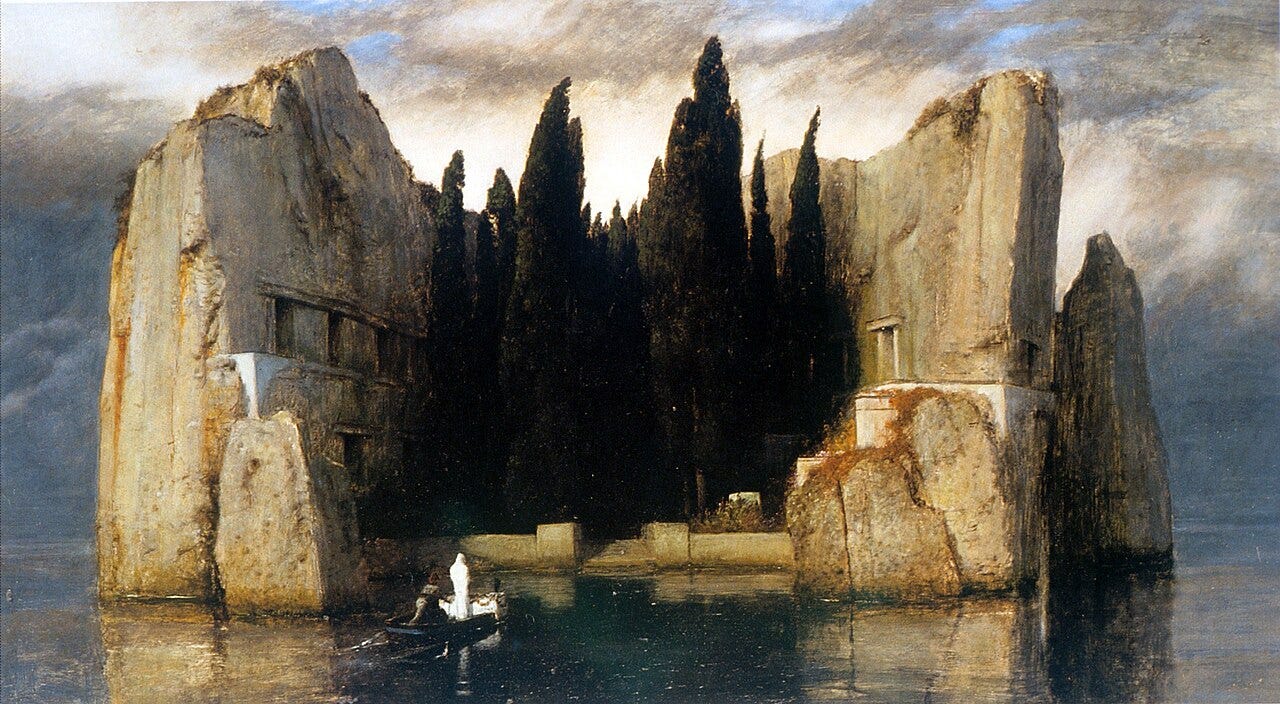
A white shrouded figure ferried toward a rock island of cypresses and tombs. Bocklin painted five versions and called it a picture for dreaming over.
Freud, Lenin and Hitler all owned or displayed copies, and Rachmaninoff wrote a symphonic poem about it. The Swiss Symbolist I cover that in Arnold Bocklin.
4 | The Funeral of Saint Bonaventure, Francisco de Zurbaran (1629)
Monks in white surround the body of a saint while cardinals and a pope stand by, everything lit like a stage in a dark room.
Zurbaran made white wool his signature. The painter of Spanish monasteries More of it in Francisco de Zurbaran.
It was painted around 1629 as part of a cycle for the Franciscan college in Seville, shared with Herrera the Elder. Napoleon’s troops looted it and it has been in the Louvre since.
5 | The Funeral of Shelley, Louis Edouard Fournier (1889)
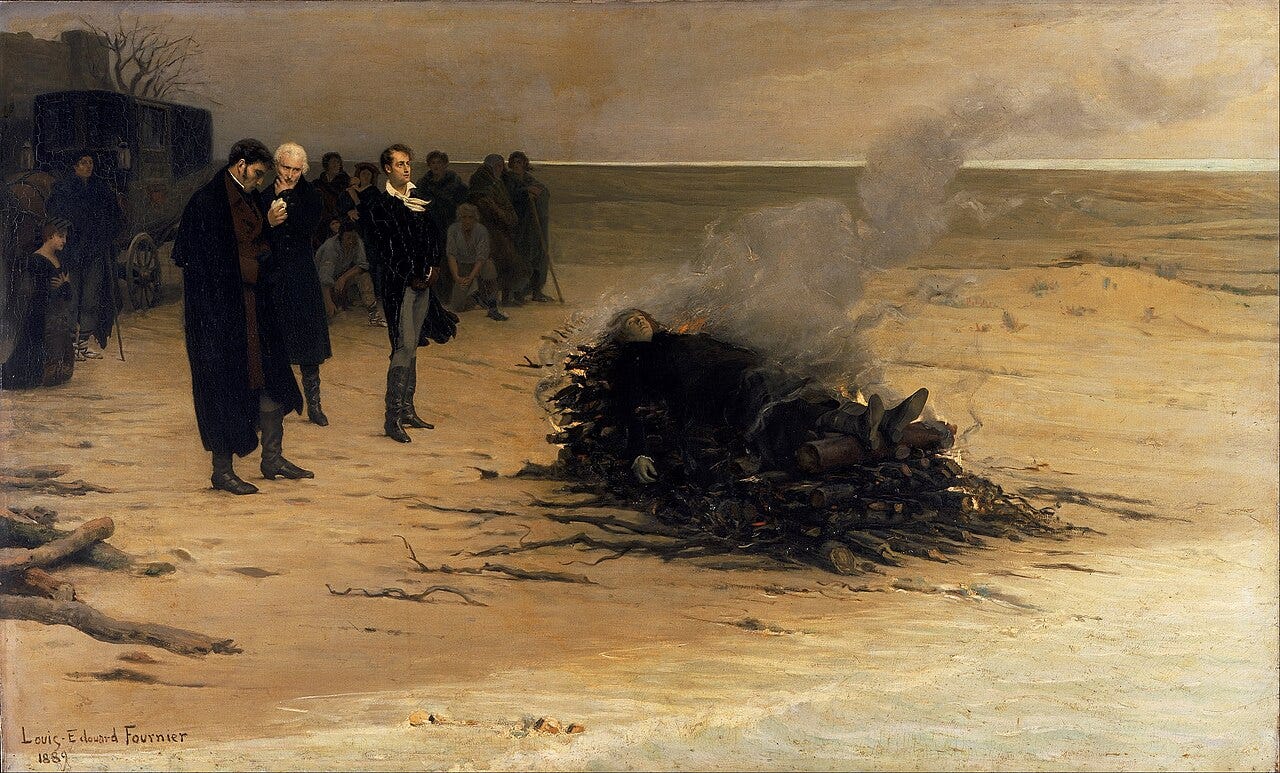
The poet Shelley drowned in 1822 and was burned on a beach near Viareggio. Byron and Trelawny stand watching the pyre in this Victorian reconstruction.
The painting is fiction dressed as reportage: Byron actually left before the cremation ended, and Mary Shelley was not present at all.
6 | The Dead Toreador, Edouard Manet (1864)
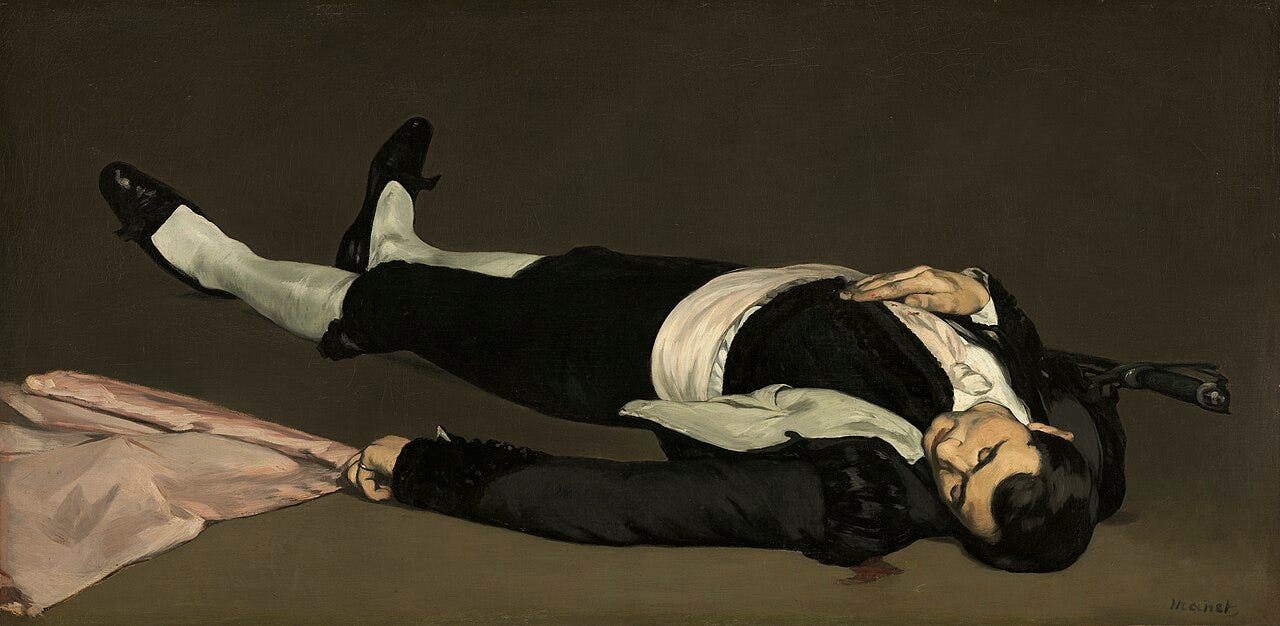
A bullfighter laid out flat on an empty grey ground, seen from his feet. Manet cut this figure out of a larger painting he had destroyed.
Death with no mourners, no priest, no story: modern painting arriving through a funeral without a funeral. I go into his whole story in Edouard Manet.
7 | The Entombment of Christ, Caravaggio (1603)
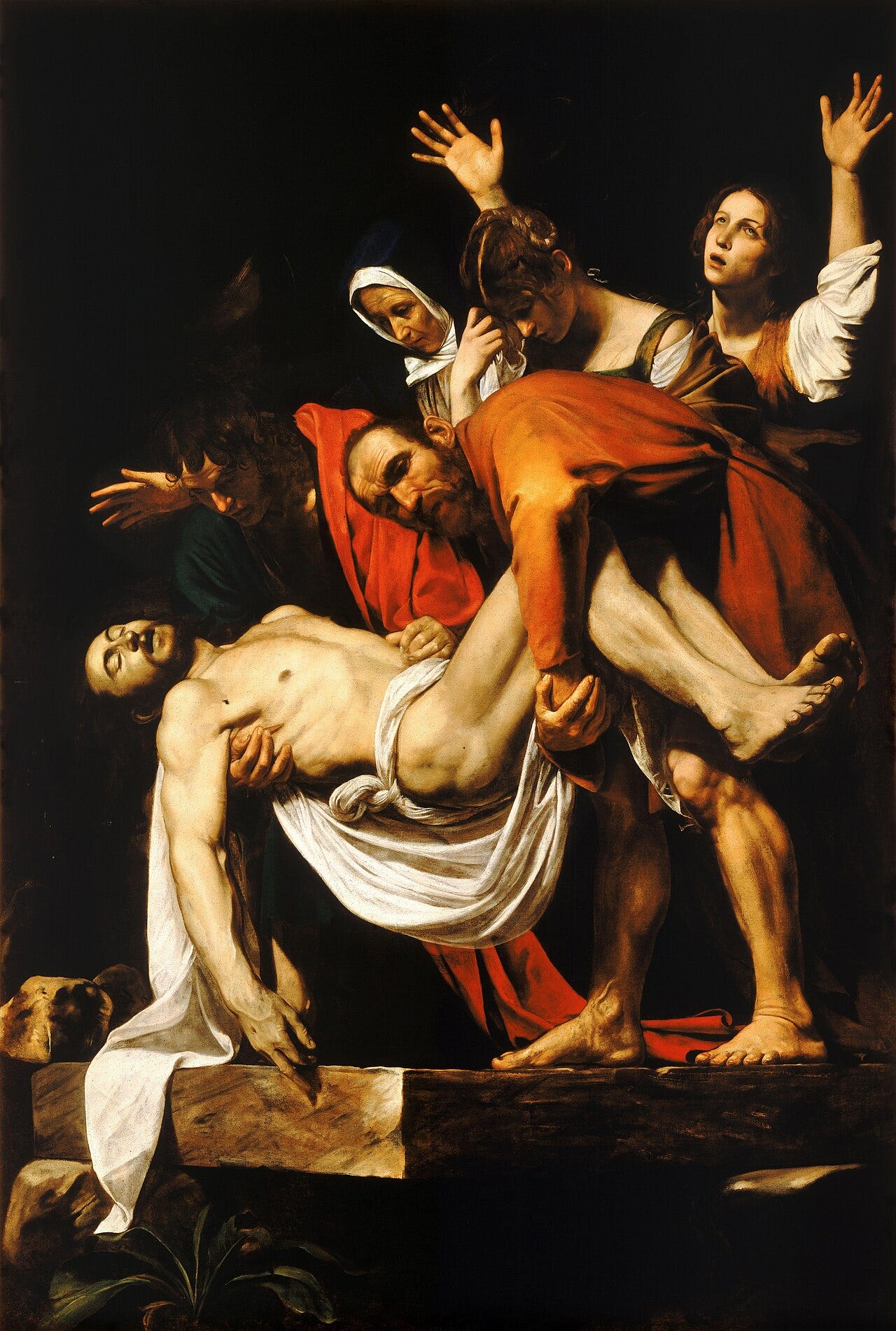
The body slides toward us on a stone slab that juts out of the picture, as if being lowered into our own space. Nicodemus looks straight at the viewer.
It was so admired that Rubens, Fragonard and Cezanne all copied it. The rule breaker The full account is in Caravaggio.
8 | The Triumph of Death, Pieter Bruegel the Elder (about 1562)
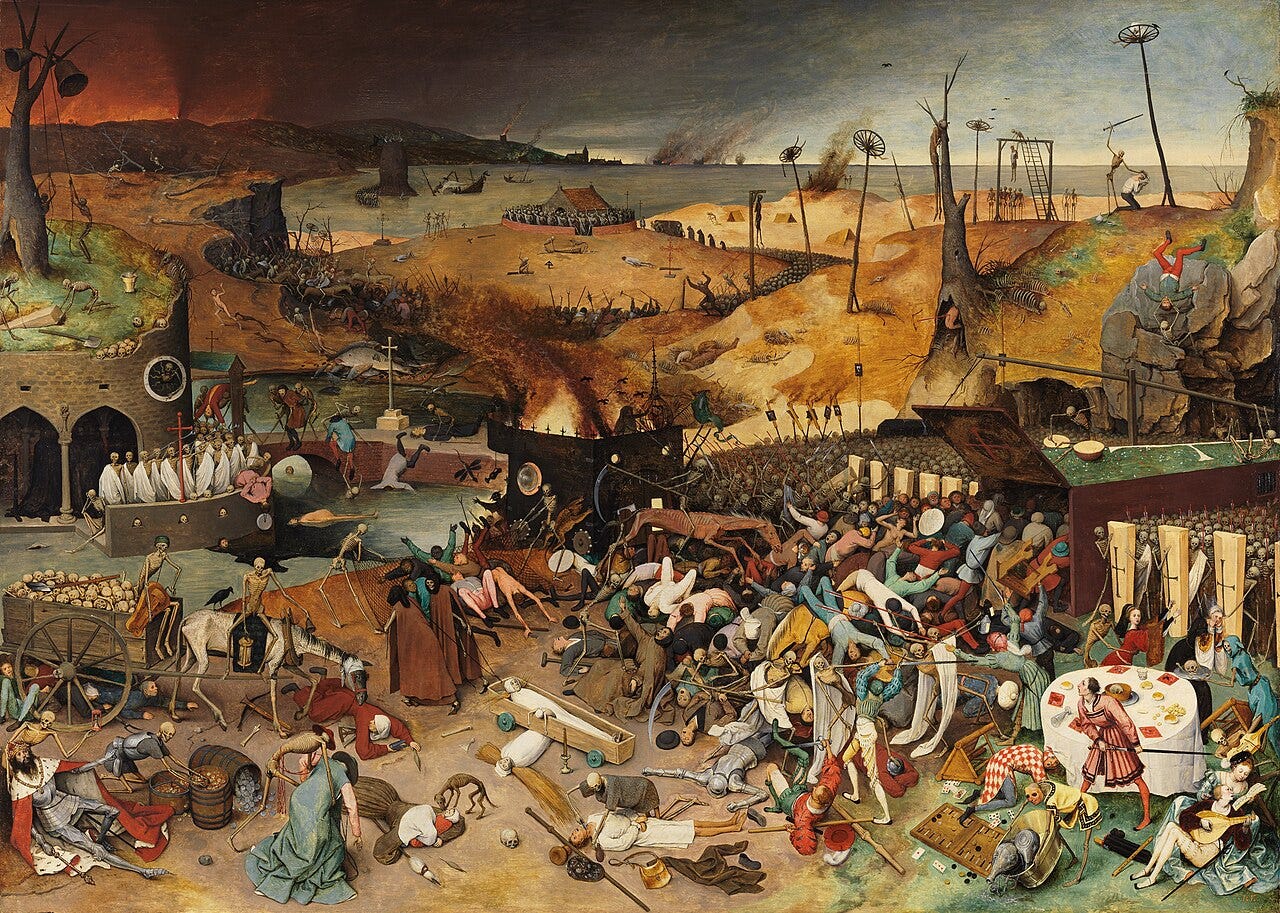
An army of skeletons herds the living into a giant coffin trap, while a skeleton cart hauls skulls across a burning plain. No funeral, just the industry of death.
Bruegel painted it after decades of plague and war in the Low Countries. The Prado restored it in 2018. More on him in Pieter Bruegel the Elder.
9 | Burial of the Sardine, Francisco Goya (about 1815)
A carnival funeral: masked crowds dance behind a banner grinning with a black face, burying a sardine to mark the start of Lent.
Goya turned a folk ritual into something closer to a nightmare. The man who painted Spain’s underside I go into it in Francisco Goya.
10 | The Funeral, Edvard Munch (1890s)
Munch returned to graves and mourners repeatedly after losing his mother at five and his sister at fourteen, painting figures dissolving around an open plot.
Grief was his lifelong subject before anxiety was. The rest of his life is in Edvard Munch.
Munch lost his mother at five and his sister at thirteen, and the funeral scenes come out of that. He drew and painted the same room repeatedly for forty years.
11 | The Funeral of Atala, Anne Louis Girodet (1808)
A young woman is carried to her grave in an American wilderness by a lover and a priest, from a novel by Chateaubriand that all of France had read.
Girodet lit the tomb like a theater and turned a bestseller into the most reproduced Romantic funeral in Europe. It is in the Louvre.
12 | The Funeral of the First Born, Vasily Perov (1865)
A widow drags a child’s coffin through the Russian snow on a sled, her back to us, two surviving children huddled on top.
Perov had buried his own children. Nothing in the painting is symbolic: it is a sled, a coffin, and a road that goes on past the frame.
For more mourning, the Met and the Rijksmuseum both catalogue their burial scenes with the commissions behind them.
What people ask about these burials
Which is the one people name? A Burial at Ornans by Courbet, with El Greco’s Burial of the Count of Orgaz as the sacred equivalent.
Why was Courbet’s burial scandalous? Its size. Painting ordinary villagers at the scale of history painting insulted the hierarchy of subjects.
Who owned copies of Isle of the Dead? Freud and Lenin had prints, and Hitler bought a version. It became the most reproduced image in Germany.
Are the saints in El Greco’s burial real attendees? No. Local legend said Augustine and Stephen appeared to bury the count in 1323. El Greco painted the miracle as fact.
Where do I find them in person? Orsay for Courbet, Toledo for El Greco, the Prado for Bruegel and Goya, the Louvre for Girodet.
And a closing figure: the villagers of Ornans posed for Courbet one by one in his studio, which is why every mourner looks like a portrait. Fifty real people attended a funeral that never happened.
This subject is one thread in a wider theme. See how it fits into Family and the Stages of Life in Painting.