
Around 1300, Giotto covered church walls in Assisi, Padua and Florence with painted stories, and most of them are still where he left them. Almost none of them carry his name. Seven centuries have brought whitewash, an earthquake and a war to those walls. The few panels he did sign were easier to move, and one of them now hangs in Paris.
Cool Stories About Art is a newsletter to learn art the fun way.
Join 200,000+ readers and get:
10 new art stories / month
The entire archive of content (140+ articles)
Comment, ask questions, and chat with other readers
Walls for Friars, Bankers and a Moneylender's Son
Giotto's patrons were Franciscan friars, a family of Florentine bankers and the son of a moneylender. They all asked him for much the same thing: a chapel covered with stories, row above row, each scene holding a single moment from the Gospels or from the life of a saint.
To see why they went to him, it helps to know how painting looked in Italy at the time. Painters still followed Byzantine models, flat figures set against gold. Giotto gave his figures weight and a real space to stand in, with faces that show grief, doubt or tenderness, and that is where his fame comes from.
The twelve works run from Assisi and Pisa in the 1290s to Florence in the 1320s, by way of Padua and Rome. Eight are still on the walls where they were painted, and on the largest of those walls his assistants worked beside him.
12. Saint Francis Receiving the Stigmata (about 1295 to 1300)
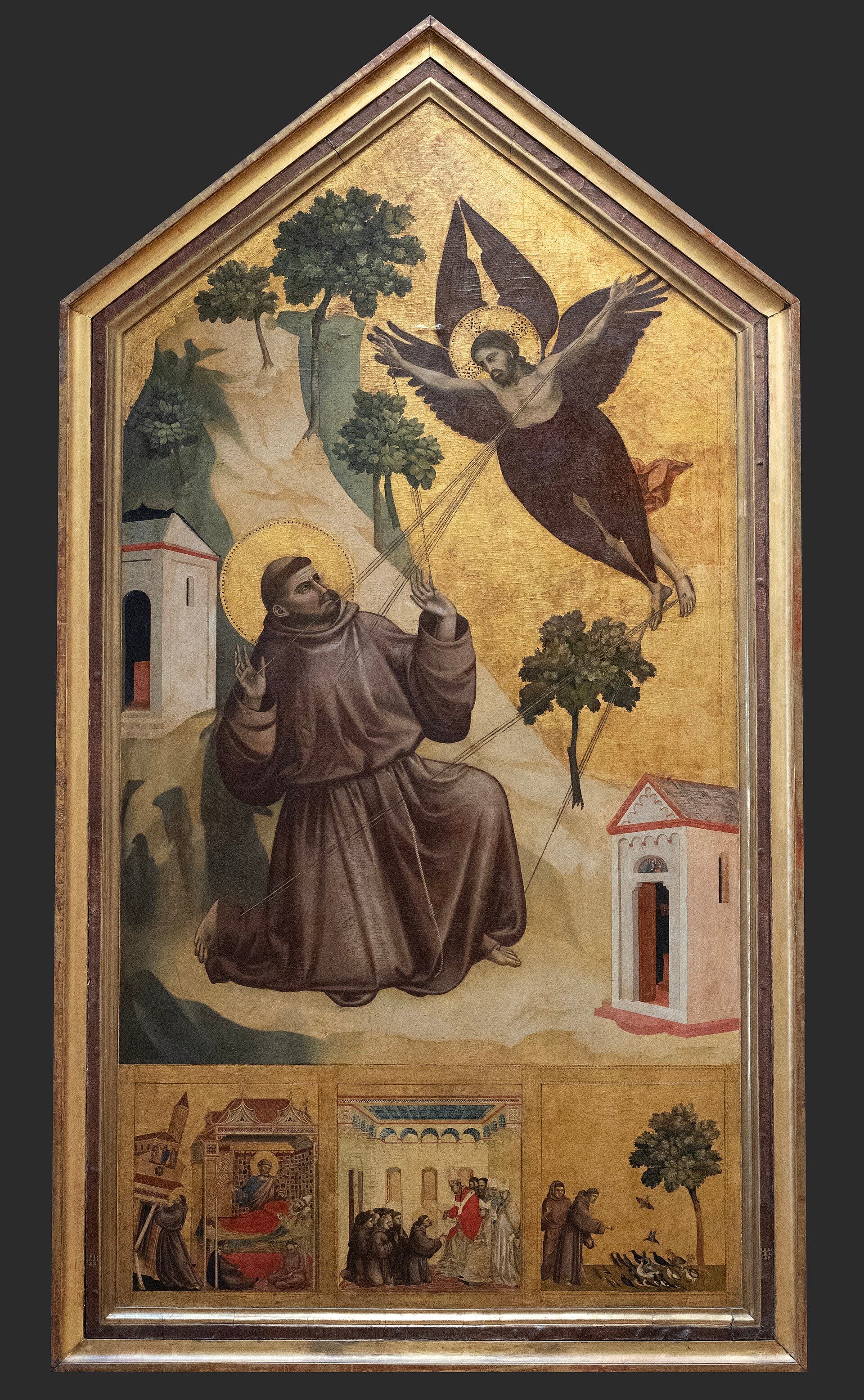
Three Latin words run in capital letters across the foot of the frame: OPUS IOCTI FLORENTINI, "the work of Giotto the Florentine." On Saint Francis Receiving the Stigmata, a panel taller than three meters, that line is one of the rare places where his name appears on a painting.
Above the signature, Francis kneels on a mountain. A winged figure on a cross sends thin rays down to him, and through them he receives the wounds of the crucified Christ.
Giotto painted the panel for San Francesco, the Franciscan church of Pisa, and it stayed in the city until October 1812, when agents of Napoleon took it from a storeroom. It reached the Louvre in 1813 and never went back.
Its signature looks even rarer once the small scenes under the main one are read. Giotto added three of them, among them Francis preaching to the birds, and all three closely follow frescoes in the basilica of Assisi, which bear no name at all.
At a Glance
Artist: Giotto di Bondone (about 1267 to 1337)
Painted: About 1295 to 1300
Medium: Tempera and gold on poplar panel
Size: 313 × 163 cm (123 × 64 in)
Where to see it: Musée du Louvre, Paris
11. Saint Francis Preaching to the Birds (about 1297 to 1300)
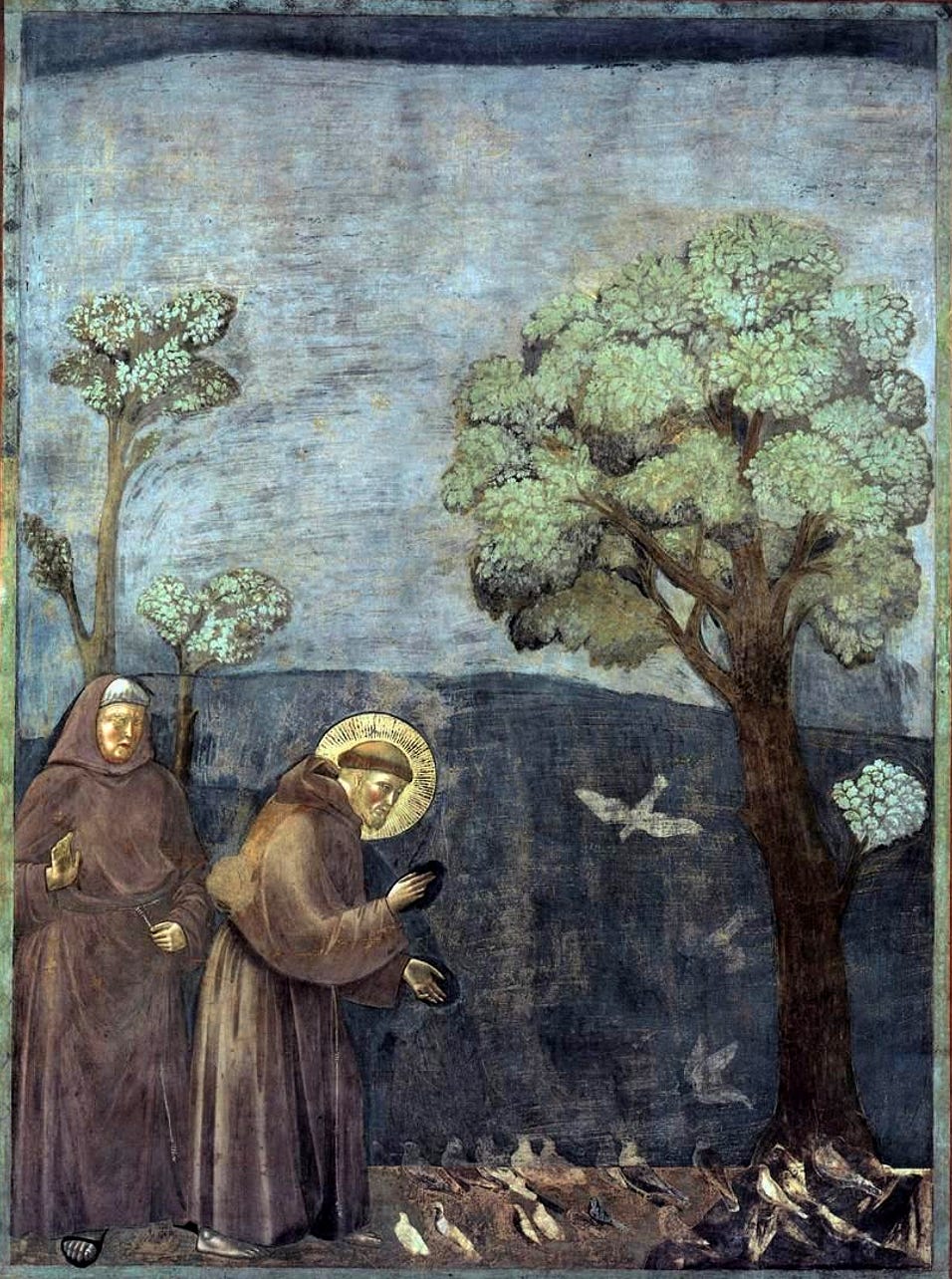
On September 26, 1997, an earthquake brought down two sections of the vault in the Upper Church of San Francesco in Assisi, and four people died, two friars and two restorers working for the state. On the wall below, a barefoot friar still leaned toward a flock of small birds, and nobody had ever written down who painted him.