
Francisco Goya was a salaried court painter, and the pictures that made him famous are mostly the ones nobody asked him to paint. He went deaf in his forties, watched a war tear through Spain and died in exile. These twelve paintings follow him from a design for royal weavers to the last years of an old man still learning.
Cool Stories About Art is a newsletter to learn art the fun way.
Join 200,000+ readers and get:
10 new art stories / month
The entire archive of content (140+ articles)
Comment, ask questions, and chat with other readers
Painting for the Crown, Painting for Himself
For most of his career Goya was a salaried court painter, and the royal portraits paid for everything else. Alongside them he made pictures nobody had asked for, small ones at first, then large ones on the walls of his own house.
Two shocks cut his working life in three. A grave illness left him deaf, and years later an invading army set Spain at war for six years. After each one he painted more for himself, while the commissions went on beside it.
These twelve oil paintings cover that life from his thirties to his eighties, and each catches him at a particular moment: what he had just survived, who he was working for, what he dared. Nine hang in the Prado, in Madrid, and the others in London, Dallas and New York.
12. The Duke of Wellington (1812)
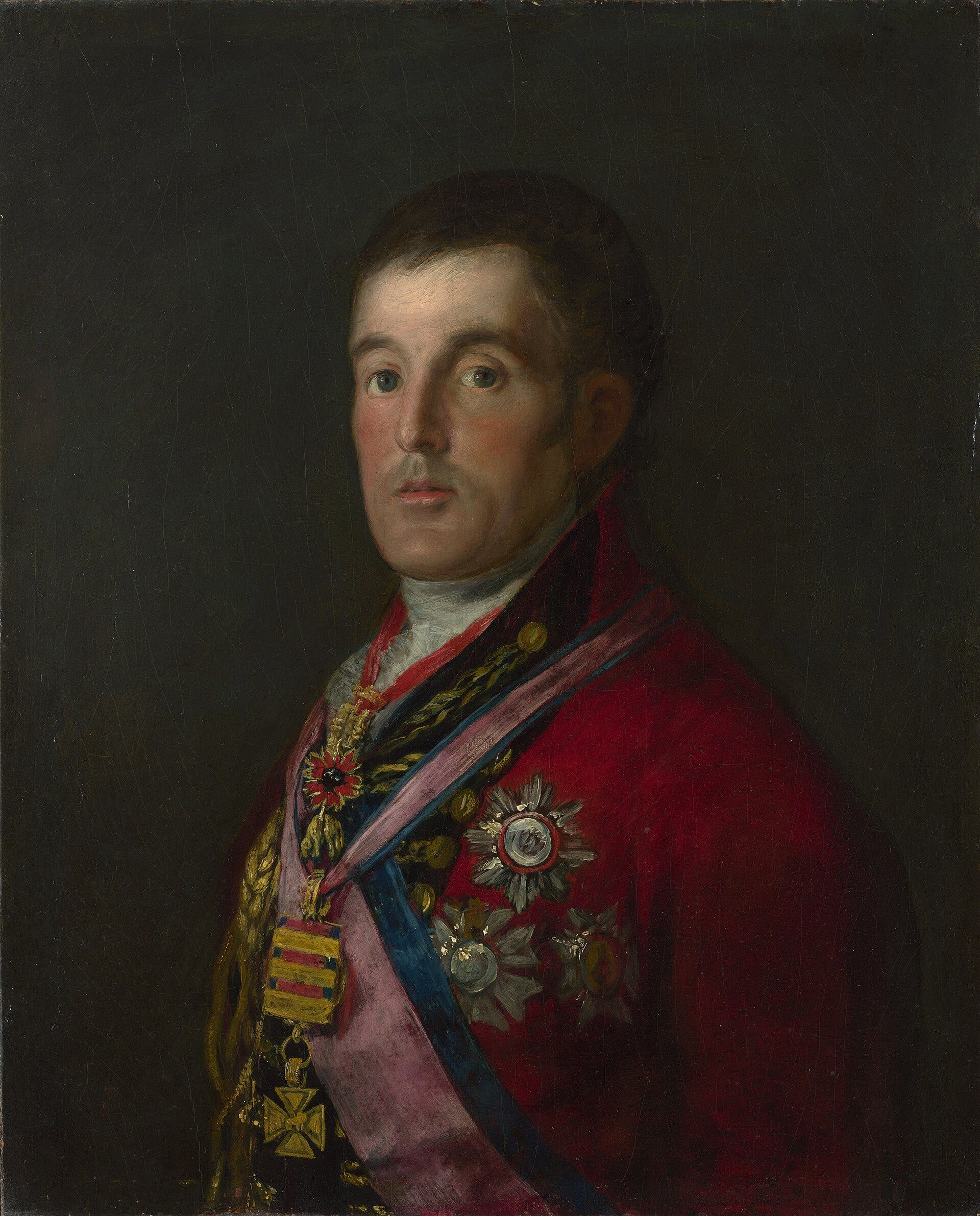
The brown of the bare wood panel shows through the paint around the duke's eyes and mouth, and Goya left it there to hollow them out. The Duke of Wellington is a small portrait, painted fast and probably from life.
Goya painted it in Madrid in August 1812. Spain was four years into its war against Napoleon's armies, and the British general Wellington had just beaten the French at Salamanca and entered the capital. Goya, 66 and still a court painter, portrayed the man who was driving them back.
Wellington's honors kept arriving while Goya worked. That same month he learned that he was to receive the Golden Fleece, and it appears at his neck. Two sashes were added along the way, and each addition forced Goya to move the medals and the gilt buttons around.
Around 1814 Goya took the panel up again and added a gold cross for army service, a decoration created in October 1813, after Wellington had sat for him. It carries three clasps, the ones the duke had won by the summer of 1812. He would earn nine in all, but the picture stops at three. Even here Goya kept his speed: on the cross, the lion is one stroke of yellow.
At a Glance
Artist: Francisco Goya (1746 to 1828)
Painted: 1812, reworked about 1814
Medium: Oil on wood panel (probably mahogany)
Size: 64.3 × 52.4 cm (25.3 × 20.6 in)
Where to see it: National Gallery, London
11. Yard with Madmen (1794)
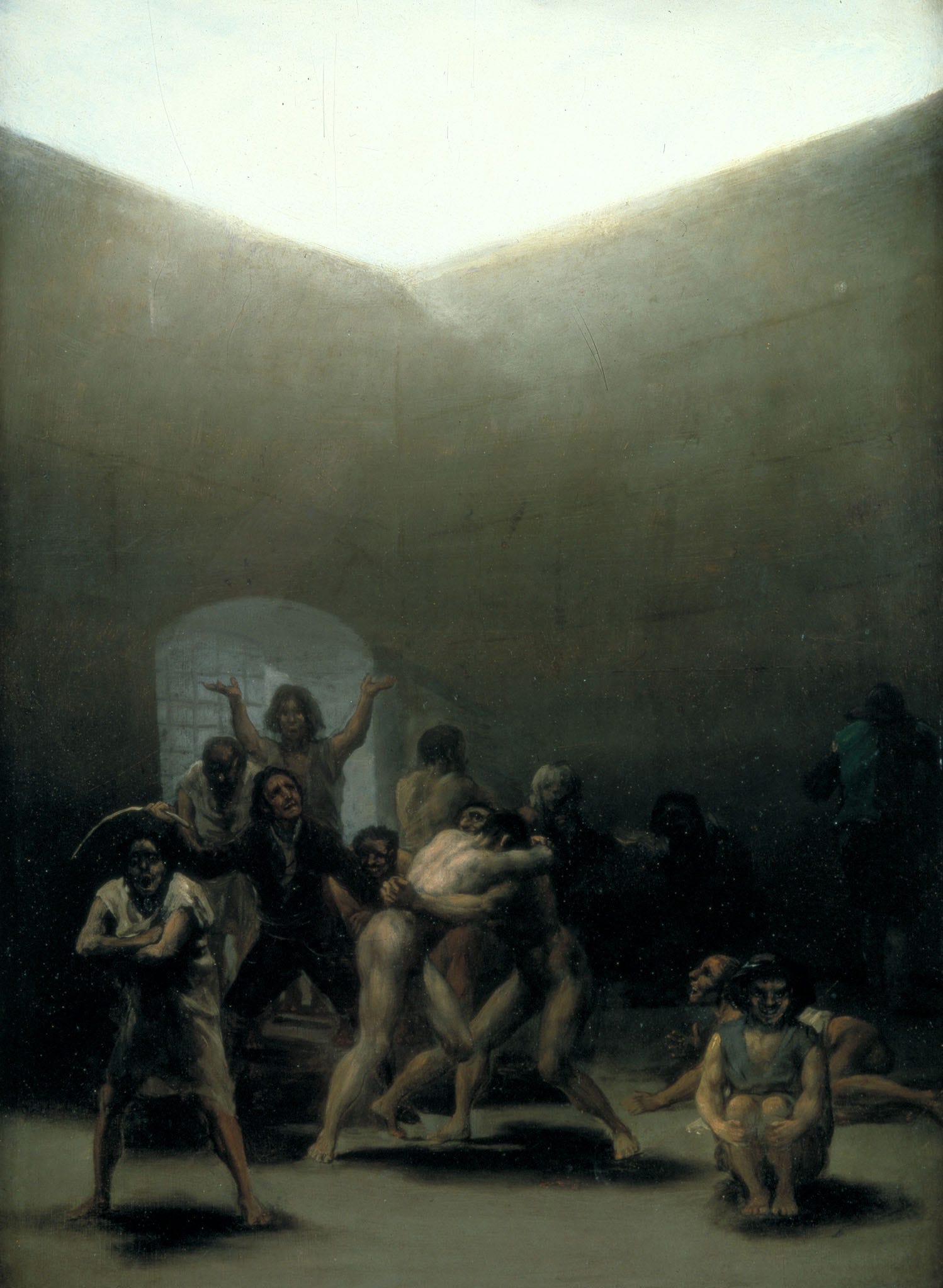
Two naked men wrestle in the middle of a bare yard while a guard whips them, and the men looking on are patients. Yard with Madmen is a small picture painted on tinplate, and Goya described it in a letter before anyone had seen it, adding that he had watched the scene himself, at Zaragoza. Nobody had ordered it, and he had gone deaf only a year or two before.