Famous Impasto Paintings: 9 Built From Thick Paint

The most famous impasto paintings include Van Gogh's Starry Night and Sunflowers, Rembrandt's late self portraits and Soutine's Carcass of Beef. Here are nine, and how each artist built texture straight out of the tube instead of blending it away.

Impasto means paint thick enough to hold its own shadow. Instead of smoothing brushstrokes flat, the painter leaves the ridges standing.

In brief

  • Van Gogh described his own painting as thick impasto like the Monticellis in a letter to his brother Theo in July 1889.

  • Rembrandt loaded lead white so heavily onto his late self portraits that the paint stands physically off the canvas.

  • Chaim Soutine hauled an entire beef carcass into his Paris studio in 1925 and painted it across several canvases as it decomposed.

  • The word impasto comes from Italian, meaning dough or paste.


Learn art the fun way. Free stories every week, no boring lectures.


1. Vincent van Gogh, The Starry Night (1889)

Vincent van Gogh, The Starry Night

Van Gogh painted the view from his asylum window at Saint Remy de Provence in June 1889, building the sky out of thick curling ridges of paint rather than flat brushwork. Each star sits slightly raised off the canvas, catching real light as it falls across the surface.

Van Gogh himself called the finished painting a failure in a letter to his brother Theo. It has hung at the Museum of Modern Art in New York since 1941.

2. Vincent van Gogh, Sunflowers (1888)

Vincent van Gogh, Sunflowers

Van Gogh painted this version in August 1888 for the room where Gauguin would soon stay in Arles. The dying flowers are built up in ridges of yellow so thick that the National Gallery in London describes the effect as evoking the texture of the seed heads themselves.

It is one of five surviving versions of the same subject on public display, alongside copies in Amsterdam, Munich, Philadelphia and Tokyo. The National Gallery in London bought this one in 1924 for 1,304 pounds, funded by the collector Samuel Courtauld.

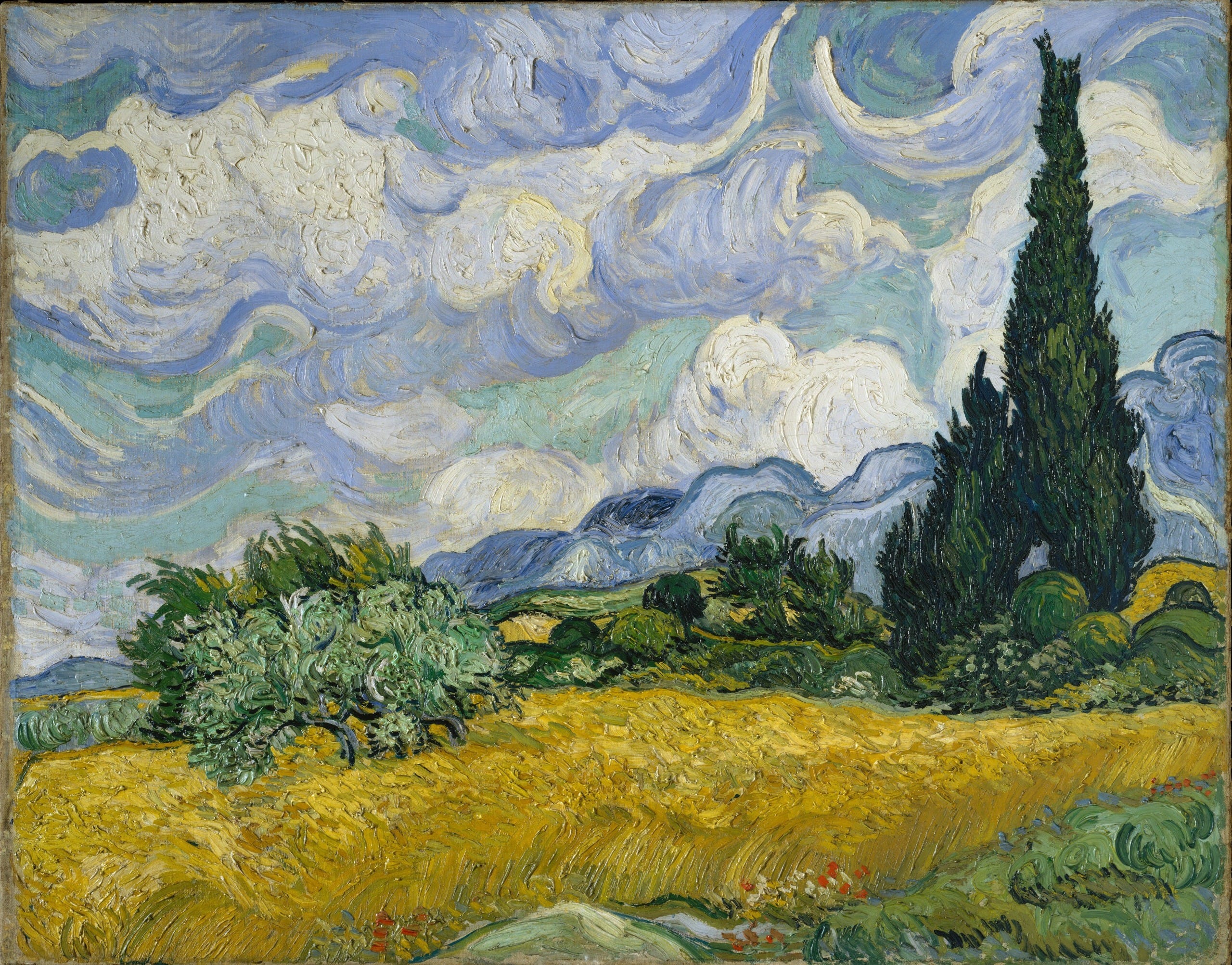
3. Vincent van Gogh, Wheat Field with Cypresses (1889)

Vincent van Gogh, Wheat Field with Cypresses

Painted on site near the asylum at Saint Remy in June 1889, Van Gogh described this canvas to his brother as painted with a thick impasto like the Monticellis, the wheat field rendered as thick as the summer heat it represents.

The Metropolitan Museum in New York bought the painting in 1993 for 57 million dollars. Van Gogh made two more studio versions of the same view that autumn, one of which now hangs in the National Gallery, London.

4. Vincent van Gogh, Wheatfield with Crows (1890)

Vincent van Gogh, Wheatfield with Crows

Van Gogh painted this canvas in July 1890, in the last weeks of his life, laying the wheat down in short thick strokes that run against the darker sky above it.

The painting is long believed to have been Van Gogh final work, though recent research points to another canvas, Tree Roots, as the actual last one. It belongs today to the Van Gogh Museum in Amsterdam, part of the collection passed down through the family of his brother Theo.

5. Vincent van Gogh, Irises (1889)

Vincent van Gogh, Irises

Van Gogh painted this canvas from life in the garden of the Saint Remy asylum within a week of admitting himself in May 1889, using thick curving strokes to build the petals up off the canvas.

The J. Paul Getty Museum in Los Angeles has held the painting since 1990. Some of the purple pigment has faded over the past century, which is why the flowers now read closer to blue than the violet Van Gogh originally mixed.

6. Vincent van Gogh, Self Portrait (1889)

Vincent van Gogh, Self Portrait

Painted in September 1889, likely his last self portrait, Van Gogh built the swirling background out of the same thick paint as his hair and beard, blurring the line between the man and the room around him.

It has hung at the Musee d’Orsay in Paris since the museum opened in 1986.

7. Rembrandt, Self Portrait with Two Circles (about 1665 to 1669)

Rembrandt, Self Portrait with Two Circles

Rembrandt began this self portrait around 1665, when he was about fifty nine years old, and kept returning to it until close to his death. The nose and hair are loaded with paint thick enough to cast a small shadow of their own across the canvas.

Two full circles are painted on the wall behind him, their meaning still debated by historians. The painting has hung at Kenwood House in London since it was left to the public in 1927 by the brewer Edward Guinness, 1st Earl of Iveagh.

8. Rembrandt, Self Portrait at the Age of 63 (1669)

Rembrandt, Self Portrait at the Age of 63

Rembrandt painted this canvas in the year of his death, his hands clasped and his gaze fixed straight ahead. Conservators have found heavy ridges of lead white built up on the cheek, laid over a darker underpainting.

The same heavy paint appears on his turban and collar, while his hands are painted almost smoothly by comparison. It is the last in his long series of self portraits and belongs today to the National Gallery, London.

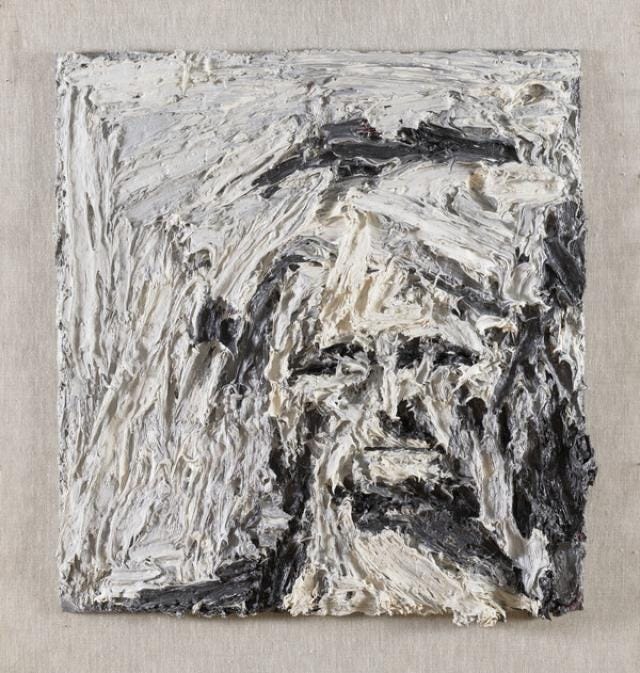
9. Chaim Soutine, Carcass of Beef (about 1925)

Chaim Soutine, Carcass of Beef

Soutine dragged an entire beef carcass into his studio in Paris in 1925 and painted it across several canvases while the meat decomposed, reportedly having it doused in fresh blood when neighbours complained of the smell.

The paint sits in thick red ridges built directly onto the canvas, closer to sculpture than to a flat picture. This version has belonged to the Buffalo AKG Art Museum, formerly the Albright Knox, since 1939.


Where to see them

  • Museum of Modern Art, New York: Van Gogh's The Starry Night.

  • National Gallery, London: Van Gogh's Sunflowers and Rembrandt's Self Portrait at the Age of 63.

  • Metropolitan Museum of Art, New York: Van Gogh's Wheat Field with Cypresses.

  • Van Gogh Museum, Amsterdam: Van Gogh's Wheatfield with Crows.

  • Getty Museum, Los Angeles: Van Gogh's Irises.

  • Musee d'Orsay, Paris: Van Gogh's Self Portrait.

  • Kenwood House, London: Rembrandt's Self Portrait with Two Circles.

  • Buffalo AKG Art Museum, Buffalo: Soutine's Carcass of Beef.


Impasto paintings, what readers ask

  • What does impasto mean? It comes from the Italian for dough or paste, and describes paint applied thickly enough to hold its own texture and shadow.

  • Who is best known for impasto? Van Gogh is the name most linked to the technique today, though Rembrandt used heavy impasto in his late self portraits two centuries earlier.

  • Why did Van Gogh paint so thickly? He worked fast, often finishing a canvas in a single sitting outdoors, and thick paint let him build light and movement directly with the brush instead of blending it in afterward.

  • Is impasto only made with oil paint? Mostly, yes. Oil stays workable long enough to be built up in ridges, while faster drying paints such as tempera or watercolour cannot hold the same texture.


Why the ridges are the point

Impasto is not a mistake left uncorrected.

Every ridge on this list was placed there on purpose, a way of putting real, physical texture between the paint and the light hitting it. Van Gogh described his own technique as thick impasto like the Monticellis in a letter written the same month he painted Wheat Field with Cypresses.

Impasto sits alongside chiaroscuro, sfumato, fresco, pointillism, oil painting, and watercolor in Painting Techniques Explained, a guide to all seven techniques that built these paintings.


Learn art the fun way. Free stories every week, no boring lectures.