
Italian art is centuries older than Italy. For most of that time a painter was Florentine, Venetian or Bolognese, and the country became a single kingdom only in 1861. Yet those rival cities worked out the habits later taught in art schools across Europe, how to give a body weight, a face a thought, a stone a breath. Then artists everywhere set out to break them.
Cool Stories About Art is a newsletter to learn art the fun way.
Join 200,000+ readers and get:
10 new art stories / month
The entire archive of content (1,000+ articles)
Comment, ask questions, and chat with other readers
Rival Cities, Endless Commissions
So many great artists came out of Italy because its cities competed. Popes, princes, bankers and guilds paid for chapels, tombs, altarpieces and portraits, and each new commission had to outdo the last one in the town next door.
That rivalry kept raising the same demand: show something nobody had yet painted or carved. Each answer became the next generation's starting point, from medieval Florence to the First World War.
An artist earns a place here by making an older way of working look out of date. For each one, the chosen work is rarely the most famous, but it sets the change side by side with the habit it broke.
12. Elisabetta Sirani (1638 to 1665)
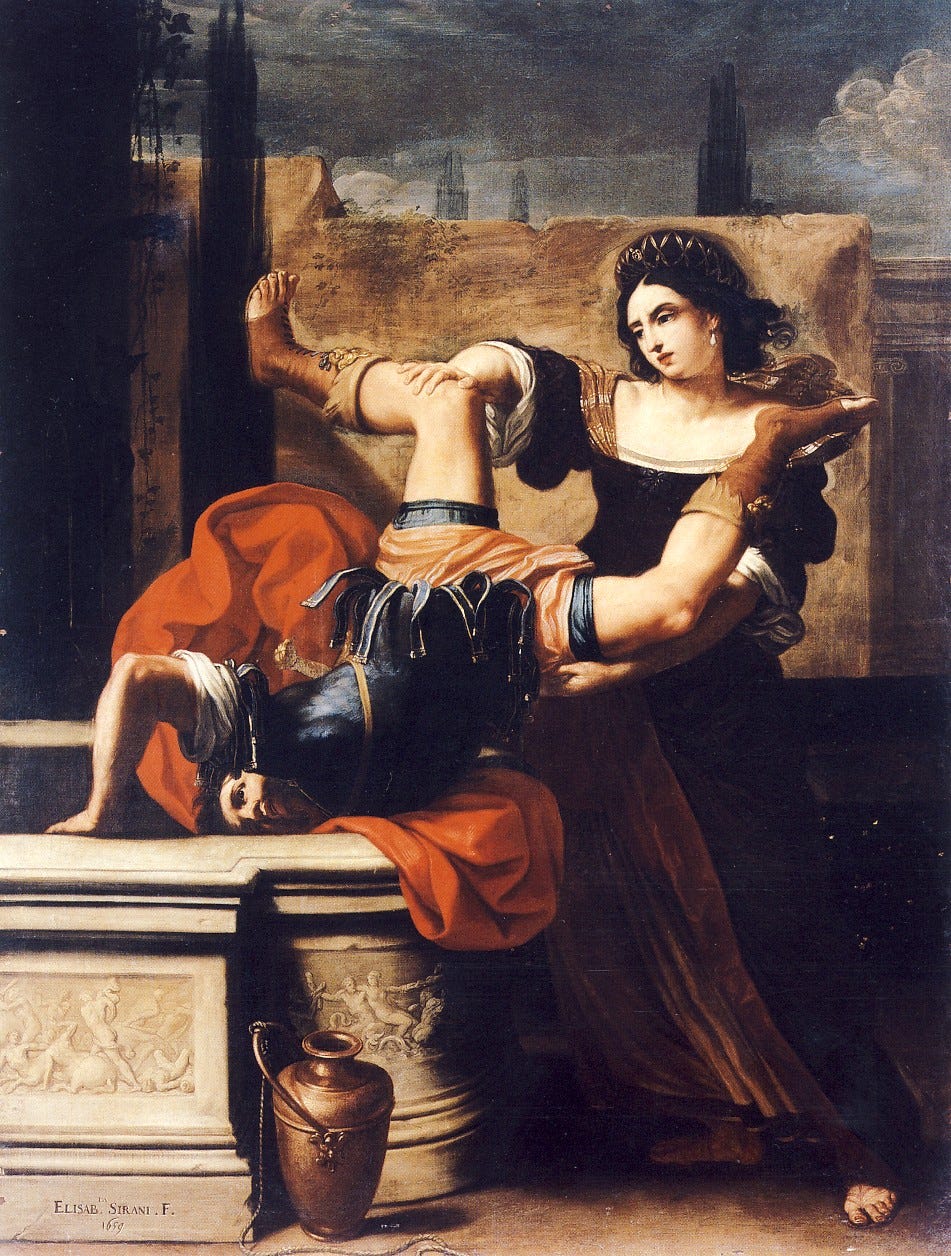
A woman has a soldier by the legs and is tipping him head first into a well. The scene comes from Plutarch. When Alexander the Great took the Greek city of Thebes, one of his captains raped a woman named Timoclea and then demanded her gold. She led him to a well where, she said, it lay hidden, and when he bent over to look, she pushed him in.
Painters who took up the story usually chose its sequel, the calm scene in which Timoclea stands before Alexander, who admires her nerve and sets her free. Elisabetta Sirani, working in Bologna in 1659, painted the push itself. Adelaide Modesti, the historian who wrote the major study of her career, found no earlier picture of that moment.
Sirani had her own reasons to choose a heroine who acts. In Bologna, a woman painter usually worked under the name and control of her father or her husband. When gout stopped her father from painting, she took over the family workshop and supported her parents and three siblings. When rumor claimed that he painted the canvases and she only signed them, she painted in front of visitors.
The workshop she ran never slowed. In about ten years she produced some two hundred paintings, drawings and etchings, and she trained her sisters and more than a dozen other young women, all of whom became professional painters.
That pace stopped in August 1665, when she died at twenty-seven after days of stomach pain. Her father accused the maid, Lucia Tolomelli, of poisoning her. The maid was tried and acquitted, and the autopsy found perforated ulcers, the sign of a natural death. Bologna gave Sirani a public funeral, an honor usually kept for nobles, and on the catafalque stood a life-size effigy of her at the easel, painting.
At a Glance
Born: 1638, Bologna
Died: 1665, Bologna
Nationality: Italian
Known for: Heroines and devotional pictures painted at great speed, and a studio that trained women as professional painters
Where to see the work: Pinacoteca Nazionale, Bologna, Museo di Capodimonte, Naples, and National Museum of Women in the Arts, Washington
11. Umberto Boccioni (1882 to 1916)
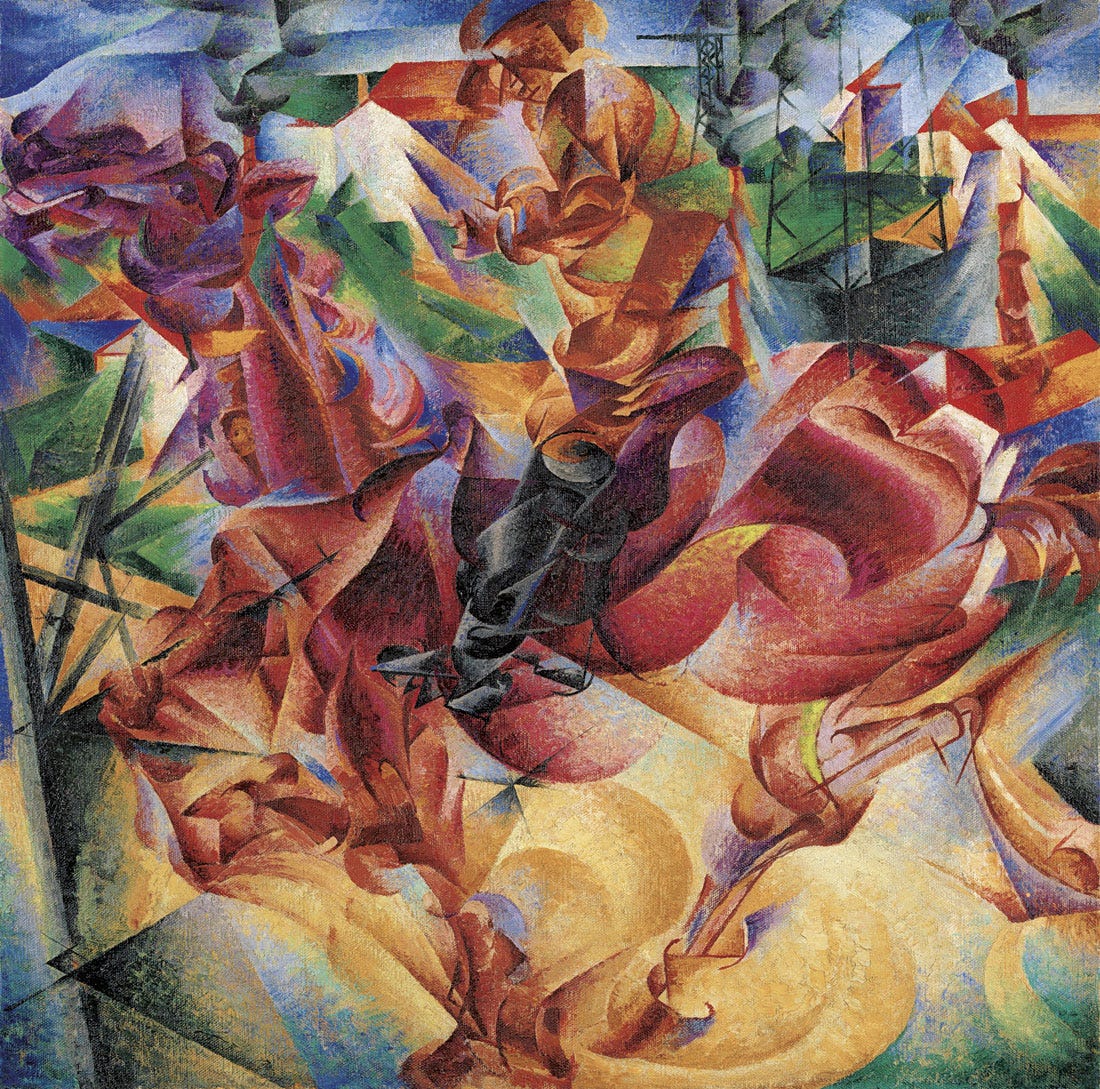
In 1912, a painter in Milan took a horse and its rider and broke them into splinters of red, orange and green, until the animal melted into the pylons and factories around it. He was not painting a horse. He was painting speed. Four years later, it was a horse that killed him.