
Italian painting did not stop at the Renaissance, and it did not start there either. The paintings below run from Giotto in the 1300s to Canaletto in the 1700s, past the names already covered in my Renaissance guide, into the centuries most lists skip.
If you're after the Renaissance heavyweights specifically, the Mona Lisa, the Sistine ceiling, Botticelli's Birth of Venus, I cover those in my Renaissance paintings guide. This list goes earlier, later, and sideways from that one, with different artists and different paintings throughout. For a completely different painting tradition, Famous Chinese Paintings covers twelve masterworks across four centuries. Italian painting keeps going well past this list too, into the 20th century, in Lucio Fontana: The Complete Story.
In 30 seconds:
Giotto, working in the early 1300s, is usually credited with breaking Italian painting away from stiff Byzantine convention.
The Renaissance runs roughly from Masaccio in the 1420s to Titian and Veronese in the mid to late 1500s.
Caravaggio and Artemisia Gentileschi, both working around 1600, push Italian painting into the drama of the Baroque.
Canaletto, in the 1700s, closes out this list a full four centuries after Giotto, painting Venice itself rather than religion or myth.
Several paintings here, including the Calling of Saint Matthew, still hang in the exact chapel they were painted for.
1. The Kiss of Judas, Giotto di Bondone (c. 1305)
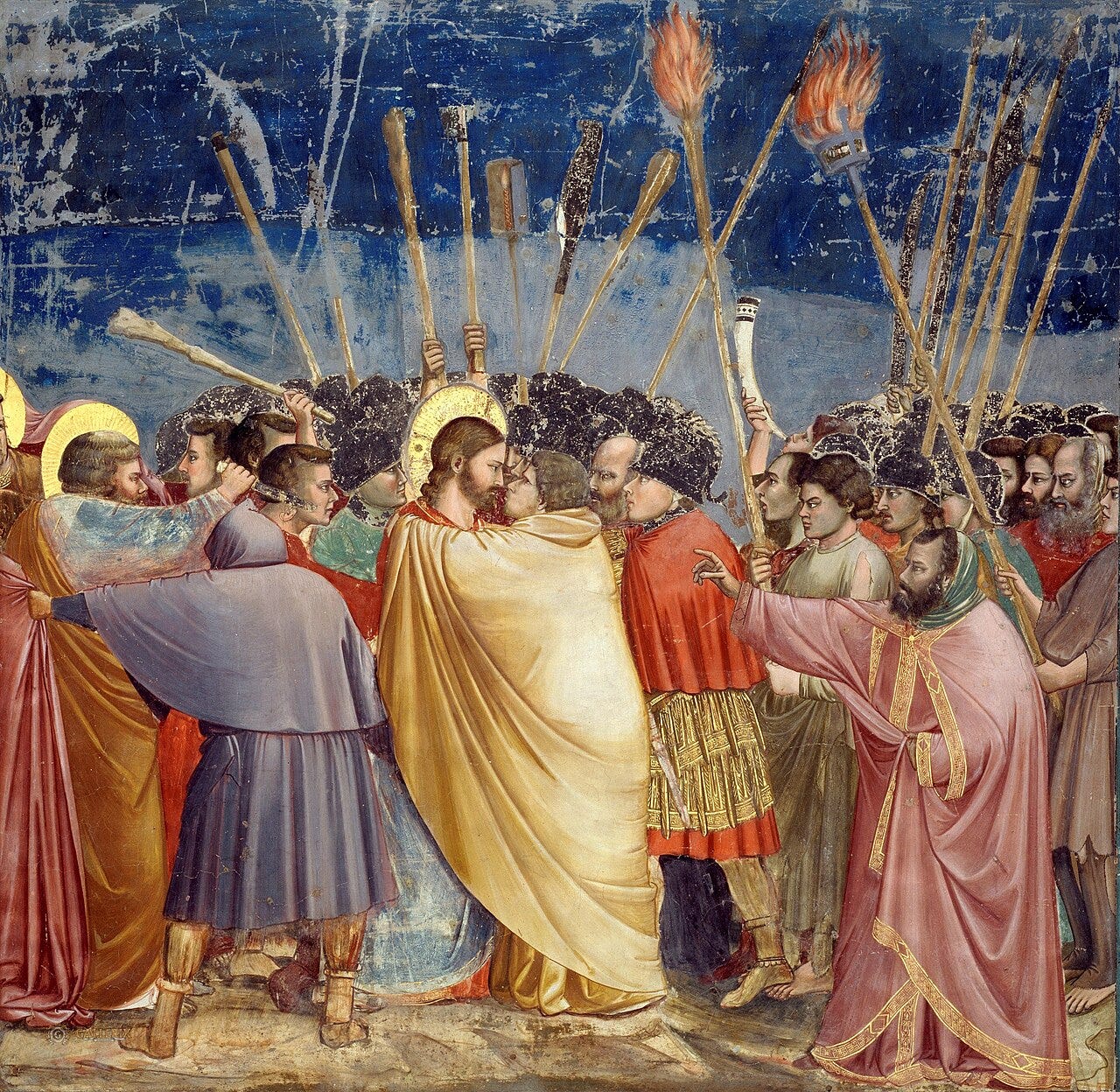
Painted on the wall of the Scrovegni Chapel in Padua, commissioned by a banker named Enrico Scrovegni who was trying to buy his family some distance from his father's reputation as a usurer. Giotto covered the whole chapel with scenes from the life of Christ and the Virgin, this one among the most famous.
Before Giotto, figures in Italian painting were mostly flat and formal, following Byzantine convention. Here Judas wraps his cloak fully around Christ, their faces close, eyes locked. Giving painted figures that kind of physical weight and eye contact was new. Historians treat this chapel as one of the starting points of everything that follows on this list.
2. The Tribute Money, Masaccio (c. 1425)
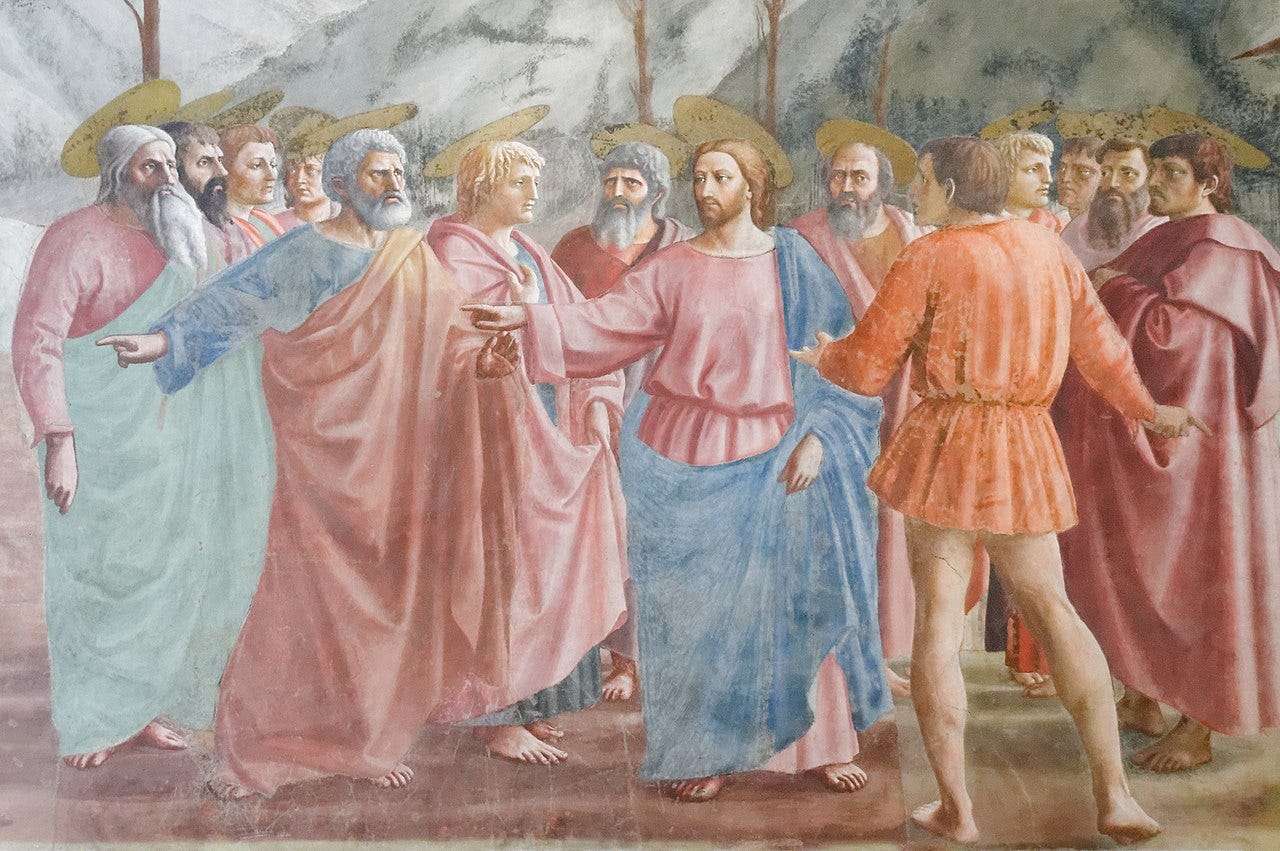
One fresco, three moments of the same story: a tax collector demands payment at the city gate, Christ tells Peter to find a coin in a fish's mouth, then Peter hands the coin over. Masaccio paints all three in a single continuous scene rather than splitting them into separate panels.
It is also an early full use of linear perspective with a single vanishing point, with every line in the architecture converging on Christ. Masaccio died in Rome in 1428, in his late twenties, and never finished the Brancacci Chapel he was painting. Filippino Lippi completed parts of it decades later. I explain how the technique works in what is perspective in art.
3. The Annunciation, Fra Angelico (c. 1440-1443)
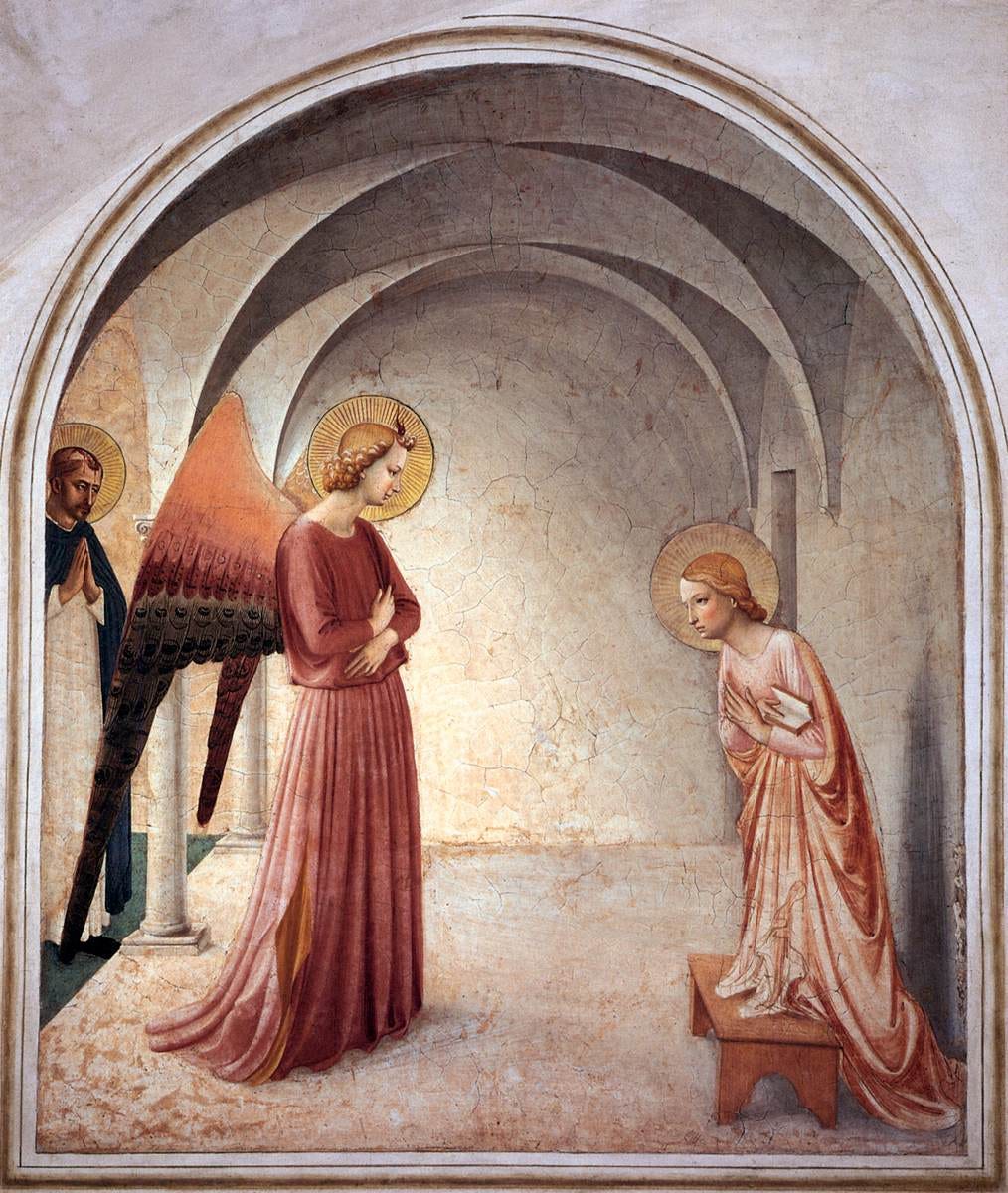
This version of the Annunciation is painted straight onto the wall of a monk's cell in the Convent of San Marco in Florence, one of about forty frescoes Fra Angelico and his workshop made for the individual cells. It was never meant for the public. It was meant for one friar at a time, alone, in prayer.
Fra Angelico was a Dominican friar himself, which is part of why the barred loggia behind the angel echoes the convent's own cloister architecture rather than a grand palace. He painted it as a wall a monk would actually look at, not a painting for a crowd.
4. The Flagellation of Christ, Piero della Francesca (c. 1455-1460)
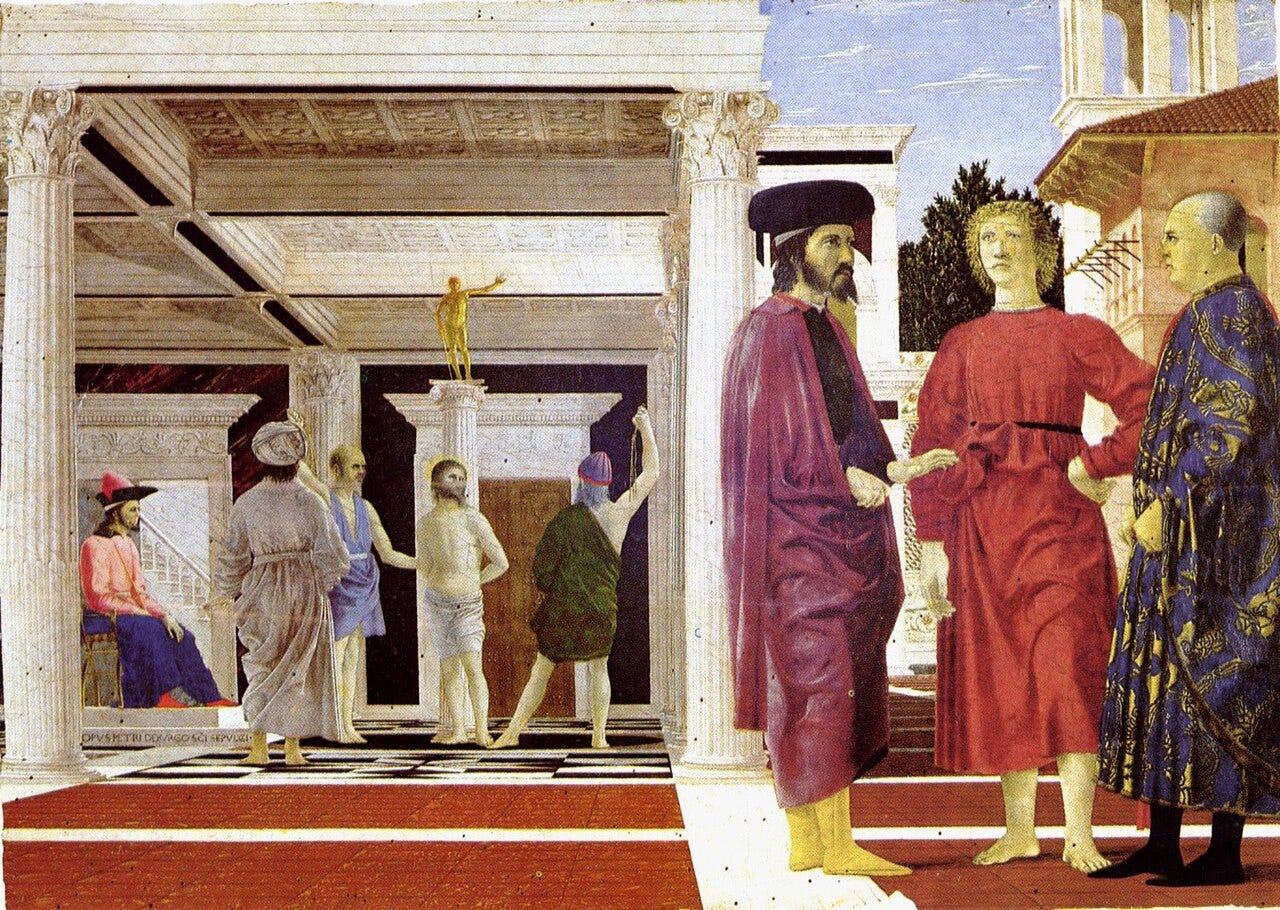
The flagellation itself happens small, in the background, inside a precise architectural space built on exact mathematical perspective. In the foreground, three men stand talking, closer to the viewer and better lit than Christ. Historians have argued for centuries over who they are and why they are there.
The painting is small, about 58 by 81 centimeters, which makes the confidence of its perspective more striking. Piero della Francesca was also a mathematician who wrote treatises on geometry and perspective, and this panel reads like a demonstration as much as a devotional image.
Piero's contemporaries and rivals get their own deep dives on this site. I go further into Caravaggio's Rome in my piece on Caravaggio.
5. The Lamentation over the Dead Christ, Andrea Mantegna (c. 1480)
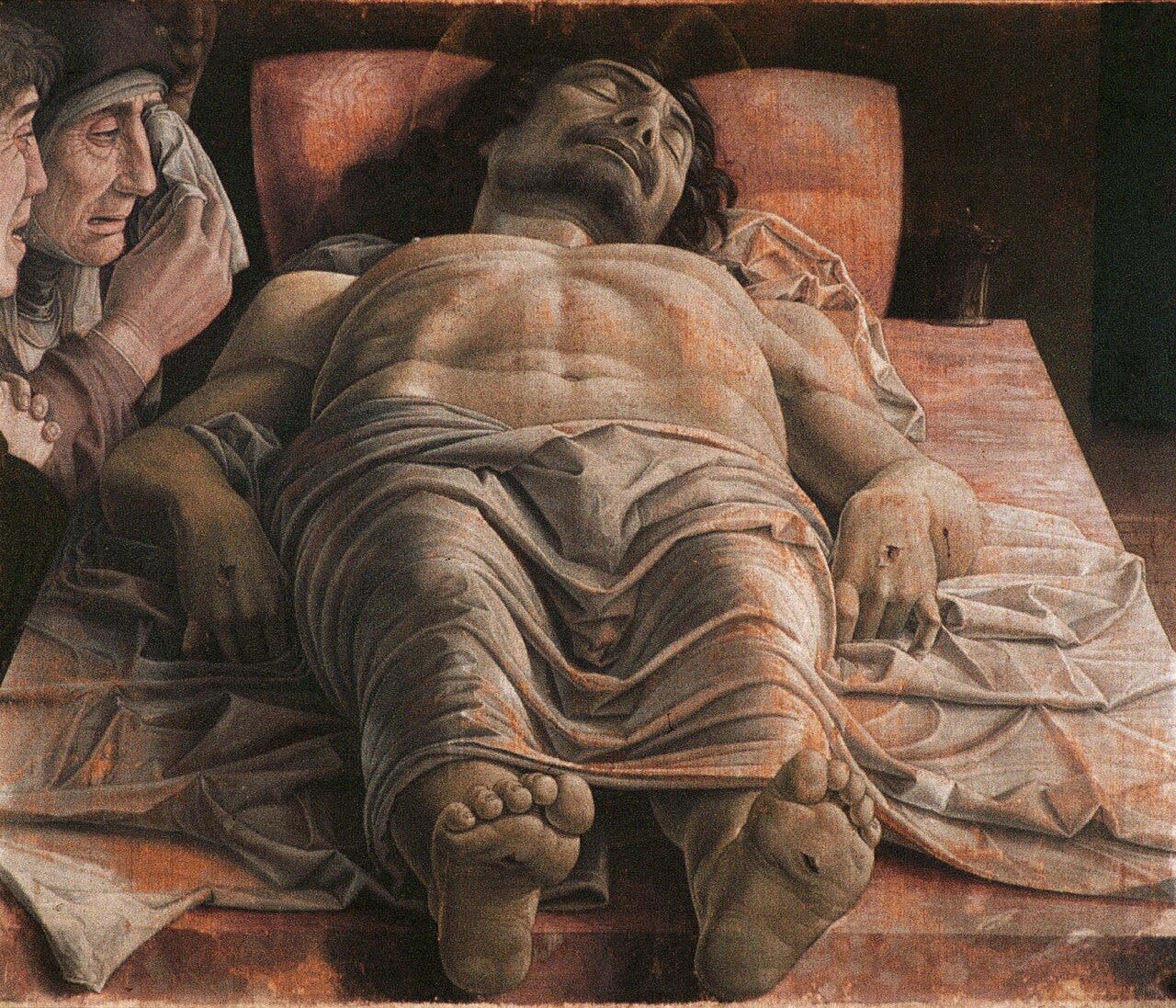
Christ's body is shown from the soles of the feet, foreshortened so sharply the composition still gets taught as a case study in perspective. Mantegna shrank the feet slightly and adjusted the proportions so the body would read correctly rather than looking distorted, a calculated cheat on top of the real geometry.
The painting was found in Mantegna's own studio after his death in 1506, which suggests it may never have been commissioned or sold. It stayed with him, unlike almost everything else on this list, which left its painter's hands for a church, a chapel or a patron.
6. Portrait of Doge Leonardo Loredan, Giovanni Bellini (c. 1501-1502)
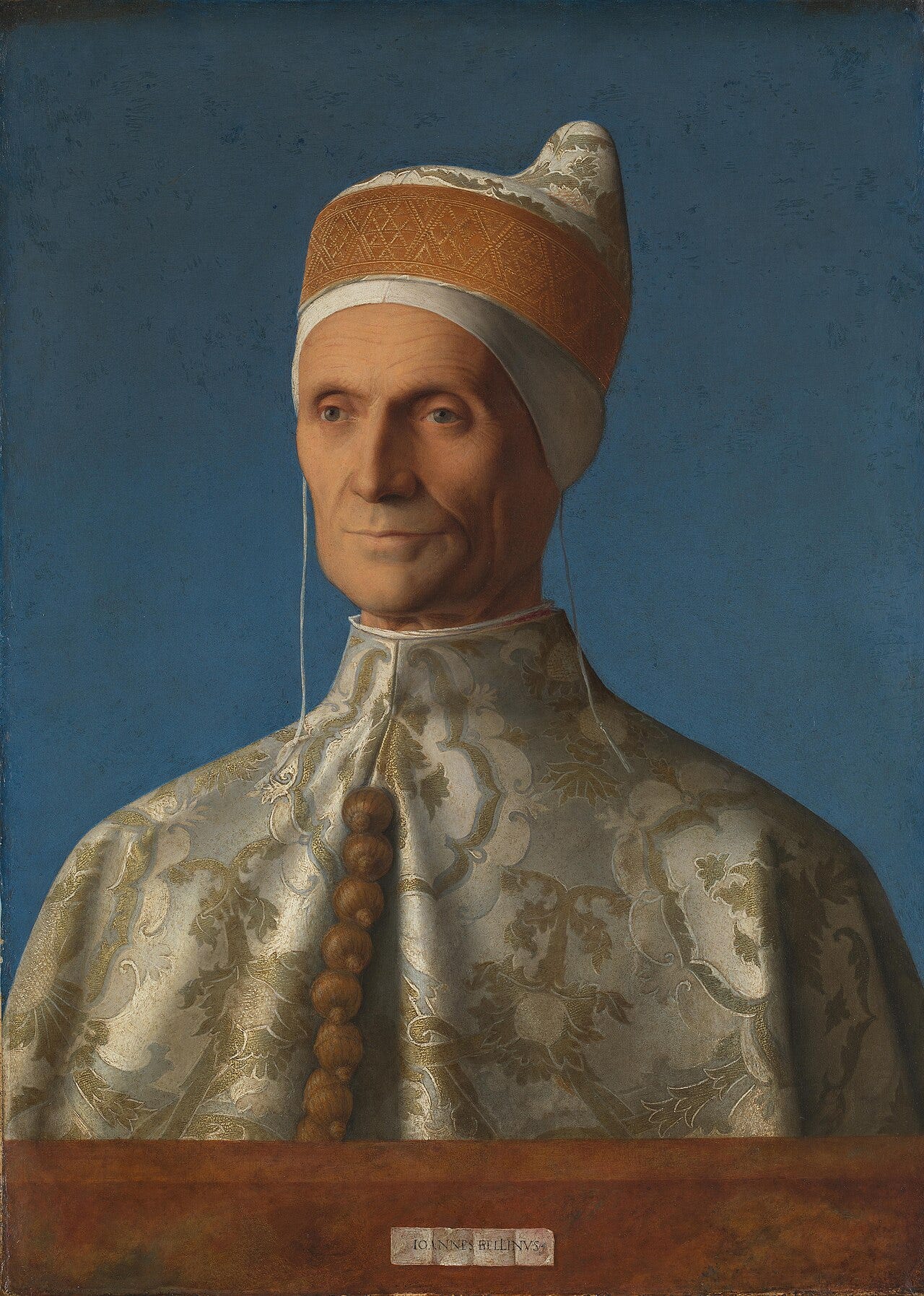
Loredan became Doge of Venice in 1501, and Bellini painted him soon after in his ceremonial robes and the corno ducale, the doge's distinctive cap. The brocade pattern on the robe is rendered thread by thread, each fold catching light differently.
Bellini adopted oil paint relatively late for a Venetian painter of his generation, likely through contact with Antonello da Messina, and this portrait shows what the switch let him do: render fabric with a level of detail tempera could not match.
7. Bacchus and Ariadne, Titian (1520-1523)
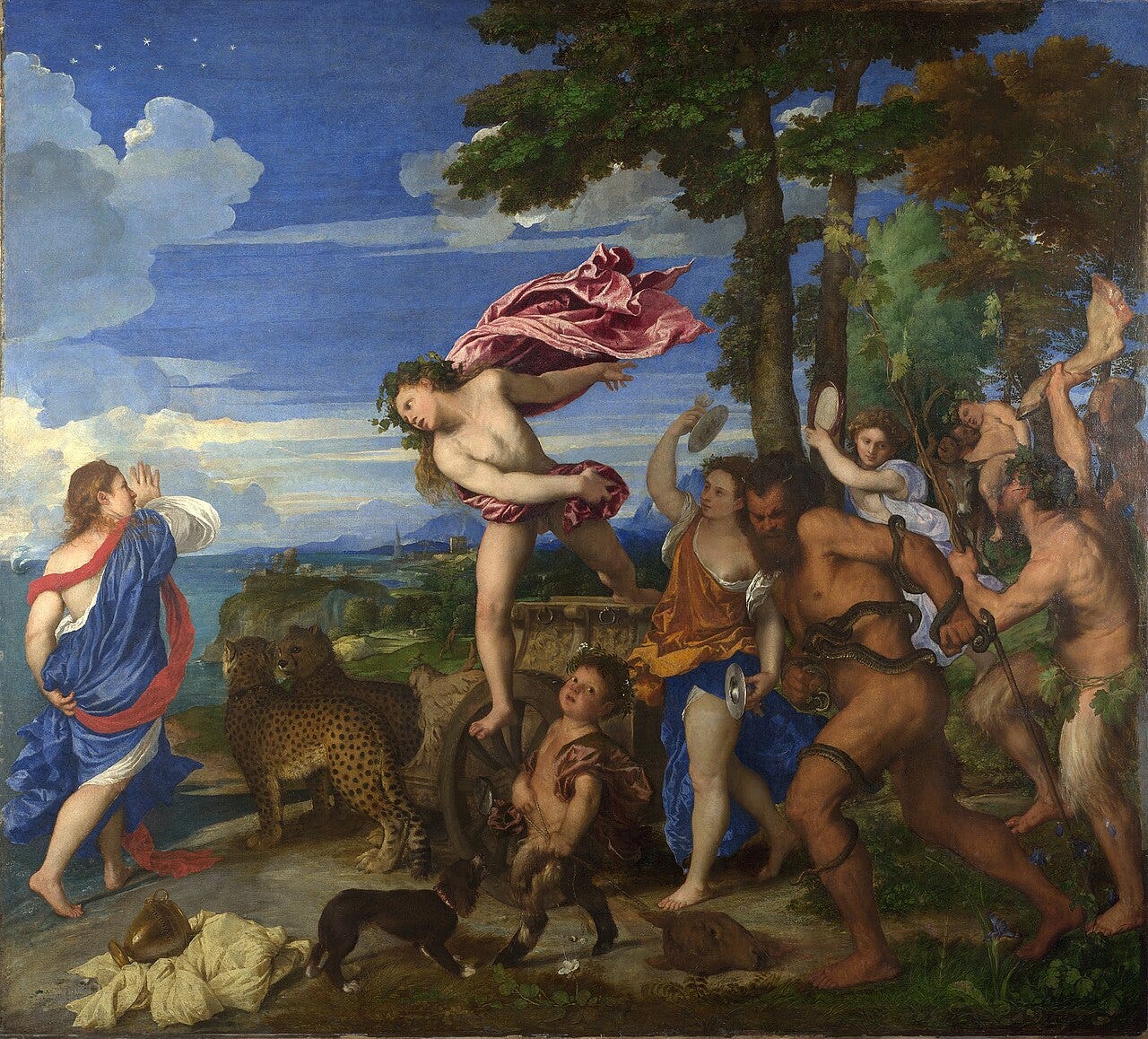
Titian painted this for Alfonso d'Este, Duke of Ferrara, for a private room decorated with mythological scenes by different masters. Theseus's ship is already sailing away in the distance, having abandoned Ariadne on Naxos, at the exact moment Bacchus leaps from his chariot and falls for her.
Look at the sky above Ariadne's head and there is a small ring of stars, the constellation Corona Borealis, a reference to the part of the myth where Bacchus later places her crown among the stars. Titian paints the future of the story into the same canvas as its present.
I explore another of Titian’s mythological scenes in Titian’s Sacred and Profane Love, Detail by Detail.
8. The Last Supper, Tintoretto (1592-1594)
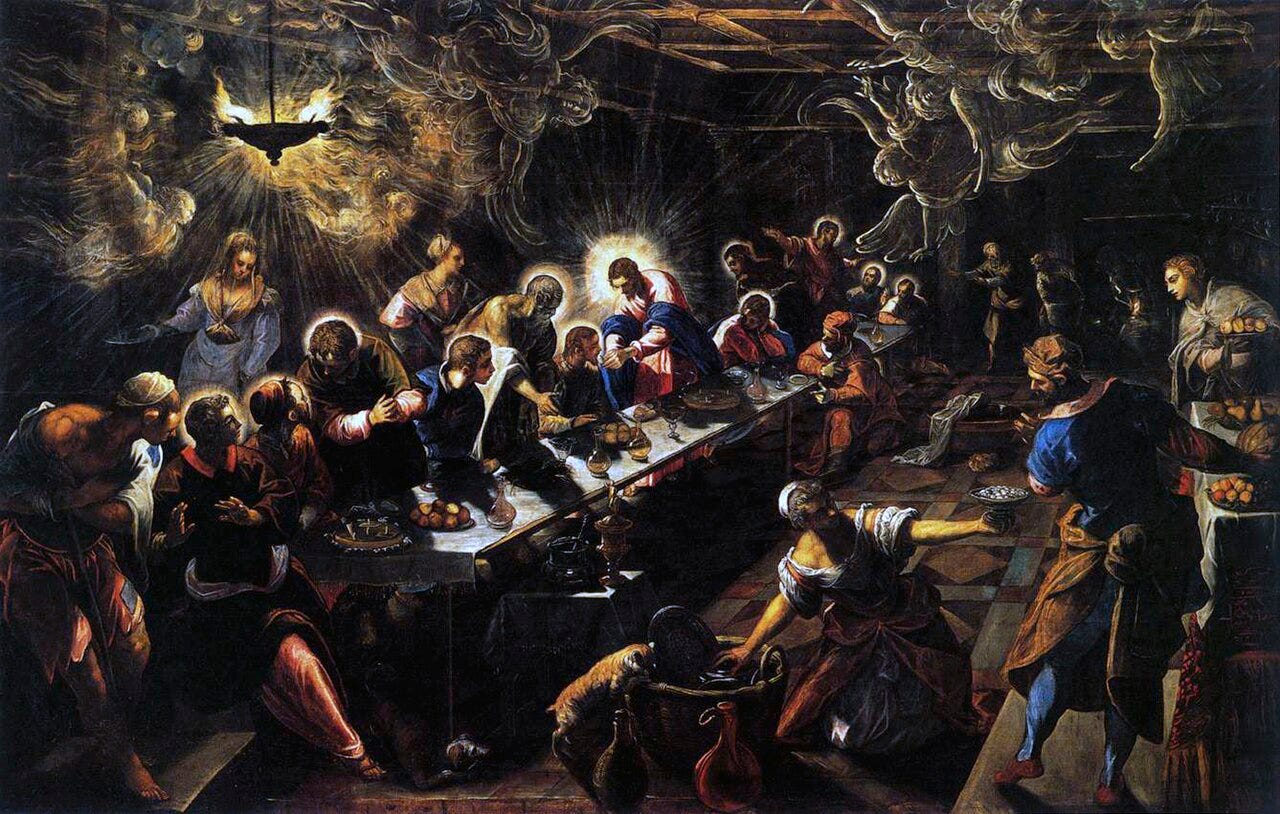
This is Tintoretto's last major painting, finished the year he died. Where Leonardo's Last Supper is calm and symmetrical, Tintoretto sets his table on a sharp diagonal, in a smoky room lit by an oil lamp, servants moving in and out, angels swirling overhead.
It replaces balance with motion, on purpose. By 1592 the restrained clarity of the Renaissance had given way to something more theatrical, and this painting is often cited as one of the clearest handoffs from one to the other.
9. The Wedding at Cana, Paolo Veronese (1563)
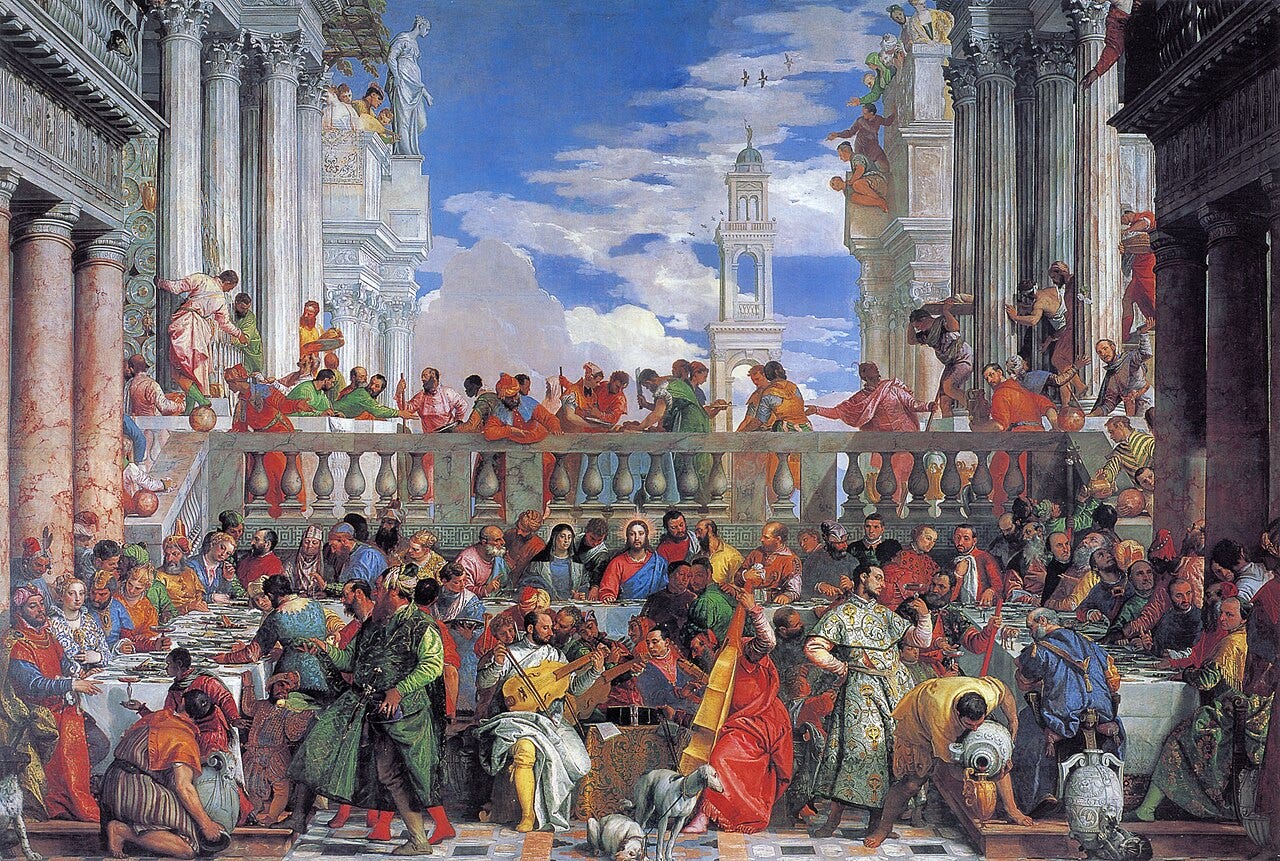
At roughly 6.77 by 9.94 meters, this is one of the largest paintings in the Louvre. Veronese stages the biblical wedding where Christ turns water into wine as a lavish Venetian banquet from the 16th century, with over 130 figures, contemporary rulers among the guests and, by tradition, Veronese himself playing viola among the musicians.
Napoleon's troops took it from its church in Venice in 1797, rolled and shipped to Paris. It has never gone back. The frame it hangs in today is not the one it left with, since the canvas had to be resized to fit the wall opposite the Mona Lisa.
I go detail by detail through this painting in Veronese’s Wedding at Cana: The Secret Detail-by-Detail.
10. The Calling of Saint Matthew, Caravaggio (1599-1600)
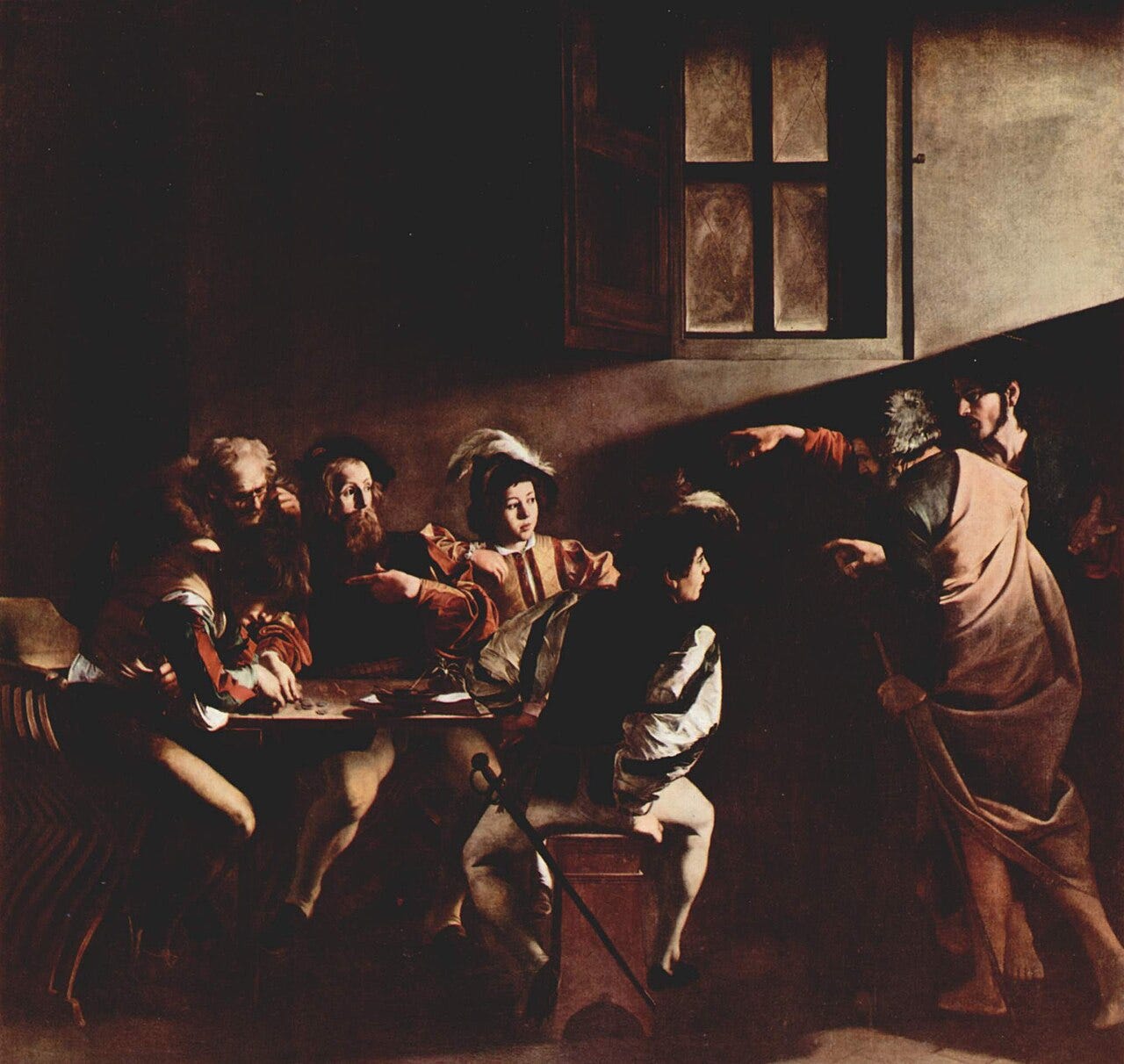
One of Caravaggio's first public commissions in Rome. A shaft of light cuts across a dark tavern and lands on a group of tax collectors, dramatizing the instant Christ calls Matthew to follow him. Which seated man is actually Matthew has been argued over for decades, since more than one figure could plausibly be pointing at himself.
Unlike almost everything else on this list, it has never left the chapel it was painted for. Most old master paintings this famous ended up in a museum eventually. This one still hangs exactly where Caravaggio installed it.
11. Judith Slaying Holofernes, Artemisia Gentileschi (c. 1614-1620)
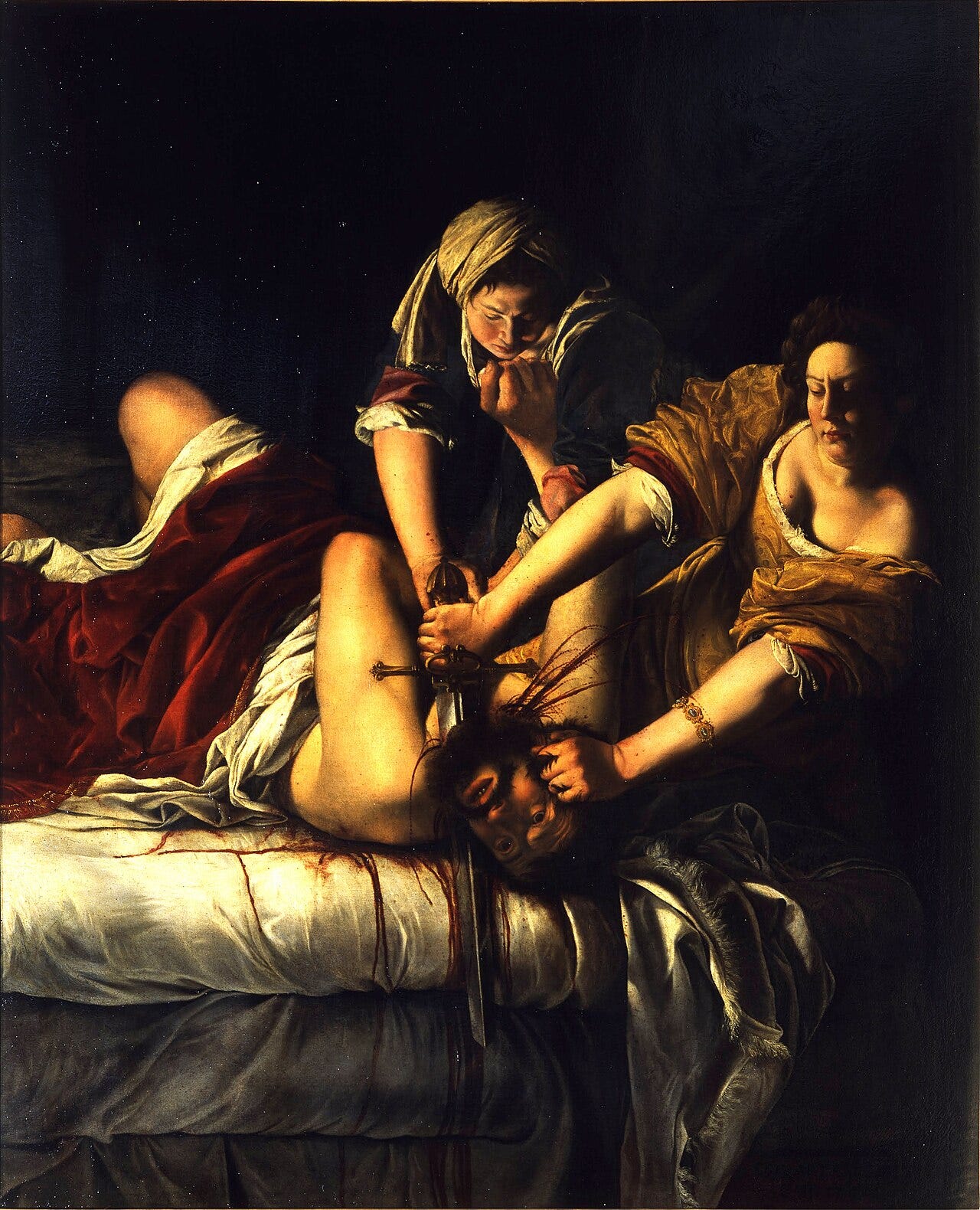
Gentileschi painted this a few years after a 1612 trial in Rome in which she testified against Agostino Tassi, a colleague of her father's who had raped her. Tassi was convicted. Historians have long connected that trial to the physical force in how she paints Judith beheading Holofernes here, two women pinning the man down together rather than one distant heroine.
In 1616, Gentileschi became one of the first women admitted to the Accademia delle Arti del Disegno in Florence, the art academy founded by the Medici. This version is the more violent of two she painted of the same subject.
Gentileschi's full career, trial included, gets its own telling in my piece on Artemisia Gentileschi.
12. The Entrance to the Grand Canal, Venice, Canaletto (c. 1730)
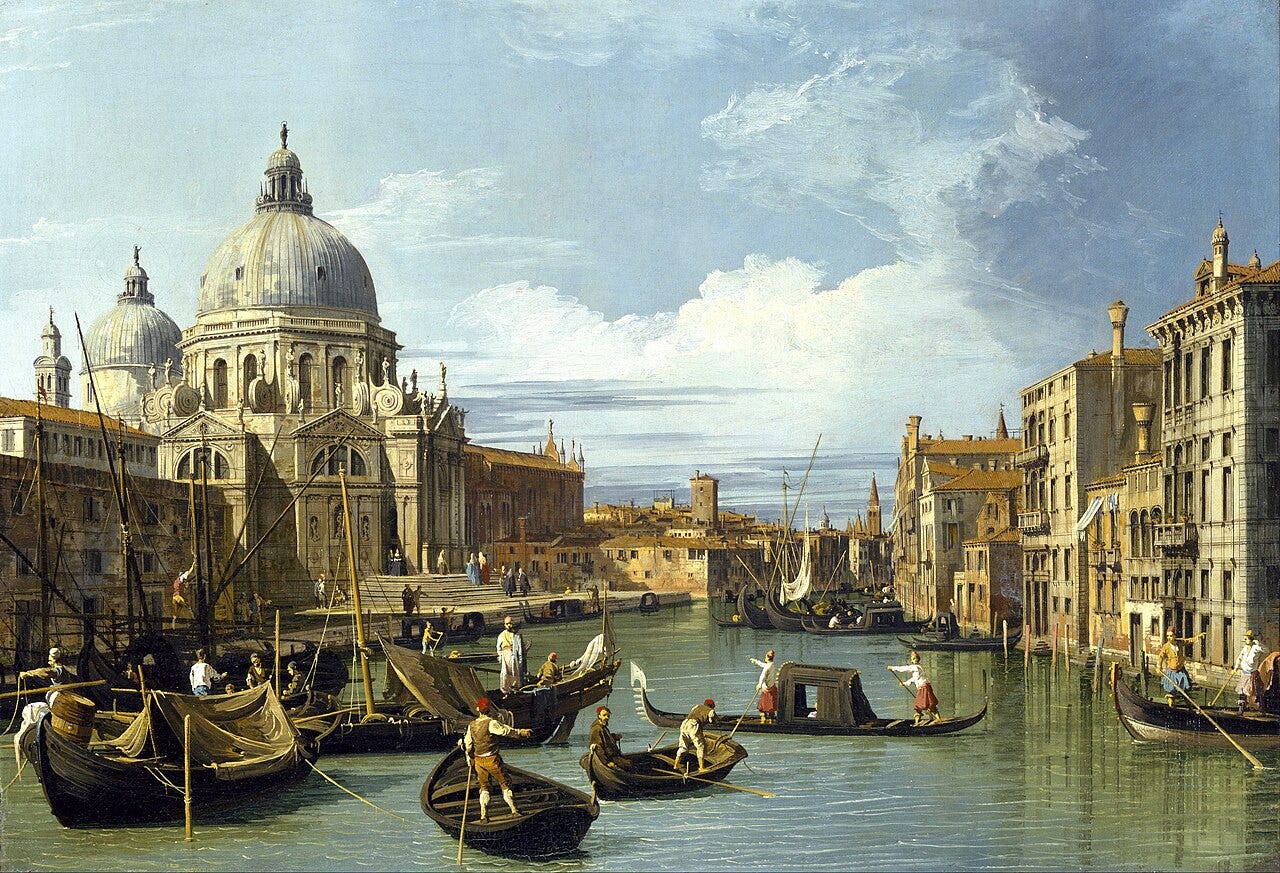
Canaletto built his career on precise, sunlit views of Venice, sold mostly to wealthy British visitors on the Grand Tour. This one shows the Dogana, Venice's old customs house, and the church of Santa Maria della Salute at the mouth of the canal, rendered with the exactness of an architectural drawing.
So many of Canaletto's best paintings were bought by British collectors in the 18th century that a large share of his surviving work still hangs in England rather than Italy, a fact that says as much about the Grand Tour economy as it does about the painter.
For more on how Venice turned into a painted postcard for wealthy foreigners, read my piece on Canaletto.
Where to see them
The Kiss of Judas: Scrovegni Chapel, Padua.
The Tribute Money: Brancacci Chapel, Santa Maria del Carmine, Florence.
The Annunciation: Convent of San Marco, Florence.
The Flagellation of Christ: Galleria Nazionale delle Marche, Urbino.
The Lamentation over the Dead Christ: Pinacoteca di Brera, Milan.
Portrait of Doge Leonardo Loredan: National Gallery, London.
Bacchus and Ariadne: National Gallery, London.
The Last Supper: San Giorgio Maggiore, Venice.
The Wedding at Cana: Louvre, Paris.
The Calling of Saint Matthew: Contarelli Chapel, San Luigi dei Francesi, Rome.
Judith Slaying Holofernes: Uffizi Gallery, Florence.
The Entrance to the Grand Canal, Venice: Museum of Fine Arts, Houston.
If I had to pick one painting on this list to see in person, it would be the Calling of Saint Matthew. Every other entry here left its original setting for a museum, a private collection, or a foreign country. Caravaggio's painting still hangs in the Contarelli Chapel where it was installed in 1600, and the darkness of that chapel does more for the composition than any gallery wall ever could.
Between the two big mythological and biblical set pieces on this list, Titian's Bacchus and Ariadne is the better painting. Veronese crams over 130 figures into the Wedding at Cana, and the scale is the point, but the composition reads more like an inventory of Venetian society than a single story. Titian tells one clear story in one canvas, down to the constellation he paints into the sky to signal how the myth ends.
Between the two supposed starting points of this list, Masaccio's break matters more than Giotto's. Giotto gave figures weight and eye contact, a real change, but it stayed a matter of expression. Masaccio's single vanishing point in the Tribute Money was a repeatable formula every painter after him could learn and reuse, which is why linear perspective spread across Italy while Giotto's specific changes did not travel the same way.
Straight answers about these Italian paintings
What is the most famous Italian painting? By almost any measure it's the Mona Lisa, followed closely by Leonardo's Last Supper and Michelangelo's Sistine Chapel ceiling. I cover all three in my Renaissance guide rather than repeating them here.
Who is considered the first Renaissance painter? Historians usually point either to Giotto, working in the early 1300s, for breaking with Byzantine style, or to Masaccio a century later for establishing full linear perspective.
What is a veduta painting? A detailed, largely accurate cityscape, the genre Canaletto built his career on, especially views of Venice sold to foreign visitors.
Where is The Wedding at Cana today, and why isn't it in Venice? It hangs in the Louvre in Paris. Napoleon's troops took it from its church in Venice in 1797, and it was never returned.
Was Artemisia Gentileschi the only woman in this group? Yes, in this particular list. She was also one of the first women admitted to Florence's Accademia delle Arti del Disegno, in 1616.
Why one of these never left its chapel
Most paintings this famous eventually get moved: sold, seized by an army, transferred to a museum. Caravaggio's Calling of Saint Matthew is the exception on this list. It has hung in the Contarelli Chapel in Rome since 1600, over four centuries in the same wall it was painted for.
For the Renaissance names this list deliberately skips, start with my Renaissance paintings guide, or read what Cool Stories About Art is. For the full ranking, see the greatest painters of all time. The 20th century opens with Futurism, and its clearest voice is told in Umberto Boccioni, the complete story.