
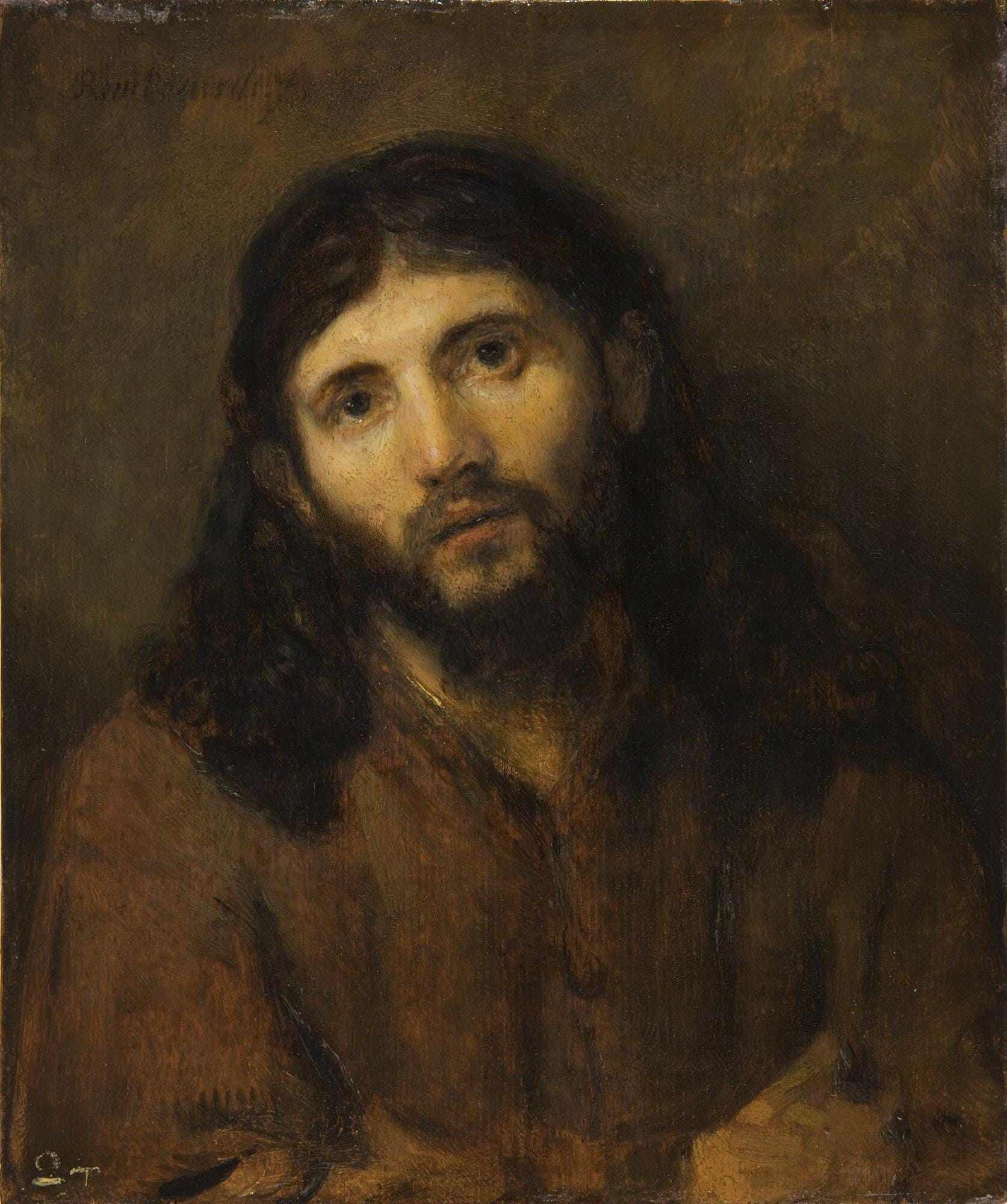
No one who knew Jesus left a description of his face, and no portrait of him was made in his lifetime. Every image of him is an invention. Each painter who showed him had to decide whether he wore a beard, whether he looked like a god or like a man from the next street, and whether his face should be shown at all.
Cool Stories About Art is a newsletter to learn art the fun way.
Join 170,000+ readers and get:
10 new art stories / month
The entire archive of content (1,000+ articles)
Comment, ask questions, and chat with other readers
A Face No One Recorded
The oldest images of Jesus that can be dated were made in the third century, about two hundred years after his death, and they show a young man without a beard. The bearded face with long hair that most people picture today came later. It borrowed from the way the Greek and Roman world showed its great gods, Zeus, Asclepius the healer and Serapis.
Scholars have tried to fill the gap left by the missing portrait, working from the evidence. In a 2018 book, the biblical scholar Joan Taylor concluded that Jesus was probably bearded, with fairly short hair and beard, lean, with dark skin, dark eyes and dark hair.
Painters never had even that much, and this blank sets the subject apart. A painter who shows a king can work from a portrait. A painter who shows Jesus has to decide what God looks like as a man. If the face looks too divine, he stops being human. If it looks too ordinary, some believers take offense.
The twelve works on this page were chosen for that decision. In each, Jesus is the subject of the picture rather than a small figure in a crowd, and the painter made a visible choice about his looks: a beard or none, a face copied from a carving or from a living man, printed on a cloth, or turned away.
12. Dura-Europos, Christ Healing the Paralytic (about 232)
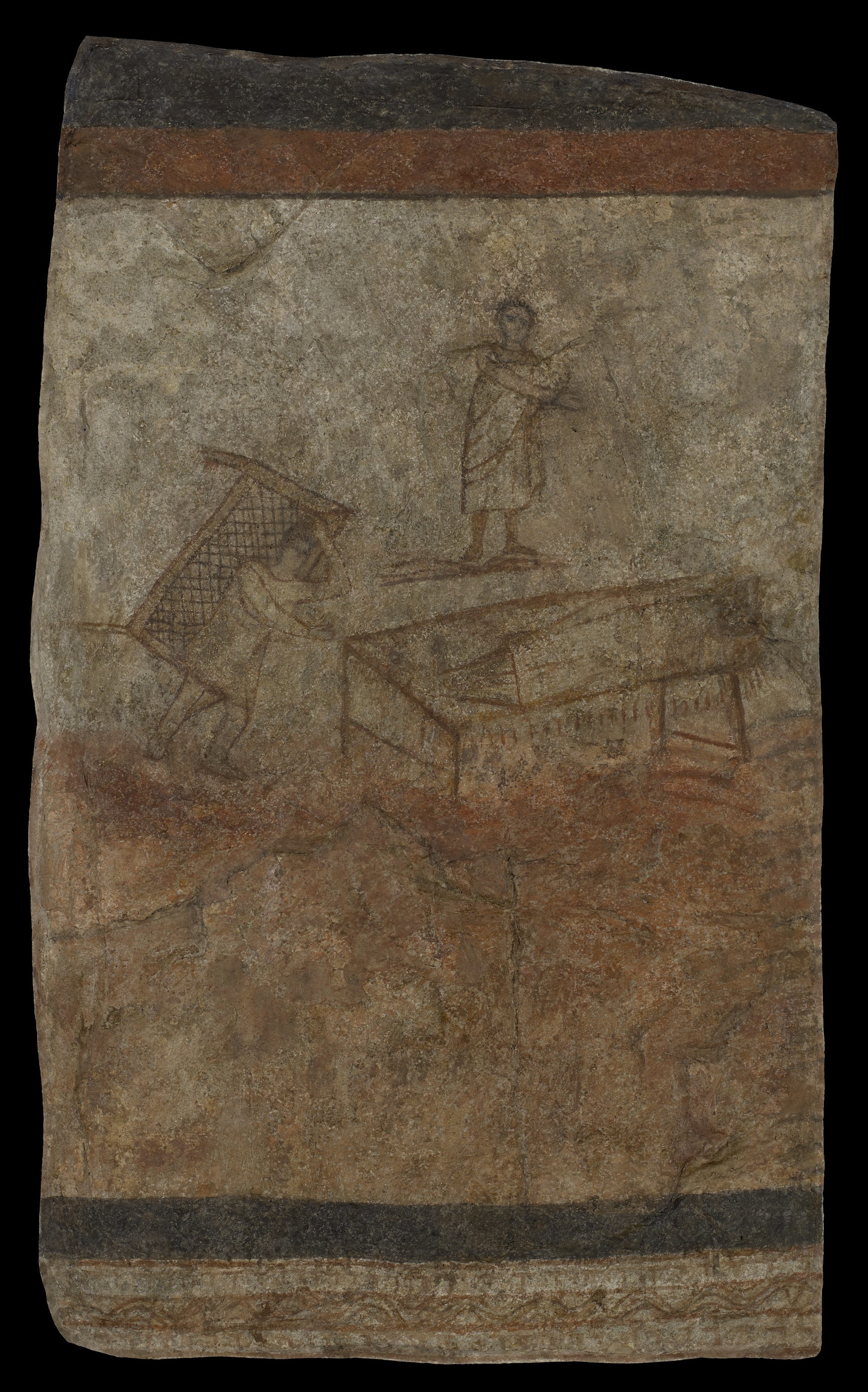
The man standing over the bed has no beard. His hair is short, he wears a plain tunic, and nothing around his head marks him out as holy. Farther along the plaster, the sick man he has just healed walks away with his bed on his back. The young man in the tunic is Jesus, as a Christian painter imagined him about two centuries after his death.
The plaster comes from a house in Dura-Europos, a Roman garrison town on the Euphrates, in what is now Syria. A few decades before the town was destroyed, at a time when Christians could be persecuted, believers there quietly turned this ordinary house into a church. They took down a wall to make a meeting room and turned another room into a baptistery, where new believers were baptized. From the street, nothing changed.
Those walls survived because the town did not. During a Persian siege in 256, the defenders piled a huge bank of earth against the western wall, and the bank buried the church. Dura fell all the same. The earth that had failed to save the town kept the paintings out of the light until 1932, when a French and American team led by Yale dug them out.
Few images of Jesus that can be dated are older, and on this one only his gesture sets him apart from the man he heals.
At a Glance
Artist: Unknown painter of the house church at Dura-Europos (third century)
Painted: About 232
Medium: Paint on plaster
Size: 145 x 88 cm (57.1 x 34.6 in)
Where to see it: Yale University Art Gallery, New Haven
About This Painting
What does Dura-Europos mean?
Dura is the ancient name of the place. When King Seleucus Nicator founded a city there around 300 BC, he named it Europos after his birthplace in Macedonia. The double name is a modern invention.
11. Nikolai Ge, What Is Truth? Christ and Pilate (1890)
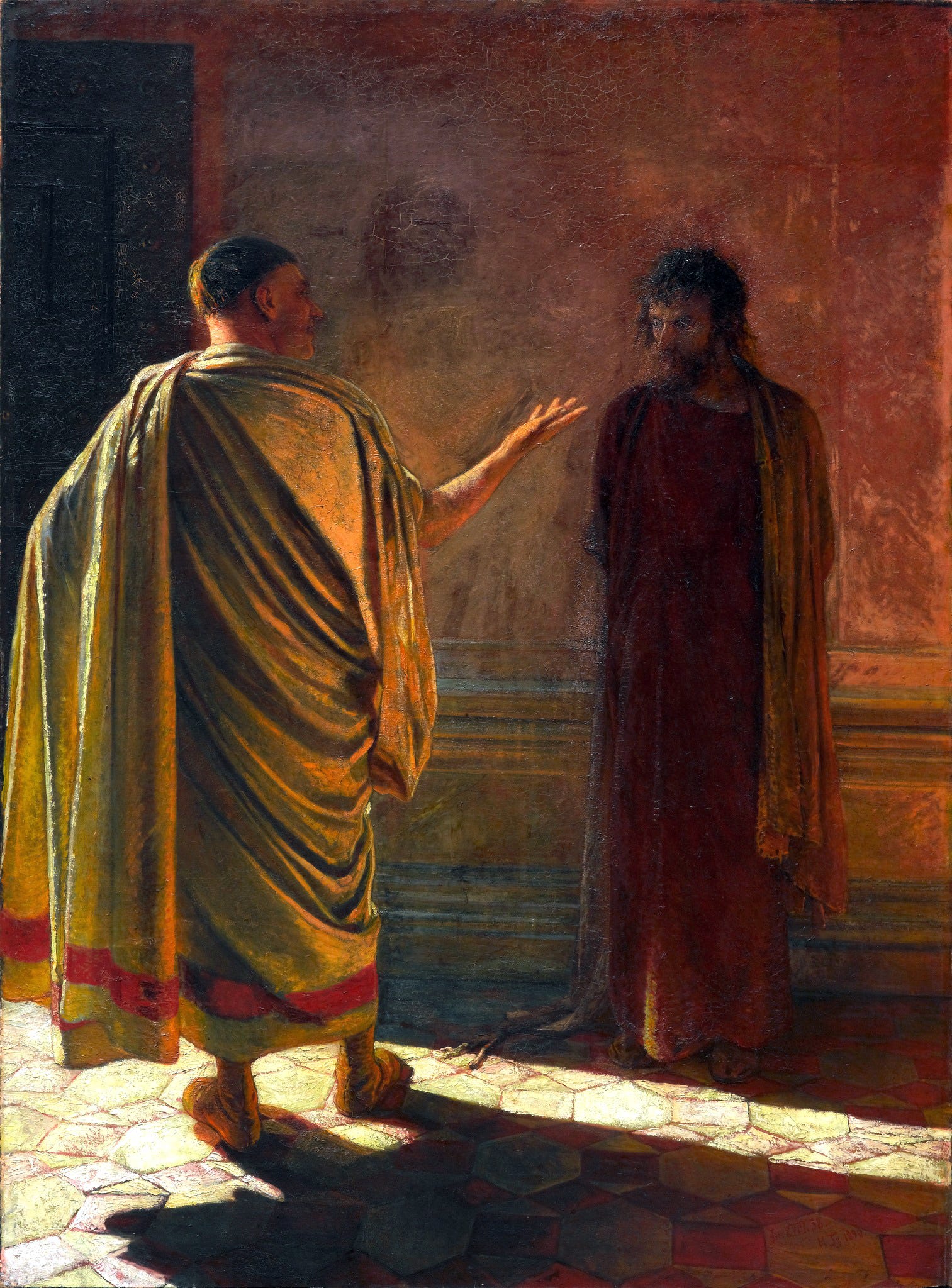
Sunlight falls on only one of the two men. Pilate, the Roman governor, stands in it in a white toga, one hand raised, halfway through a sentence. Christ faces him from the shadow, thin and unkempt, in a worn robe, and says nothing. In the winter of 1890, the censors had this canvas by Nikolai Ge removed from an exhibition in St Petersburg about three weeks after it opened.