
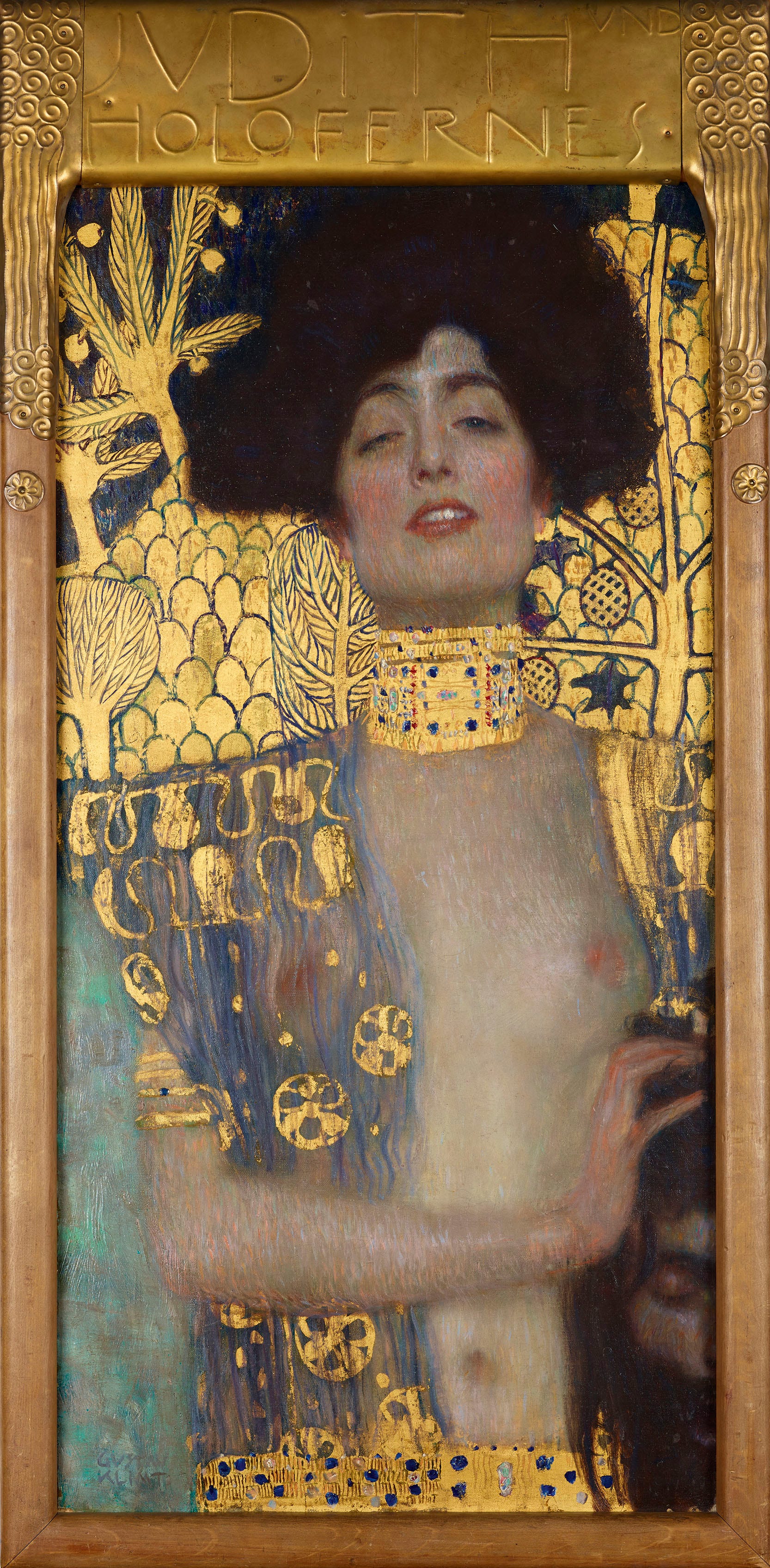
The gold that made Gustav Klimt famous fills only about ten years of a career of more than thirty. Before it came painted theater ceilings and a crowd portrait of a Vienna audience, and after it came lake landscapes and a girl in a white dress. These twelve works run from 1888 to 1913, and four of them hang in New York museums.
Cool Stories About Art is a newsletter to learn art the fun way.
Join 200,000+ readers and get:
10 new art stories / month
The entire archive of content (140+ articles)
Comment, ask questions, and chat with other readers
Twelve Paintings, Twenty-Five Years
Klimt did not stay with one manner. He trained as a decorator at Vienna's School of Applied Arts, painted theater ceilings in his twenties, and in 1897 co-founded the Vienna Secession, a breakaway artists' group. Around 1900 he turned to real gold leaf, and in the summers he painted landscapes beside an Austrian lake.
Because he changed so often, a handful of pictures can follow him through each stage. These twelve were made between 1888 and 1913, and each shows him trying something new.
Several of them turn on a plain question: who asked for the picture? The answer was a city, a banker, a family, an artists' group, or nobody at all.
12. Auditorium of the Old Burgtheater (1888 to 1889)
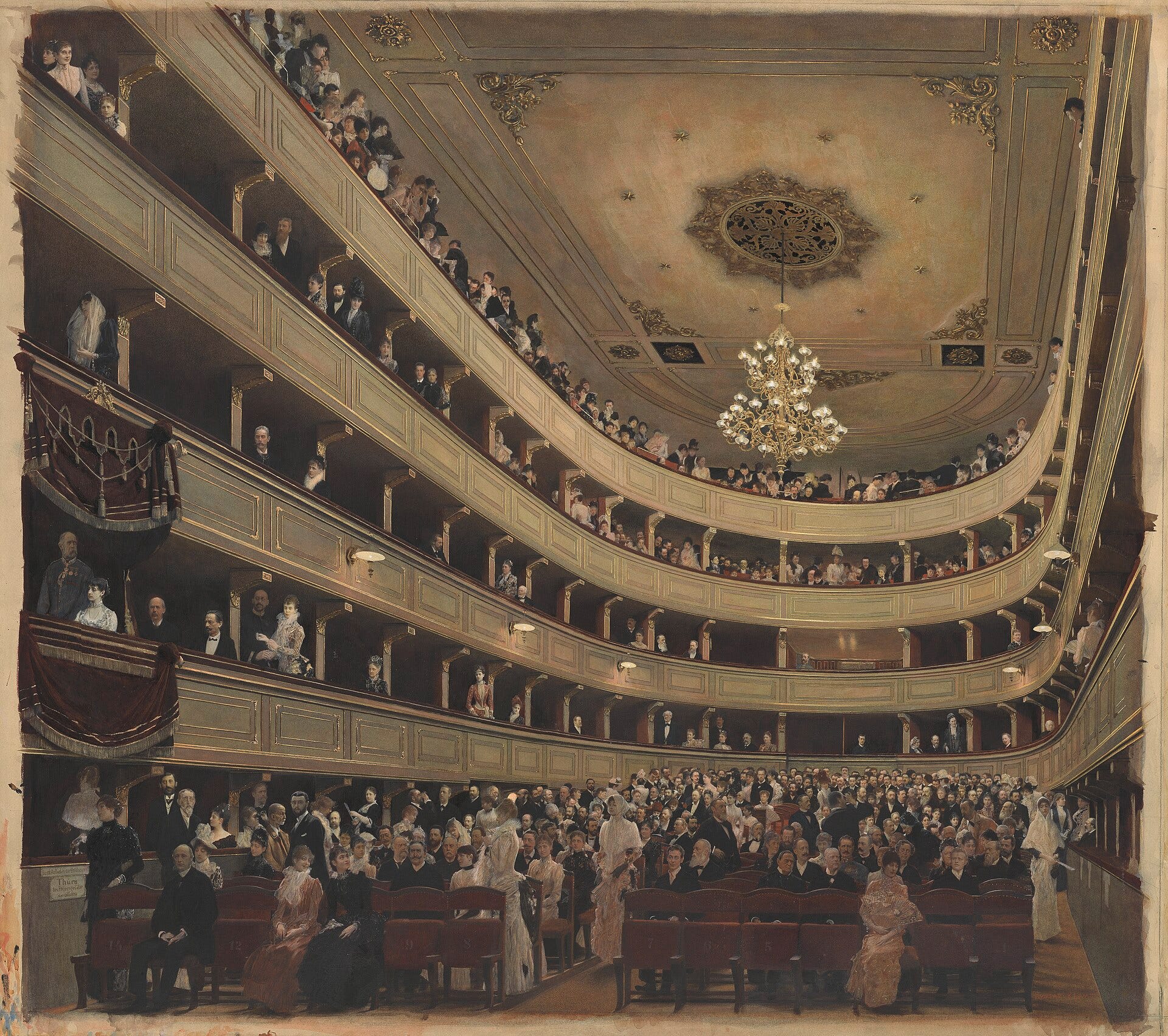
A chandelier hangs over a horseshoe of tiered boxes, and in the boxes sit more than a hundred tiny people in evening dress. Auditorium of the Old Burgtheater shows a Vienna theater as an actor would see it, from the stage. The city asked for the picture in 1887 to record the house before it was demolished, and the last performance there took place in October 1888.
The picture came out of a decorating firm where Klimt, still in his twenties, worked with his brother Ernst and their friend Franz Matsch. The firm had just finished ceilings for the new Burgtheater on the Ringstrasse. For the old house, Matsch painted the stage seen from the seats, and Klimt the seats seen from the stage.
On a ceiling, figures are allegories. Here the faces had to be real, and they can be named. Klimt filled the boxes with Vienna's society, among them the actress Katharina Schratt, a friend of the emperor. Karl Lueger, a future mayor, was missing at first, and Klimt added him afterward.
At a Glance
Artist: Gustav Klimt (1862 to 1918)
Painted: 1888 to 1889
Medium: Watercolor and gouache on paper
Size: 91.2 × 103 cm (35.9 × 40.6 in)
Where to see it: Wien Museum, Vienna
11. Pallas Athena (1898)
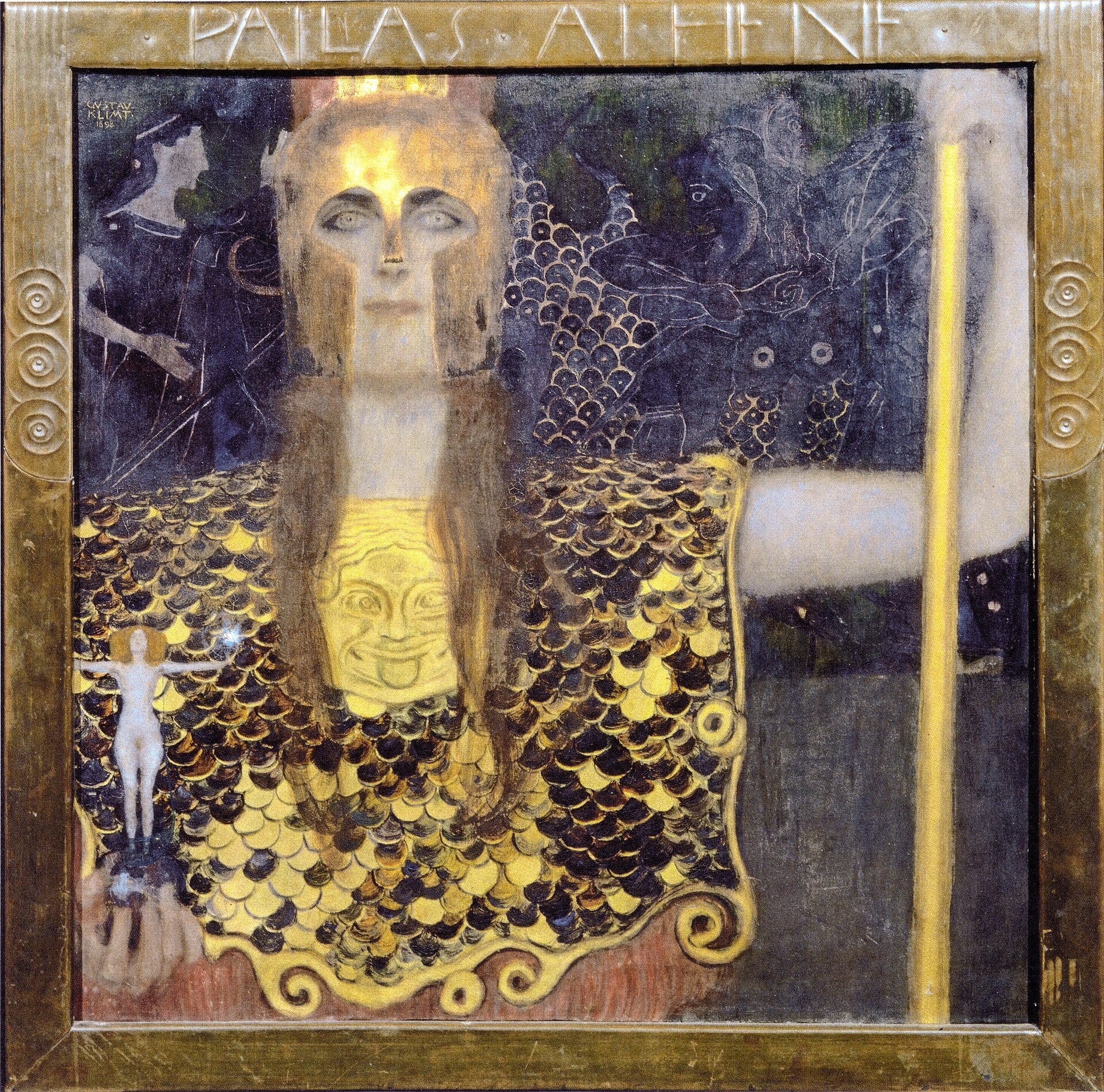
On the breastplate of Pallas Athena, a small Medusa sticks out her tongue. The goddess herself stares straight out of a square canvas, spear in hand. Klimt hung her in November 1898 in the brand-new hall of the Secession, the breakaway artists' group he had co-founded, and the critics did not take it well.