
Marble keeps every mistake, because what the chisel removes cannot be put back. Michelangelo held to that idea, and the stone often decided for him, once with a dark vein that surfaced across the face of a statue already under contract. These twelve sculptures run from a relief he carved in his teens to a marble he was still cutting in his final days.
Cool Stories About Art is a newsletter to learn art the fun way.
Join 200,000+ readers and get:
10 new art stories / month
The entire archive of content (140+ articles)
Comment, ask questions, and chat with other readers
What Marble Asked of Michelangelo
Sculpture made Michelangelo commit before he could see the result. He worked by cutting away, so a flaw met halfway through a block, a vein or a crack, could cost him months of work. Sculpture was still the art he claimed as his own, and he kept starting marbles he never finished.
Most of what he carved has stayed in Florence and Rome, in churches and museums. The choice follows him from his teens to his final weeks, and it sets the statues everyone knows beside a few that most lists leave out.
Several of the twelve were left unfinished, or finished by someone else. On those, the marks of his chisel are still in the stone, and they show how he worked better than any polished surface does.
12. The Santo Spirito Crucifix (about 1493)
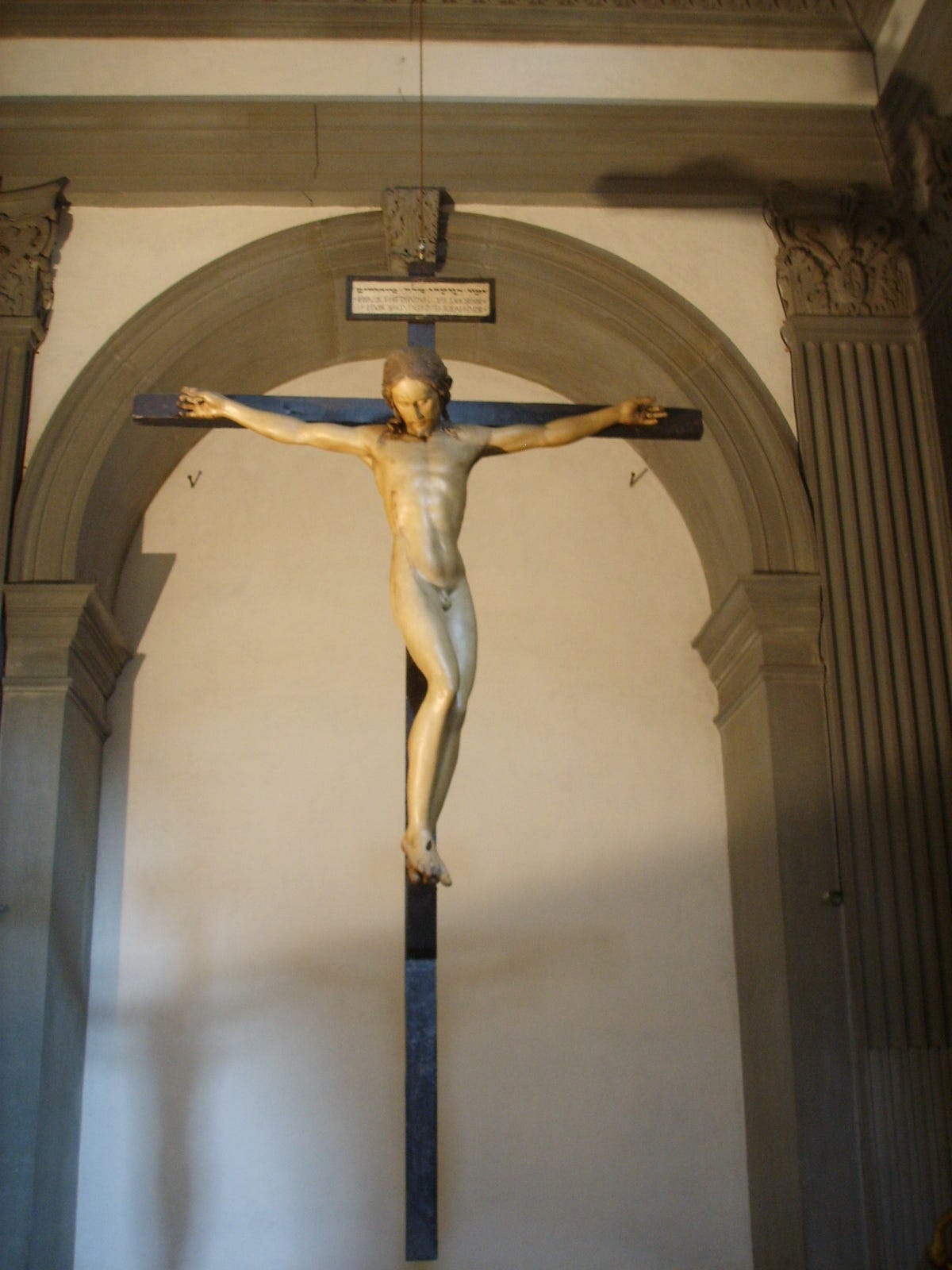
This Christ is as thin as a boy, with narrow shoulders, hips swung sideways and the head fallen forward onto the chest. He is completely naked. The Santo Spirito Crucifix is a painted wooden figure that Michelangelo carved around 1493 for the Augustinian church of Santo Spirito, in Florence.
He made it to repay a favor. The prior of Santo Spirito, Niccolò di Lapo Bichiellini, had lodged the sculptor, then about eighteen, and let him study anatomy on the bodies of the dead from the convent hospital.
Those dissections seem to show in the wood. Doctors who have examined the figure have described it as the exact body of a boy of about fourteen.
For about a century the crucifix hung over the main altar. Early in the 1600s it was taken down and moved into the convent, and from then on it was counted among Michelangelo's lost works.
It came back to light in 1962. The German art historian Margrit Lisner, who was cataloguing the crucifixes of Tuscany, found it in a corridor of the convent under a thick coat of greenish paint. Her attribution was doubted at first, and specialists still debate whether this is the crucifix carved for the prior.
If it is, the lost Michelangelo had spent more than three centuries inside the convent it was made for.
At a Glance
Artist: Michelangelo Buonarroti (1475 to 1564)
Carved: About 1493 to 1494
Medium: Painted wood
Size: 139 × 135 cm (54.7 × 53.1 in)
Where to see it: Sacristy of the Basilica of Santo Spirito, Florence
11. The Risen Christ (1519 to 1521)
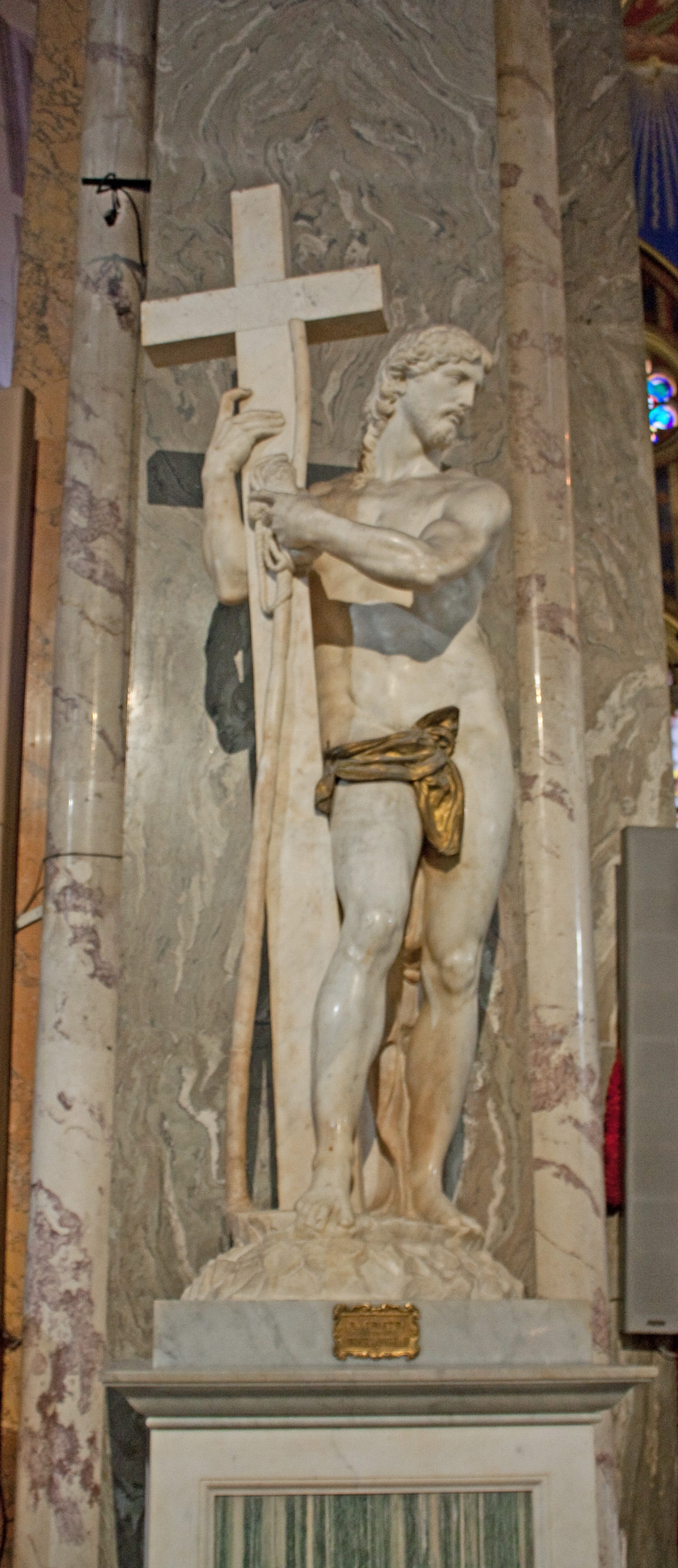
In a church in Rome, a marble man stands naked except for a bronze cloth added later, holding a tall cross against his side. He is the second attempt. In 1514 Michelangelo had signed a contract for a naked Christ holding the cross, and as he began carving the first block, a black vein appeared across the face, running from the temple into the beard.