
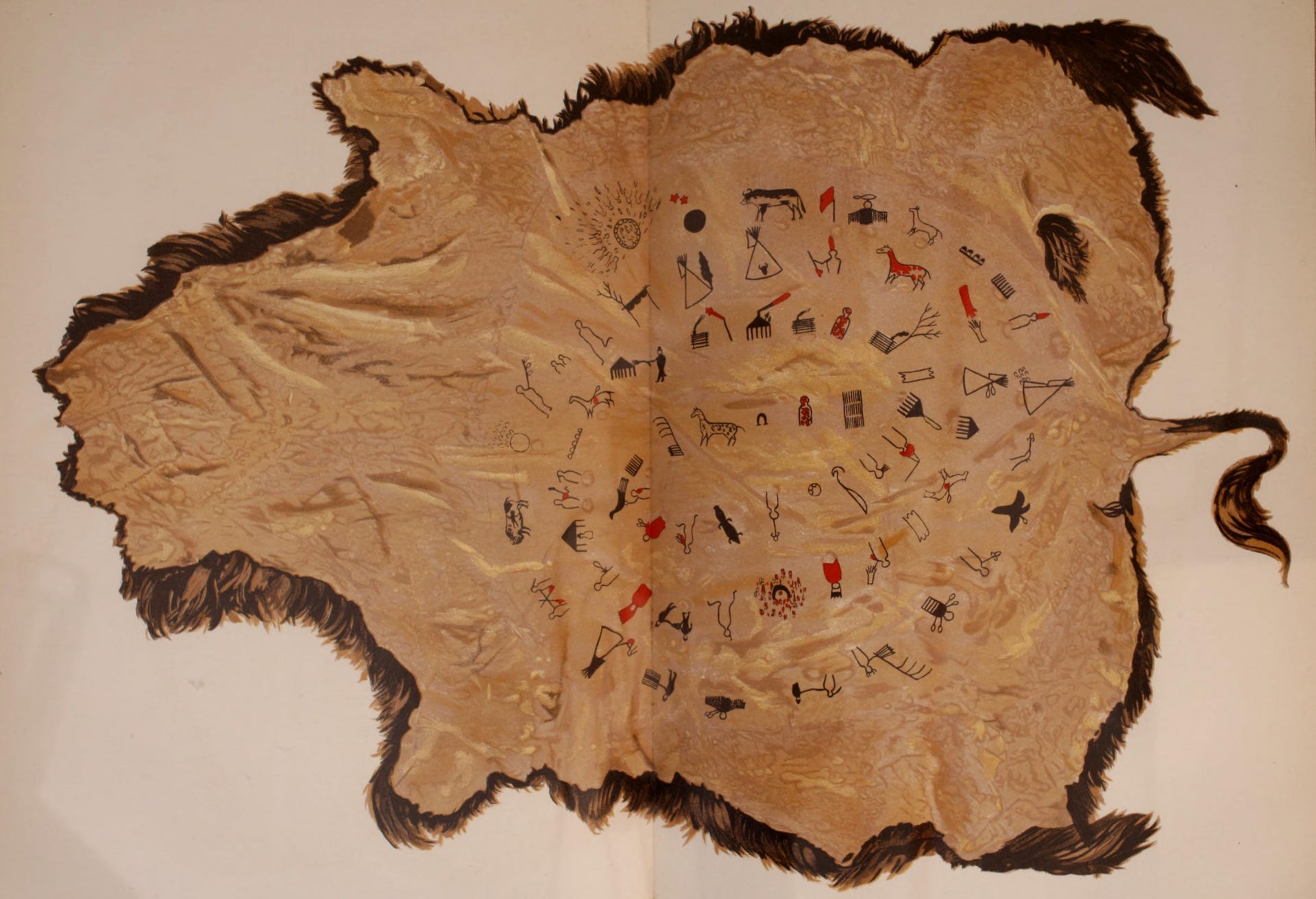
For centuries, Native American painting had nothing to do with a frame. It lived on buffalo hides, shields and the ruled pages of account books, and it served to remember a battle, a deed in war or the name of a winter. When it reached museums, outsiders had already painted their own picture of Native people, and the art had to answer it.
Cool Stories About Art is a newsletter to learn art the fun way.
Join 200,000+ readers and get:
10 new art stories / month
The entire archive of content (1,000+ articles)
Comment, ask questions, and chat with other readers
From Painted Hides to Museum Walls
On the Plains, painting was a way of keeping memory. Men recorded their deeds on hides and shields in earth and plant colors, and keepers added one sign for each winter. When traders and soldiers brought pencils and ruled account books, the same records moved onto paper.
In the twentieth century the question changed. Schools, museums and juries had firm ideas about what Native art should look like, and Native painters began to answer them, along with the portraits that visitors from the East and from Europe had made of their ancestors.
Ten of these twelve works are by Native artists. Two are by outsiders who painted Plains leaders in the 1830s, and they stay here as the view of a visitor, not as the truth. Together the twelve run from records kept for one's own people to replies addressed to everyone else.
12. Amos Bad Heart Bull, A Pictographic History of the Oglala (about 1890 to 1913)
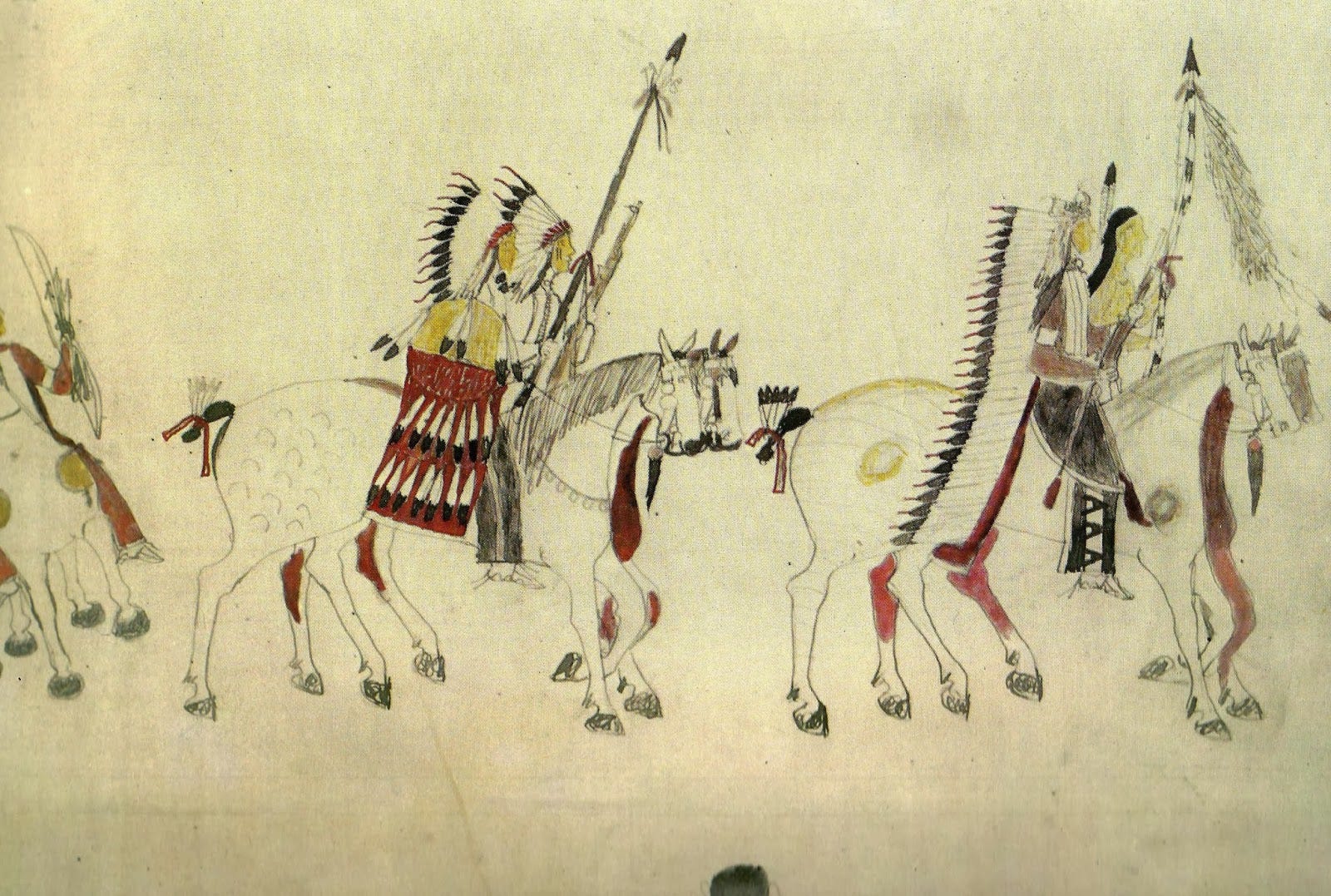
A column of riders crosses the page in single file, headdresses up, lances raised. The drawing comes from a ledger book in which Amos Bad Heart Bull, an Oglala Lakota, recorded the history of his people from about 1890 to his death in 1913. The book itself can no longer be opened.
What he set down there was history in pictures. In the 1890s he had served as a scout for the US Army under the name Eagle Lance, and over twenty years he filled more than four hundred drawings with what he knew: wars against the Crows, a long sequence on the Battle of the Little Bighorn, camp life, reservation life, the Fourth of July celebrations of 1898 and 1903.
Outsiders heard of the book only in 1927, when a University of Nebraska student named Helen Blish learned that it existed. With a grant from the Carnegie Institution, she rented it from the artist's sister, Dollie Pretty Cloud, for a yearly fee, and a Lincoln photographer, Frank Shoemaker, recorded every page on glass plates. Then the book went home.
It stayed with Dollie Pretty Cloud until her death in 1947, and the family buried it with her. Nothing was lost by accident. The family decided where its history would rest.
The glass plates took a stranger road. The negatives followed Blish's academic adviser to California and disappeared, until they turned up at a garage sale in Claremont in the mid-1980s. In 2011 they reached the Smithsonian's archives. Every drawing in the book, this column of riders included, now survives only as the light that fell on a glass plate in Lincoln in 1927.
At a Glance
Artist: Amos Bad Heart Bull (Oglala Lakota, 1869 to 1913)
Made: About 1890 to 1913
Medium: Drawings in a ledger book, known today from photographs made in 1927
Size: Unknown, the original is no longer accessible (no figure in cm or in)
Where to see it: In photographs at the Smithsonian's National Anthropological Archives, Suitland, Maryland, and in the book A Pictographic History of the Oglala Sioux (1967)
11. Howling Wolf, A Procession of Southern Cheyenne Warriors (mid to late 1870s)
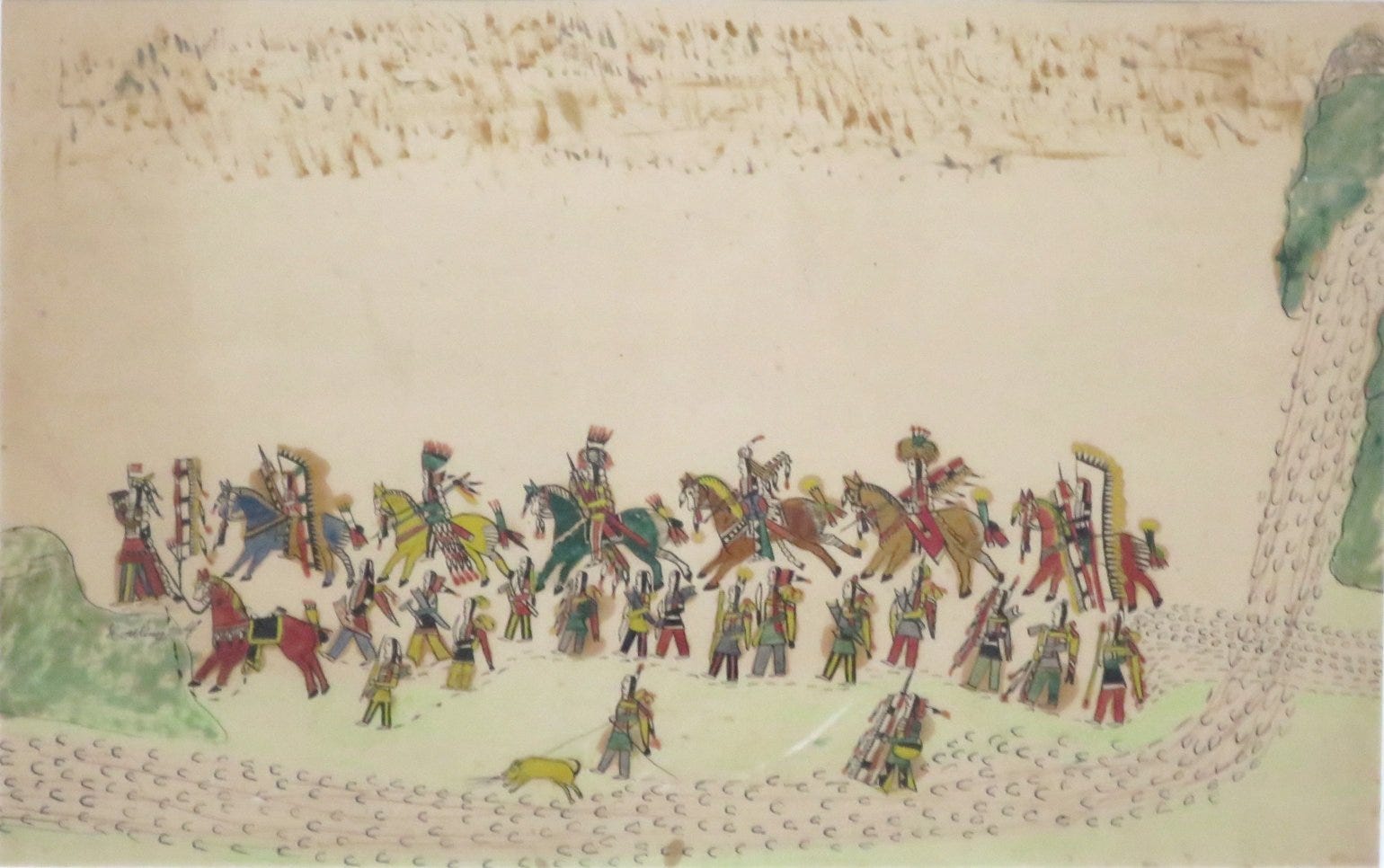
In 1875 the US War Department sent a young Southern Cheyenne man, his father and seventy other men to Fort Marion, a prison in St. Augustine, Florida, a long way from the Plains. The young man was Howling Wolf. At about fifteen he had survived the attack on the camp at Sand Creek. In Florida, an army officer was waiting for him with an odd idea of how prisoners should spend their days.