Old Age in Art: 12 Famous Paintings to Know
The most famous paintings of old age refuse to look away. Rembrandt tracked his own face into ruin, Durer drew his dying mother with terrible honesty, and Ghirlandaio kept a grandfather’s diseased nose because love does not edit. Here are twelve to know, and where to see them.
For most of art history, painting flattered. Old age is where that stops. A wrinkled hand, a clouded eye, a sagging cheek. These twelve painters chose to record exactly what time does to a face, and turned decline into some of the most moving pictures ever made.
Use this as a quick tour:
The self trackers: Rembrandt and Titian, who painted their own ageing.
The tender ones: Ghirlandaio and Durer, honest but full of love.
The unflinching: Goya, Giorgione and Matsys, who made age a warning.
Where to see them: a museum list at the end, grouped by city.
Rembrandt, Self-Portrait with Two Circles
Rembrandt painted this self portrait around 1665, a few years before he died, holding his palette before two mysterious circles on the wall. He is old, heavy, worn down by bankruptcy and loss.
Rembrandt painted himself all his life, dozens of times, ending as this tired old master. Nobody has ever charted their own ageing so honestly across a whole career, one long self portrait in real time.
It hangs at Kenwood House in London. He does not hide the ruin. He looks straight out, brush in hand, still working, still himself.
Albrecht Durer, Portrait of the Artist’s Mother
Albrecht Durer drew his mother in 1514, when she was sixty three and dying. He spared her nothing, the sunken cheeks, the corded neck, the exhausted eyes.
She died two months later, and Durer wrote a tender, painful account of her final illness. The drawing is not cruel. It is love that refuses to look away.
It is held in Berlin. Few images of old age are this raw, a son recording his mother right at the end, honouring her by telling the truth.
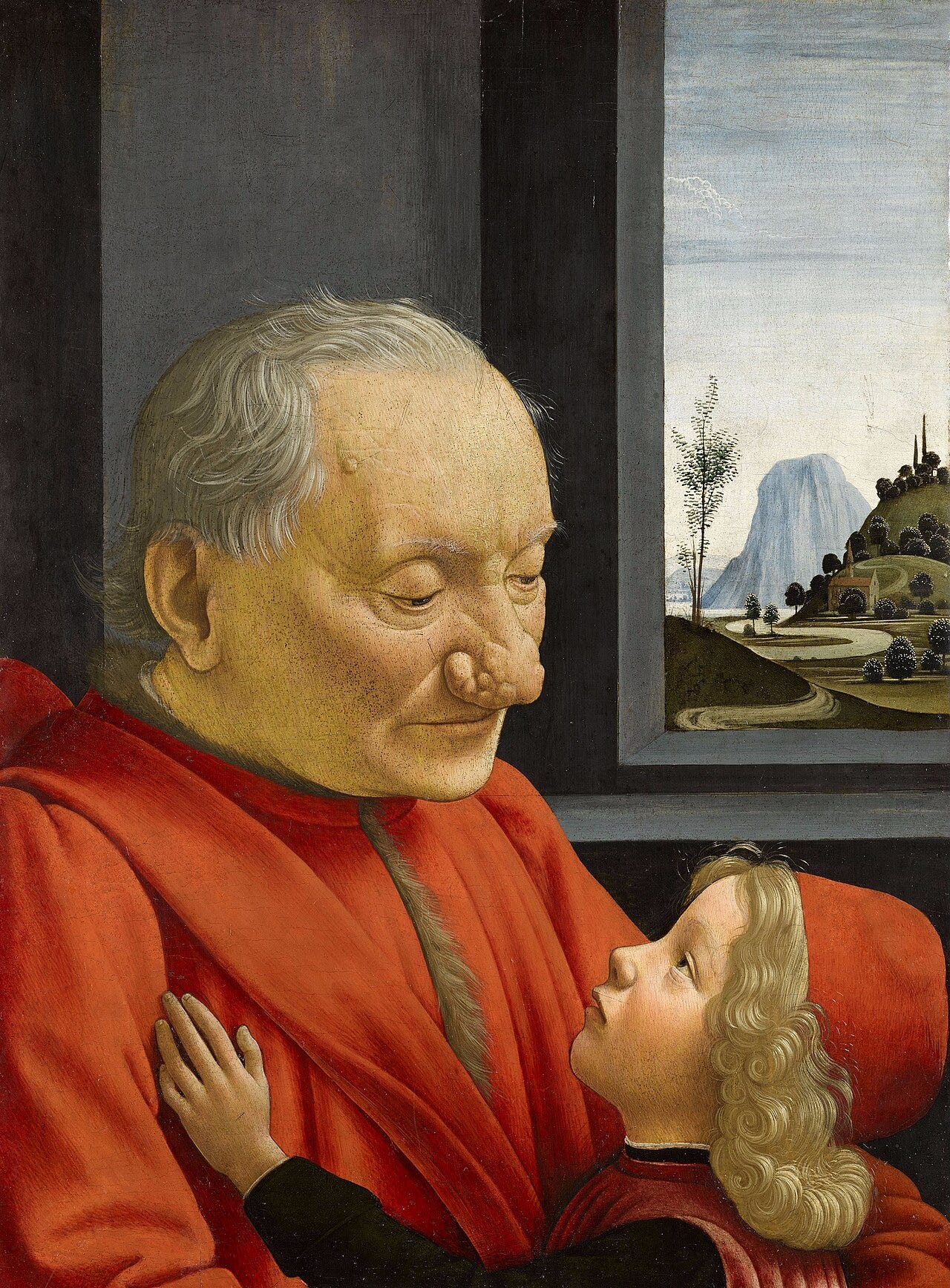
Domenico Ghirlandaio, An Old Man and his Grandson
Ghirlandaio painted this around 1490, an old man gazing down at his small grandson. The child looks up with total trust. The man’s nose is swollen and disfigured by disease.
Ghirlandaio could easily have tidied the nose away. He kept it, because the whole painting is about love seeing past decay. The boy does not notice or care.
It hangs in the Louvre in Paris. It is one of the most tender portraits ever made, old age and childhood face to face, and love holding them together.
Francisco Goya, Time and the Old Women
Francisco Goya painted Time and the Old Women around 1810, two decrepit women dressed and jewelled as if young, preening in a mirror while a winged figure of Time raises a broom to sweep them away.
Goya is savage here. The joke is on anyone who tries to deny age, the fine clothes only making the ruined faces worse. It is a cruel, brilliant warning.
It hangs at the Palace of Fine Arts in Lille. Goya, going deaf and darkening in mood, used old age as a mirror held up to vanity itself.
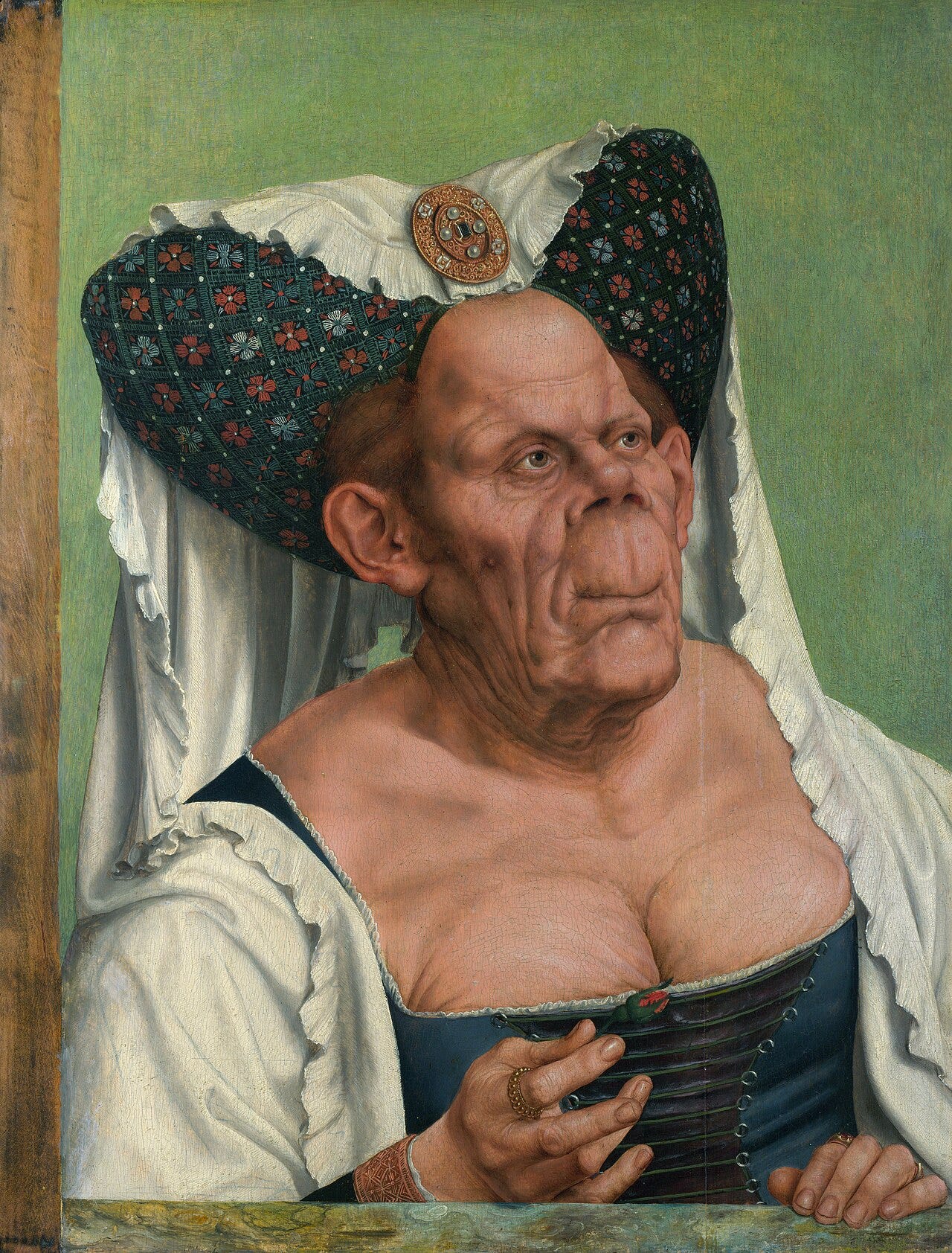
Quentin Matsys, A Grotesque Old Woman
Quentin Matsys painted A Grotesque Old Woman around 1513, an elderly woman in a young woman’s low cut dress and outdated headdress, her features swollen and distorted.
She may show a real medical condition, and she was probably meant to mock older women who dressed to seem young. Centuries later she became the model for the Ugly Duchess in Alice in Wonderland.
It hangs at the National Gallery in London. Cruel and unforgettable, she is one of the most famous faces of old age in all of art.
Giorgione, La Vecchia
Giorgione painted La Vecchia, the old woman, around 1506. She points to herself and holds a small scroll that reads, in Italian, with time.
The message is blunt and universal. This is what time does. She was once young, and the viewer, however young now, will come to look like her.
It hangs at the Accademia in Venice. Painted by an artist who himself died young of plague, it is one of the earliest honest portraits of ageing in Western art.
James McNeill Whistler, Whistler’s Mother
James McNeill Whistler painted his mother in 1871, seated in strict profile in a black dress and white cap. He titled it, coolly, Arrangement in Grey and Black.
Whistler claimed to care only about the shapes and tones, not the sitter. Yet the world saw an ageing mother sitting patiently, and the painting became an icon of quiet old age and devotion.
It hangs at the Musee d’Orsay in Paris. Whatever Whistler said about pure composition, everyone reads it as a portrait of a life nearly done, still and dignified.
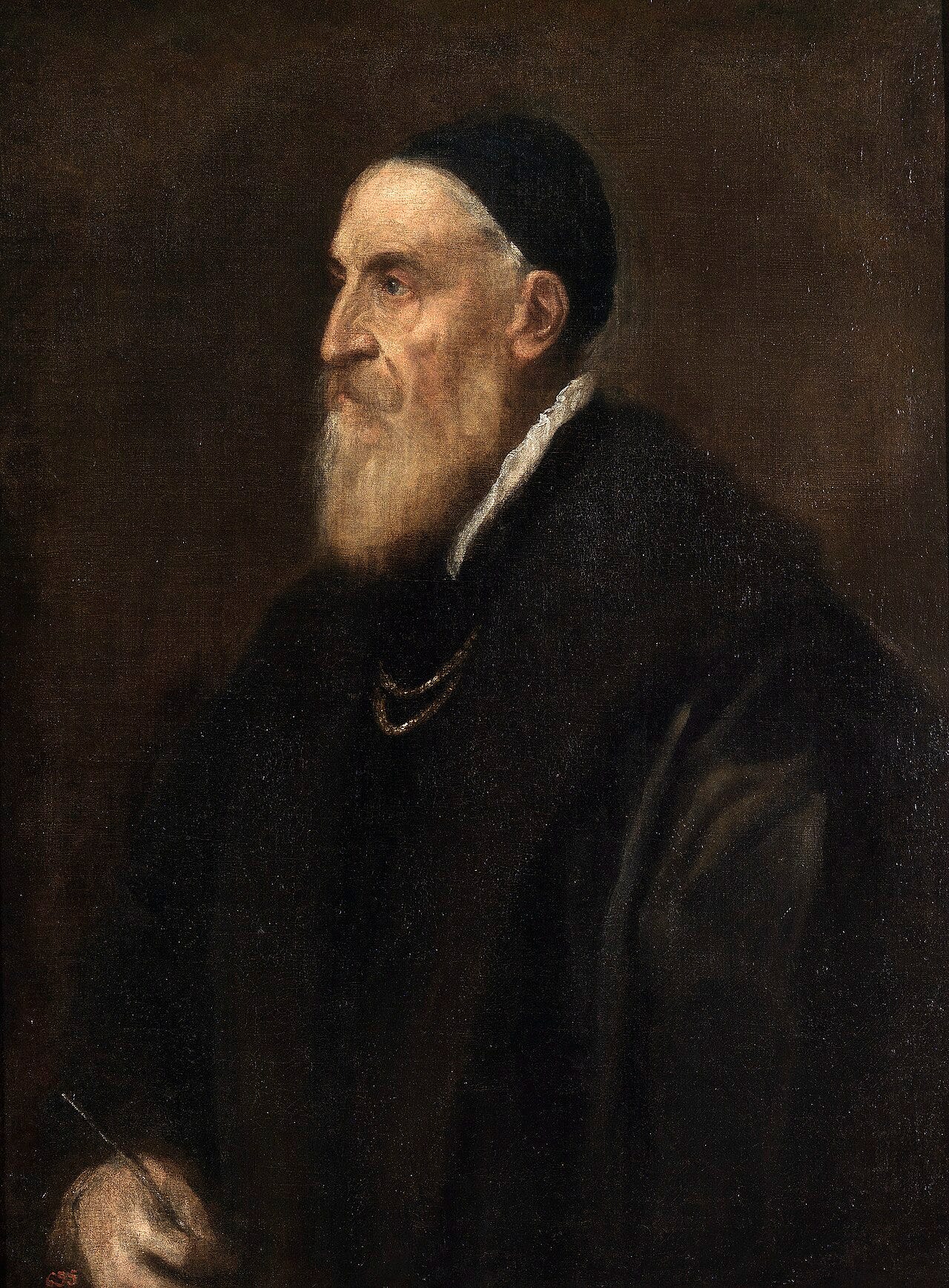
Titian, Self-Portrait
Titian painted himself as an old man around 1567, in his late seventies or older, richly dressed, brush in hand, staring off in proud profile. He was the most famous painter in Europe.
Even in age Titian shows himself as a lord of art, not a broken old man. His late oil technique grew loose and free, painting almost with his fingers.
It hangs at the Prado in Madrid. Titian lived into his eighties and painted to the end, old age worn like a badge of authority rather than defeat.
Rembrandt, An Old Woman Reading
Rembrandt painted An Old Woman Reading in 1655, an elderly woman bent over a heavy book, her lined face lit softly from the glowing pages. She is absorbed, at peace.
Rembrandt loved painting the old, and here he uses his warm light to make age gentle and quiet rather than tragic. The wrinkles are all there, but so is deep calm.
It is held in the Buccleuch collection in Scotland. Set against Goya’s cruelty, it shows the other face of ageing in art, wisdom and stillness instead of decay.
Frans Hals, The Regentesses of the Old Men’s Almshouse
Frans Hals painted the Regentesses of the Old Men’s Almshouse in 1664, when he was around eighty and poor himself, cared for by the very charity these women ran. Five stern faces sit in a row.
His once dashing brush is now loose and rough, and some read tiredness or even bitterness in these hard old faces. It is old age painting old age, with a chiaroscuro that has gone bare and stark.
It hangs at the Frans Hals Museum in Haarlem. Hals died two years later, and this bleak, honest group is one of the last things he made.
Leonardo da Vinci, Portrait of a Man in Red Chalk
This red chalk drawing of a bearded old man, made around 1512, is often said to be Leonardo da Vinci’s self portrait in age, though scholars still argue. The face is deeply lined, the gaze weary and wise.
Real or not, it became the world’s image of Leonardo as the ancient sage. The long beard and heavy brows turned him into the model of the wise old genius.
It is held at the Royal Library in Turin. So fragile it is rarely shown, it fixed forever the idea of the great artist as a venerable old man.
Rembrandt, Portrait of an Old Man
Rembrandt returns once more with a portrait of an unknown old man, seated and frail, hands at rest, his lined face half lost in shadow. Rembrandt painted many such anonymous elders.
He gave these nameless old people the same care he gave the rich, finding whole lives in a worn face. Age, for Rembrandt, was the richest subject a painter could have.
His late elders are spread across the world’s great museums. No painter before or since has looked at old age with such patience and such tenderness.
Questions people ask about old age in art
Which painter is most famous for painting old age? Rembrandt, who tracked his own ageing across dozens of self portraits and painted countless tender studies of the elderly.
Why did Ghirlandaio keep the old man’s diseased nose? Because the painting is about love seeing past decay. The child gazes up with total trust, and the flaw only makes the tenderness stronger.
What does Giorgione La Vecchia mean? The old woman holds a scroll reading with time, a blunt reminder that age comes for everyone, however young they are now.
Is the red chalk drawing really Leonardo? Scholars still disagree, but the ageing bearded face became the world’s image of Leonardo as the wise old master.
Why is Whistler’s Mother about old age? Whistler called it an arrangement of tones, but the world sees an ageing mother sitting patiently, an icon of quiet later life.
Where to see them
Louvre, Paris: Ghirlandaio An Old Man and his Grandson.
Musee d’Orsay, Paris: Whistler’s Mother.
National Gallery, London: Matsys A Grotesque Old Woman.
Prado, Madrid: Titian Self-Portrait.
Frans Hals Museum, Haarlem: The Regentesses of the Old Men’s Almshouse.
Keep exploring
If these faces pulled you in, three more paths from here. Walk through the whole life of the master of the ageing face in Rembrandt, the complete story, learn to read the hidden clues in famous canvases in seven secrets hidden in famous paintings, or start with the basics of the self portrait.
One last thing. It is easy to paint youth. It takes courage to paint a face that time has finished with, and to find beauty and truth there anyway. These twelve painters did, and their old faces outlast every flattering portrait ever made.