Famous Paintings Explained: What They Really Mean

Every hidden meaning we have decoded on Cool Stories About Art, gathered on one page.

Some of the most famous paintings in the world hide a meaning that never quite survives the first look. Guernica reads as chaos until you know what the bull and the horse are doing there. The Scream is not a portrait of someone screaming. Las Meninas puts you exactly where a king once stood, without you noticing at first.

Cool Stories About Art has decoded the story behind many of these paintings, one at a time. This page gathers them side by side, so you can go straight to the painting you are looking for.

In 30 seconds

  • Picasso refused to let Guernica enter Spain while Francisco Franco was alive. The painting finally reached Madrid in 1981, six years after Franco's death.

  • The Scream is not a portrait of someone screaming. Edvard Munch wrote that the scream came from the landscape itself, and the figure is covering its ears against it.

  • Salvador Dali's Persistence of Memory measures only 24 by 33 centimeters, about the size of a laptop screen, despite being one of the most reproduced paintings in the world.

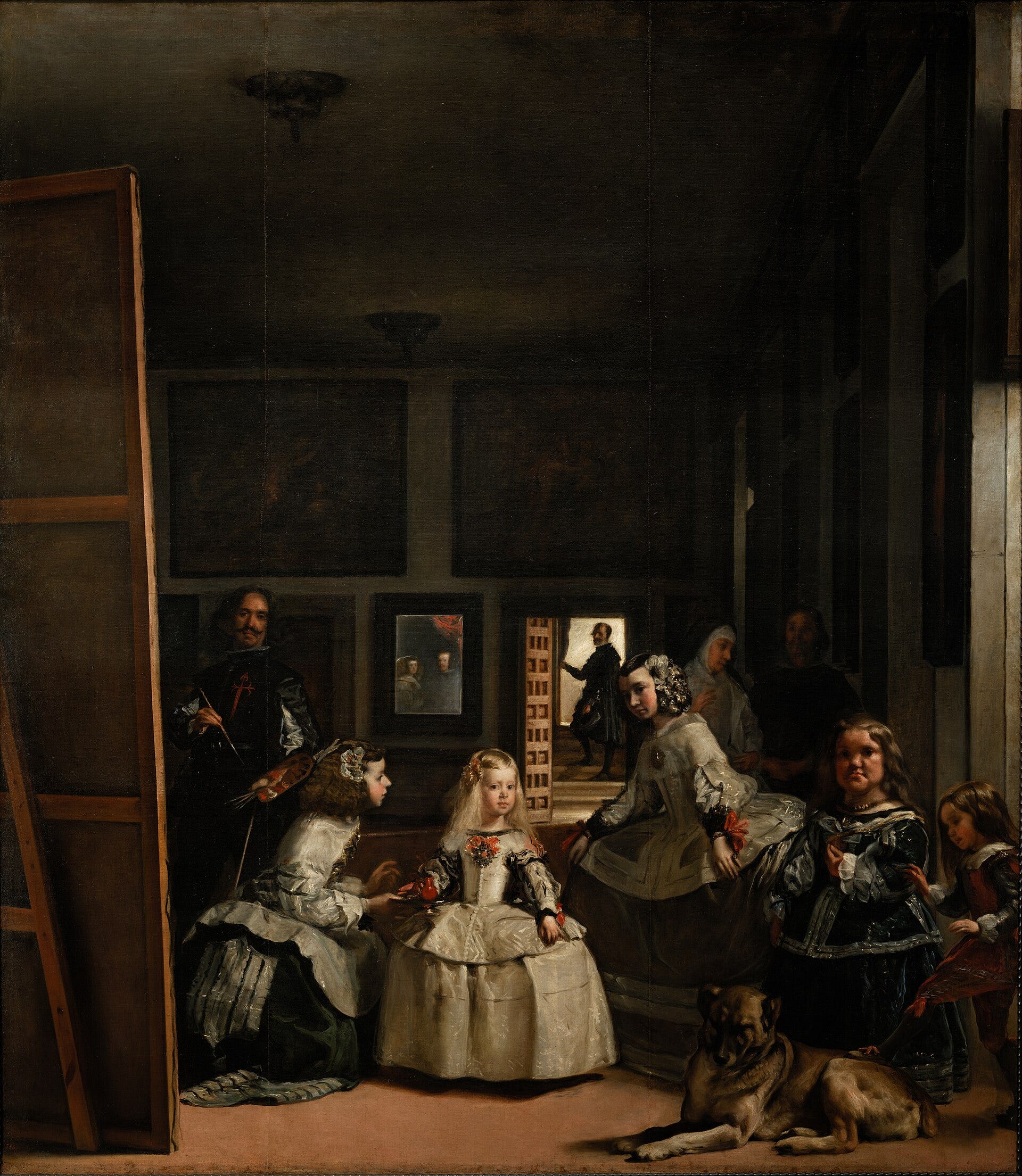
  • The mirror at the back of Las Meninas reflects the king and queen of Spain, which means the viewer is standing exactly where they once stood.

  • Michelangelo painted the fingers of God and Adam so they almost touch, and do not. The small gap between them carries the whole meaning of the fresco.

Guernica, by Pablo Picasso (1937)

Within weeks of the bombing of the Basque town of Guernica in April 1937, Picasso began painting a huge canvas in black, white and grey. He never explained in public what the ambiguous bull or the screaming horse are meant to represent.

Full story: What Does Guernica Mean?

The Scream, by Edvard Munch (1893)

Munch wrote down the exact walk near Oslo that produced this image, and what he says is actually happening to the central figure surprises most people who assume it is simply a portrait of terror. He made four finished versions, and one sold for 119.9 million dollars in 2012.

Full story: What Does The Scream Mean?

The Persistence of Memory, by Salvador Dali (1931)

Dali said the idea for the melting clocks came to him while watching a piece of cheese soften in the sun. The strange fleshy shape asleep at the center of the painting has its own reading that most visitors walk right past.

Full story: What Does The Persistence of Memory Mean?

Whistler's Mother, by James McNeill Whistler (1871)

The painting everyone calls Whistler's Mother has an official title that never uses the word mother at all. How it became a symbol of American motherhood involves a postage stamp that Whistler never approved.

Full story: What Does Whistler's Mother Really Mean?

The Third of May 1808, by Francisco Goya (1814)

A single lantern on the ground lights a man in a white shirt facing a firing squad with no visible faces. Goya built the whole composition around a pose that has been compared to a crucifixion ever since it was painted.

Full story: What Does The Third of May 1808 Mean?

Primavera, by Sandro Botticelli (about 1480)

This crowded garden of gods is meant to be read starting from one specific side of the canvas, not the side most people start with. Once you know where to begin, a chase turns into the arrival of spring itself.

Full story: What Does Botticelli's Primavera Mean?

The Birth of Venus, by Sandro Botticelli (about 1485)

Despite the title, the goddess is not actually being born in this scene. What Botticelli painted instead, and why a Christian city accepted a giant pagan nude, comes down to a philosophy that was fashionable in Medici Florence.

Full story: What Does Botticelli's Birth of Venus Mean?

The School of Athens, by Raphael (1509 to 1511)

Raphael filled this fresco with ancient philosophers who never shared a room in real life, and gave several of them the faces of artists working in Rome at the same time as him. Two of Raphael's own rivals are hidden in plain sight.

Full story: The School of Athens: Who Is Who in Raphael's Fresco

The Garden of Earthly Delights, by Hieronymus Bosch (about 1500)

Read across its three panels, this triptych moves from paradise, through a garden of pleasure, into hell. One detail hidden in the hell panel took five centuries for anyone to actually notice, let alone play out loud.

Full story: The Garden of Earthly Delights: Meaning of Bosch's Triptych

The Creation of Adam, by Michelangelo (about 1512)

Everyone remembers the two hands that almost touch. Fewer people know about the debate over the shape wrapped in red cloth behind God, or who the woman tucked under his arm might be.

Full story: The Creation of Adam: Meaning, the Hands, the Hidden Brain

Nighthawks, by Edward Hopper (1942)

Look closely at the diner in this painting and one architectural detail is missing from the street side of the building, something Hopper never explained but that changes how the whole scene reads.

Full story: Nighthawks by Hopper: Meaning and the Diner With No Door

Christina's World, by Andrew Wyeth (1948)

The woman in the pink dress looks like she is resting in a field. She was fifty six years old and could not walk, and the real reason she is on the ground changes the entire painting.

Full story: Christina's World: Meaning and the Real Christina

The Potato Eaters, by Vincent van Gogh (1885)

Painted five years before The Starry Night, this deliberately ugly picture of a peasant family cost Van Gogh a friendship. He kept calling it, years later and in his own words, one of the best things he ever made.

Full story: The Potato Eaters: Meaning and Why Van Gogh Made It Dark

The Son of Man, by Rene Magritte (1964)

A green apple floats in front of a man's face in this self portrait. Magritte, unusually for him, actually explained in his own words what the apple is meant to hide.

Full story: The Son of Man by Magritte: Meaning of the Apple

The Fighting Temeraire, by J.M.W. Turner (1838)

Turner painted a real warship being towed to the scrapyard, then quietly changed almost every fact about that day, from the number of tugboats to the position of the sunset, to make the farewell hit harder.

Full story: The Fighting Temeraire: Meaning and the Facts Turner Changed

The Gleaners, by Jean Francois Millet (1857)

Three women bending to collect leftover grain look peaceful enough today. Shown at the Paris Salon of 1857, the same scene frightened critics enough that one compared it to the guillotines of the Terror.

Full story: The Gleaners by Millet: Meaning and the 1857 Scandal

The Death of Marat, by Jacques Louis David (1793)

David posed a murdered political ally the way older paintings pose the dead Christ, and quietly removed the real skin disease that had put Marat in his bathtub in the first place.

Full story: The Death of Marat: Meaning, the Murder, the Propaganda

The Sleeping Gypsy, by Henri Rousseau (1897)

A lion stands over a sleeping woman and does not attack her. When the painting resurfaced years after Rousseau's death, some experts refused to believe a self taught customs officer had painted it.

Full story: The Sleeping Gypsy: Meaning and the Hoax Suspicion

Wanderer above the Sea of Fog, by Caspar David Friedrich (about 1818)

You never see this man's face, and the mountain he stands on does not exist on any map. Both choices were deliberate, and they are why the image still works as a stand in for whoever is looking at it.

Full story: Wanderer above the Sea of Fog: Meaning and the Hidden Man

Las Meninas, by Diego Velazquez (1656)

A small mirror at the back of this crowded royal scene reflects two people who are not visibly standing in the room with everyone else. Their presence in that mirror changes where you, the viewer, are actually standing.

Full story: Las Meninas: Meaning, the Mirror, and Who Is in It

Cool Stories About Art has now decoded twenty of these paintings, from a 1793 political murder in a bathtub to a 1964 apple hiding a face, and keeps adding a new one each time a painting earns its own page.