
Petroglyphs are pictures hammered or cut into stone, from the Ice Age to a few centuries ago. The stone often keeps more than the image: how it was cut, roughly when, and what happened to it later, such as a cross cut over a giant on a Russian lakeshore, or a dam abandoned so that carvings would not drown.
Cool Stories About Art is a newsletter to learn art the fun way.
Join 200,000+ readers and get:
10 new art stories / month
The entire archive of content (140+ articles)
Comment, ask questions, and chat with other readers
What a Petroglyph Is, and How It Gets Its Date
A picture painted on stone rather than cut into it is a pictograph, which is why the painted caves of the Ice Age are left out.
Many cliffs and boulders wear a dark crust called desert varnish, clay stained by iron and manganese. Where a surface had it, carvers struck through it with a stone chisel and a hammerstone to bare the paler stone beneath, and the image shows by contrast.
Once cut, a groove holds almost nothing that can be dated reliably, and that is why dating petroglyphs is hard. The date has to come from around the carving: the surface it was cut into, objects buried nearby, the style, or what the figure shows.
Meaning is harder still. Where no living tradition explains a figure, any reading of it stays a guess.
Each of the twelve starts from one figure, one group of figures or one kind of mark, and in each the stone gives up at least one clue about how it was cut, how old it is or what happened to it later. Several have since had to survive a reservoir, the dust of trucks, a gas plant or a cross.
12. The Demon of Besov Nos, Lake Onega (Karelia, Russia)
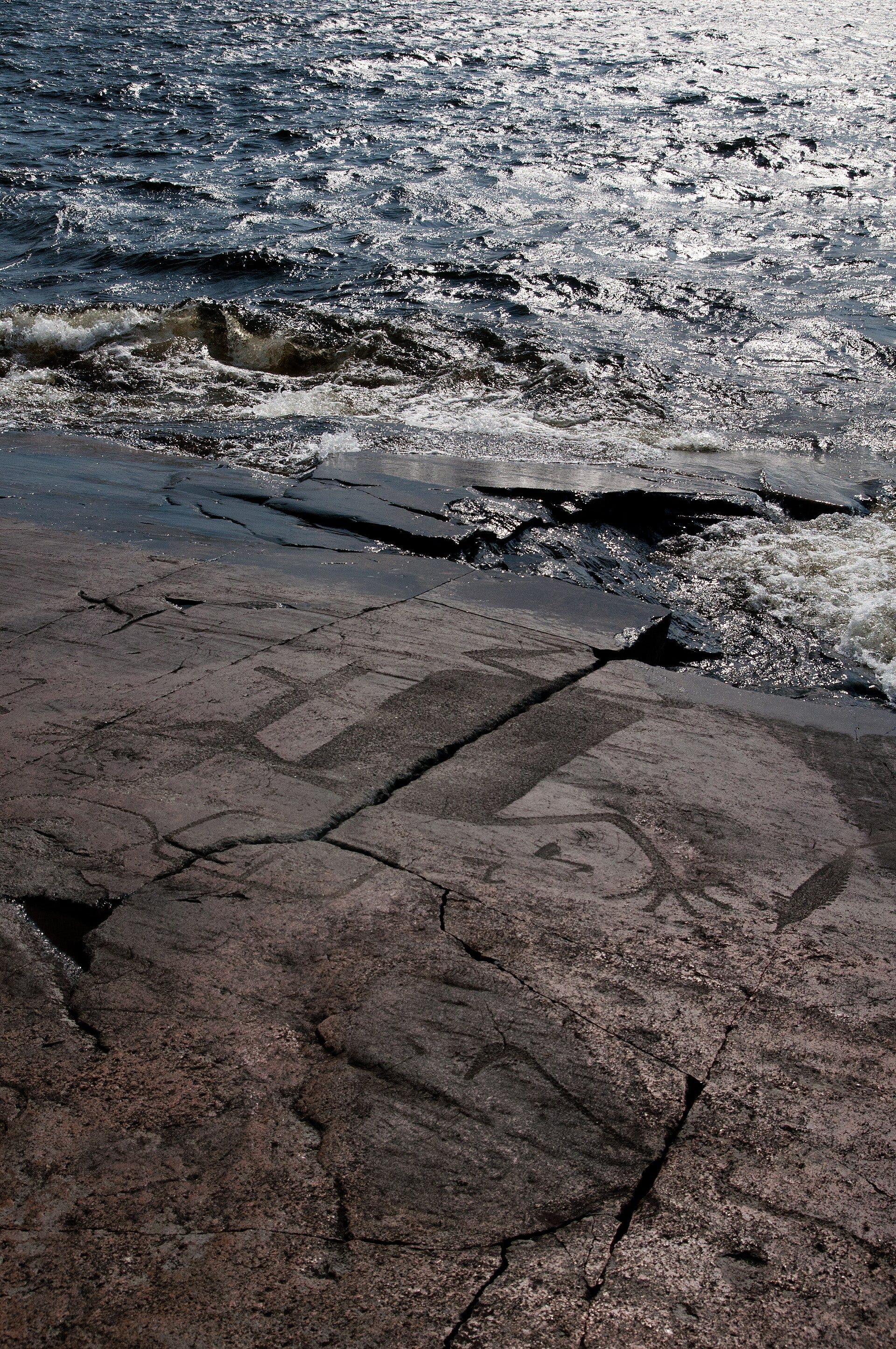
A small Christian cross is cut into the granite over a giant figure on the eastern shore of Lake Onega, in Karelia, Russia. The two were made thousands of years apart. The figure is a human shape more than seven feet long, pecked a few millimeters deep into the smooth rock of a cape.
The giant was carved by Neolithic fishers and hunters, people of the New Stone Age who lived along the lake. Their homes date the carvings: more than a hundred settlements and camps excavated around the shore belong to the same people. Most estimates put the giant at some five to six thousand years old.
Its makers may have seen in it a Great Mother, a kind of figure that turns up often in Stone Age art across Europe and Asia, but what it meant to them is unknown.
Thousands of years later, Christians saw something else in it. Local people put the carvings down to the evil spirit, and in the 1500s monks were calling the big figure the demon. The cape still bears the name Besov Nos, the demon's nose.
The cross is probably older than that name. It was cut over the figure in the 1400s, most likely to neutralize it, and tradition credits it to the monks of the Murom monastery. It is still there, in the same granite as the giant.
At a Glance
Artist: Unknown Neolithic carvers of the Lake Onega shore
Carved: Neolithic, some 5,000 to 6,000 years ago by most estimates
Medium: Pecked into smooth granite rock on the shore, 1 to 4 mm deep
Size: About 2.3 m (7 ft 6 in) long
Where to see it: Besov Nos cape, eastern shore of Lake Onega, Karelia, Russia
11. The Whales of Bangudae, Ulsan (South Korea)
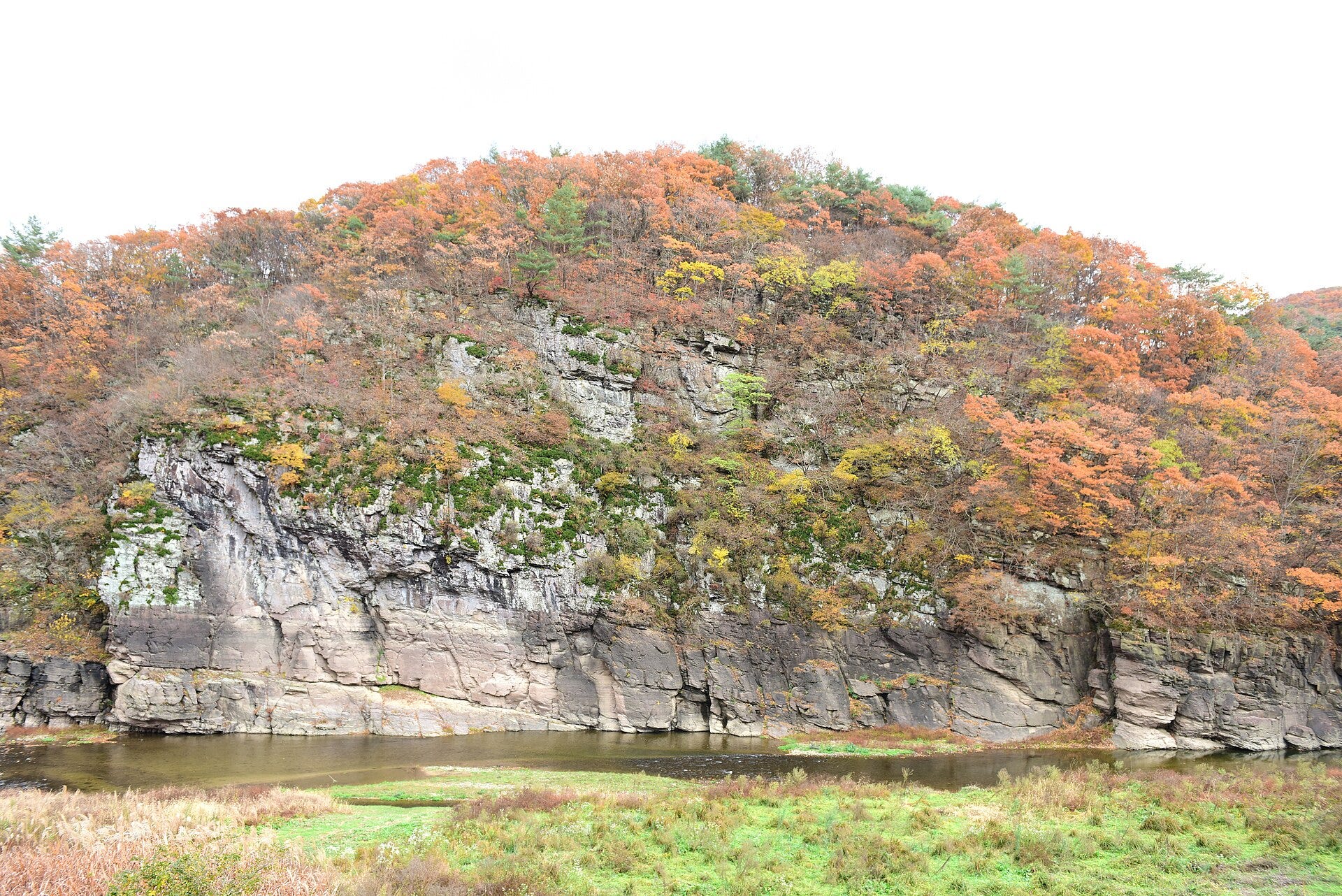
Carved on a cliff above a shallow stream in Ulsan, South Korea, a gray whale swims with its calf on its back, and around it other whales carry harpoons in their bodies. A university team found the carvings in December 1971. By then, the cliff had already been spending part of every year under water for six years.