Famous Picasso Paintings: His 12 Greatest Works

Pablo Picasso reinvented painting more than once in a single lifetime, from tender blue beggars to shattered cubist faces to the great scream of Guernica.

Pablo Picasso Graffiti

He was the most famous and prolific artist of the twentieth century, making tens of thousands of works and changing art more than once before he died at ninety one.

These are twelve of his most famous paintings, each one a turning point in a restless, ruthless career. For the whole story of the man, see the complete Picasso guide; here, the paintings themselves.

I have picked the twelve that shook the world.


Learn art the fun way. Free stories every week, no boring lectures.


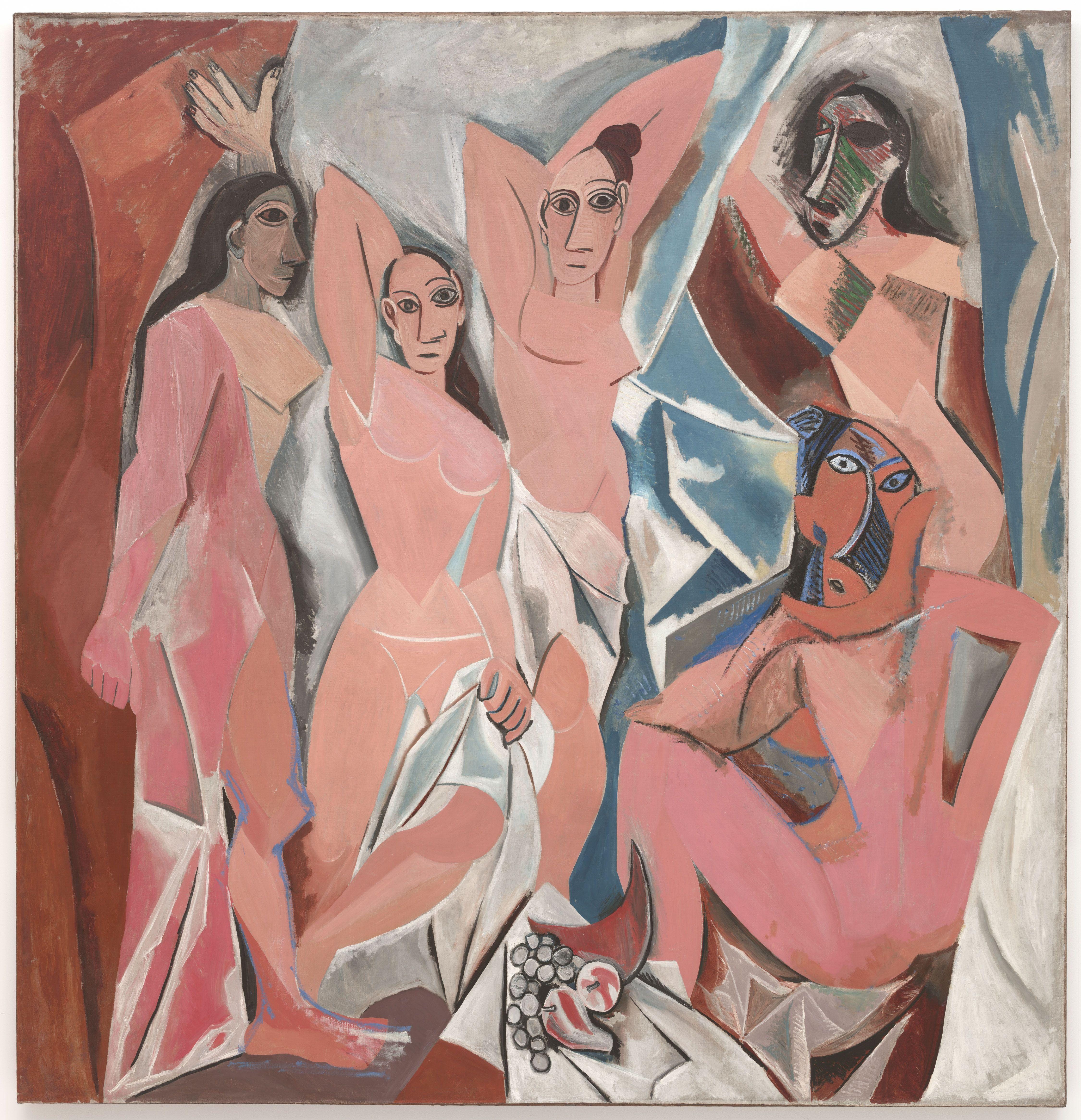
1. Les Demoiselles d'Avignon (1907)

Five naked women stare out with faces like carved masks, their bodies broken into sharp, flat planes, in the painting that blew the doors off modern art.

Picasso worked on it in secret for months, and even his friends were shocked, one of them calling it a hoax. He fused the raw power of African masks and ancient Iberian carving with a brutal new way of seeing, the first step toward Cubism The women are prostitutes on a street in Barcelona, painted with none of the softness the nude usually gets.

He hid the canvas away for years, and it did not go on public show until 1916.

2. Guernica (1937)

A screaming horse, a bull, a mother with a dead child and a broken warrior writhe in black, white and pale tones, the most famous protest painting ever made.

Picasso threw himself at the huge mural after German bombers destroyed the Basque town of Guernica for Franco during the Spanish Civil War.

There is no blood and no color, only the raw horror of violence against the innocent, told in the language of nightmare. He refused to let it hang in Spain while Franco lived, so it stayed in exile in New York for decades.

It is a large part of why Picasso still matters, and it finally came home to Madrid in 1981.

3. The Old Guitarist (1903)

A gaunt, blind old man folds himself around a brown guitar in a world drained of all color but cold blue, the finest picture of Picasso's Blue Period.

He painted it in his early twenties, poor, in the blue years that followed the suicide of a close friend, pouring his own despair into these ragged outcasts.

The stretched, bony figure owes a debt to the long saints of El Greco, whom the young Picasso adored. It hangs in the Art Institute of Chicago, and under an X ray the faint ghost of an earlier painting shows through, a woman he painted over to save the costly canvas.

4. Girl before a Mirror (1932)

A young woman gazes at her own reflection, which stares back darker and stranger, her body a pattern of bright curves and a face split into day and night at once.

The girl is Marie Therese Walter, Picasso's young secret lover, painted in a burst of color and desire. The mirror shows not her face but something older and sadder, as if she sees her whole life and death in the glass.

Picasso painted his women again and again, and his tangled, often cruel love life ran straight through his art, a story I dig into in the piece on the six women he broke He kept Marie Therese hidden even from his wife, painting her in a private code of color for years.


Join 130,000 readers who get the secrets behind the paintings. Free.


5. The Weeping Woman (1937)

A woman sobs so hard her face seems to shatter like glass, tears running in hard lines down cheeks broken into jagged green and purple shards.

She is Dora Maar, the photographer and Picasso's lover through the Guernica years, whom he painted over and over in tears. It came straight out of Guernica, taking that mural's grief and pressing it into a single anguished face.

It hangs in the Tate in London. Dora hated being cast forever as the weeping woman, saying that for Picasso she was never anything but a suffering machine.

6. La Vie (1903)

A gaunt naked couple stands facing a grieving mother holding a baby, in a cold blue meditation on love, death and the whole arc of a life.

Painted at the height of the Blue Period, it is Picasso's largest and most ambitious early work, dense with buried meaning. The man's face is that of his dead friend Carlos Casagemas, who had shot himself over a woman, the loss that first turned Picasso's world blue.

X rays show he reworked the scene many times, changing the figures and the meaning as he went. It hangs in Cleveland, and no one has ever fully cracked what its silent figures are meant to say.

7. Three Musicians (1921)

Three flat, brightly colored figures in costume, a Harlequin, a Pierrot and a monk, sit playing music, cut and stacked together like a wall of paper shapes.

This is Cubism at its most playful and grand, the late, colorful kind Picasso called synthetic, built from crisp overlapping planes.

The three players may be Picasso and two poet friends, one dead and one gone from his life, a memory of lost youth in fancy dress.

It looks like collage but is entirely painted, every torn paper edge done by hand. There are two versions, one in New York and one in Philadelphia, both painted the same summer.


130,000 people read this every week. Joining them costs nothing.


8. Family of Saltimbanques (1905)

A troupe of circus wanderers, acrobats and a clown, stand marooned in a bare pink landscape, going nowhere, together yet strangely alone.

This is the warmer Rose Period that followed the blue years, its harlequins and travelling players standing in for the artist and his friends.

Picasso loved the circus and saw in these poor performers a mirror of the outsider artist. It is his largest Rose Period painting, quiet and haunted despite the soft pink and terracotta.

It hangs in Washington, the last great picture before he smashed everything apart with Cubism.

9. The Dream (1932)

A woman sleeps in a red armchair, her calm face tilted, painted in smooth curving lines and warm color, one of Picasso's most tender and best known portraits.

She is again Marie Therese, and the upper half of her face is shaped, some say deliberately, like something rather less innocent.

He is said to have painted it in a single afternoon, in a mood of pure pleasure, all soft roundness and glowing color. In 2006 its owner put his elbow through the canvas by accident, days before a sale, tearing a hole worth tens of millions.

Repaired, it later sold in private for around one hundred and fifty five million dollars.

10. Ma Jolie (1911 to 1912)

At first it looks like a jumble of brown and tan shards, but hidden inside are a woman, a guitar and the stenciled words Ma Jolie, my pretty one.

This is Analytic Cubism at its most extreme, a figure shattered into so many facets that it nearly dissolves into pure pattern. Ma Jolie was Picasso's pet name for his lover Eva Gouel, a love letter buried inside an almost unreadable painting.

He and Georges Braque pushed this style so far together that their work of these years is hard to tell apart, even for experts. It hangs at the Museum of Modern Art in New York, a love note so encoded that the woman is almost impossible to find.


Two new stories a week, 130+ secrets unlocked. Start free.


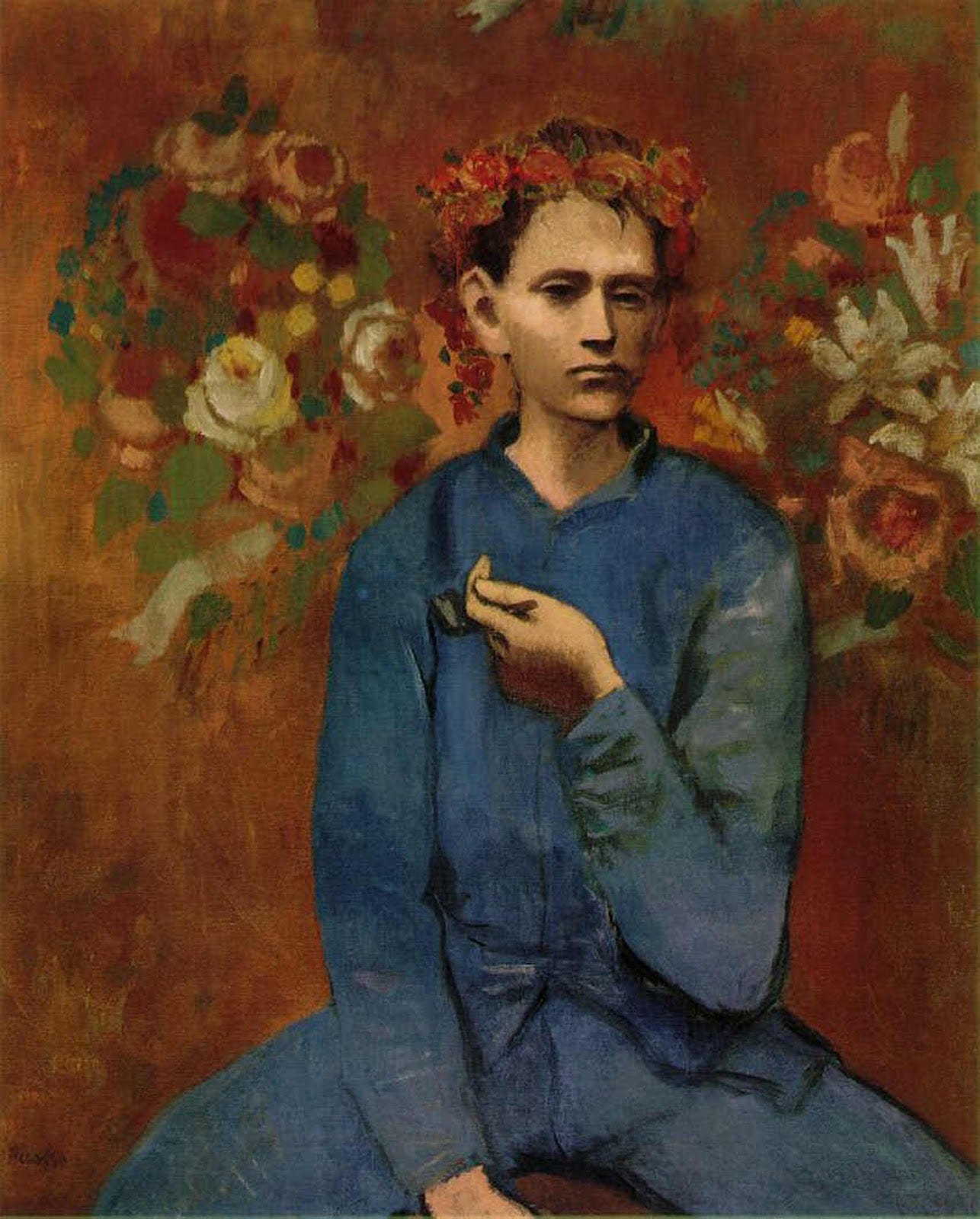
11. Boy with a Pipe (1905)

A dreamy Paris boy in a blue smock sits crowned with a garland of roses, holding a pipe, painted in the soft glow between Picasso's blue and rose years.

He was around twenty four, living in a run down Montmartre studio, and the boy was a local street kid he called little Louis. Critics have never quite known what to make of the rose garland, which sits oddly on a rough young lad.

For decades the picture was admired but not thought major. Then in 2004 it sold for one hundred and four million dollars, at the time the most expensive painting ever sold at auction.

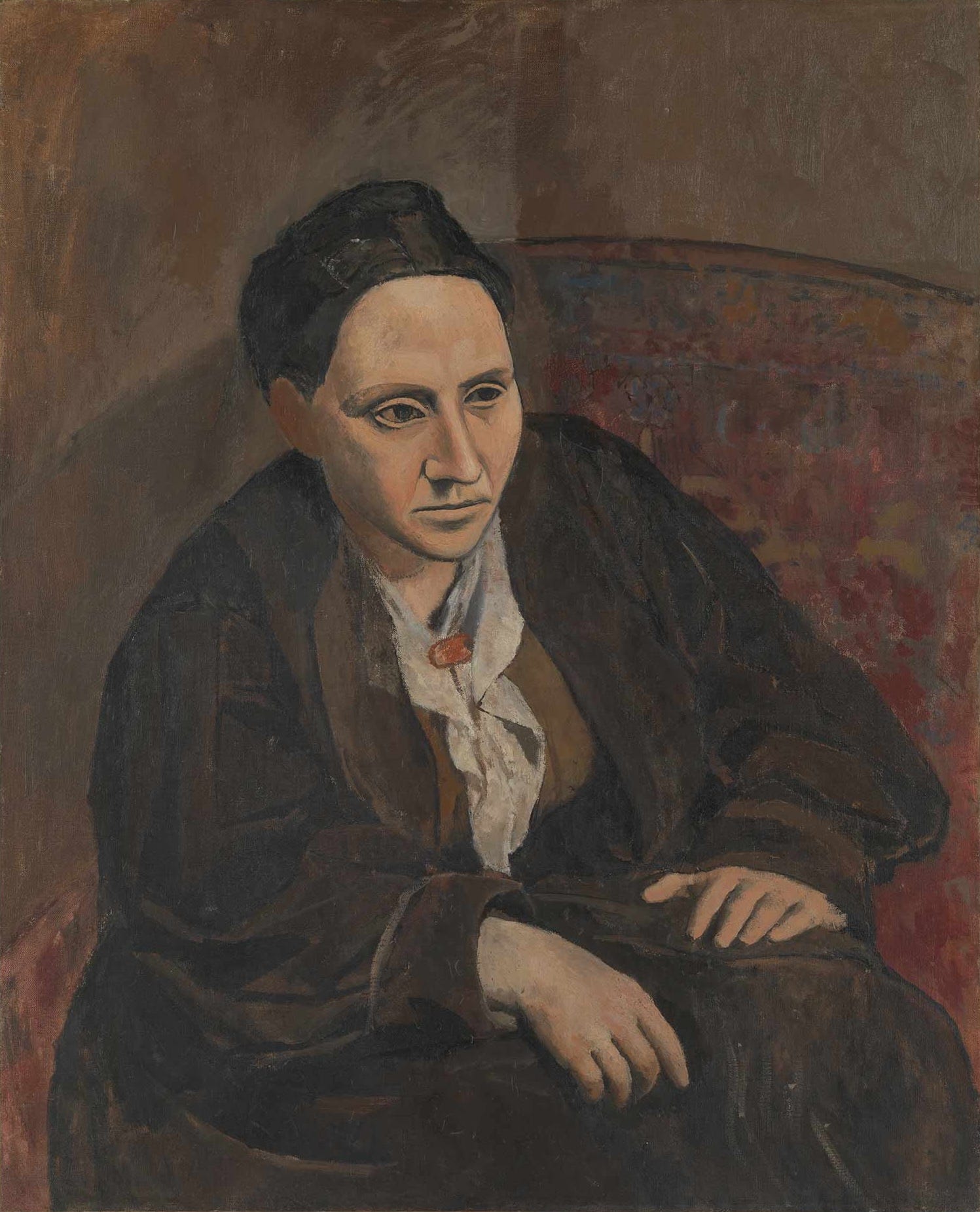
12. Portrait of Gertrude Stein (1906)

The American writer Gertrude Stein sits heavy and still, her face simplified into a stern, mask like shape that looks nothing like a normal likeness.

Picasso made her sit some ninety times, then wiped out the face in frustration and finished it from memory, months later, without her there.

When people said it looked nothing like her, he simply replied that it would. In that flat, carved face you can already see him leaving ordinary portraiture behind, one step short of Cubism.

It hangs at the Metropolitan Museum, and in the end Stein did grow to look like her painting, exactly as he had promised.


What people still ask about Picasso

  • What is Picasso's most famous painting? Guernica from 1937 and Les Demoiselles d'Avignon are his two most famous, along with his Blue Period pictures.

  • How many paintings did Picasso make? Around 1,900 paintings and tens of thousands of works in all, one of the most prolific artists who ever lived.

  • What is Cubism? The style Picasso invented with Braque that breaks a subject into flat, shifting facets seen from many angles at once.

  • Why is Picasso so famous? He reinvented art several times over, from the Blue Period to Cubism to Guernica, shaping the whole twentieth century.

  • Are Picasso's paintings worth a lot? Yes, several have sold for over one hundred million dollars, among the highest prices ever paid for art.


If these paintings pulled you in, you will love these too:


The man who ate the century

Picasso could not stop reinventing himself, tearing up his own style the moment he had perfected it. He painted love and cruelty, tenderness and rage, often about the same people, sometimes in the same week.

These twelve pictures are only the peaks of a mountain range of nearly two thousand paintings. Love him or not, the whole shape of modern art still bends around him.