Famous Portrait Paintings: 12 Faces That Made History
The most famous portrait paintings run from Leonardo's Mona Lisa and Holbein's Henry the Eighth to Van Gogh's melancholy doctor and Sargent's society stars. A great portrait does more than record a face, it decides how a person is remembered forever.
Kings, popes and merchants all sat for the same reason: to control how the future would see them. I have picked twelve faces that shaped history and how we picture it, and you can read how the genre works in what portrait painting is.
What a portrait is really for:
Power. Kings and popes used them as propaganda, copied and sent across an empire.
Memory. A face held past death, the only way to meet the dead before photography.
Status. To be painted at all meant money, rank and the right to be remembered.
The soul. The best go past the surface and seem to catch the person inside.
What I would open after this
If you like knowing what is actually going on inside a picture, start with these three:
The Arnolfini Portrait, detail by detail, the mirror, the dog, and the question everyone asks
Twelve famous portraits and the real people, the faces behind the paintings
Was Monet really the first Impressionist, the painting that may have got there first
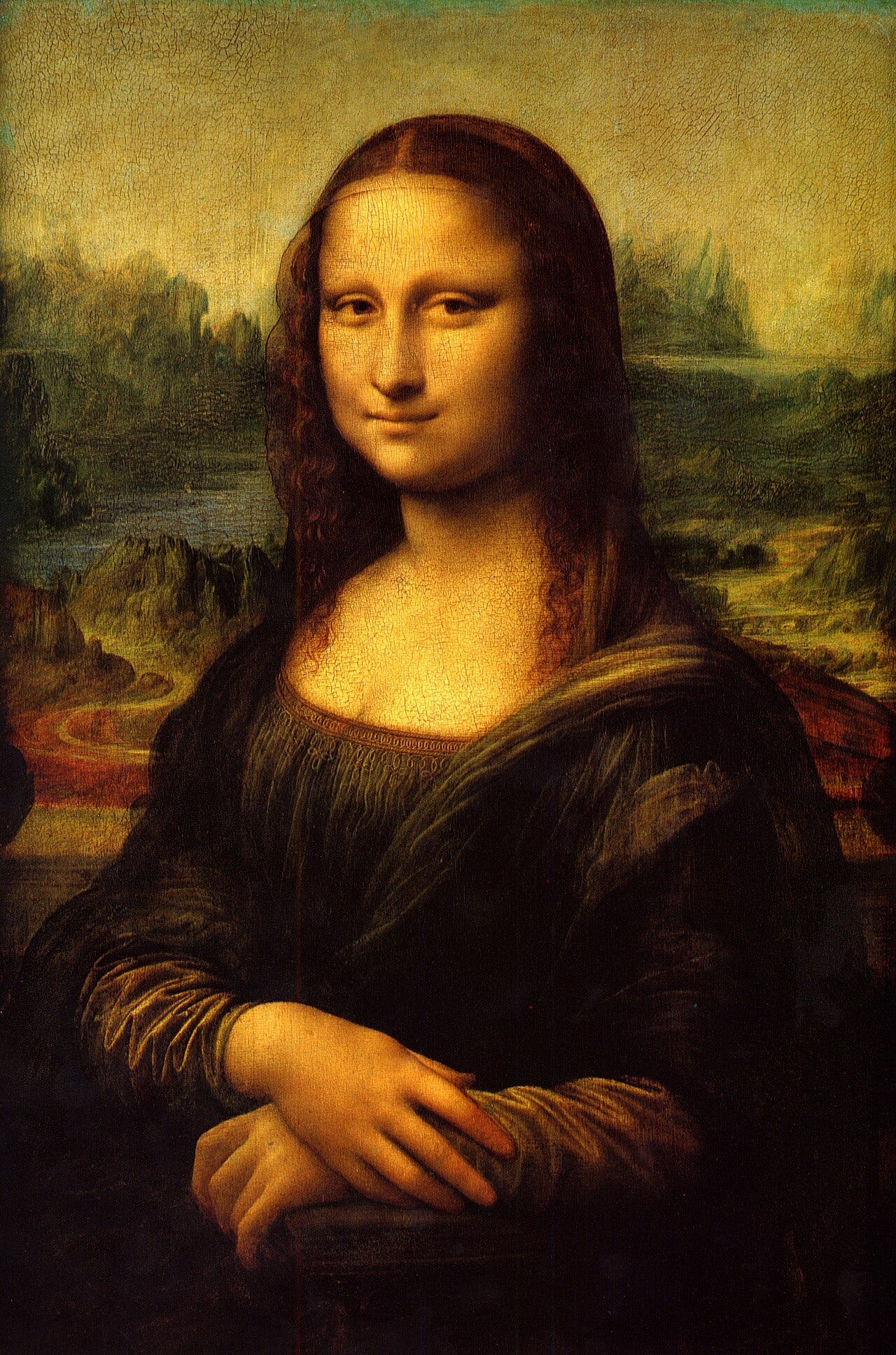
1. Leonardo da Vinci, Mona Lisa (about 1503)
Every list of great portraits bows first to the Mona Lisa. Leonardo painted this Florentine woman, most likely Lisa Gherardini, around 1503, giving her a soft, ambiguous smile that has never stopped being argued over.
She became the most famous face on earth almost by accident, after a thief stole her from the Louvre in 1911 and the world spent two years hunting her. Doctors still search her face for signs of illness, a hunt I follow in was Mona Lisa sick.
2. Jan van Eyck, Portrait of a Man in a Red Turban (1433)
This man stares straight out of the picture, meeting your eye across six hundred years, which in 1433 was almost unheard of. Jan van Eyck may well have painted himself here, and along the top he wrote his motto, Als Ich Can, meaning as best I can, a quiet boast about his own skill.
Before this, sitters gazed off to the side in polite profile. By turning the face to us and carving every crease and whisker in oil, van Eyck made a portrait feel like a living presence in the room.
3. Hans Holbein the Younger, Henry the Eighth (about 1537)
Legs planted wide, shoulders swollen with padding and fists on his hips, Henry the Eighth stares you down like a wall of muscle. Hans Holbein built this image of the king around 1537, and no ruler ever managed his own picture better.
The pose became the one and only Henry in the public mind, copied endlessly for centuries. The original wall painting burned in a palace fire in 1698, so every Henry you imagine now descends from Holbein's lost design.
4. Frans Hals, The Laughing Cavalier (1624)
He is not laughing, and he is not a cavalier. Frans Hals painted this smiling young man in 1624, and the catchy title was invented by the Victorians more than two centuries later.
What makes it live is the smirk and the swagger, caught with loose, quick strokes that look almost modern up close. The sitter tilts back, one hand on his hip, challenging you to find a portrait more pleased with itself.
5. Rembrandt, The Night Watch (1642)
Rembrandt took the dullest job in painting, the group portrait, and turned it into a drama. The Night Watch, from 1642, shows a militia company bursting into movement, muskets and banners catching the light, instead of lining up in a neat row.
Each man paid to appear, and those who paid more got better spots, which caused grumbling from the figures left in shadow. It was later cut down to fit between two doors, so the picture we love today is missing a strip from every side.
6. Diego Velazquez, Portrait of Pope Innocent the Tenth (1650)
When Innocent the Tenth saw his own portrait, he is said to have muttered that it was too true. Velazquez had painted the pope in 1650 with a sharp, suspicious glare and glowing red robes, holding nothing back about the hard man inside them.
Three centuries later Francis Bacon became obsessed with it and painted dozens of screaming versions, twisting this cool, honest face into pure nightmare. Few portraits have haunted other artists so completely.
7. Thomas Gainsborough, The Blue Boy (about 1770)
A boy stands draped head to toe in glowing blue satin, in one of the most loved pictures in Britain. Thomas Gainsborough painted The Blue Boy around 1770, and it is often told as an act of defiance, since Joshua Reynolds, head of the Royal Academy, had argued that cold blue should never rule a picture, and Gainsborough's blue boy has been read ever since as a reply to that rule.
In 1921 the picture sold to an American railway magnate for a record sum and shipped to California, which caused a small national heartbreak when it left the country.
8. Jean Auguste Dominique Ingres, Napoleon on his Imperial Throne (1806)
Ingres painted Napoleon not as a general but as a god. In 1806 he set the new emperor stiff and frontal on a golden throne, gold laurel on his head, staring out cold and remote like an ancient idol.
Critics of the day hated it, calling the flat, frozen style a step backward into the Middle Ages. Ingres did not care, since he wanted power to look eternal and untouchable, never merely human.
9. Francisco Goya, Charles the Fourth of Spain and His Family (1800)
Goya lined up the entire Spanish royal family in gold and jewels, and somehow made them look faintly ridiculous. Painted in 1800, the group stares out plump, stiff and vain, with the real power, the queen, placed dead center.
Some believe Goya quietly mocked his own patrons, since no one here comes off as grand or wise. Like Velazquez before him, he tucked himself into the shadows at the left, watching the show he was paid to record.
10. John Singer Sargent, Lady Agnew of Lochnaw (1892)
Lady Agnew lounges back in a chair, one arm draped, and fixes the viewer with a cool, knowing gaze that still feels thoroughly modern. John Singer Sargent painted her in 1892, and this single relaxed look made her famous overnight.
The portrait was a sensation at exhibition and turned both sitter and painter into stars. Sargent could suggest silk, skin and personality with a few swift strokes, and here he made a young woman look utterly, effortlessly alive.
11. Vincent van Gogh, Portrait of Dr Gachet (1890)
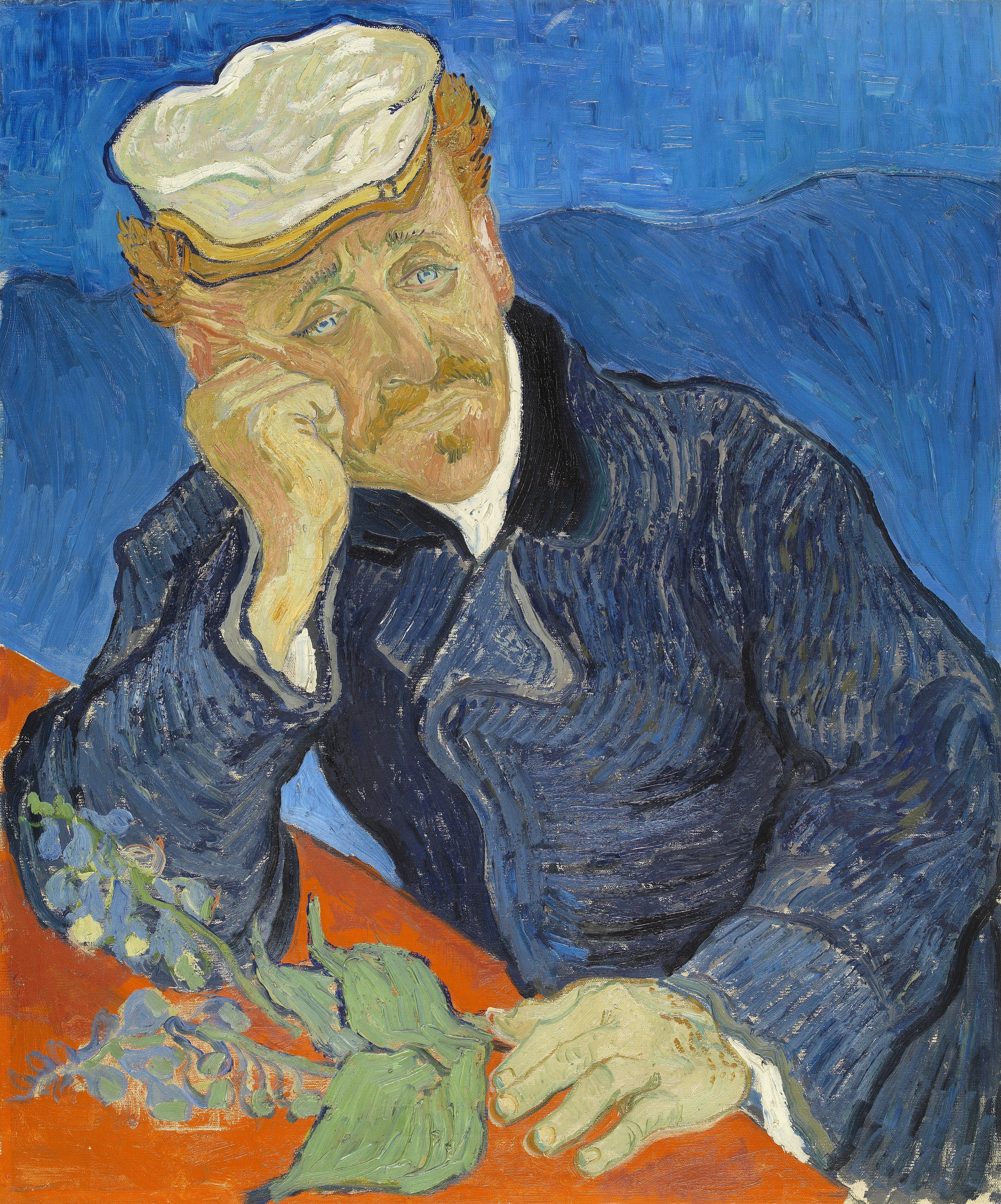
Van Gogh painted his doctor drowning in sadness, chin propped on his hand, and called the mood the heartbroken expression of our time.
He made the Portrait of Dr Gachet in 1890, in the last weeks of his life, and I follow that final summer in the last day of Vincent van Gogh.
A century later the picture shocked the world when it sold for eighty two and a half million dollars in 1990, briefly the most expensive painting ever, then vanished into a private collection and has rarely been seen since.
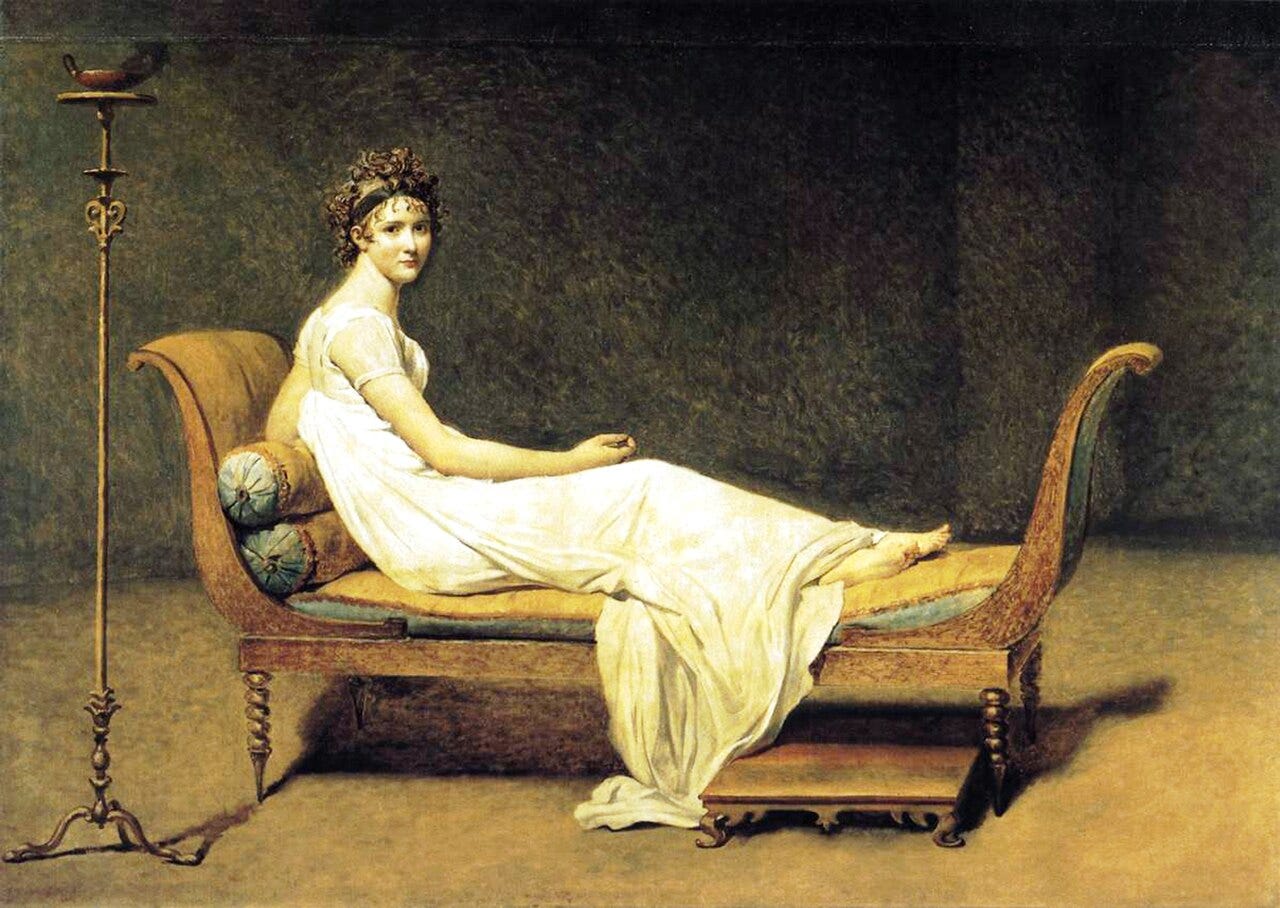
12. Jacques Louis David, Portrait of Madame Recamier (1800)
The most stylish portrait of its age was never finished. In 1800 Jacques Louis David posed the famous beauty Madame Recamier barefoot on a couch, and then the two fell out before he could complete it.
He kept the unfinished picture rather than hand it over, and his own pupil painted a rival version out of spite. Left half done, David's cool, empty room and reclining woman became the height of style anyway, proof that a portrait can win even when the painter walks away.
Where to meet them
Leonardo, Mona Lisa, and David, Madame Recamier: the Louvre, Paris.
Holbein, Henry the Eighth: surviving versions at the Walker Art Gallery, Liverpool, since the original is lost.
Hals, The Laughing Cavalier: the Wallace Collection, London.
Velazquez, Pope Innocent the Tenth: the Doria Pamphilj Gallery, Rome.
Sargent, Lady Agnew of Lochnaw: the National Galleries of Scotland, Edinburgh.
If a face held your eye, look closer here:
The Ambassadors, detail by detail, the object at the bottom that only works from one side
The secret behind Monet Magpie, one bird in the snow, and why it matters
Lady with an Ermine, detail by detail, why she is holding that animal
Portraits, a few honest questions
What is the most famous portrait painting? Leonardo's Mona Lisa, painted around 1503, is the most famous portrait in the world.
What makes a portrait great? Not just a likeness, but a sense of the person inside, caught in a look, a pose or a mood.
What is the most expensive portrait? Among the highest is Van Gogh's Portrait of Dr Gachet, sold for eighty two and a half million dollars in 1990.
Is the Laughing Cavalier really laughing? No. He only smiles, and the romantic title was invented by the Victorians long after Hals painted him in 1624.
Why did rulers commission portraits? To shape how they were seen. A portrait of a king or pope was propaganda, copied and sent across a whole realm.
The faces that decided their own legend
Line them up and you realize a portrait is a negotiation. The sitter wants to look powerful, beautiful or wise, and the painter decides how much of the truth to let in.
Holbein gave Henry a wall of muscle he may not have had, Goya let a whole royal family look faintly absurd, and Velazquez gave a pope a glare so honest the man called it too true.
The strangest twist is that we now know these people almost entirely through paint. Ask anyone to picture Henry the Eighth, and they will describe a portrait made nearly five hundred years ago by a German visitor named Holbein.