
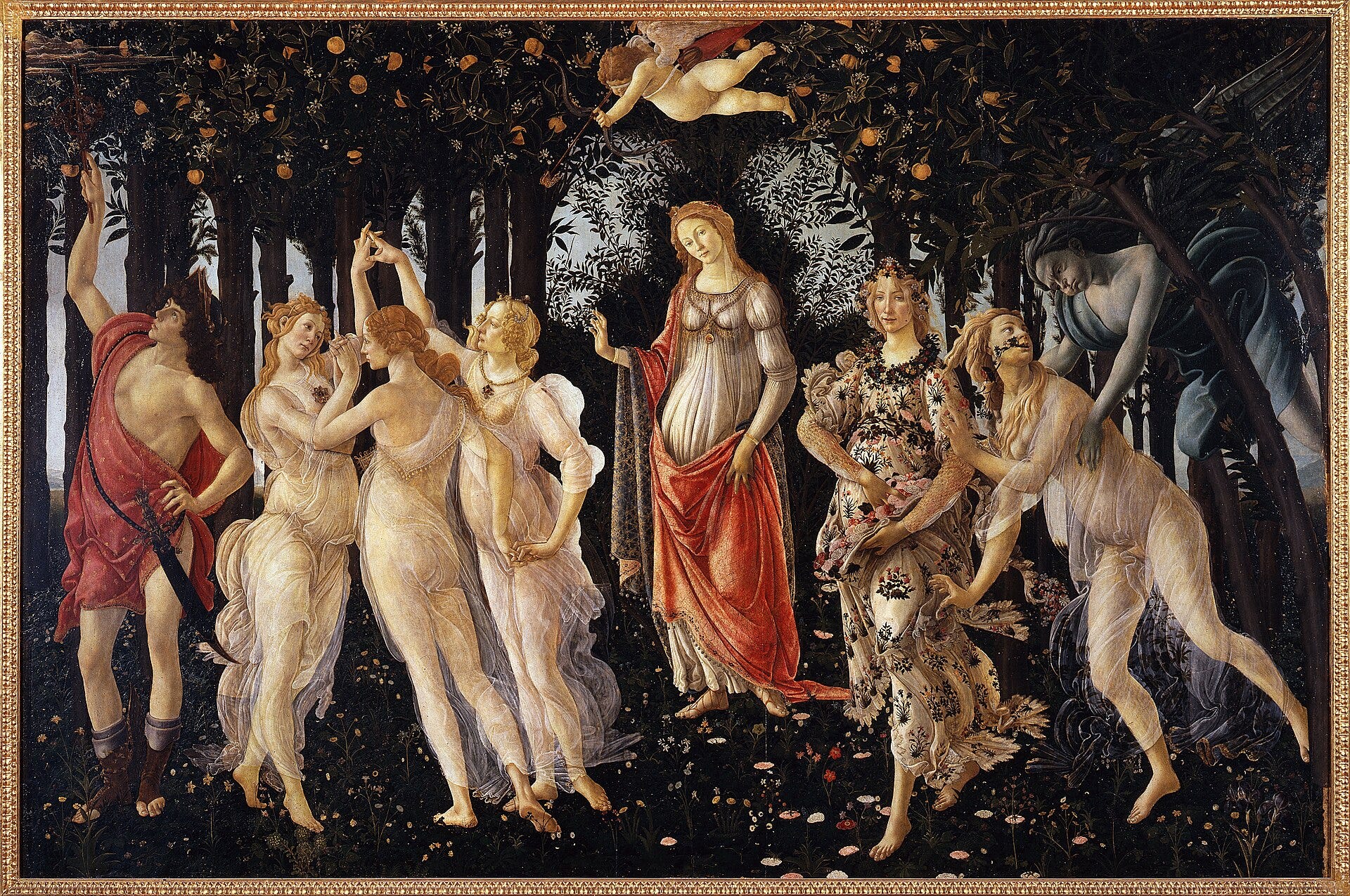
Around 1400, a Florentine painter still set his saints against a wall of gold, and nobody had yet written down how to make a painted room look deep. Two centuries later, painters could measure space, model a face with shadow alone and sell the same image in a dozen cities. Every one of those changes started with a single artist, and everyone after had to reckon with it.
Cool Stories About Art is a newsletter to learn art the fun way.
Join 170,000+ readers and get:
10 new art stories / month
The entire archive of content (1,000+ articles)
Comment, ask questions, and chat with other readers
What the Renaissance Asked of Its Artists
The word Renaissance means rebirth. It names the two centuries, roughly 1400 to 1600, when European scholars and artists took their models from ancient Greece and Rome. It began in Florence, where bankers, guilds and churches competed to pay for altarpieces and statues, then spread to Rome and Venice.
What those patrons asked for, more and more, was a picture that looked like the world. A medieval saint stood against a background of gold leaf, and his size depended on his importance, not on where he stood in a room. A Renaissance painter had to build a space the eye could believe, place bodies with real weight inside it and light them from a single direction.
Italy did not work this out alone. Meanwhile, painters in Flanders, now Belgium, learned to lay oil paint in thin, transparent layers and to describe a fur collar or a distant river with a precision Italy could not yet match.
That shared search is the thread of this page. Each of the twelve artists here found painters or sculptors working one way and left them working another, and each entry follows that shift to the work that shows it. A few rarely appear in lists like this one, and I think the story makes little sense without them.
12. Sofonisba Anguissola (about 1532 to 1625)
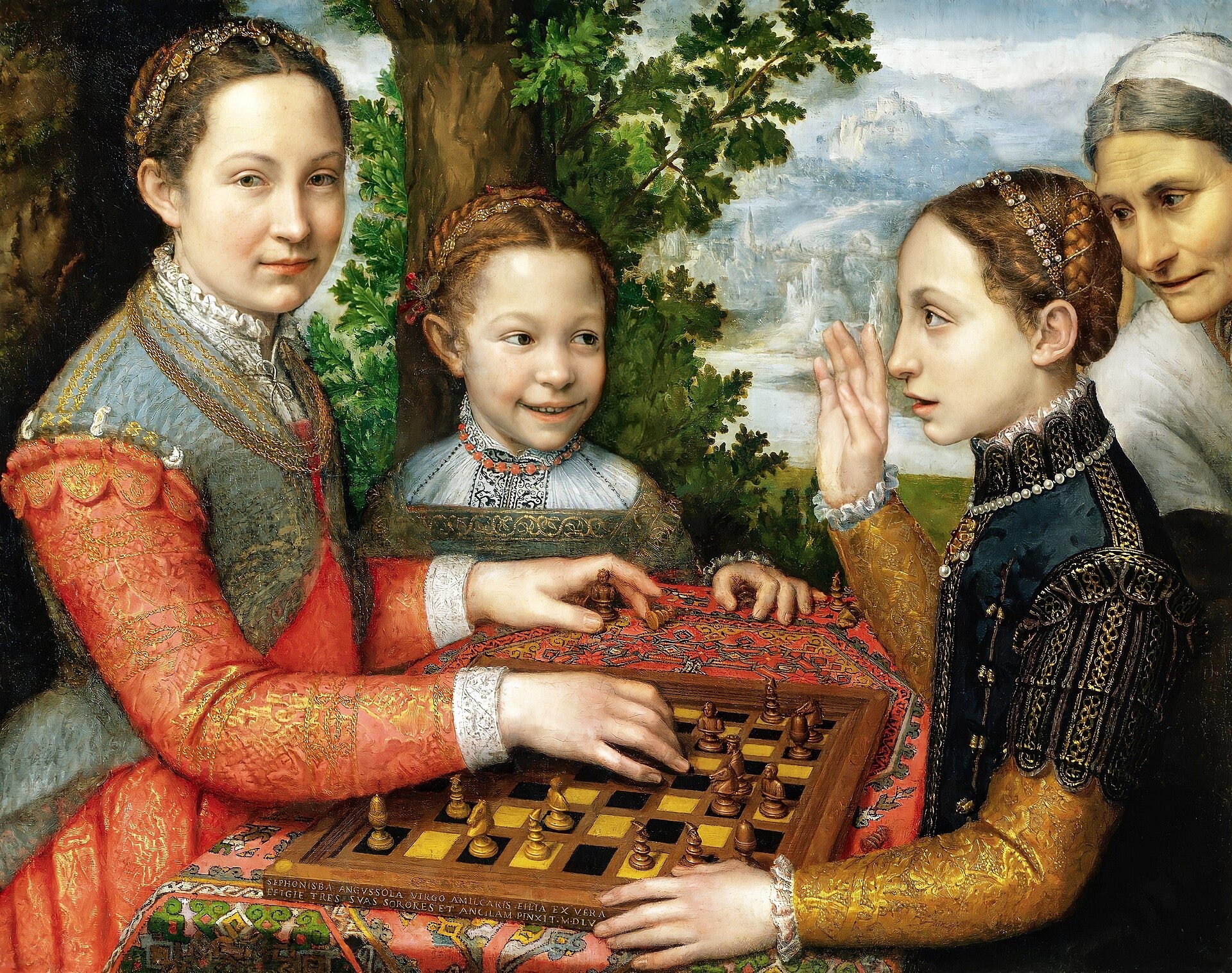
Three girls in rich dresses sit around a chessboard in the open air. The eldest has just moved a piece and turns her eyes toward the viewer, and the youngest, beside her, breaks into a smile. Sofonisba Anguissola painted her sisters this way in 1555, at twenty-three. Portraits of the time showed sitters still and posed. Hers are caught in the middle of a game.
That she painted at all was unusual. In sixteenth-century Italy, a woman who painted was at best a painter's daughter helping in the family shop. Public workshops were closed to her, and so was the nude model, the basis of all serious training. Sofonisba's father, a nobleman of Cremona, had her taught by two local masters instead, and she painted the people within reach: her sisters, her parents, and above all herself. She made more self-portraits than any artist between Dürer, number 7, and Rembrandt.
Her father sent her drawings to Michelangelo, and a letter of 1562 records the great man's answer to a drawing of a laughing girl: he would like to see a weeping boy, which was harder. She sent back A Boy Bitten by a Crayfish. Some forty years later, Caravaggio borrowed its gestures for his Boy Bitten by a Lizard.
Her name traveled further. In 1559, Philip II of Spain called her to Madrid to serve his new wife, and she stayed more than a decade as the queen's drawing teacher and a royal portraitist. A woman had built a painter's career recognized across Europe.
She lived long enough to advise a painter of the next generation. In July 1624, in Palermo, the young Flemish painter Anthony van Dyck came to see her. He noted her age as ninety-six and found her nearly blind. She advised him not to place the light too high, so that the wrinkles would not look too deep. Her hand, he wrote, was still steady.
At a Glance
Born: About 1532, Cremona, Italy
Died: 1625, Palermo, Sicily
Nationality: Italian
Known for: Portraits and self-portraits, The Chess Game, court portraits for Philip II of Spain
Where to see the work: National Museum, Poznań, and Museo del Prado, Madrid
11. Filippo Brunelleschi (1377 to 1446)
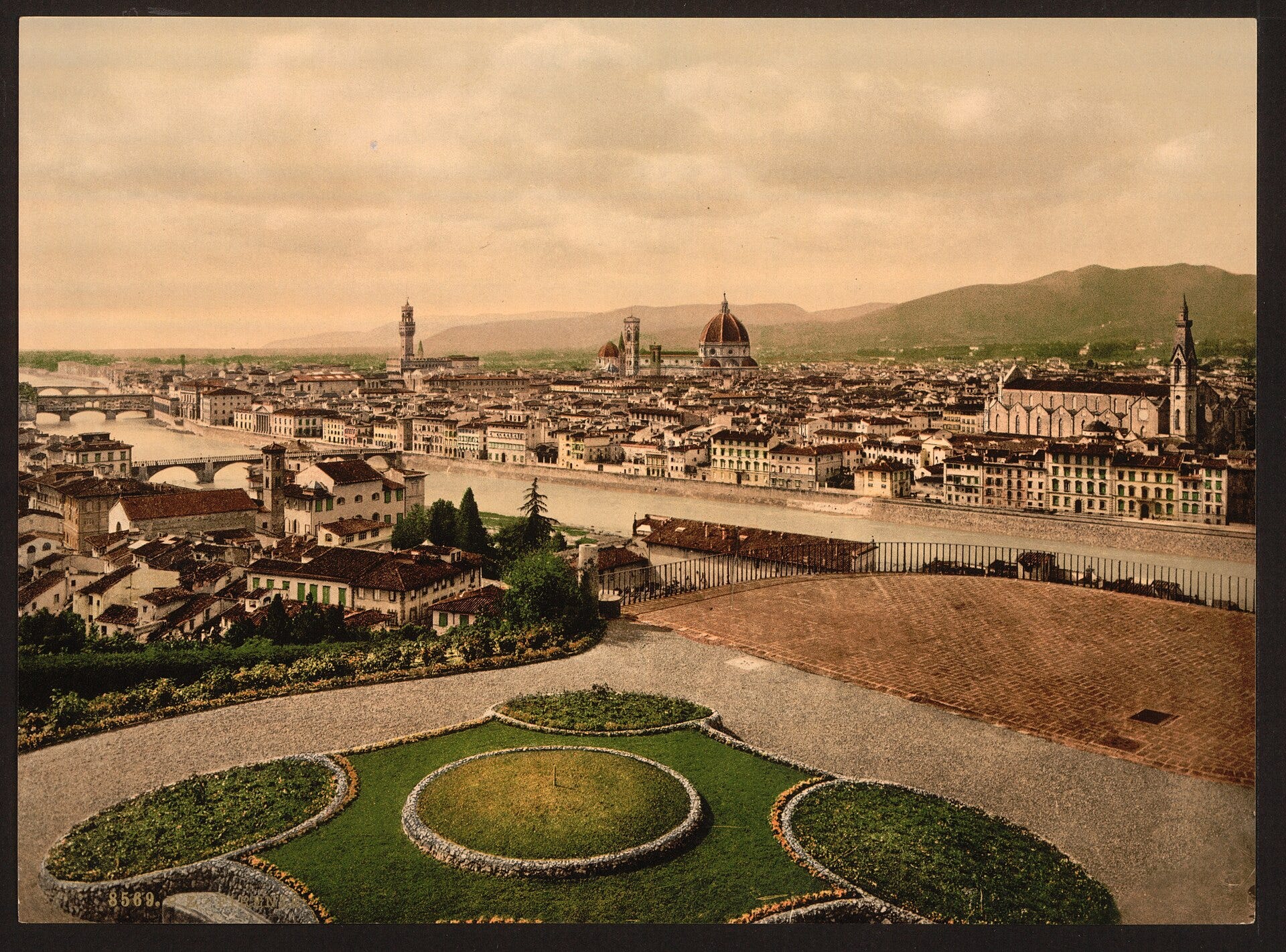
In the early 1400s, a goldsmith stood just inside the doorway of Florence's unfinished cathedral with a small painted panel in one hand and a mirror in the other. The panel showed the Baptistery, the eight-sided building across the square. Through its middle, he had drilled a hole the size of a lentil.