
Auguste Rodin received some of the largest commissions of his time, and several were refused, left unfinished or cast in bronze only after his death. His working life began in a rented stable so cold that the clay of an early head froze and split. Twelve sculptures follow him from there to the small faces he modeled in his late sixties.
Cool Stories About Art is a newsletter to learn art the fun way.
Join 200,000+ readers and get:
10 new art stories / month
The entire archive of content (140+ articles)
Comment, ask questions, and chat with other readers
A Sculptor Who Reused Everything
Rodin worked mostly in clay and plaster. Many of his marbles were carved by assistants, and his bronzes were cast by foundries, sometimes many times over. Working that way let him take a figure apart, reuse a head or an arm on another body, and show a fragment as a finished piece.
The same habit explains why one work can be seen in Paris, Philadelphia or Cleveland. In 1916 Rodin gave his works and the right to reproduce them to the French state, and many of the bronzes in museums today were cast after his death in 1917.
The choice runs from 1863 to the years around 1910, so it covers his whole career. Most of the twelve show him keeping something that an accident, a refusal or an older figure had handed him.
12. Mask of Hanako (about 1908)
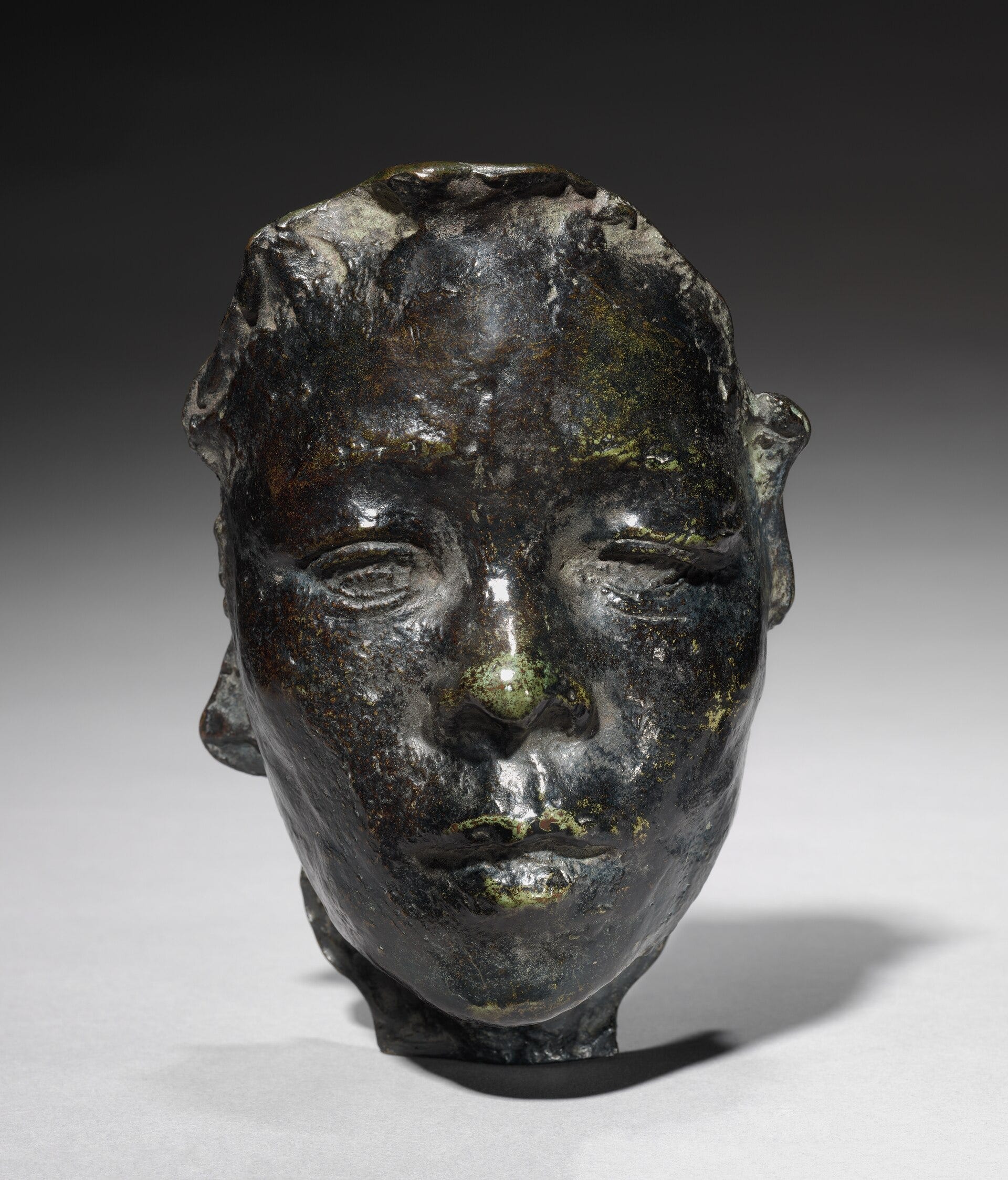
The eyes are almost shut and the brows are pulled hard toward each other, above a mouth set in a flat, tight line. Rodin modeled this small face, the Mask of Hanako, around 1908 from a Japanese actress who could hold that expression for hours.
The expression came from her work on stage. Her real name was Ohta Hisa. Her agent, the American dancer Loïe Fuller, gave her the stage name Hanako, "little flower," and wrote the plays she performed. They were Westernized versions of kabuki that ended with a harakiri, a ritual suicide, and in that last scene Hanako held the audience through the anguish on her face.
Rodin met her in Marseille in 1906, where he had gone to draw the dancers of the Cambodian royal ballet. She began posing for him in February 1907, and over the following years he made at least 53 heads of her, along with drawings.
What those sessions looked like is known from his friend and biographer Judith Cladel. "Hanako did not pose like other people," she recalled. Her features "contracted in an expression of cold, terrible rage," and she "had the look of a tiger."
This mask may come from one of her death scenes. Albert Elsen, an American art historian who specialized in Rodin, reported that Rodin first called it Mask of the Anguish of Death.
To me the furious heads are the more memorable, but they are only half of the series. Other heads of Hanako show the same face at peace, with nothing left of the agony of her stage deaths.
At a Glance
Artist: Auguste Rodin (1840 to 1917)
Made: Modeled about 1908
Medium: Bronze
Size: 17.6 x 11.8 x 9 cm (6 15/16 x 4 5/8 x 3 9/16 in), Cleveland cast
Where to see it: Cleveland Museum of Art, Cleveland (this cast). Other heads and masks of Hanako are at the Musée Rodin, Paris, and the Metropolitan Museum of Art, New York.
11. Man with the Broken Nose (1863 to 1864)
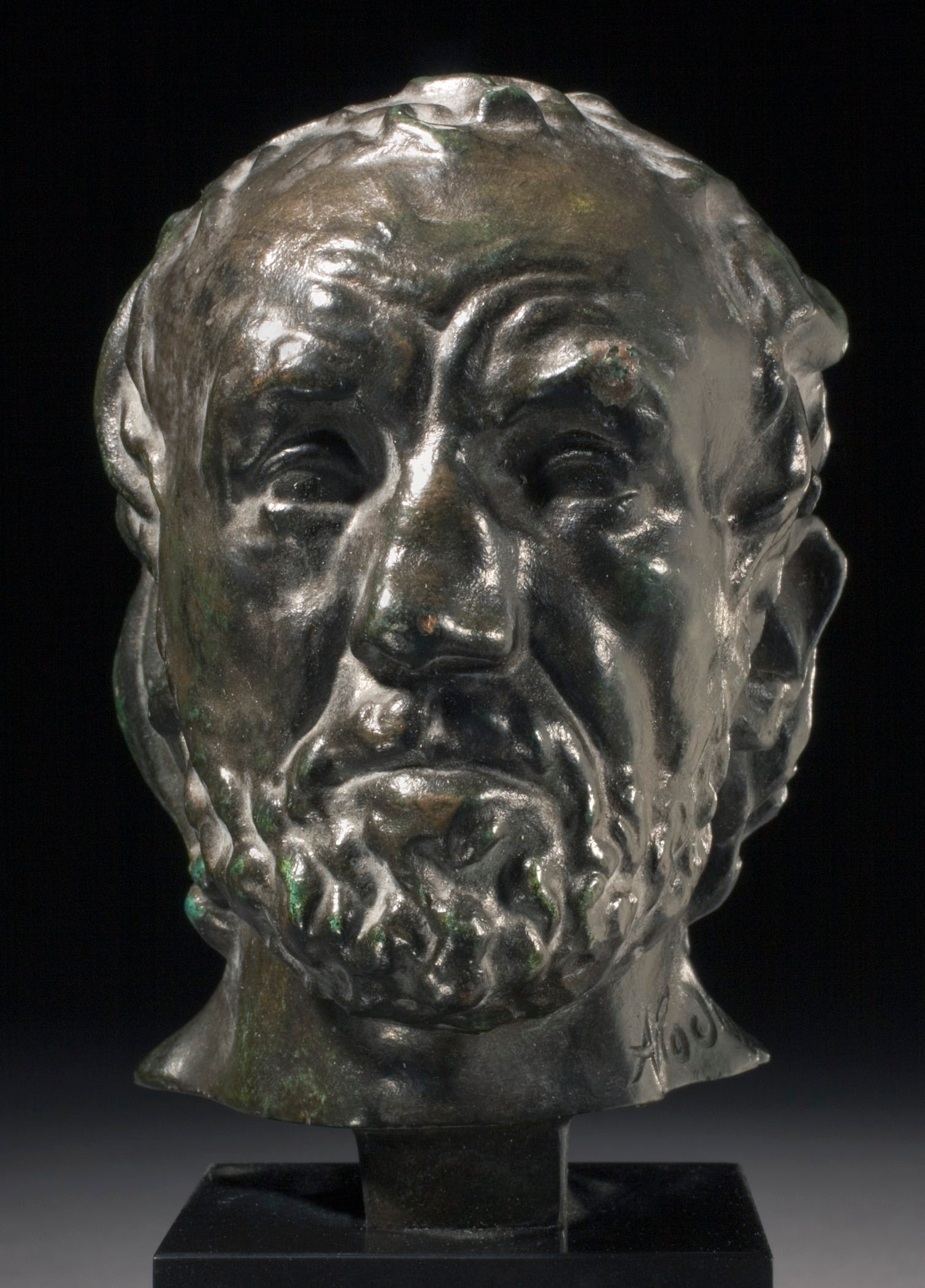
A bearded face with a flattened nose and a deeply furrowed brow stops short behind the ears, as if the back of the head had been cut away. Rodin was 23 when he began modeling it in clay, in the autumn of 1863. His studio was a small, drafty stable he rented while he worked for decorative sculptors, and when winter came, the cold got into the clay and froze it.