
A king walked to his own beheading under nine canvases this Antwerp painter had filled with clouds, gods and the king's own father. His pictures crossed Europe for courts in Madrid, London and Munich and for a French queen, some rolled up for months, some cut down or enlarged on arrival, and the most famous hat he ever painted is in fact made of felt.
Cool Stories About Art is a newsletter to learn art the fun way.
Join 200,000+ readers and get:
10 new art stories / month
The entire archive of content (140+ articles)
Comment, ask questions, and chat with other readers
A Painter Who Worked for Kings
The great Flemish painter of the Baroque was born in 1577 and came home to Antwerp late in 1608, after eight years in Italy. From his studio there he worked for churches, guilds and merchants in his own city, and for the courts of Spain, France, England and Bavaria.
That range is what his reputation rests on. He painted altarpieces several meters high, myths crowded with heavy bodies, men fighting wild beasts, likenesses and whole palace decorations, often with assistants. Kings also sent him abroad as an envoy, and the hope of peace comes back in several of these pictures.
The twelve chosen are the ones that guides to his work cite most often, plus three they seldom include. They run from a picture painted during a mission to Spain in 1603 to a canvas he explained figure by figure in a letter of 1638, and today they hang in six cities in six countries.
12. The Banqueting House Ceiling (1629 to 1634)
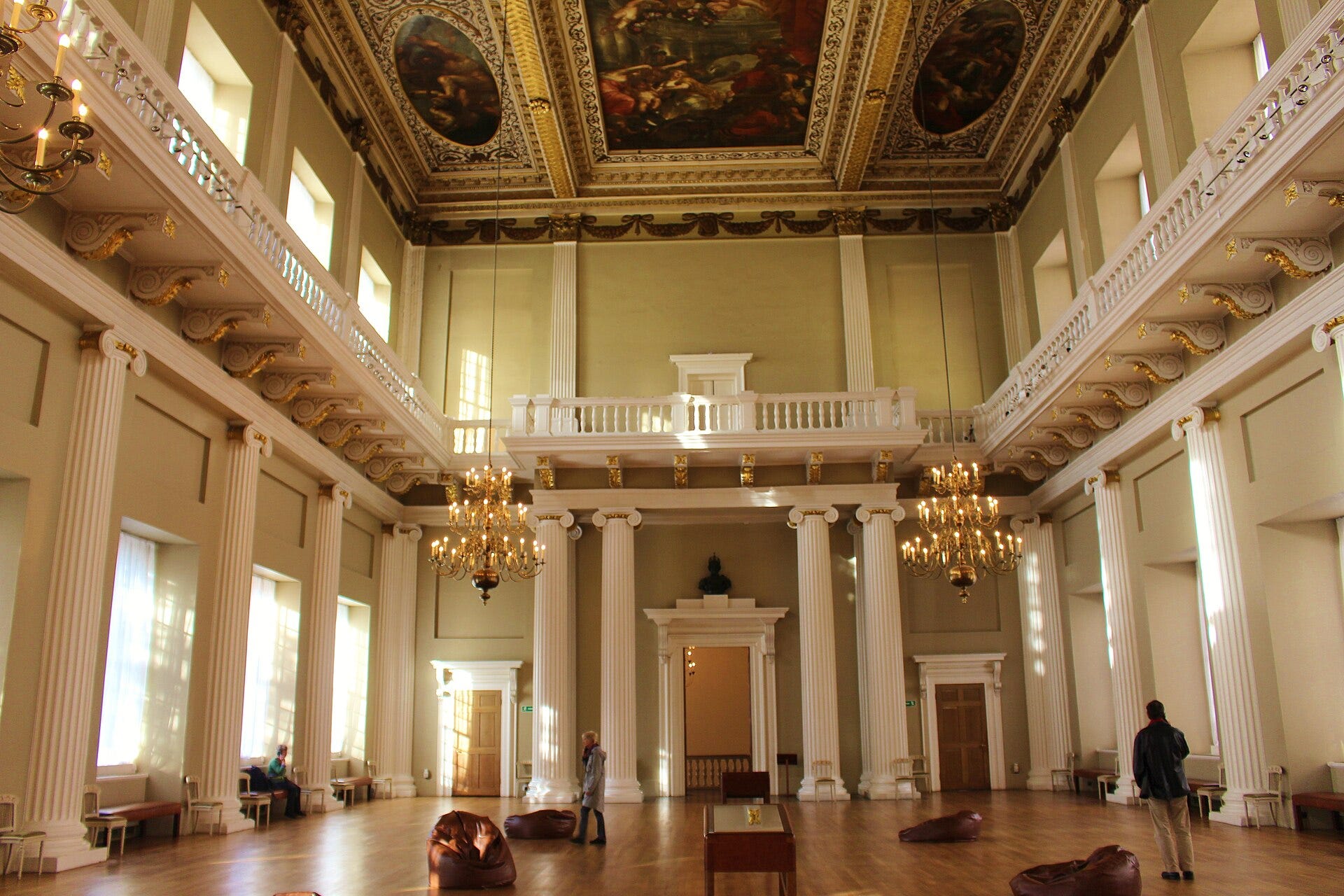
On one of the canvases overhead, a king in robes is carried up into the clouds by an eagle. He is James I, who had united the crowns of Scotland and England, and the nine canvases of The Banqueting House Ceiling were ordered by his son, Charles I, in 1629.
The hall itself was older than the paintings. The architect Inigo Jones had built it for the court at Whitehall, with a ceiling divided by heavy beams into compartments left empty for pictures that did not yet exist. James I had approached Rubens shortly before he died in 1625, and his son turned that approach into an order.
Rubens painted the canvases at home in Antwerp, and their size caused trouble from the start. The three largest would not fit in his studio, so he worked on them in the Antwerp Exchange and in the refectory of a Carmelite convent.
Then came illness and delays. The finished canvases stayed rolled up for almost a year, long enough for the paint to begin to crack, and Rubens had to retouch them before they could be shipped.
Even in London they did not fit. Somewhere between Antwerp and Whitehall, English and Flemish feet and inches had been confused, and the canvases had to be cut down or extended to fill their compartments. They were finally installed in 1636.
Once in place, every canvas praised the late king. In one, Minerva joins the crowns of Scotland and England above a child who may stand for Great Britain. In another, James governs wisely in the role of Solomon. In a third, the eagle lifts him to heaven.
Charles I had set his father in the sky above his guests. On January 30, 1649, he walked through this same hall, under those canvases, to the scaffold built just outside, where he was beheaded.
At a Glance
Artist: Peter Paul Rubens (1577 to 1640)
Painted: 1629 to 1634, installed in 1636
Medium: Oil on canvas, nine canvases set in a beamed ceiling
Size: Not published
Where to see it: Banqueting House, Whitehall, London
11. The Adoration of the Magi (1609, enlarged 1628 to 1629)
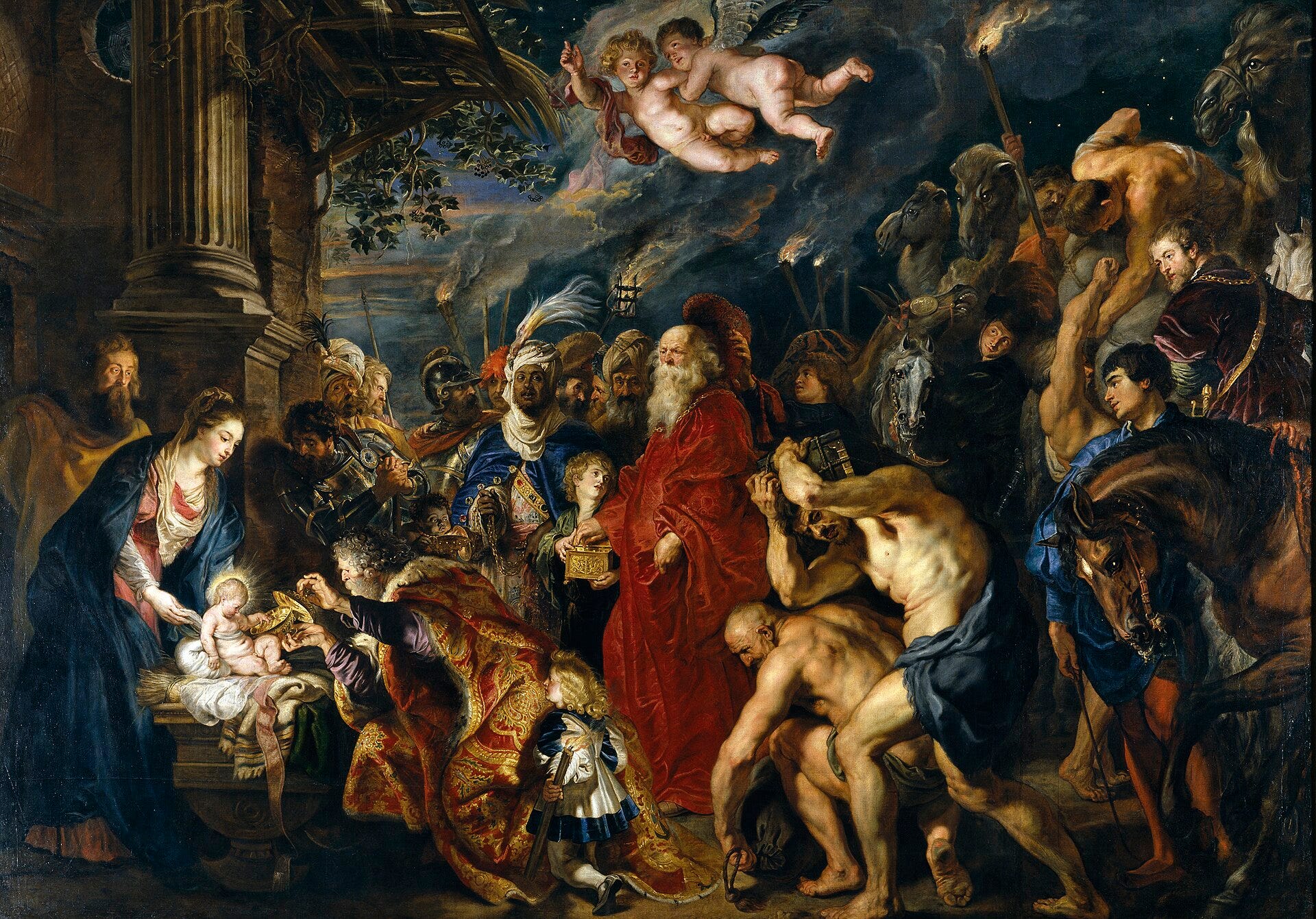
Torchlight falls on a crowd at night. Three kings in red, gold and white robes kneel before a baby held by his mother, while servants in turbans push in from the right with camels and horses. About 1608, the city of Antwerp ordered this canvas for the room in its town hall where a truce with Spain was to be signed. It did not stay in that room for long.