
Shipwreck paintings were the disaster movies of their century. Gericault built a scale model of a real raft and interviewed survivors, Turner claimed he was lashed to a mast in a storm, and one painter sold the same sinking ship to buyers for forty years. Twelve wrecks and the truth behind each.
Before you board
One painter studied severed limbs in a morgue to get the bodies right.
One shipwreck painting was a political scandal the government tried to smother.
One artist told everyone he had himself tied to a mast for four hours. Nobody has ever confirmed it.
One wreck on this list carried 133 enslaved people thrown overboard for the insurance.
The Dutch painted so many storms that buyers could recognise a wrong sail at a glance.
Learn art the fun way
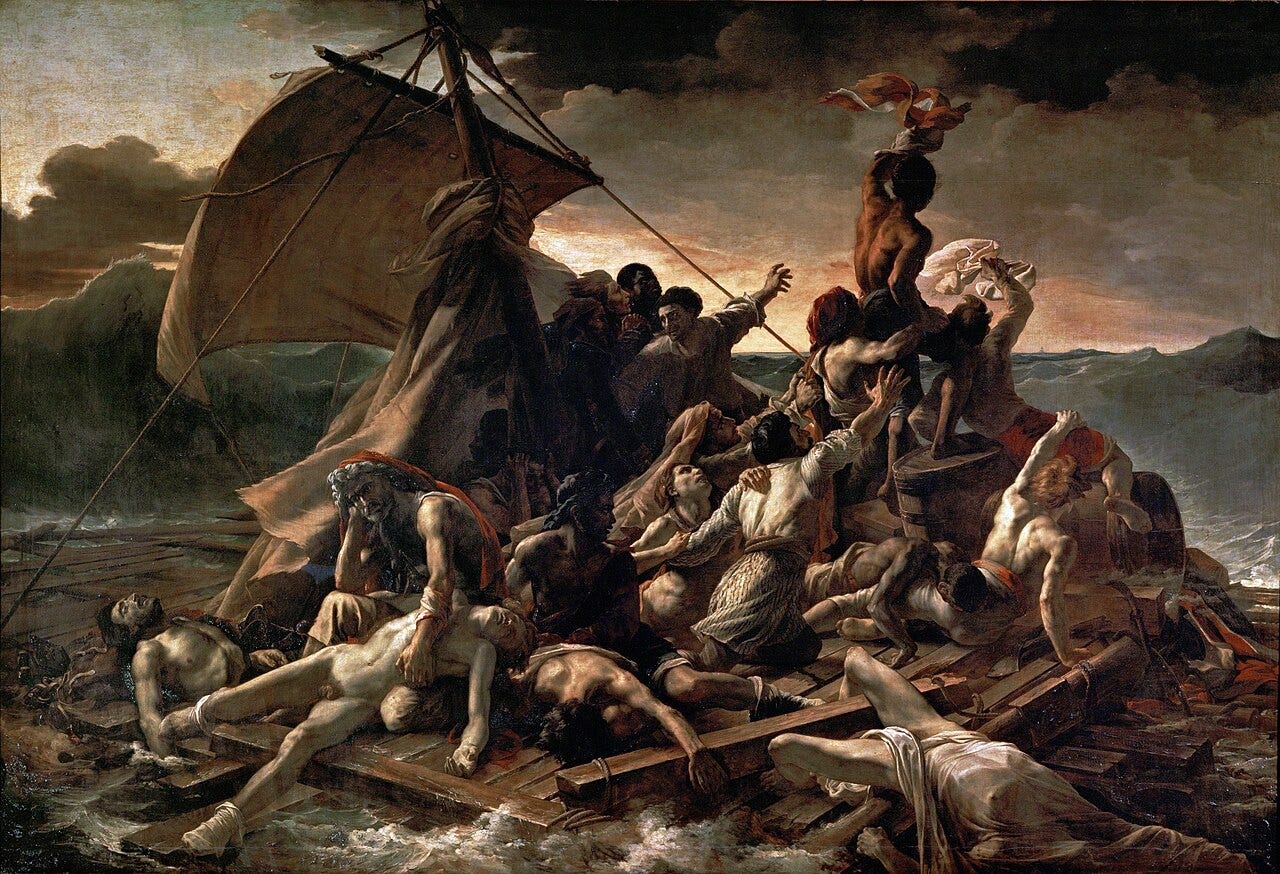
1 | The Raft of the Medusa, Theodore Gericault (1819)
The French frigate Medusa ran aground off Africa in 1816. Around 147 people were pushed onto a raft. Thirteen days later fifteen were alive, and the survivors described murder and cannibalism.
Gericault interviewed two survivors, had the ship’s carpenter build him a model raft, and studied corpses to paint the skin. I go into his whole story in Theodore Gericault.
2 | The Slave Ship, JMW Turner (1840)
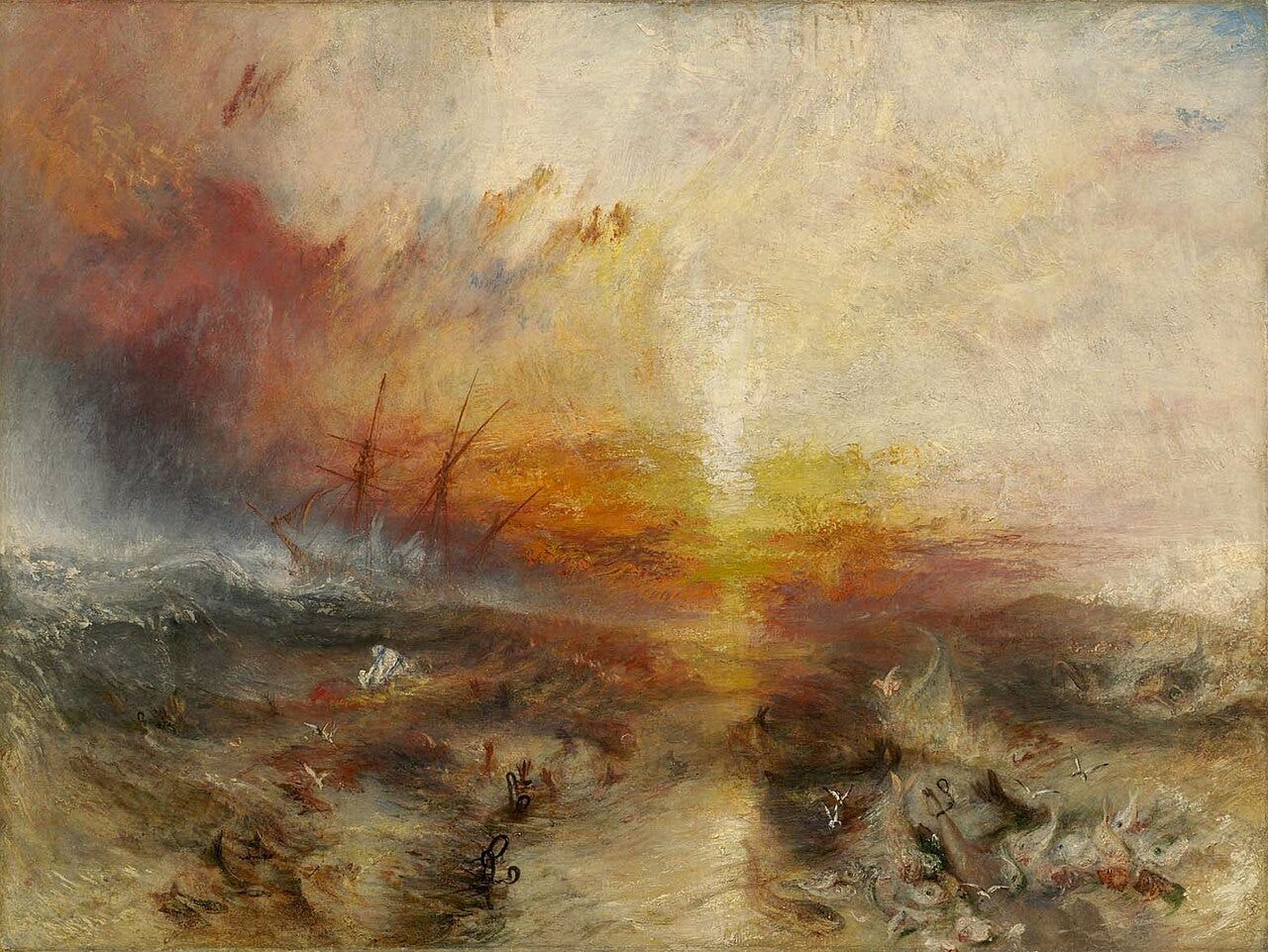
A burning sunset over a sea full of drowning figures and chains. Turner painted it after reading about the Zong, whose captain threw 133 enslaved people overboard so the loss could be claimed on insurance.
He exhibited it as Britain debated abolition. John Ruskin owned it for years, then sold it because he could not keep looking at it.
3 | Snow Storm: Steam Boat off a Harbour’s Mouth, JMW Turner (1842)
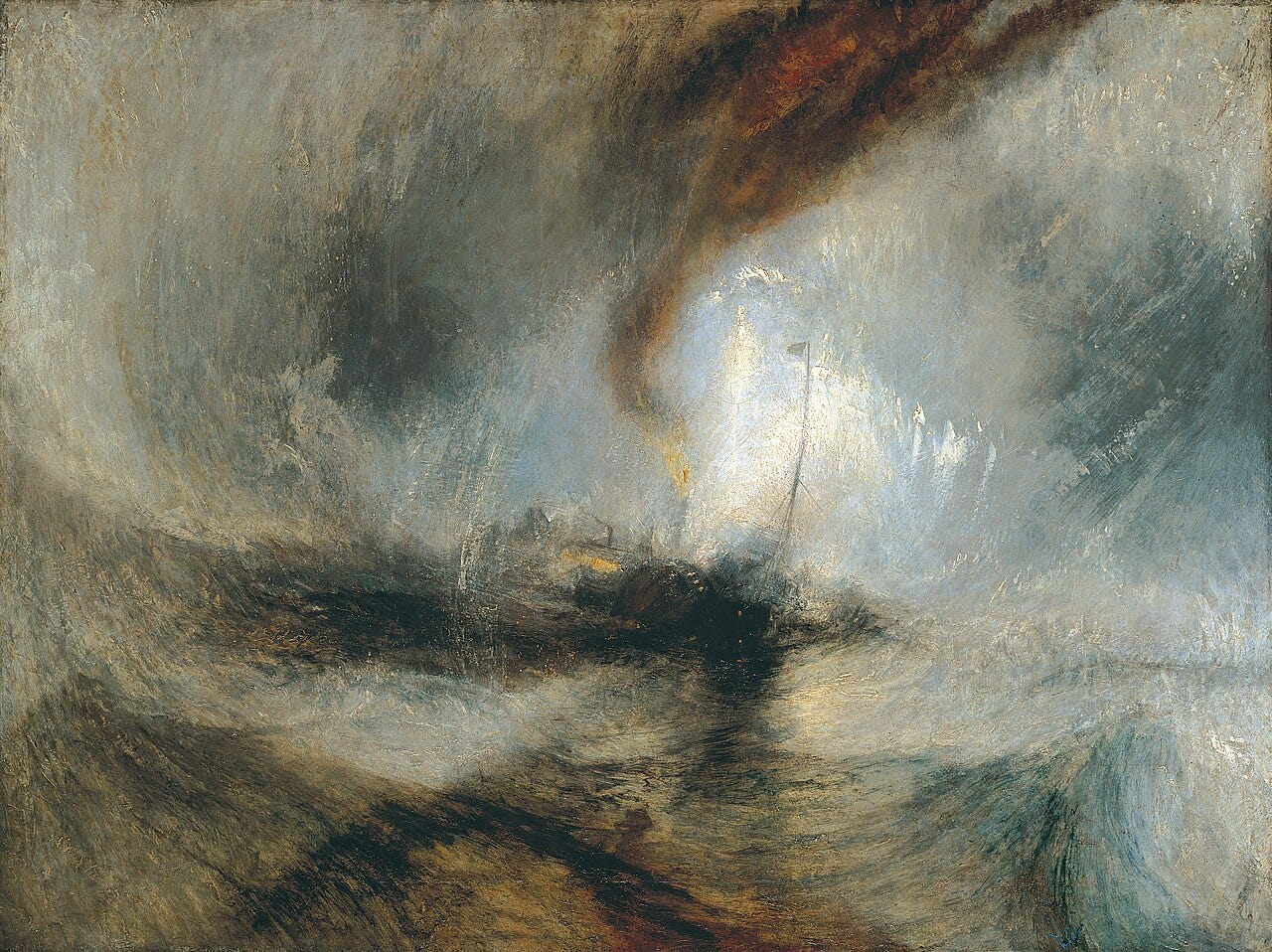
Turner told a friend he had been lashed to the mast of a steamer for four hours to observe the storm, and did not expect to survive it.
No record confirms the voyage and most scholars doubt it. A critic called the painting soapsuds and whitewash. More on him in JMW Turner.
4 | The Storm on the Sea of Galilee, Rembrandt (1633)
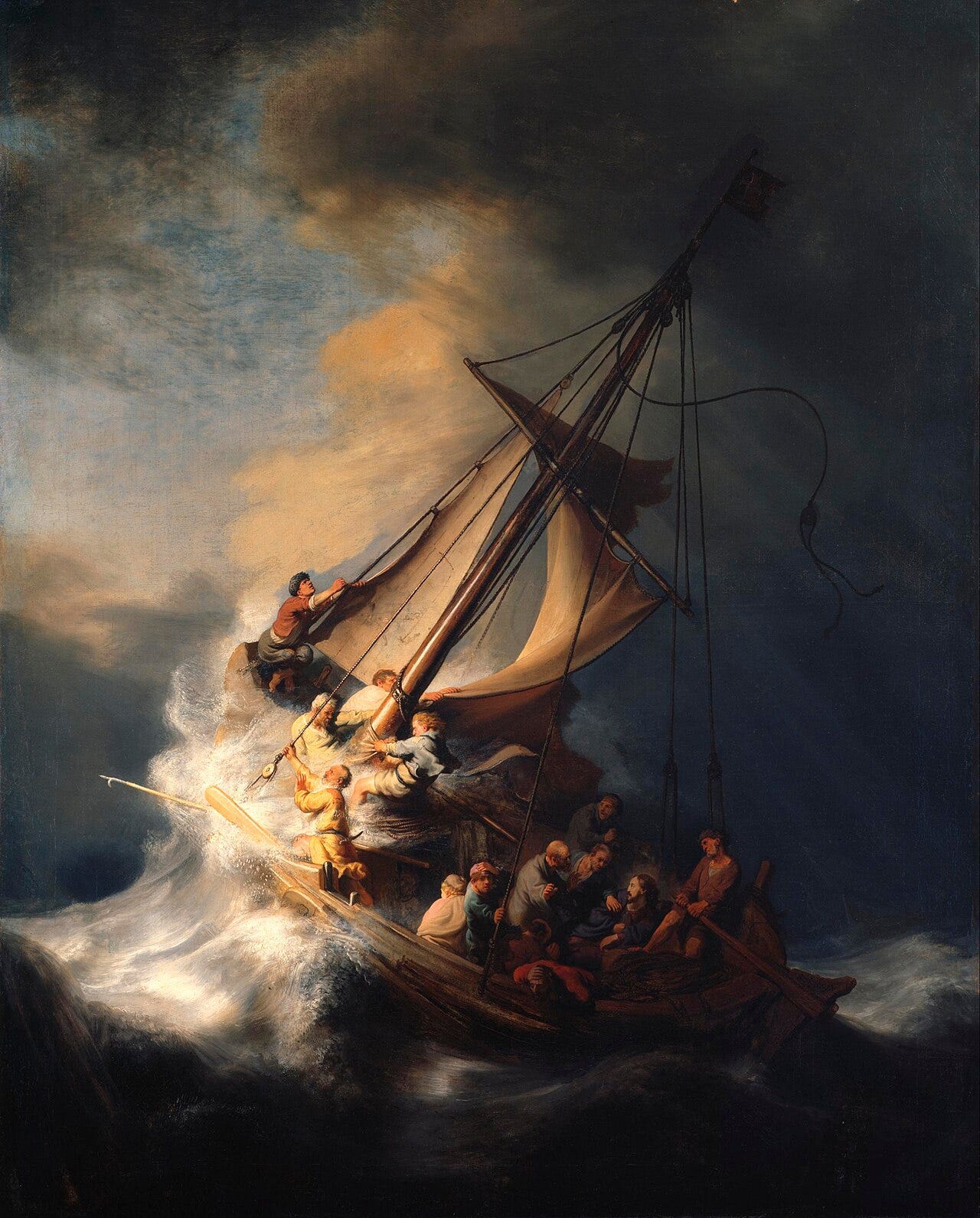
Fourteen figures fight a wave that has split the sail, and one of them, gripping a rope and looking straight out at us, is Rembrandt himself.
Stolen from the Gardner Museum in Boston in 1990 and never recovered. The empty frame still hangs. The full heist is in the most stolen paintings in history.
5 | The Sea of Ice, Caspar David Friedrich (1824)
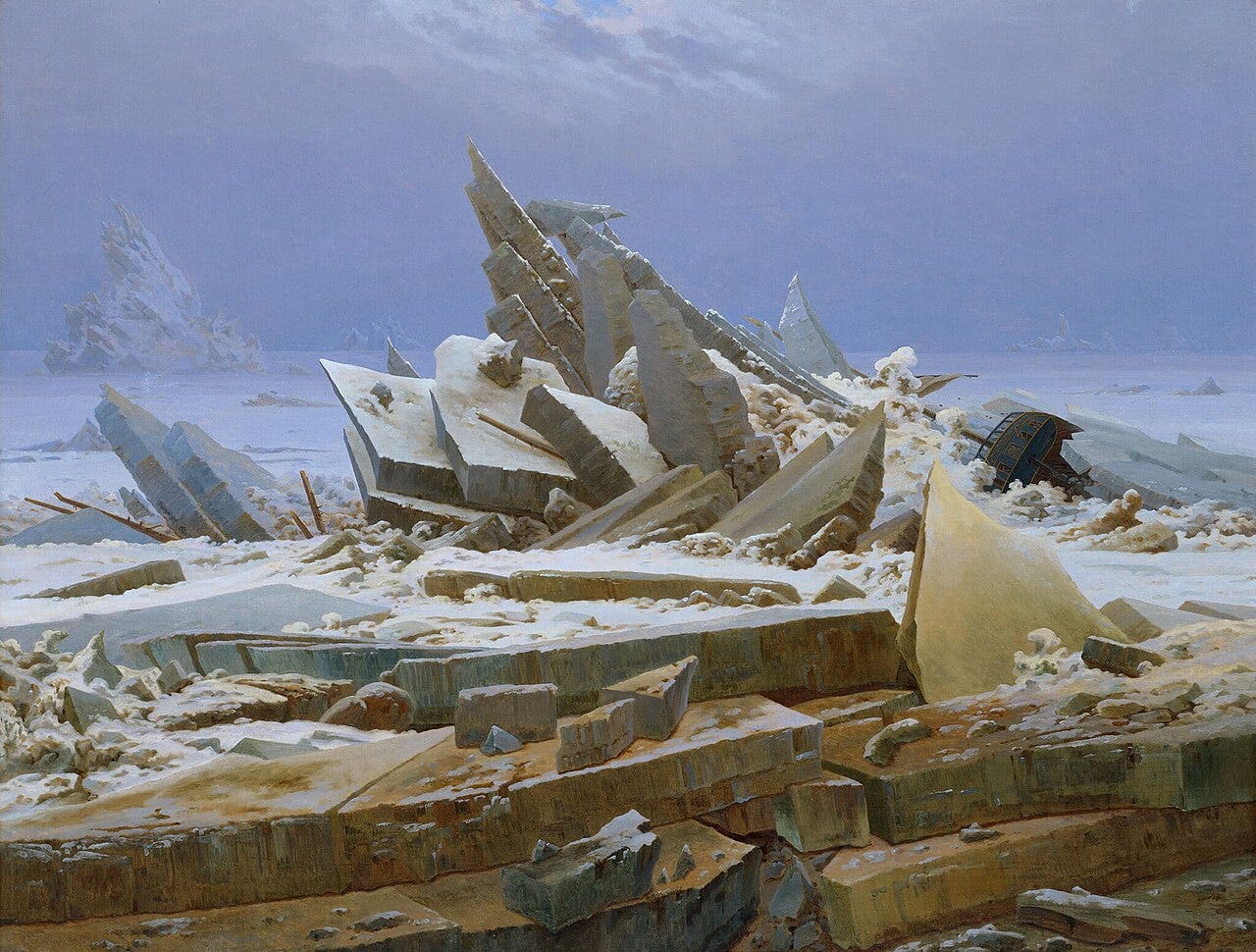
Slabs of ice pile into a jagged pyramid and a ship’s hull juts out of the wreckage, barely visible. The wreck is almost an afterthought.
It failed to sell in Friedrich’s lifetime and was rediscovered in the 20th century as one of the coldest images ever painted. The rest of his life is in Caspar David Friedrich.
6 | The Ninth Wave, Ivan Aivazovsky (1850)
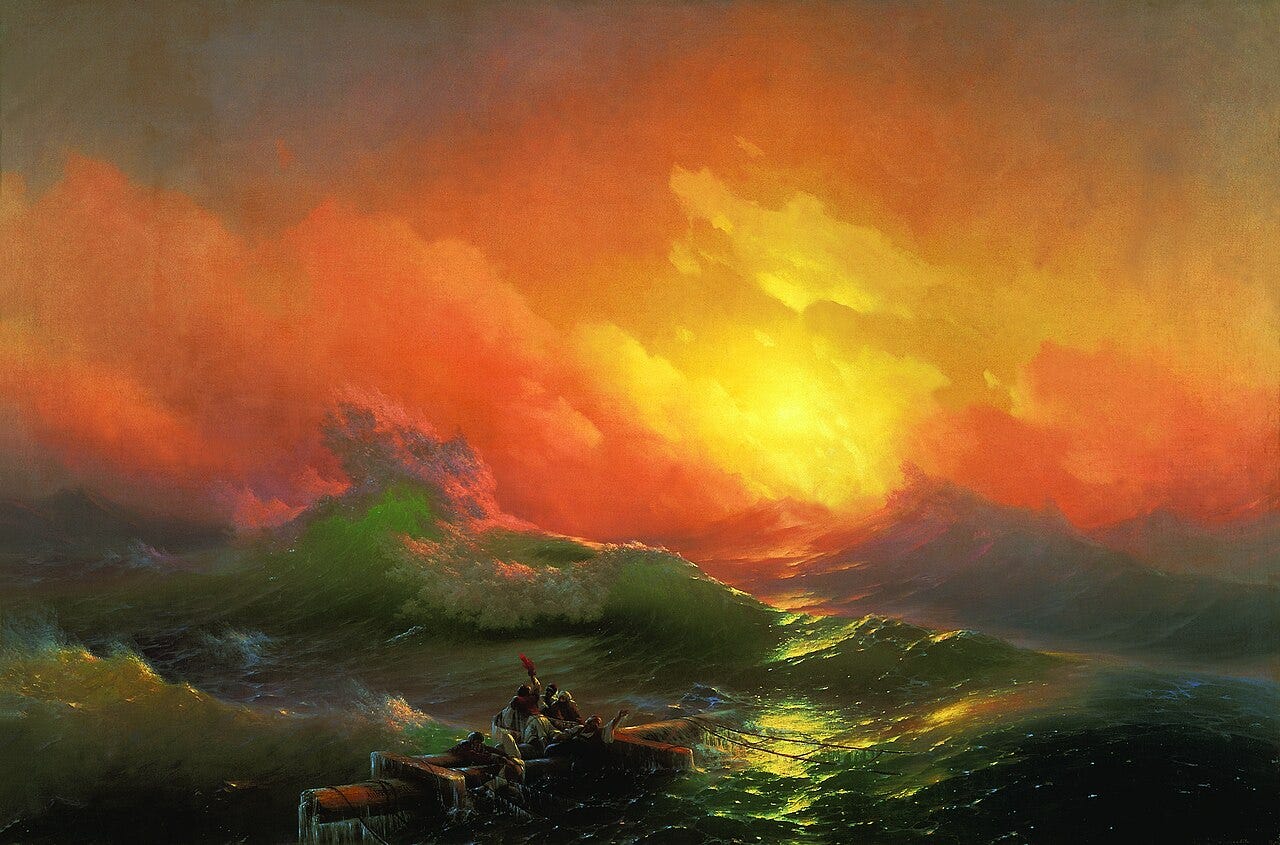
Survivors cling to a mast at dawn as the largest wave of the sequence rises behind them. Sailors believed the ninth wave was the killer.
Aivazovsky painted around 6,000 canvases and worked from memory, never from sketches at sea. I cover him properly in Ivan Aivazovsky.
7 | The Gulf Stream, Winslow Homer (1899)
A man on a dismasted boat, sharks circling, a waterspout behind, a ship on the horizon that has not seen him. Viewers wrote to Homer demanding to know if he lived.
Irritated, Homer said the man was rescued, and later added a faint ship to soften it. More of his sea is in fishermen in painting.
8 | The Shipwreck of the Minotaur, JMW Turner (1810)
A real disaster: HMS Minotaur went down on a Dutch sandbank in 1810 and around 370 men died. Turner painted the wreck as a wall of green water.
British audiences knew these events from the newspapers, which is exactly why the pictures sold.
The Minotaur ran aground off the Dutch coast in December 1810 and around three hundred and seventy men died. Turner painted it soon after, from newspaper reports rather than from sight.
9 | Dutch storms and the trade in disaster
Ludolf Bakhuizen reportedly paid fishermen to row him out into gales so he could sketch waves from inside them, and painted wrecks for a market that knew rigging by heart.
Get a sail wrong in Amsterdam and your buyer noticed. More of that sea is in famous storm paintings and famous sea paintings.
That rigging obsession is the whole point of marine painting, the genre built around ships rather than water, and it peaked in this same Dutch market.
10 | The Wreck of a Transport Ship, JMW Turner (about 1810)
Lifeboats pitch at impossible angles around a foundering hull. Turner painted the same subject so often that wrecks became a signature.
It hung in the Gulbenkian in Lisbon, bought by an oil magnate who preferred disasters to portraits.
Painted around 1810, it was bought by William Beckford, the author of Vathek, for his abbey at Fonthill. The horizon is tilted so far that the viewer feels the roll of the ship.
11 | The Last Voyage and the Titanic in paint
The Titanic sank in 1912, when photography and cinema had already taken over disaster. Painters largely stopped competing after that.
The great age of the painted shipwreck lasted about a century, from the 1760s to the 1860s, and ended when the news got faster than the brush.
12 | The Fighting Temeraire, JMW Turner (1839)
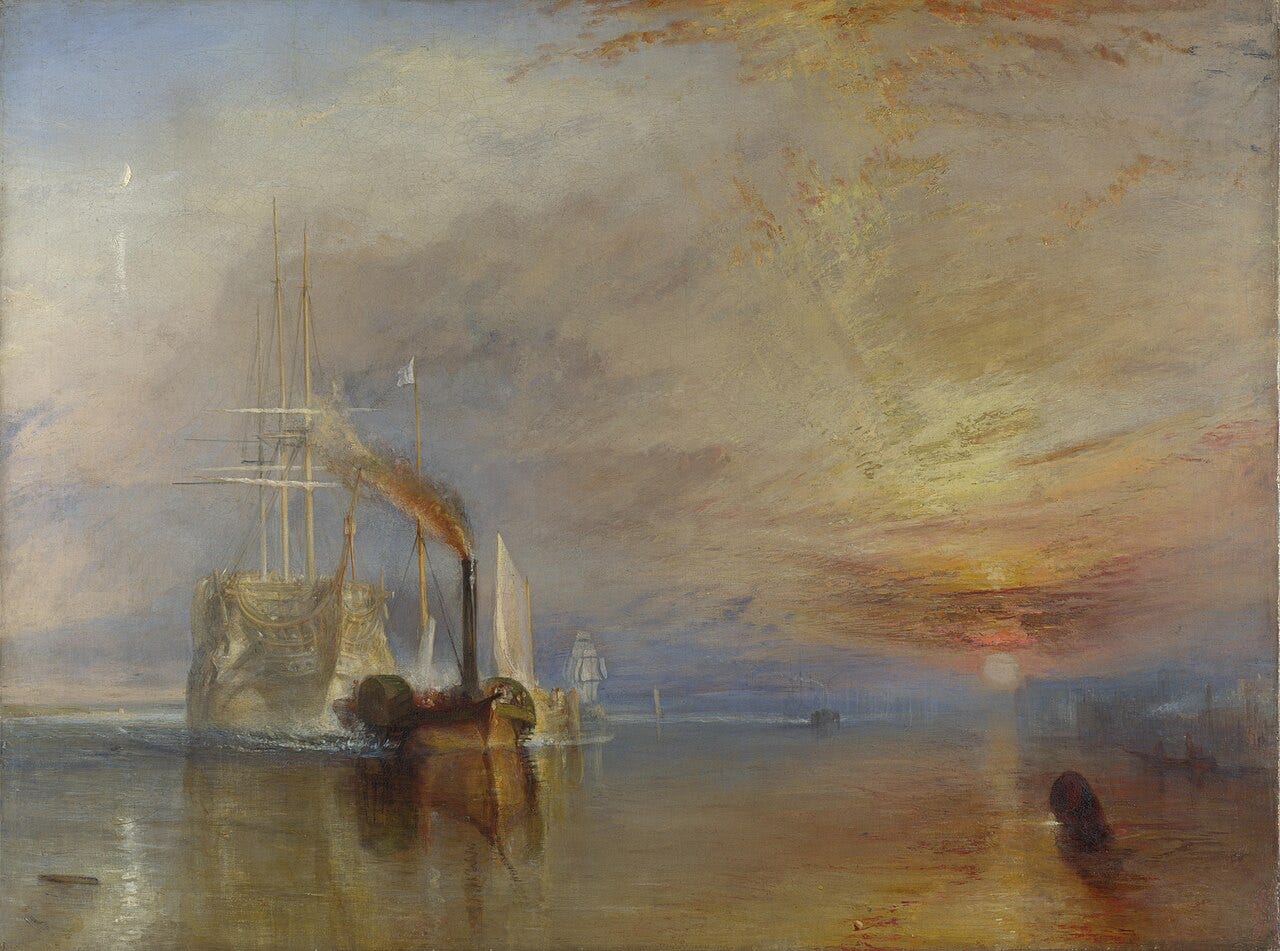
Not a wreck: a warship being towed to the breakers by a small black steam tug, under a burning sunset. A death rather than a disaster.
Turner refused to sell it, calling it his darling. Britain voted it the nation’s favourite painting in 2005.
Turner refused every offer for it and left it to the nation. He called it his darling, and it was the picture he would not sell at any price.
What readers ask about the wrecks
What is the single best known? The Raft of the Medusa by Gericault, with Turner’s Slave Ship as the most morally charged.
Was Turner really tied to a mast? He said so. No passenger list or log confirms it, and most historians treat it as a story he enjoyed telling.
What was the Zong? A slave ship whose crew threw 133 people overboard in 1781 to claim insurance. Turner’s Slave Ship responds to it.
Which shipwreck painting is missing? Rembrandt’s Storm on the Sea of Galilee, stolen in 1990 and still unrecovered.
Where is The Raft of the Medusa today? The Louvre for the Medusa, Boston for the Slave Ship, Tate for the Turners, Hamburg for the Sea of Ice.
Does Turner ever paint a calm harbour instead of a wreck? Often, and the Fighting Temeraire above is one case of it. Ports and harbours get their own survey here, from Claude Lorrain onward, where a calm port usually doubles as a balance sheet.
Two collections to keep going
The Met and the Rijksmuseum both hold marine disasters with the incidents documented in their catalogue notes, which is where the real stories usually are.
One last detail: when the Medusa ran aground, the captain had been given the command through court connections despite not having sailed in twenty years. Gericault painted the raft, but the scandal was the appointment.
One shipwreck became the most scandalous painting of its age. Go inside the raft in the untold story of the Raft of the Medusa.