
The most famous statues in Rome, Florence and Paris can be seen in an afternoon each, and most tourists walk past the best ones. Twelve city statues, where exactly to stand, and which famous originals have quietly been swapped for copies.
The city that holds these statues was also one of the most painted subjects in Europe for centuries, from ruins sketched by Grand Tour travelers to modern views, twelve of which are gathered in Rome in Painting: 12 Views of the Most Painted City.
Learn art the fun way
ROME
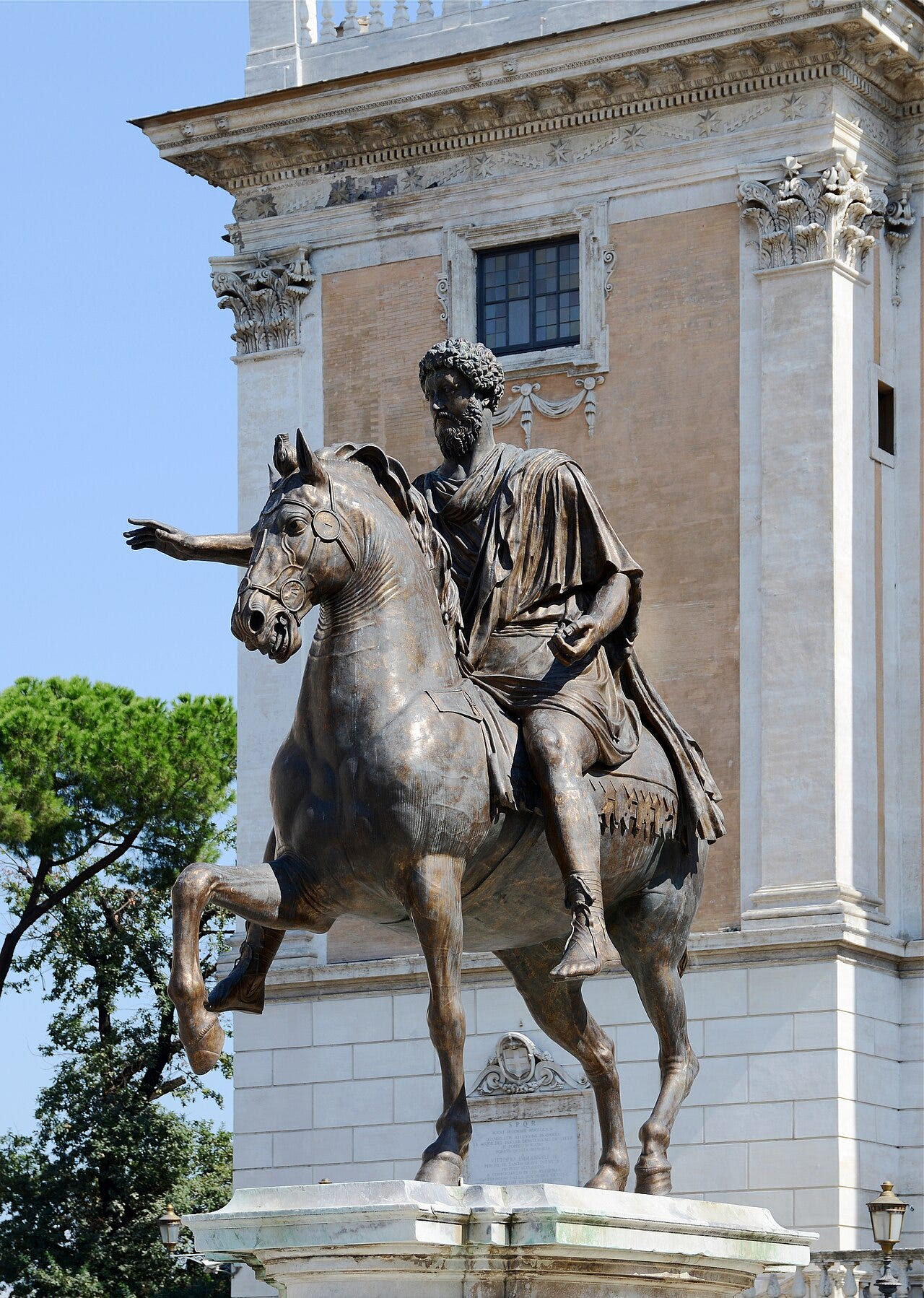
1 | The Marcus Aurelius, Capitoline Hill
The only large bronze equestrian statue to survive antiquity, because medieval Rome mistook the rider for Constantine and refused to melt a Christian emperor.
The original is indoors in the Capitoline Museums. What stands on Michelangelo’s piazza is a replica. More survivors are in famous bronze statues.
2 | The Trevi Fountain
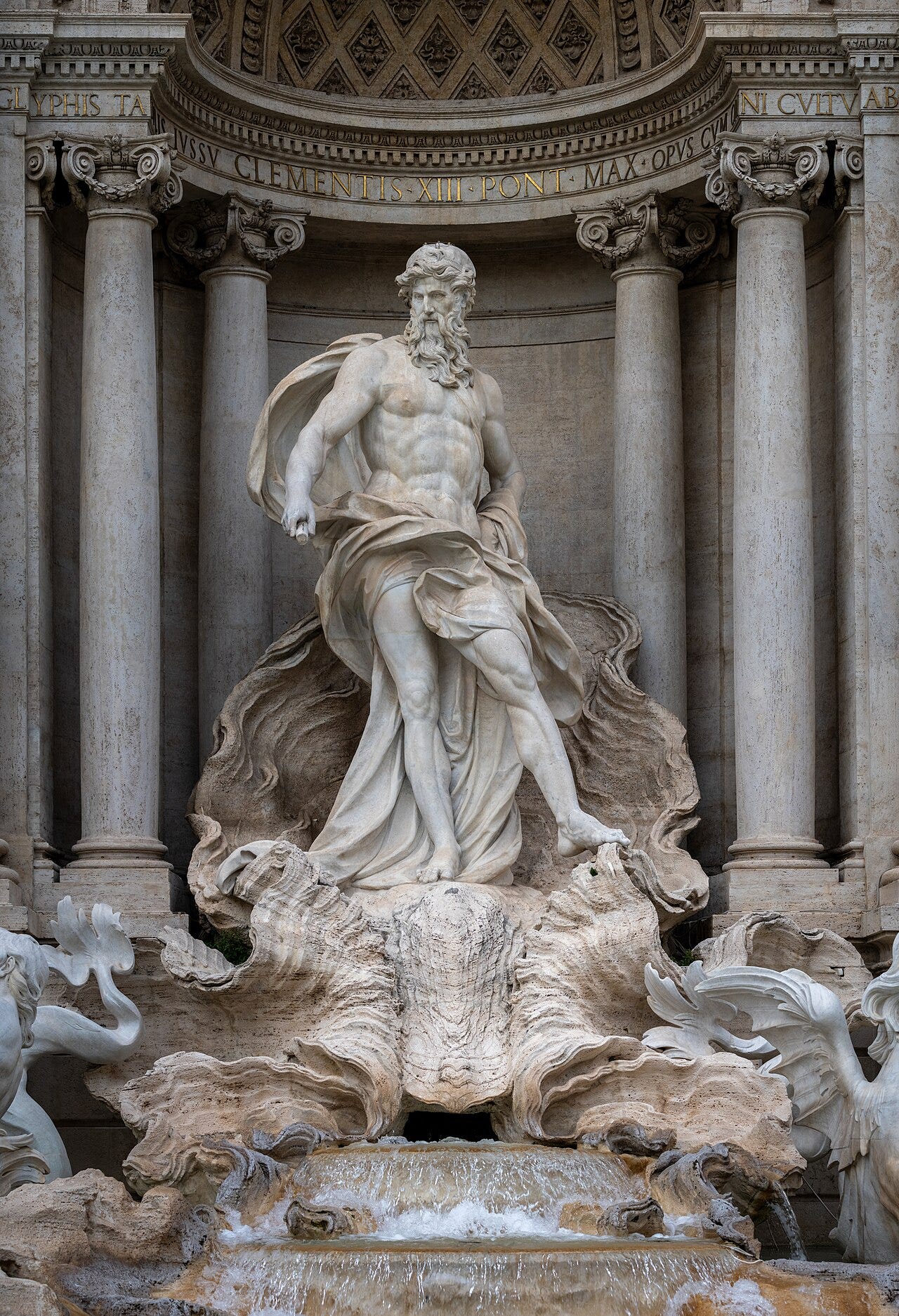
Nicola Salvi’s ocean god bursts out of the back of a palace, water pouring over a reef of carved rock. It took 30 years and Salvi died before it was finished.
Go at seven in the morning. Around 3,000 euros in coins are collected every day and given to charity.
3 | The Laocoon, Vatican Museums
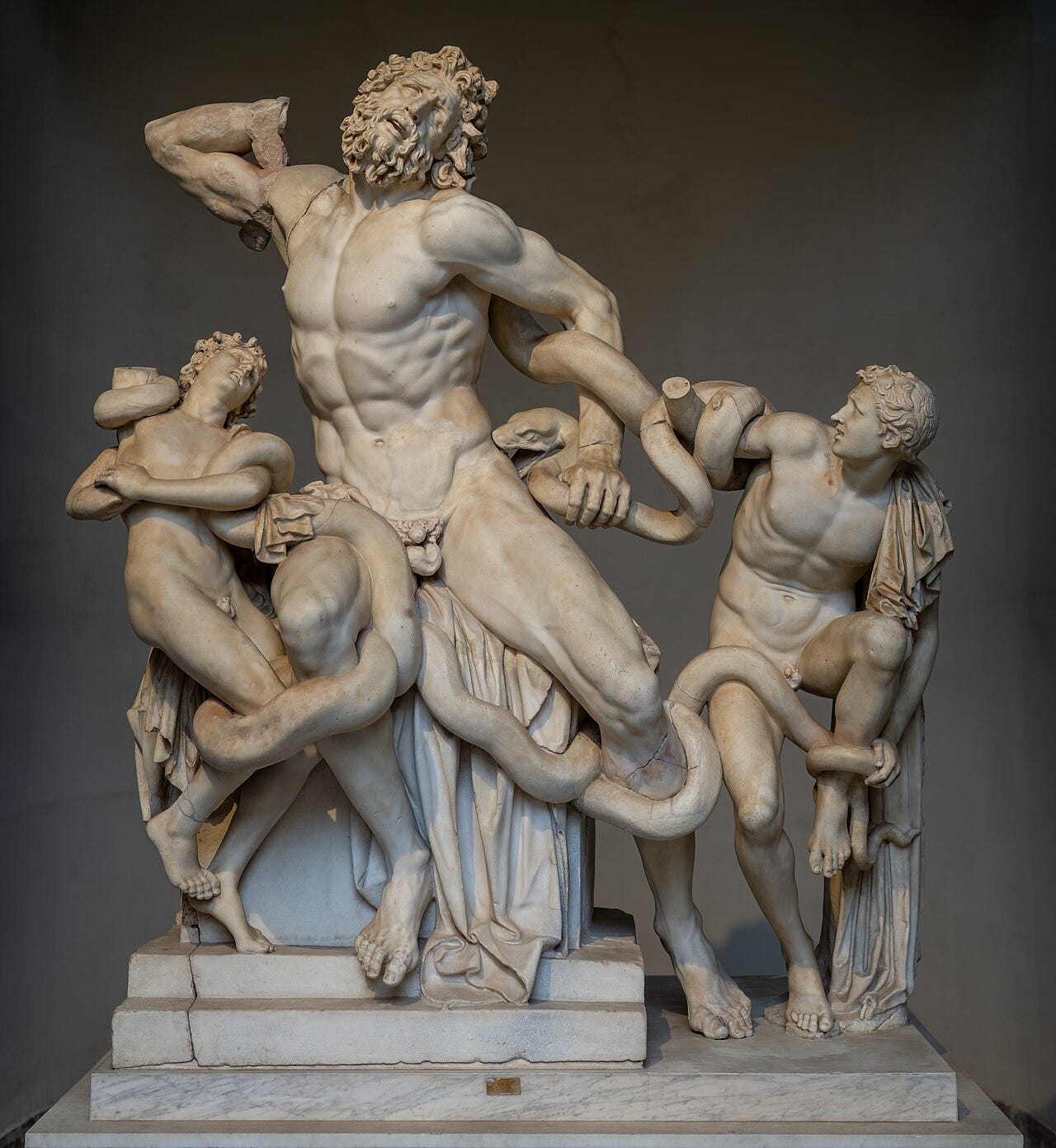
Dug from a vineyard in 1506 with Michelangelo watching. The arm was missing, restorers guessed heroic, and the real bent arm turned up in a Rome workshop in 1905.
The full excavation story is in famous marble sculptures.
It was dug up in a vineyard on the Esquiline in January 1506 and Michelangelo was sent to look at it the same day. Pliny had described it, so the Romans knew what they had found the moment it came out of the ground.
4 | Bernini in the Galleria Borghese
Apollo and Daphne, the Rape of Proserpina and Bernini’s David sit in adjoining rooms. Fingers press into marble thigh, bark climbs marble legs.
Booking is compulsory and the visit is timed to two hours. It is the best two hours in sculpture.
Cardinal Scipione Borghese commissioned four groups from Bernini between 1618 and 1625, when the sculptor was in his twenties. They were made for specific rooms and are still in them, which is rare.
FLORENCE
5 | The David, Galleria dell’Accademia
The original moved indoors in 1873 after weather and a riot damaged it. The Piazza della Signoria version is a marble copy from 1910.
There is a third David in bronze at Piazzale Michelangelo. The full story is in where is the statue of David.
6 | Cellini’s Perseus, Loggia dei Lanzi
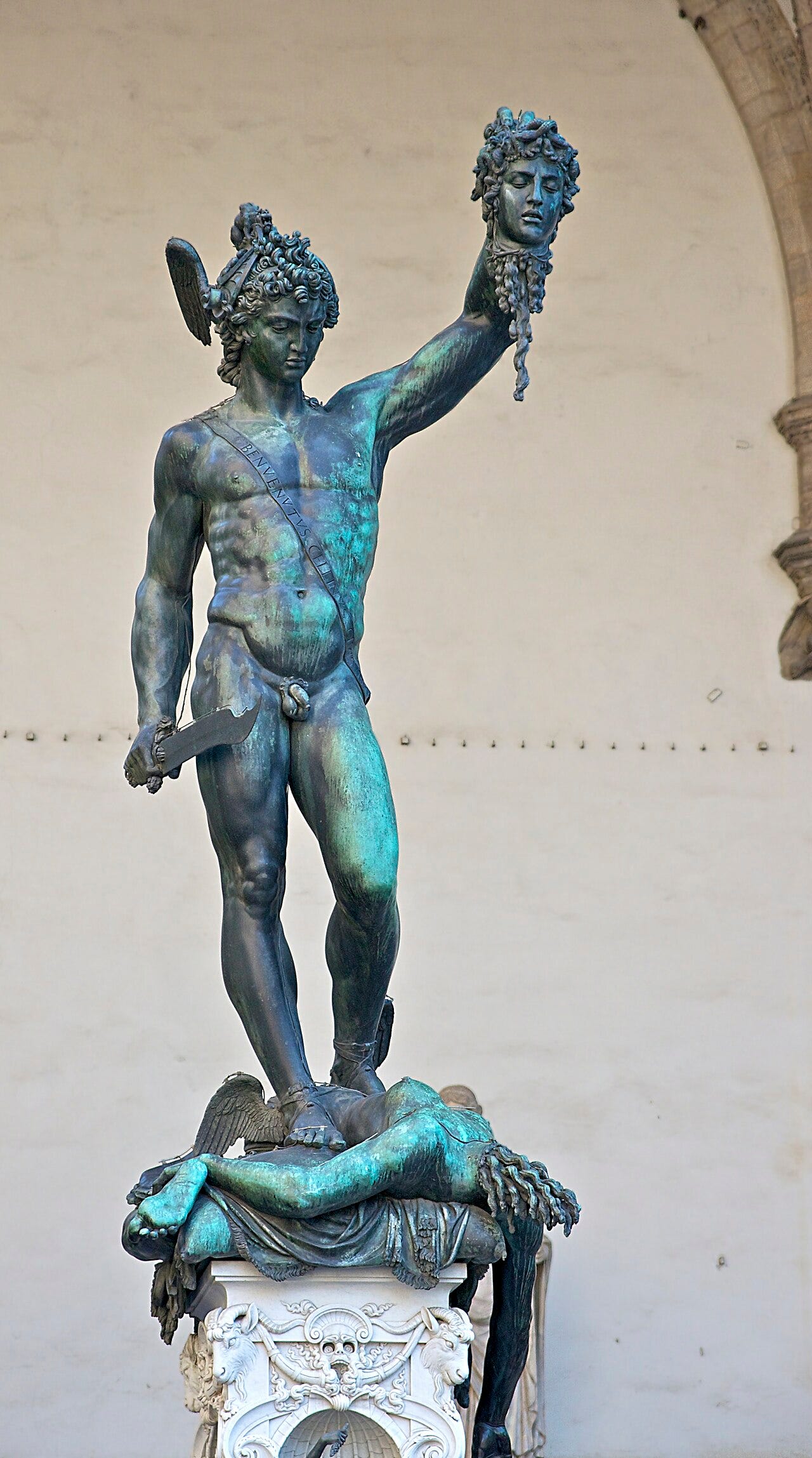
Standing free in an open loggia since 1554, holding up the severed head of Medusa. Cellini claimed he threw his own household pewter into the furnace to save the casting.
Look at the back of Perseus’ helmet: a hidden self portrait of the sculptor.
It was unveiled in 1554 and Cellini describes in his autobiography how the bronze ran short and he threw his household pewter into the furnace. The head of Medusa faces the Palazzo Vecchio, which was the point.
7 | Donatello’s David, Bargello
The first freestanding nude bronze cast in Europe since antiquity, made for a Medici courtyard rather than a public square.
The Bargello is the least crowded great museum in Florence. Go on a weekday morning.
It is the first free standing nude bronze cast in Europe since antiquity, made around 1440 for the Medici courtyard. It moved to the Bargello in 1865 and has never been securely dated.
8 | The Gates of Paradise, Duomo Museum
Ghiberti’s bronze baptistery doors, named by Michelangelo. The panels on the building today are copies; the restored originals are in the Museo dell’Opera del Duomo.
Ghiberti spent 27 years on them and put his own bald head in the frame.
Ghiberti worked on the second doors from 1425 to 1452, and Michelangelo is said to have given them the name. The originals were removed after the 1966 flood and what you see on the Baptistery is a cast.
PARIS
9 | The Venus de Milo, Louvre
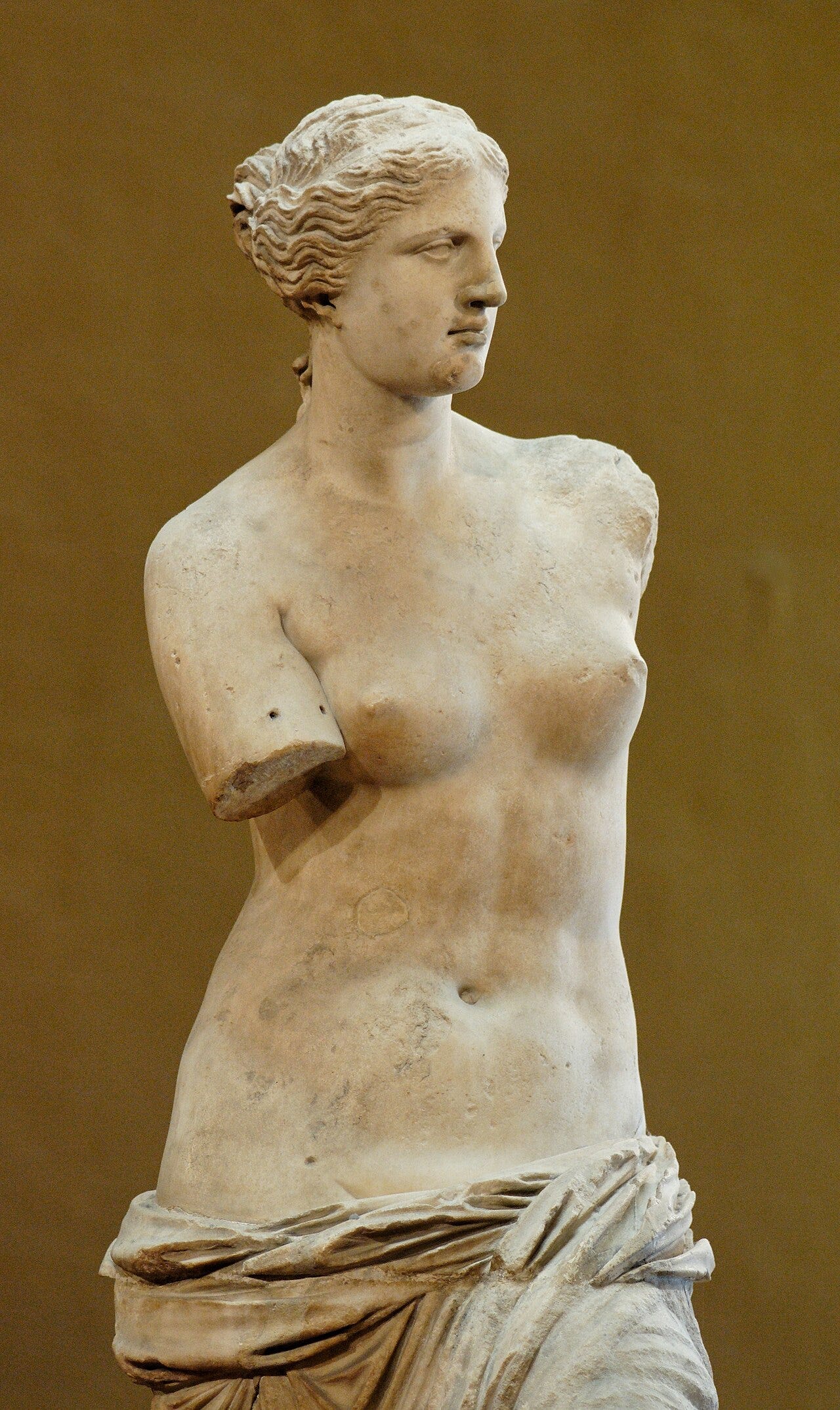
Found on Melos in 1820 in pieces, arms never recovered. The base carrying the sculptor’s name conveniently disappeared, which let the Louvre imply a greater author.
She is on the ground floor of the Sully wing, and the crowd is a third of the Mona Lisa’s.
10 | The Winged Victory of Samothrace, Louvre
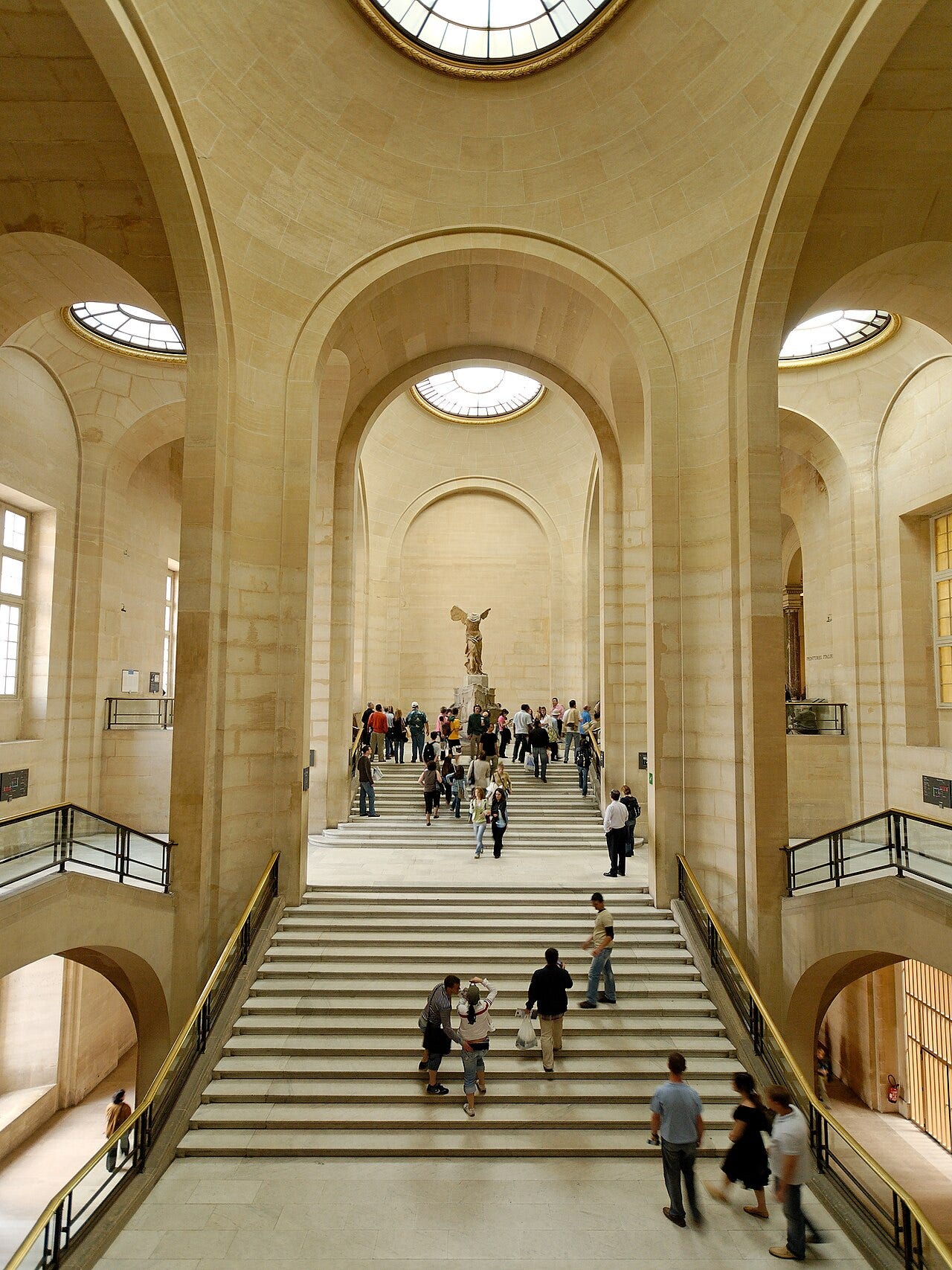
At the top of the Daru staircase, reassembled from more than a hundred fragments found in 1863. Her right hand was found in 1950 and sits in a case beside her.
Climb the stairs slowly and look up. That is exactly how she was designed to be seen, on a ship’s prow.
11 | The Thinker, Musee Rodin
In the garden, not the house. He began as a small figure of Dante brooding over the Gates of Hell before being enlarged and set on his own pedestal.
More than 25 authorized casts exist, which is why Paris, Philadelphia and Tokyo all have one. The list is in the most famous statues in the world.
12 | The Burghers of Calais, Musee Rodin garden
Six condemned men at ground level, ropes around their necks. Rodin insisted they should not stand on a pedestal so citizens could meet their eyes.
Calais originally refused that idea. Twelve casts now stand from London to Tokyo.
Before you travel, both the Met and the Rijksmuseum let you study casts and painted versions of these same figures for free.
Planning the trip: what people ask
Is the David in the square real? No. The original has been in the Accademia since 1873; the piazza holds a 1910 copy.
Which statue should I see first in Rome? The Borghese Berninis if you book ahead, otherwise the Capitoline Marcus Aurelius indoors.
Are the Louvre statues crowded? Far less than the Mona Lisa. The Venus and the Winged Victory are both easy to see early in the day.
Why are so many originals replaced by copies? Pollution, weather and vandalism. Cities move originals indoors and leave replicas in place.
Which city has the most famous statues? Rome by volume of antiquity, Florence by Renaissance concentration, Paris by museum holdings.
The detail I keep coming back to: when Michelangelo’s David was moved from the piazza to the Accademia in 1873, the journey took seven days on a specially built rail track through the streets of Florence.
For the whole story, see the greatest sculptures that shaped art history.