Sun Paintings: 12 Famous Works to Know

The most famous paintings of the sun chase the one thing paint cannot really do: blaze. Van Gogh circled a low yellow sun behind a sower like a halo, Turner painted a sun so hot it seems to burn the canvas, and Monet gave a whole movement its name with one orange dawn. Here are twelve to know, and where to see them.

The sun is a painter’s ultimate dare. It is brighter than any paint on the palette, so artists have to fake its glare with contrast, colour and pure nerve. The twelve below run from a rising dawn to a sun so fierce it almost blinds you.

Use this as a quick tour:

  • The dawns: Monet, Friedrich and Claude, the sun rising as hope.

  • The blazes: Turner and Munch, the sun as raw power.

  • The light chasers: Van Gogh, Sorolla and Homer, sunlight as life itself.

  • Where to see them: a museum list at the end, grouped by city.


New here? Learn art the fun way. Free stories every week, no boring lectures.


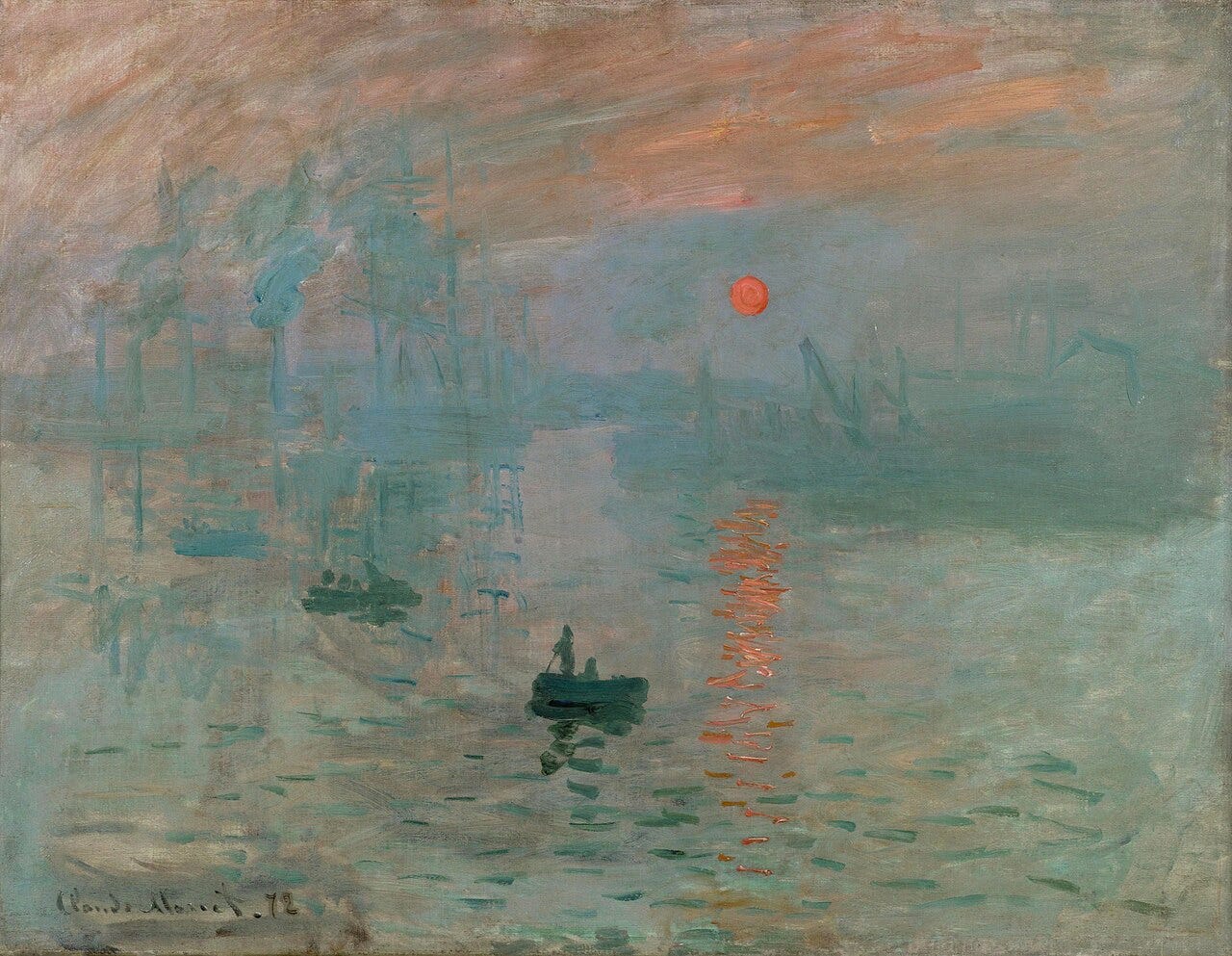
Claude Monet, Impression, Sunrise

A small orange sun rises through morning mist over a hazy harbour with dark boats
Claude Monet, Impression, Sunrise, 1872

Claude Monet painted Impression, Sunrise in 1872, a small orange sun rising through morning mist over the harbour of Le Havre. This one painting gave a whole movement its name, Impressionism.

A critic mocked the loose, sketchy look by naming the whole show after this title, and the insult stuck for good. Monet was not painting the harbour so much as the exact feeling of the sun coming up.

It hangs at the Musee Marmottan Monet in Paris. That one misty orange sun launched modern painting.

Vincent van Gogh, The Sower

A huge yellow sun sits low behind a farmer scattering seed in a violet field
Vincent van Gogh, The Sower, 1888

Vincent van Gogh painted The Sower in 1888 at Arles, a huge low yellow sun sitting directly behind a farmer scattering seed across a violet field. The sun forms a glowing halo around his head.

Van Gogh loved the subject and painted it many times, seeing the sower as a near religious figure of hope and renewal. The enormous sun turns hard farm work into something sacred.

Versions hang at the Kroller Muller Museum in the Netherlands and the Van Gogh Museum in Amsterdam. For Van Gogh the sun was faith, painted as a wheel of pure yellow.

Edvard Munch, The Sun

An enormous sun bursts over rocks and sea, throwing rays of colour across the whole canvas
Edvard Munch, The Sun, around 1911

Edvard Munch painted The Sun around 1911 for the great hall of Oslo University, an enormous sun bursting over rocks and sea, throwing rays of colour right across the huge canvas. After a lifetime of anxiety, this is Expressionism turned joyful.

The painter of The Scream here made his opposite, an image of pure light and energy flooding the world. There are no people, only the sun as a source of life and knowledge.

It hangs in the Aula of Oslo University. It is Munch’s hymn to light, the dark master finally painting the dawn.

J.M.W. Turner, The Fighting Temeraire

A ghostly white warship is towed by a dark steam tug beneath a blazing golden sunset
J.M.W. Turner, The Fighting Temeraire, 1839

J.M.W. Turner painted The Fighting Temeraire in 1839, a ghostly old warship towed to be broken up, beneath a blazing golden and red sunset that fills half the sky.

The setting sun is the whole meaning. As the great sailing ship of the past is dragged away by a squat steam tug, the sun goes down on a whole age. It was voted Britain’s favourite painting.

It hangs at the National Gallery in London. Turner made a sunset carry the passing of an entire era.

J.M.W. Turner, Regulus

A blinding white sun at the centre of a harbour scene almost erases the buildings around it
J.M.W. Turner, Regulus, 1837

J.M.W. Turner returns with Regulus of 1837, where a blinding white sun sits at the very centre of a harbour, so fierce it seems to eat the buildings and ships around it.

The story behind it is cruel: a Roman general whose eyelids were cut off and who was left to stare at the sun until blinded. Turner makes the whole painting the experience of being dazzled.

It hangs at Tate Britain in London. Turner kept adding white to the sun on show day until it truly hurt to look at, the boldest attempt in art to paint pure glare.

Joaquin Sorolla, Sunlight on the Beach

Children wade in bright shallow water as brilliant Mediterranean sunlight scatters across the sea
Joaquin Sorolla, children in the sun on a Spanish beach, around 1905

Joaquin Sorolla, the great Spanish painter of light, filled his beach scenes around 1905 with children wading in bright shallows as brilliant Mediterranean sun scatters over the water and their wet skin.

Sorolla painted outdoors at full midday, chasing the exact dazzle of southern sunlight. He caught the way strong sun bleaches colour and throws blue shadows better than almost anyone.

His work fills the Sorolla Museum in Madrid and hangs worldwide. He is often simply called the painter of the sun, and his beaches feel warm to the touch.

Caspar David Friedrich, Woman before the Rising Sun

A woman stands with her back to us, arms slightly open, before a low glowing sunrise
Caspar David Friedrich, Woman before the Rising Sun, around 1820

Caspar David Friedrich painted Woman before the Rising Sun around 1820, a woman standing with her back to us, arms slightly opened, before a low glowing sunrise in a still valley. It is the heart of German Romanticism.

For Friedrich the rising sun was a sign of God and resurrection. The woman greets the light like a believer, small before the vast dawn, exactly as he wanted us to feel.

It hangs at the Museum Folkwang in Essen. The sun here is not science but faith, hope rising over the world.

Frederic Edwin Church, Twilight in the Wilderness

A vast American sky burns red and gold at sunset over an empty forest and river
Frederic Edwin Church, Twilight in the Wilderness, 1860

Frederic Church painted Twilight in the Wilderness in 1860, a vast American sky burning red and gold at sunset over an empty forest and still river. Not a single person is in sight.

Church, the star of the Hudson River School, made the flaming sky the whole subject. Painted on the eve of the Civil War, its fiery sunset over an untouched land felt to many like an omen.

It hangs at the Cleveland Museum of Art. The setting sun turns the American wilderness into something vast, silent and charged with meaning.

Winslow Homer, Sunlight and Sea

Bright sun glints off a rolling sea as light and spray catch the crest of the waves
Winslow Homer, sunlight on the sea, around 1900

Winslow Homer painted the sea in full sun late in his life around 1900, bright light glinting off rolling water and catching the spray on the crest of each wave off the Maine coast.

Homer chased the hard, clean light of the north Atlantic, where the sun is sharp rather than warm. He stripped away people and story to leave only sun, water and rock.

His late seascapes hang at the Metropolitan Museum and beyond. Homer made sunlight on the sea feel bracing and real, cold and brilliant at once.

Vincent van Gogh, Field with Rising Sun

A pale sun rises over a walled wheat field in swirling strokes of yellow and green
Vincent van Gogh, Enclosed Field with Rising Sun, 1889

Vincent van Gogh painted this walled field with a rising sun in 1889 from the asylum at Saint Remy, a pale sun climbing over young wheat in swirling strokes of yellow and green.

Even confined and unwell, Van Gogh turned again and again to the sun over the fields as a sign of renewal. The whole sky seems to spin around the rising light.

It is held in private and museum collections. The sun, for Van Gogh, was always the promise that the dark would end.

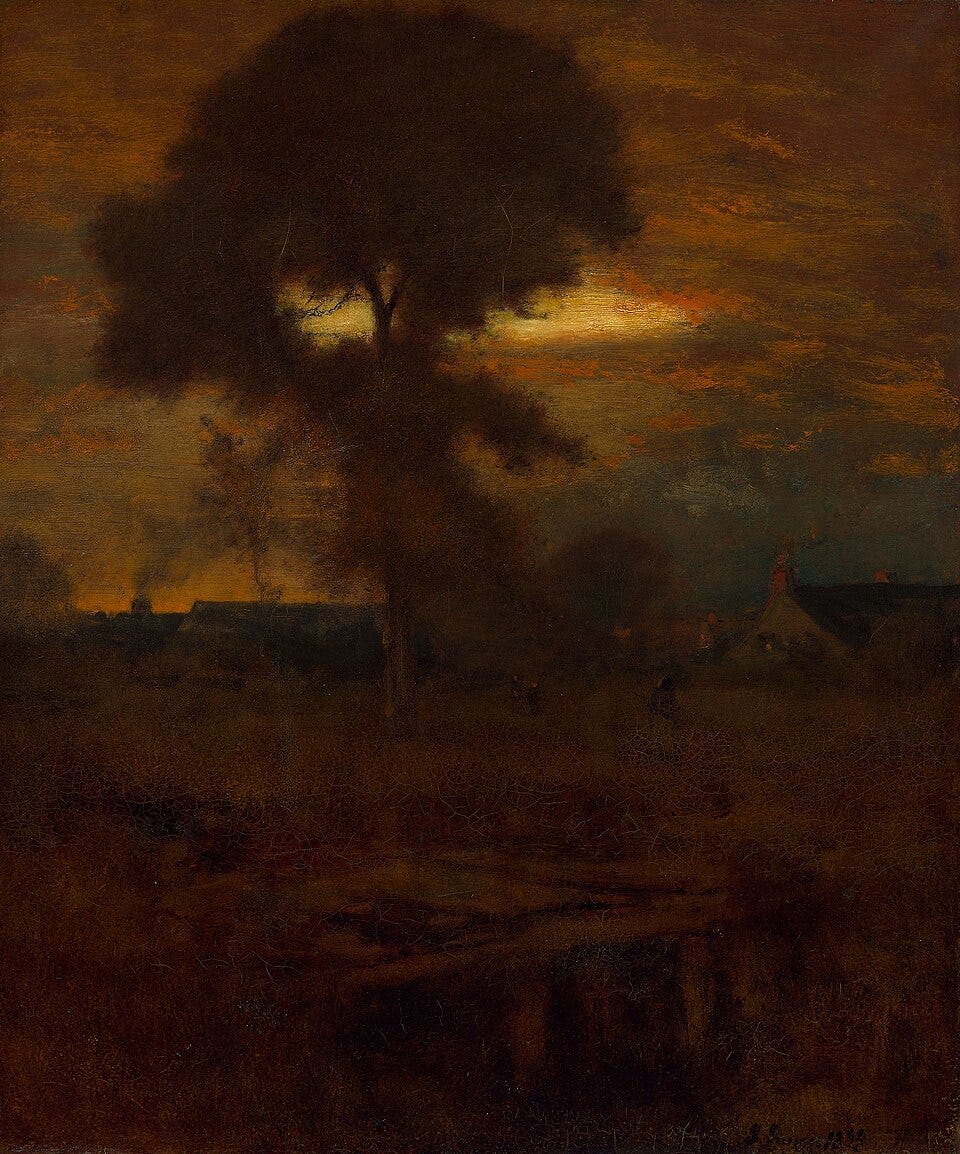
George Inness, Sunset Glow

A hazy field and trees bathed in the warm golden glow of a low evening sun
George Inness, an American landscape at sunset, around 1885

George Inness painted glowing American landscapes in the 1880s, hazy fields and trees bathed in the warm golden light of a low evening sun. The mood is calm and inward.

Inness was deeply spiritual and treated the sun’s glow as almost holy, blurring his scenes into a haze of warm light rather than sharp detail. He wanted the viewer to feel the hour, not measure it.

His work hangs in American museums including the Metropolitan Museum. For Inness the setting sun was a state of grace, painted as pure warm atmosphere.

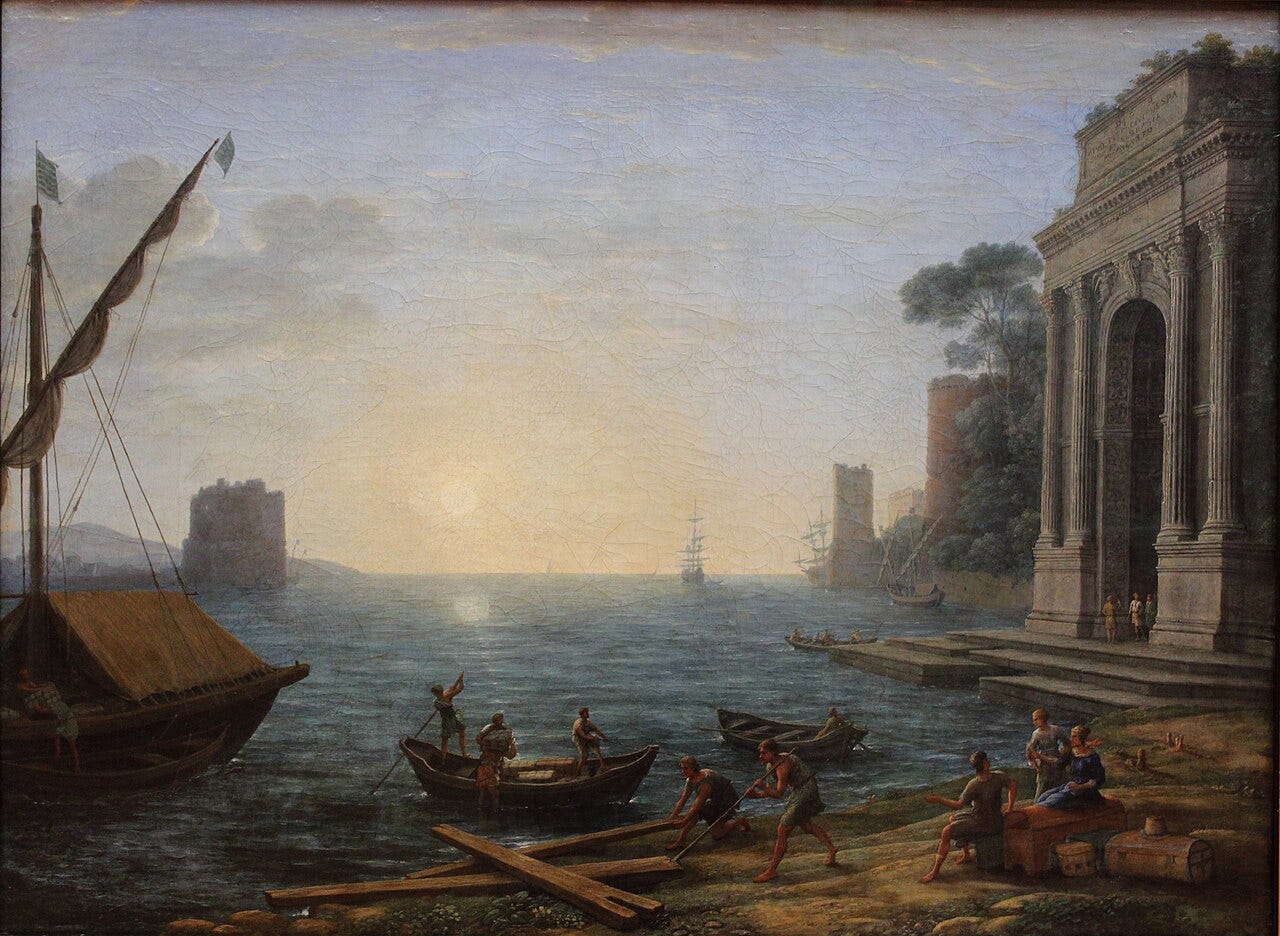
Claude Lorrain, Seaport at Sunrise

A calm classical harbour with ships as a golden sun rises over the water between grand buildings
Claude Lorrain, a seaport with the rising sun, around 1640

Claude Lorrain painted idealised harbours around 1640, calm classical ports where a golden sun rises over the water between grand buildings, laying a path of light across the sea.

Claude was the master who taught Europe to put the sun at the centre of a landscape. Turner idolised him and asked to have his own paintings hung beside Claude’s forever.

His seaports hang in the National Gallery in London and the Louvre. Two centuries before Monet, Claude had already made the rising sun the true subject of a painting.


Join 130,000 readers who get the secrets behind the paintings. Free.


Questions people ask about sun paintings

  • Which sun painting named a whole movement? Monet Impression, Sunrise of 1872. A critic mocked the title, and Impressionism took its name from it.

  • Why is there a giant sun behind Van Gogh Sower? Van Gogh saw the sower as a figure of hope and renewal, so he set a huge glowing sun behind him like a halo, turning farm work into something sacred.

  • How did Turner paint such a fierce sun in Regulus? He kept adding white paint to the sun on exhibition day until it truly dazzled, so the viewer shares the blinding glare of the story.

  • Why is Munch The Sun so unlike The Scream? After a life of anxiety, Munch painted this huge burst of light and energy for a university hall, his hymn to knowledge and life instead of dread.

  • Who taught European painters to paint the sun? Claude Lorrain, in the 1600s, put the rising sun at the centre of the landscape, and Turner idolised him for it.

Where to see them

  • Musee Marmottan Monet, Paris: Monet Impression, Sunrise.

  • National Gallery, London: Turner The Fighting Temeraire and Claude Lorrain seaports.

  • Aula, University of Oslo: Munch The Sun.

  • Sorolla Museum, Madrid: Sorolla sunlit beach scenes.

  • Kroller Muller Museum, Netherlands: Van Gogh The Sower.

Keep exploring

If the light pulled you in, three more paths from here. Walk through the whole life behind those blazing suns in Vincent van Gogh, the complete story, learn to read the hidden clues in famous canvases in seven secrets hidden in famous paintings, or start with the basics of Impressionism.


Two new stories a week, 130+ secrets unlocked. Start free.


One last thing. No paint is as bright as the sun, so painting it is really an act of faith and trickery at once. The greatest artists faked the blaze with contrast and nerve until you almost had to squint. These twelve still make you feel the light.