
Famous surrealist paintings put dreams, fears and free association on canvas, from Dalí's melting clocks to Magritte's men in bowler hats. The painters behind them built an entire visual language for the unconscious mind, then handed it to everyone who came after them. That same pull toward fear and the uncanny runs through Creepy Paintings: 12 of Art History's Scariest, painted centuries before surrealism gave the unconscious a name.
I have picked twelve surrealist paintings worth knowing. The first eight are the artists who defined the movement. The last four are painters surrealism later claimed as its own ancestors, and they happen to be the only ones here whose work is old enough to show in full.
In 30 seconds:
Surrealism started in Paris in 1924, when André Breton wrote its manifesto and pushed artists to paint straight from the unconscious.
Salvador Dalí and René Magritte turned dream logic into some of the most reproduced images of the 20th century.
The movement pulled earlier painters like Hieronymus Bosch and Henri Rousseau into its own family tree, claiming them as ancestors after the fact.
Most core surrealist paintings are still under copyright, since Dalí, Magritte, Miró and Ernst all worked well into the 20th century.
Museums like the Museum of Modern Art, the Dalí Theatre Museum in Figueres and the Museo Reina Sofía hold the best known works.
Where the dream logic came from:
Automatism. Painters and writers tried to bypass conscious control and let the hand move on its own.
Dream imagery. Freud's writing on dreams and the unconscious gave the movement its central material.
Chance and juxtaposition. Objects that had no business sharing a canvas ended up side by side anyway.
A political streak. Many surrealists, Breton included, saw the movement as a revolt against a rational world that had just produced a World War.
1. Salvador Dalí, The Persistence of Memory (1931)
Dalí's melting pocket watches, draped over a dead tree and a sleeping face, made him famous almost overnight.
The painting is barely the size of a sheet of paper, about 24 by 33 centimeters, which surprises most people who only know it from reproductions. It has hung at the Museum of Modern Art in New York since 1934. I go deeper into his complete story.
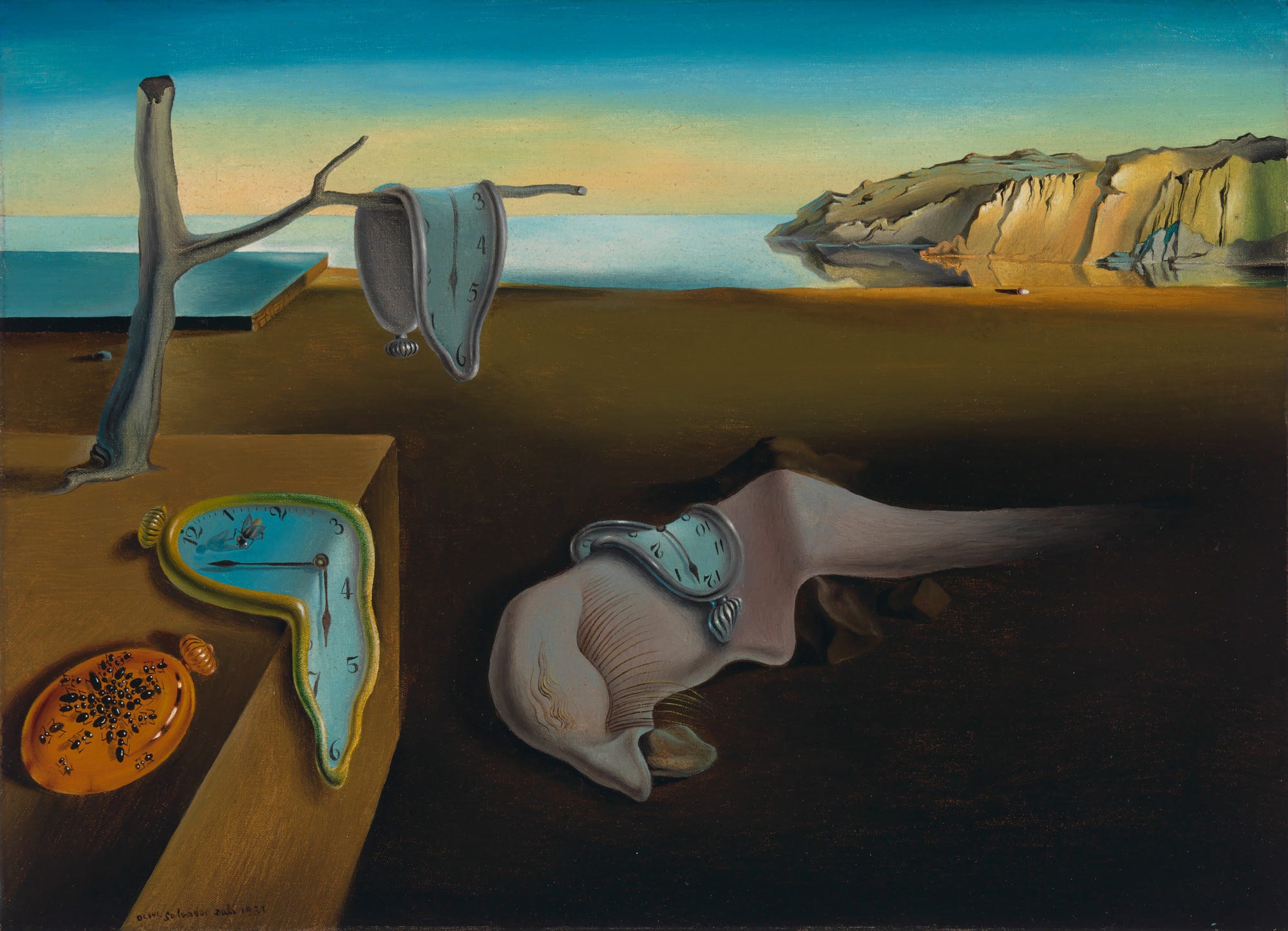
I go deeper into Dalí’s other icon in Dalí: The Secret Behind The Great Masturbator.
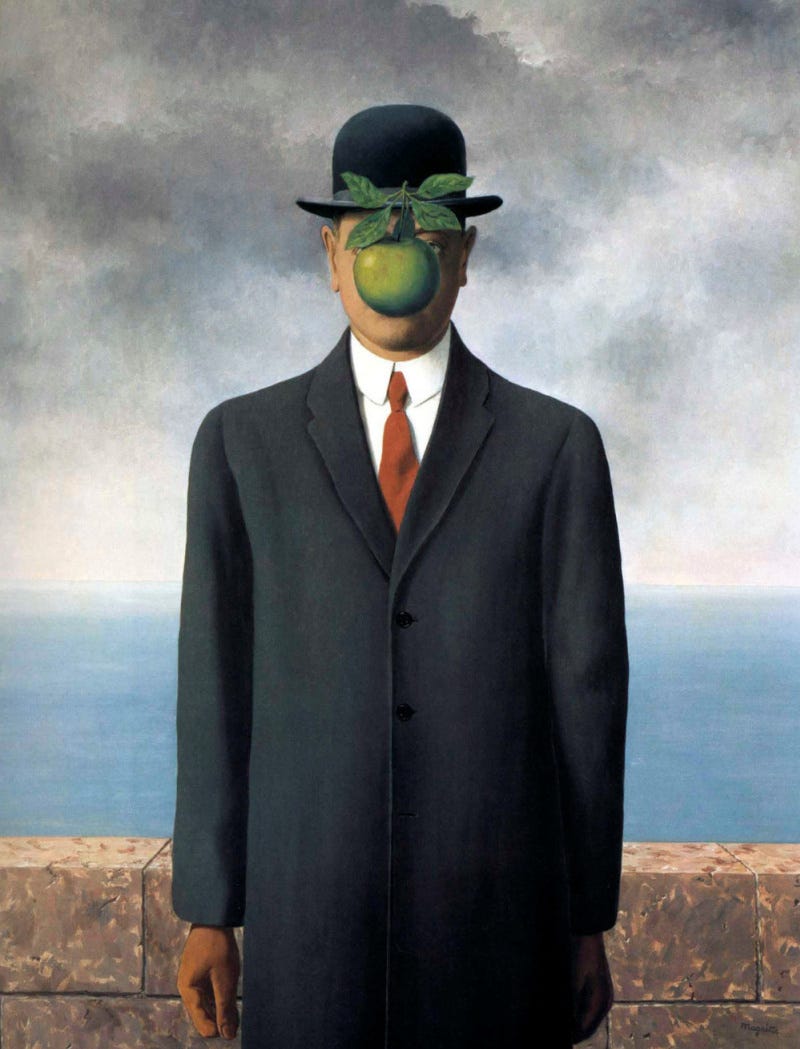
2. René Magritte, The Son of Man (1964)
A man in a bowler hat and suit stands in front of a low wall and the sea, his face hidden behind a floating green apple.
Magritte painted it as a kind of self portrait, and said the apple hides the visible while making you aware of what it conceals. It belongs to a private collection. I go deeper into his own complete story. A closer look at exactly what that apple is hiding and why is worth the click. He had played the same trick decades earlier with a painted pipe and a caption insisting it was not one, the reason behind that famous denial is worth knowing too.
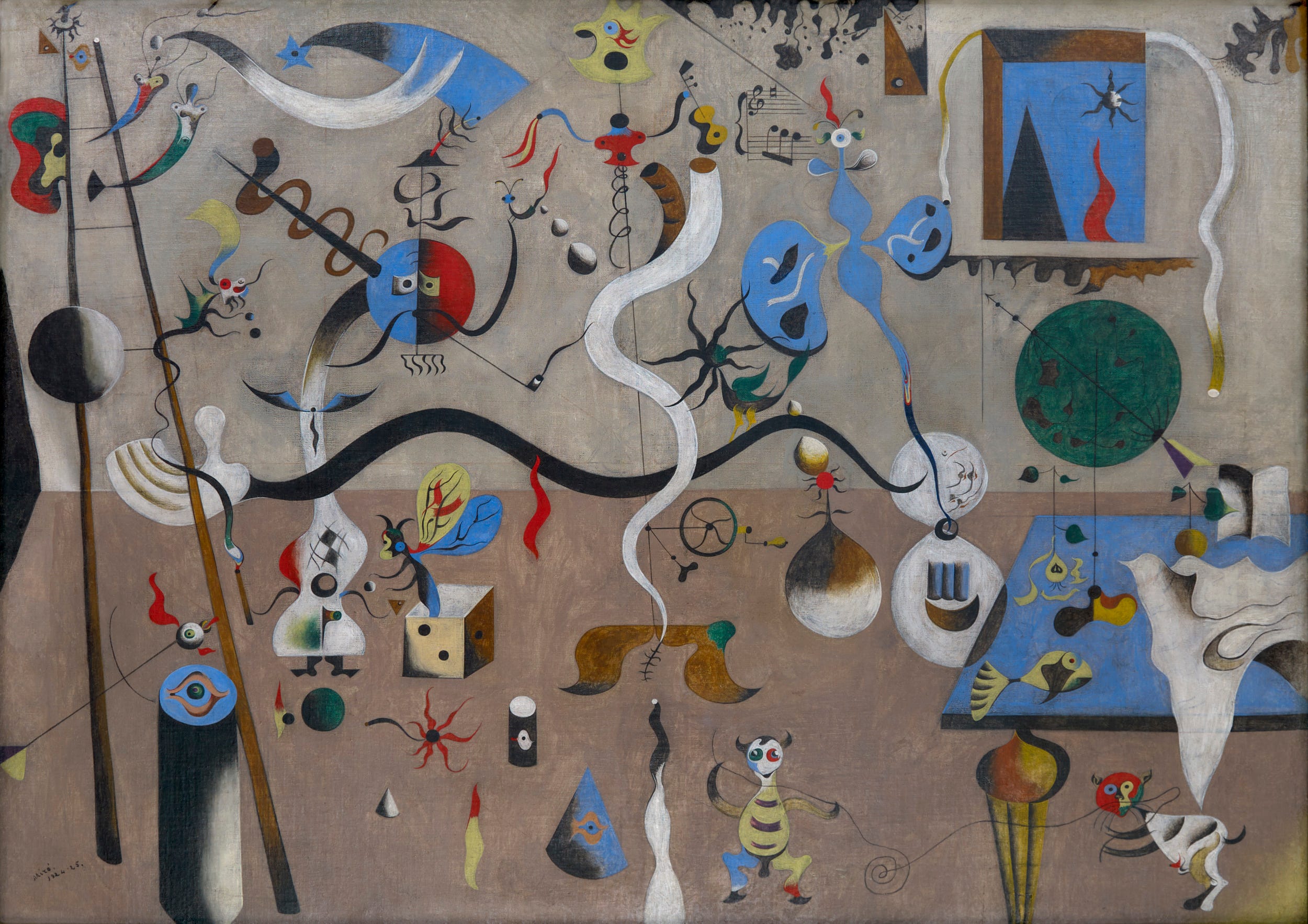
3. Joan Miró, The Harlequin's Carnival (1924 to 1925)
Miró filled this canvas with small dancing shapes, insects, ladders and musical instruments, painted from memory during a period when hunger reportedly gave him hallucinations.
He called it a record of what he saw with his eyes closed. It hangs at the Buffalo AKG Art Museum. I go deeper into his complete story.
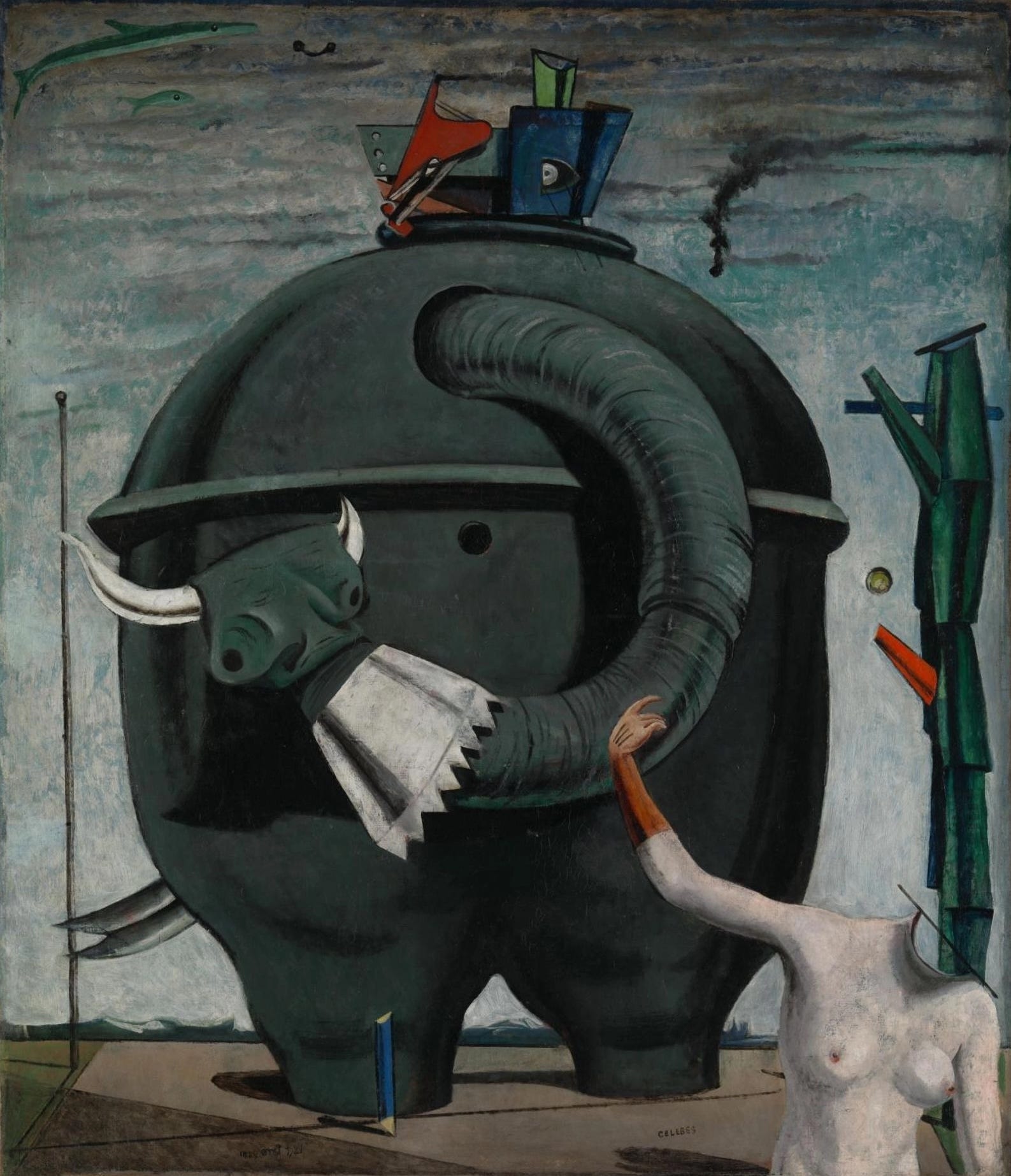
4. Max Ernst, The Elephant Celebes (1921)
A hulking mechanical elephant, built from a Sudanese corn bin Ernst had seen in a photograph, stands in an empty landscape beside a headless mannequin.
It was one of the first paintings to grow directly out of the collage techniques Ernst had been experimenting with. It is now at Tate in London. I go deeper into his complete story. Ernst had built that same collage habit a few years earlier in the Cologne Dada group, and some of the strangest results of that period are gathered in famous Dada artworks.
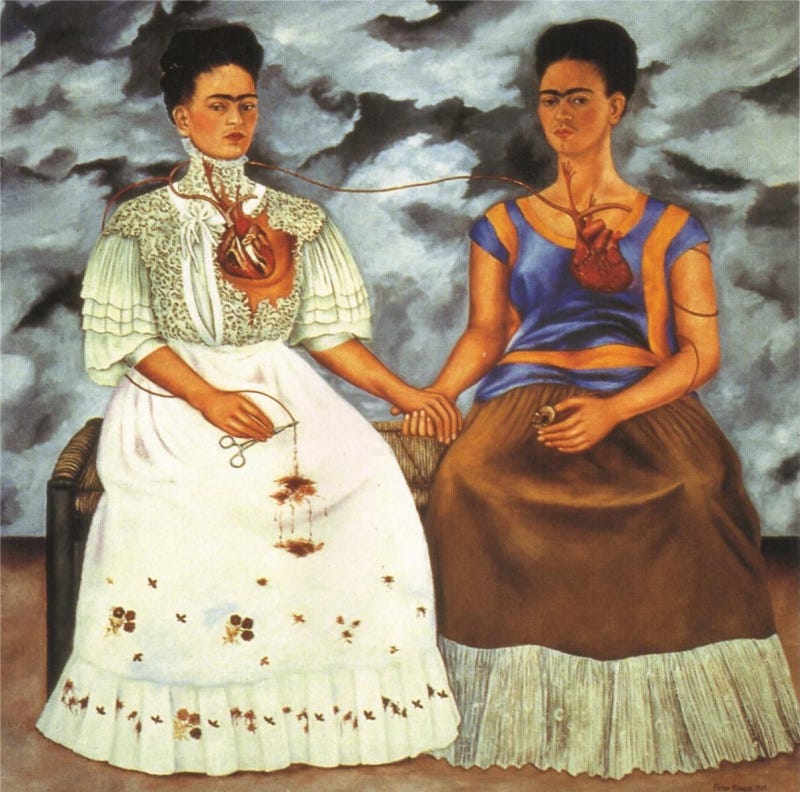
5. Frida Kahlo, The Two Fridas (1939)
Kahlo painted two versions of herself sitting side by side, hearts exposed and connected by a single vein, right after her divorce from Diego Rivera.
She rejected the surrealist label herself, and once said she never painted dreams, only her own reality. The painting stays at the Museo de Arte Moderno in Mexico City. I go deeper into her complete story.
6. Paul Delvaux, The Sleeping Venus (1944)
Delvaux painted this during the German occupation of Belgium, a nude Venus asleep on a plinth while skeletons and screaming women fill a moonlit square behind her.
He later said the air raid sirens and the fear that came with them fed directly into the scene. It hangs at Tate.

7. Yves Tanguy, Indefinite Divisibility (1942)
Tanguy filled his canvases with soft, rounded shapes scattered across flat, featureless horizons, closer to an alien seabed than any place on Earth.
He had no formal art training. He reportedly decided to become a painter after spotting a Giorgio de Chirico in a gallery window from a moving bus. The painting belongs to the Buffalo AKG Art Museum.

8. Leonora Carrington, Self Portrait, Inn of the Dawn Horse (c. 1937 to 1938)
Carrington painted herself mid transformation, hair standing on end, a hyena at her side and a white horse rearing outside the window behind her.
She was 20 when she made it, already deep into a relationship with Max Ernst that her family had tried to stop. It hangs at the Metropolitan Museum of Art in New York.

I tell her full story in Leonora Carrington: The Woman They Couldn’t Destroy.
Her escape from wartime Europe eventually landed her in Mexico City, where she spent most of her working life and became a central figure of Surrealism there. Leonora Carrington, The Complete Story covers that second act in full.
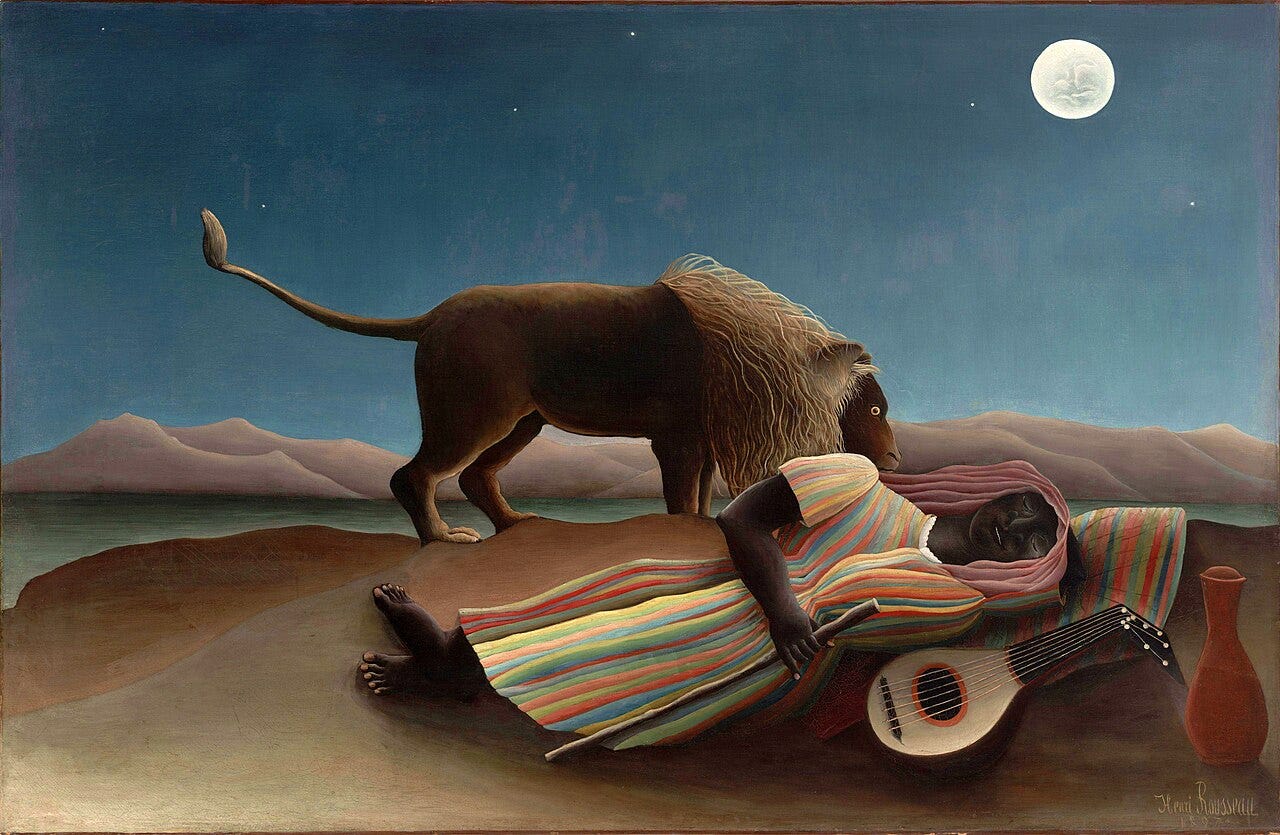
9. Henri Rousseau, The Sleeping Gypsy (1897)
Rousseau, a self taught customs officer who never left France, painted a lion sniffing at a sleeping woman under a full moon in an empty desert.
The surrealists later claimed him as an ancestor for the same reason critics had mocked him during his own lifetime: he painted as if nobody had taught him the rules. It hangs at the Museum of Modern Art.
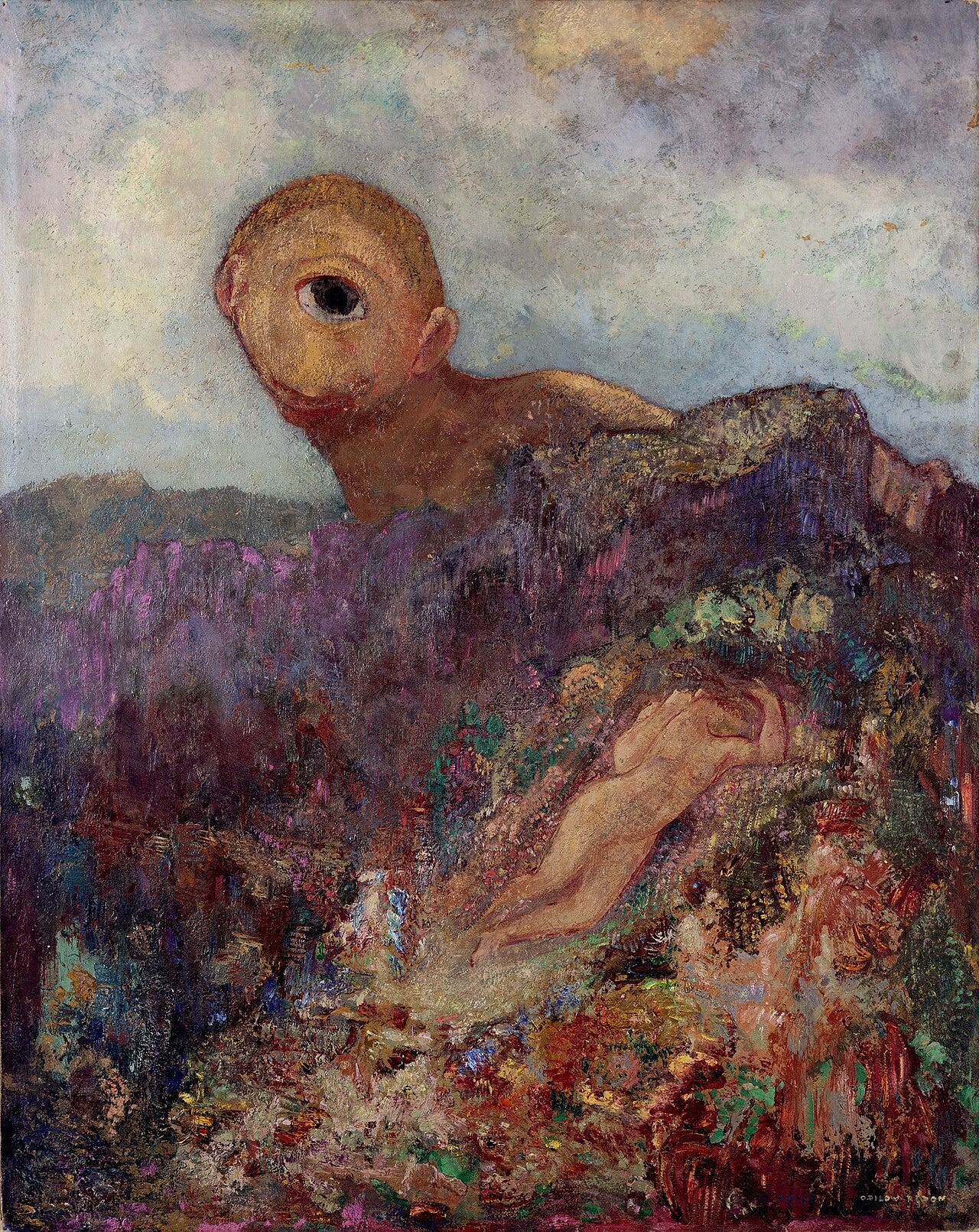
10. Odilon Redon, The Cyclops (c. 1914)
A single huge eye peers over a hillside at a sleeping nude below, one of the strangest images Redon painted in a career built on strange images.
He had spent decades drawing charcoal nightmares before he turned to this kind of color late in life. The painting is at the Kröller Müller Museum in the Netherlands.
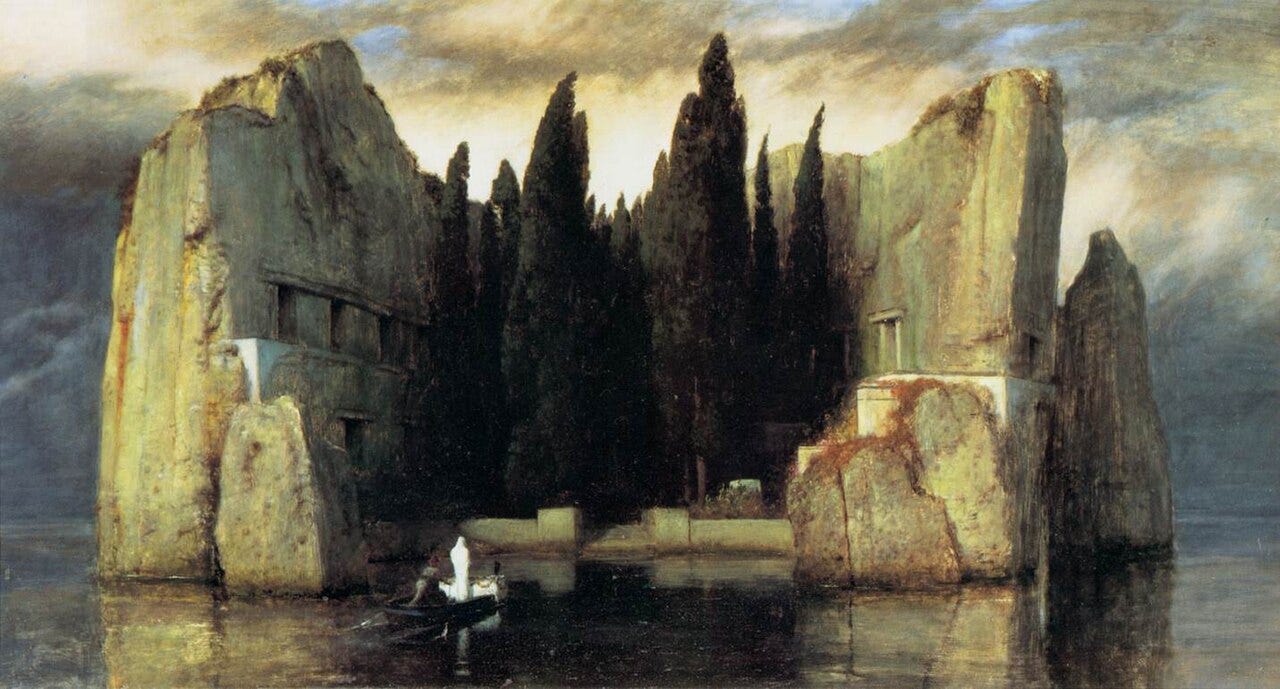
11. Arnold Böcklin, The Isle of the Dead (1880)
A small boat carries a white draped figure toward a rocky island covered in dark cypress trees, painted decades before surrealism existed as a word.
Böcklin painted five versions of the same haunting scene between 1880 and 1886. The painting fascinated both Freud and Hitler, who each owned a version of it, an odd afterlife for such a quiet image.
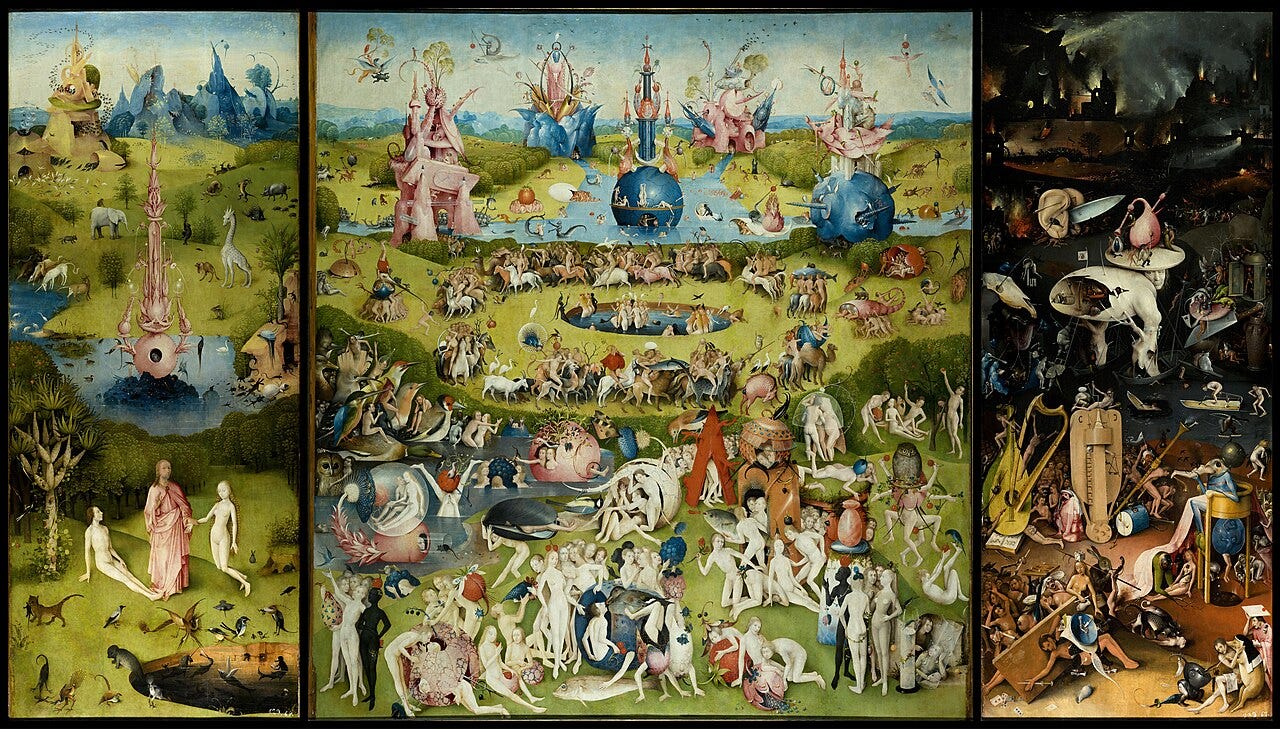
12. Hieronymus Bosch, The Garden of Earthly Delights (c. 1500 to 1515)
Four centuries before surrealism existed, Bosch filled a triptych with giant strawberries, bird headed demons and people trapped inside musical instruments in hell.
Dalí visited the Prado to study it and named Bosch as a direct ancestor of his own work. It has hung in Madrid since the 16th century. The hell panel even hides sheet music tattooed onto a damned man's backside, one of several details worth reading panel by panel.
Dalí comes across as surrealism's best salesman more than its best painter. Breton expelled him from the group in 1934 for turning surrealism into a marketable brand, and the accusation was hard to argue with: he kept painting under the surrealist name for another five decades after being pushed out.
Magritte reused the same trick twice, a pipe with a caption denying it was one, then an apple hiding a face. Ernst never repeated himself that way. His mechanical elephant in The Elephant Celebes came from a photograph of a Sudanese corn bin, built on the same collage habit he carried over from the Cologne Dada scene.
Of the four painters surrealism claimed as ancestors after the fact, Bosch has the strongest claim to the title. Dalí studied The Garden of Earthly Delights at the Prado and called Bosch a direct ancestor of his own work. Rousseau, Redon and Böcklin never got that kind of direct endorsement from anyone in the movement.
A few essentials on Surrealism
What makes a painting surrealist? It tries to paint the logic of dreams and the unconscious mind rather than the visible world, usually through impossible combinations of ordinary objects.
Who started surrealism? The poet André Breton, who published the first Surrealist Manifesto in Paris in 1924.
Is Frida Kahlo a surrealist? She showed with the group and is often listed alongside them, but she always said her paintings were her own reality, not dreams.
Why are so many surrealist paintings so small? Dalí in particular worked at a small scale on purpose, since he wanted viewers to lean in close, the way you would to read a letter.
Where can I see the most surrealist paintings in one place? The Museo Reina Sofía in Madrid and the Dalí Theatre Museum in Figueres both hold major collections.
Where to see them
The Persistence of Memory: Museum of Modern Art, New York.
The Elephant Celebes: Tate, London.
The Two Fridas: Museo de Arte Moderno, Mexico City.
The Garden of Earthly Delights: Museo del Prado, Madrid.
The Sleeping Gypsy: Museum of Modern Art, New York.
The manifesto that started it all
Breton wrote the first Surrealist Manifesto in October 1924, defining surrealism as pure psychic automatism, an attempt to express the real function of thought without any control by reason.
The group he gathered around him in Paris included Ernst, who arrived from the Dada scene in Cologne, and Miró among the first. They held their first joint exhibition in November 1925 at the Galerie Pierre.
The word itself came from outside the group. The poet Guillaume Apollinaire used surrealiste in 1917, years before Breton borrowed it and gave it a manifesto.
Dalí was expelled from the group in 1934, accused by Breton of turning surrealism into a marketable brand. He kept painting under the surrealist name anyway for another five decades.
Surrealism is the eighteenth of twenty stops in Art Movements in Painting.
Wifredo Lam joined the Surrealist circle around André Breton after fleeing France in 1941. His path from Cuba to Paris and back is traced in Wifredo Lam, The Complete Story.