
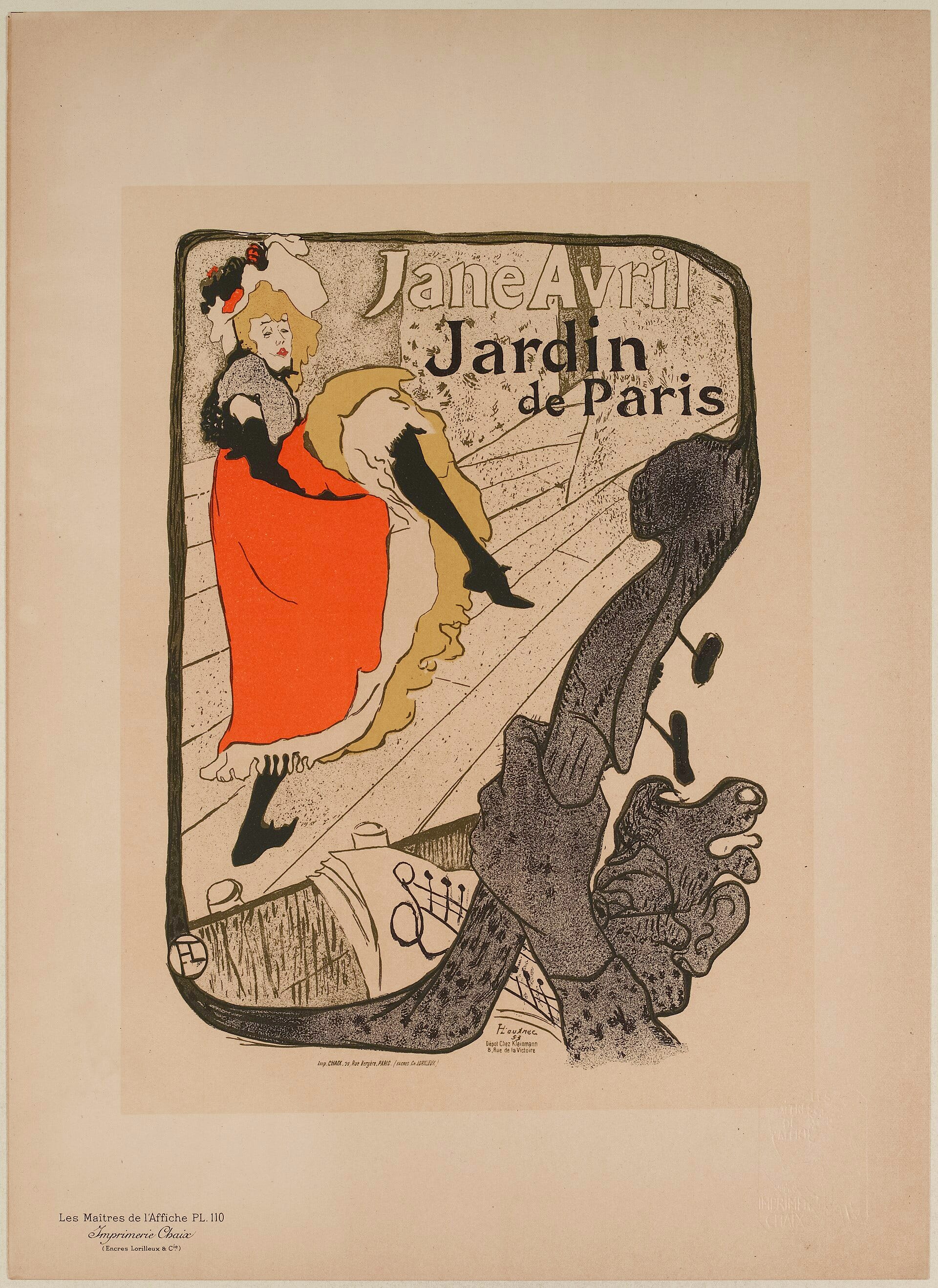
Henri de Toulouse-Lautrec spent most of his twenty working years among people who performed at night: circus riders, singers, dancers and the crowds who came to watch them. Two of his canvases hung in the nightclub where many of them worked, and his posters covered the walls outside. Over one friend's pictures, he even challenged another painter to a duel.
Cool Stories About Art is a newsletter to learn art the fun way.
Join 200,000+ readers and get:
10 new art stories / month
The entire archive of content (140+ articles)
Comment, ask questions, and chat with other readers
A Painter of People Who Worked at Night
Toulouse-Lautrec painted the people he could watch from close by. A Montmartre nightclub kept a table for him, and he drew the singers, dancers and regulars he found there. Later he rented rooms in brothels and painted there during the day.
A poster first made his name, and his color lithographs are as well known today as his canvases, so both kinds of work are here. Many of the originals can be seen in three cities: Albi, where a museum is devoted to him, Paris and Chicago.
The twelve run from a carriage scene painted in his teens to what is thought to be the last picture he finished, in 1901. Most date from the early 1890s, and the same people return from one to the next: a dancer, a critic with a yellow beard, a very tall cousin.
12. Equestrienne, At the Cirque Fernando (1887 to 1888)
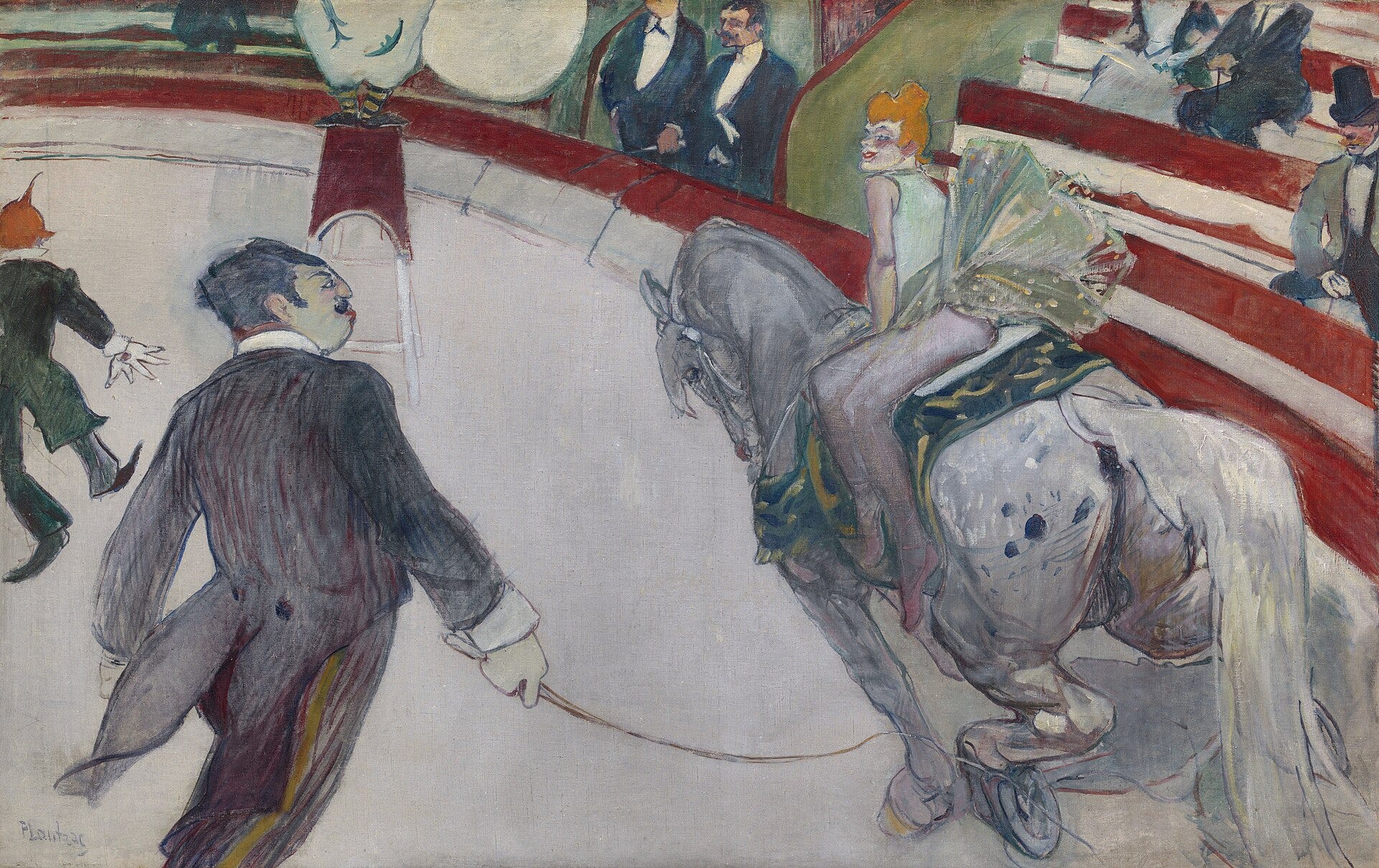
A rider in a white tutu perches on a dapple-grey horse as it gathers speed around the ring. Behind her, the famous ringmaster Monsieur Loyal, in a tailcoat, cracks a long whip, and a clown waits at the edge with a paper hoop. In a moment she will stand up on the horse's back and leap through it. For now she seems to bare her teeth at the ringmaster, and he glares back at her.
The ring was a real one. Equestrienne (At the Cirque Fernando) shows a circus in Montmartre, the hill at the north end of Paris where Toulouse-Lautrec had studied under the painter Fernand Cormon. He worked on it in 1887 and 1888, on a canvas over one and a half meters across.
Its first public outing may have come in February 1888, in Brussels, at the yearly salon of Les XX, a circle of avant-garde artists in that city. For the occasion, Toulouse-Lautrec drew a clown holding up a paper hoop with the titles of his eleven works written across it, the same prop he had painted in the ring.
From Brussels the circus rider went to a dance hall. In 1888 the canvas was bought by Joseph Oller, the owner of the Moulin Rouge on the boulevard de Clichy, and it may even have been ordered for the place. When the Moulin Rouge opened on October 6, 1889, the rider was hanging in its lobby, and the first customers walked past a ringmaster's whip on their way to the dance floor.
What those customers saw was a moment of waiting. The horse is already running and the whip is in the air, but the rider has not yet risen. I think that is where the picture's energy comes from. The paper hoop is still whole.
At a Glance
Artist: Henri de Toulouse-Lautrec (1864 to 1901)
Painted: 1887 to 1888, Paris
Medium: Oil on canvas
Size: 100.3 × 161.3 cm (39.5 × 63.5 in)
Where to see it: Art Institute of Chicago, Chicago
11. Portrait of Vincent van Gogh (1887)
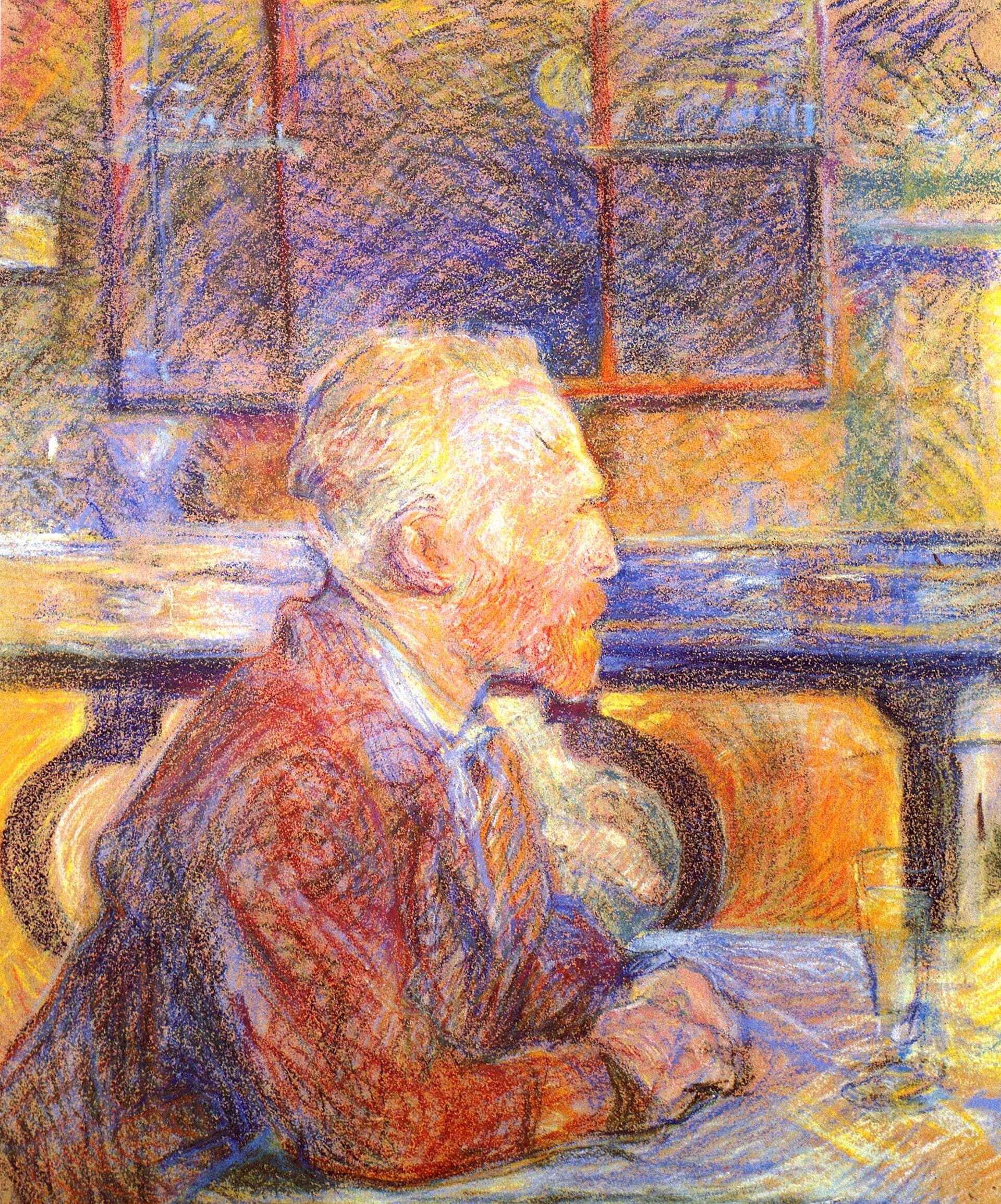
Bare paper shows everywhere in this drawing. A red-bearded man sits upright at a café table, his forearms resting beside a glass, and every part of him is built from quick strokes of blue, orange and yellow chalk. Three years later, at a banquet in Brussels, another painter insulted this man's pictures in front of the other guests, and the artist who had drawn him stood up.