Famous Van Gogh Paintings: His 12 Greatest Works
In just ten years, and mostly in his last three, Vincent van Gogh painted some of the most loved pictures on earth, from swirling stars to blazing sunflowers.
He sold almost nothing in his lifetime, yet today his work draws the biggest crowds in any museum and breaks auction records. These are twelve of his most famous paintings, all now in the public domain, each one a burst of color wrung out of a short and painful life.
For the full story of the man behind them, see the complete Van Gogh guide; here, the paintings themselves. I have picked the ones the whole world now knows by heart.
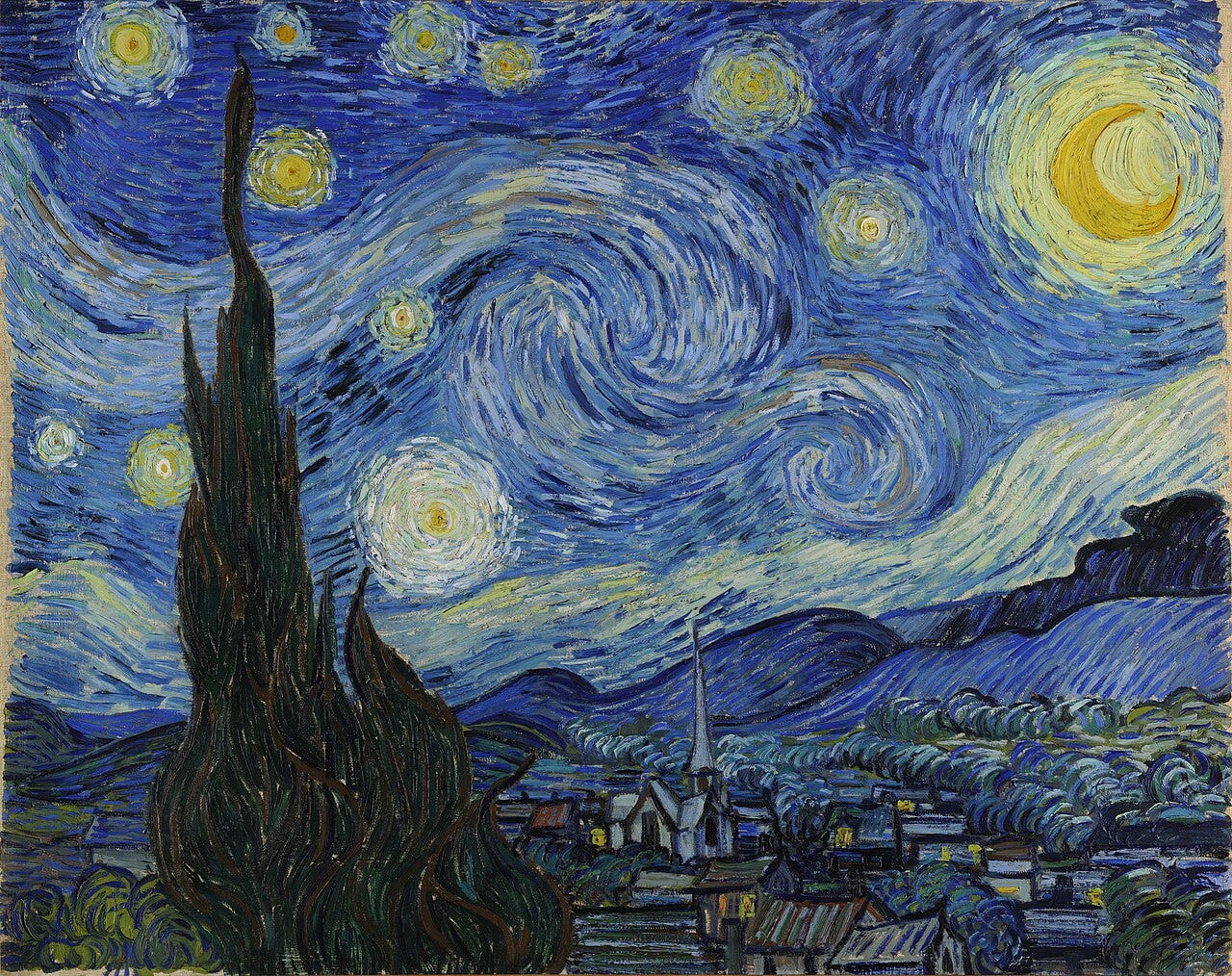
1. The Starry Night (1889)
A village sleeps under a night sky boiling with huge, spiraling stars and a glowing crescent moon, the most famous night in all of art.
Van Gogh painted it from memory in the asylum at Saint Remy, looking out through a barred window before dawn. The great dark cypress in the foreground reaches up like a green flame linking the earth to the sky.
He had real doubts about it, feeling it pushed too far from the real world he wanted to paint. It hangs at the Museum of Modern Art in New York, seen by millions who never knew he doubted it.
2. Sunflowers (1888)
A vase of shaggy yellow sunflowers glows against a yellow wall, painted in yellow on yellow as a hymn to the color of the sun. Van Gogh made the sunflowers to decorate the room he was preparing for his friend Paul Gauguin in Arles, a welcome in paint.
He was proud of them in a way he rarely was, calling the sunflower his own flower. The thick, crusted paint still looks freshly squeezed from the tube, and one version sold in 1987 for a record price that startled the art world.
3. The Potato Eaters (1885)
Five peasants huddle around a dish of potatoes in a dim, brown cottage, their faces coarse and their hands knotted from work. This early, muddy picture was Van Gogh's answer to Millet, the French painter of peasant life he worshipped above all others.
He wanted to show people who ate the earth they dug, honest and unlovely, and thought it his first real painting. Critics and even his brother found it too dark and clumsy, and it was long overlooked.
It hangs in the Van Gogh Museum in Amsterdam, kept as the rough seed of everything he became.
4. Cafe Terrace at Night (1888)
A cafe glows warm yellow under a deep blue sky pricked with stars, the first night scene Van Gogh painted with no black paint at all, a leap of Post Impressionist color.
He set up his easel right on the cobbles of a real square in Arles and worked through the night to catch the gaslight. It is one of the earliest of his starry skies, painted months before the more famous Starry Night.
Some see a hidden Last Supper in it, twelve figures around a central waiter in white, though that may be wishful thinking. The very cafe still stands in Arles, repainted yellow to match the picture that made it famous.
5. Bedroom in Arles (1888)
Van Gogh painted his own small bedroom in the Yellow House with tilting walls, a bright bed and paired objects, meant to breathe pure rest and calm.
He was so pleased that he made three versions, and wrote to his brother that the color alone should work like a lullaby. The odd, sloping perspective and the pairs of things hide a quiet loneliness under the cheerful color.
There is more going on in this simple room than first meets the eye, which I unpack in the piece on the bedroom's secret The Yellow House itself was later destroyed by a bomb in the Second World War.
6. Wheatfield with Crows (1890)
A flock of black crows scatters over a stormy wheat field beneath a heavy blue sky, painted in the final weeks of his life. For years it was wrongly called his very last painting, and read as a suicide note in paint, though the timeline is not so simple.
The three roads leading nowhere and the low, pressing sky give it a real sense of dread. He died in July 1890, and I tell the story of his final hours in the piece on his last day The painting stayed in the family collection he left behind, now the heart of the Van Gogh Museum in Amsterdam.
7. Self Portrait (1889)
Van Gogh stares out of a swirling blue background, his face gaunt and his eyes intent, in the most famous of his many self portraits.
He painted himself dozens of times, partly out of a hunger to understand his own face and partly because he could not afford to pay models.
This one was painted inside the asylum at Saint Remy, the whirling background echoing the storms in his mind. Look closely and the blue coat and blue ground almost dissolve into each other, holding him inside the color.
It hangs in the Musee d'Orsay in Paris, one of more than thirty self portraits he left in barely four years.
8. Irises (1889)
A dense bed of blue purple irises fills the whole canvas, one lone white iris standing out among them like an outsider. Van Gogh painted it in his first week at the asylum, calling his work the lightning rod for his illness, a way to hold himself together.
The thick, curling brushwork and flattened space owe a clear debt to the Japanese prints he loved. The heavy ridges of paint here have shifted with time, the red pigment fading so the flowers were once far more violet.
In 1987 it briefly became the most expensive painting ever sold.
9. Almond Blossom (1890)
Branches of white almond blossom spread across a bright turquoise sky, a burst of spring painted with tender, quiet joy. Van Gogh made it as a gift for his brother Theo and Theo's wife Johanna, to celebrate the birth of their baby son, named Vincent after him.
It was his hope for a new life, painted by a man who had little hope left for his own. That same sister in law, Johanna, later saved his whole legacy, turning a dead unknown into the most loved painter alive.
It stayed the family's favorite, and hangs today at the heart of the Van Gogh Museum.
10. Starry Night Over the Rhone (1888)
Gas lamps and stars both shine and ripple in the dark water of the river Rhone, a calmer, earlier cousin of the famous Starry Night.
Van Gogh painted it on the riverbank at Arles, thrilled at the challenge of catching a night sky in color rather than plain black.
A couple strolls arm in arm along the near bank, small and human under the vast, glittering dome. He made it in the same Arles months when he also cut off his own ear in a breakdown, joy and crisis side by side.
It hangs in the Musee d'Orsay, one of the rare night scenes he painted outdoors, on the spot beneath the real stars.
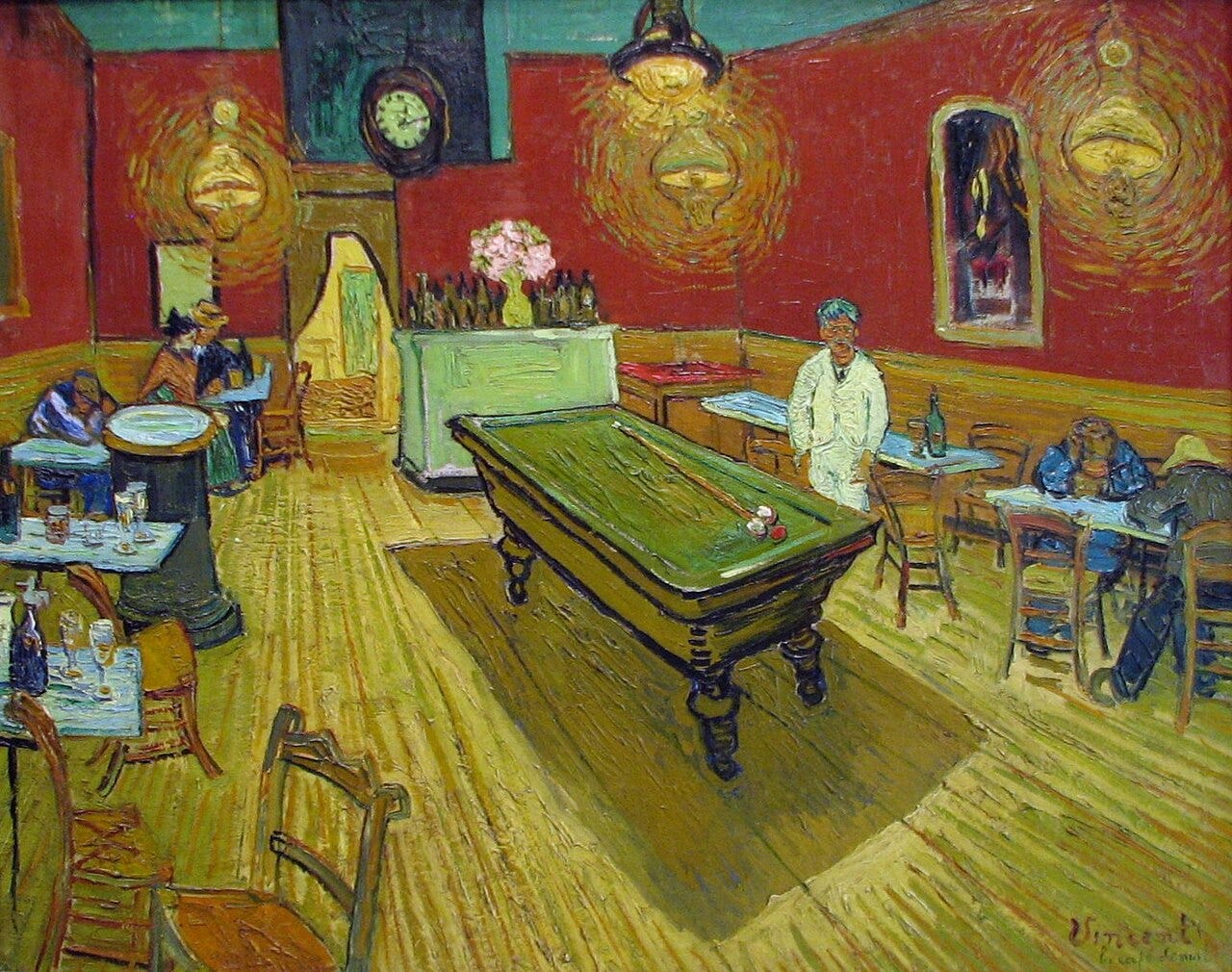
11. The Night Cafe (1888)
A garish all night cafe glows sickly red and green under harsh yellow lamps, a place Van Gogh called one where you could ruin yourself or go mad.
He deliberately clashed red and green to express what he called the terrible passions of humanity, the color itself made to feel uneasy.
A lonely few slump at the tables while the owner stands like a pale ghost by the billiard table. He took the room by the week and painted through three nights, sleeping by day.
He spoke of the picture as his revenge for all the money the cafe had drained from him, a work now worth a fortune he never saw.
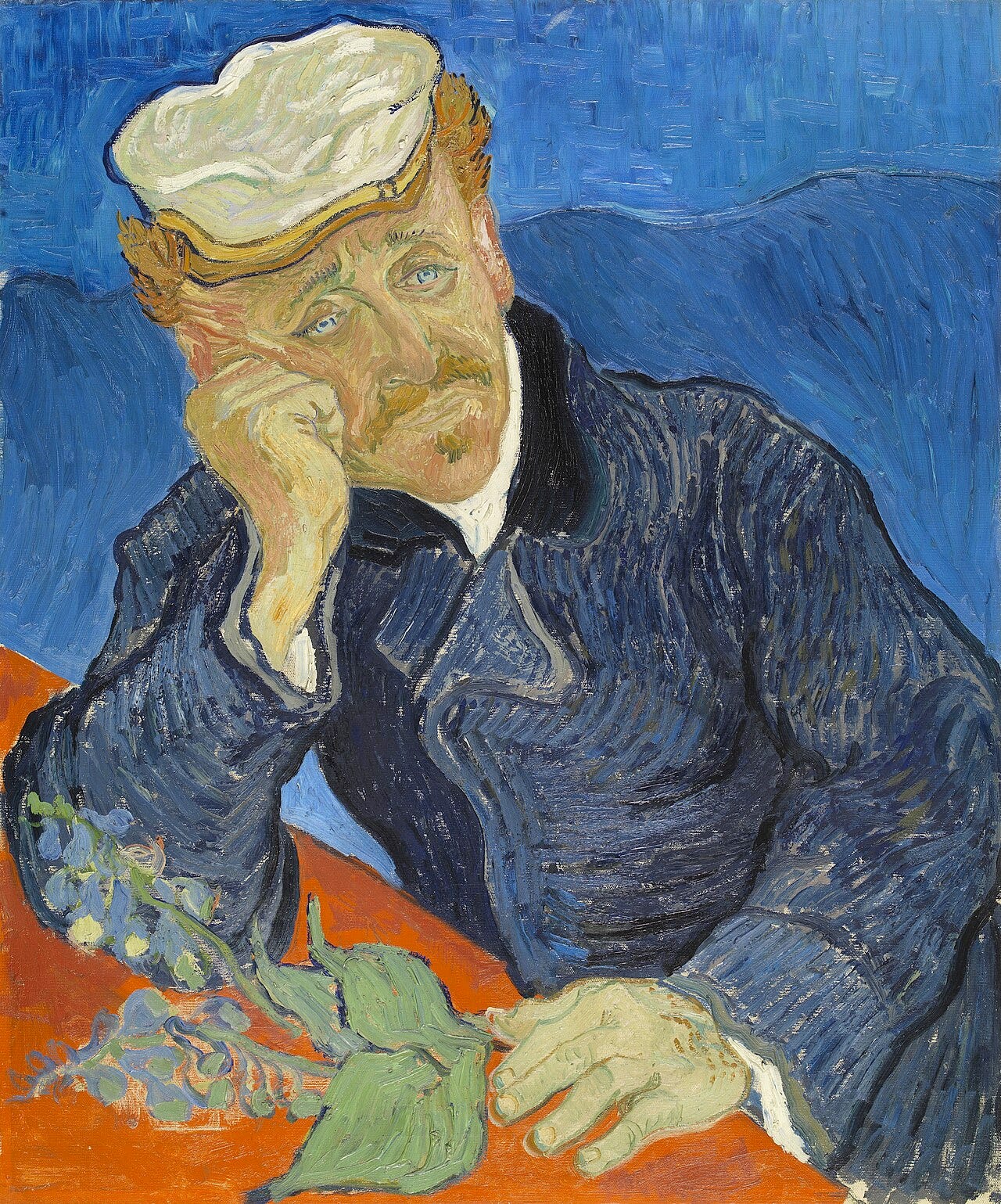
12. Portrait of Dr Gachet (1890)
The doctor who cared for Van Gogh in his final weeks sits with his head on his hand, his face full of a sadness the painter said matched his own.
Van Gogh painted Gachet, an art loving physician, in the last month of his life, calling the sad expression the heartbroken look of the time.
He made two versions of it, working fast in the summer before his death. One sold in 1990 for a record breaking price before it vanished into a private collection, and its whereabouts remain a mystery to this day.
The doctor who tried to heal him became one of his most haunting and valuable works.
Van Gogh's paintings, the questions people ask
What is Van Gogh's most famous painting? The Starry Night from 1889, followed by his Sunflowers and his many self portraits.
How many paintings did Van Gogh make? Around 860 oil paintings and roughly 1,300 works on paper, almost all in his last decade.
Did Van Gogh sell any paintings? Only a handful in his lifetime, most famously The Red Vineyard; fame and huge prices came only after his death.
Why are Van Gogh's paintings worth so much? His story, his color and his rarity make them icons, and two of them have sold for over eighty million dollars.
Where can I see Van Gogh's paintings? The Van Gogh Museum in Amsterdam holds the largest collection, with more in Paris, New York and around the world.
If these paintings pulled you in, you will love these too:
The secret behind Hopper Soir Bleu, the clown picture that went wrong
Twelve famous portraits and the real people, the faces behind the paintings
Six women, one monster, what Picasso did to the women who loved him
Painted for no one, loved by everyone
Van Gogh sold almost nothing and died believing he had failed. Every one of these paintings was made in poverty, often in pain, by a man who thought the world had turned its back on him.
Now they hang behind glass while crowds line up for hours to stand in front of them. It is the strangest and saddest happy ending in the whole history of art.