
Most people first hold a watercolor brush as children, and for centuries professional painters treated it the same way, as a tool for sketches and notes before the real picture. The twelve artists on this page made it a medium for finished work. After one of them died, his children lost the right to reproduce his paintings for more than thirty years.
Cool Stories About Art is a newsletter to learn art the fun way.
Join 200,000+ readers and get:
10 new art stories / month
The entire archive of content (1,000+ articles)
Comment, ask questions, and chat with other readers
A Paint That Forgives Little
Watercolor is pigment bound in gum arabic and thinned with water. The paint is transparent, so its glow comes from the white paper beneath it, and that same transparency makes it unforgiving. A dark stroke laid over a light one stays dark, so every white has to be planned from the first touch, either by leaving the paper bare or by lifting the color off while it is still wet.
Water also runs into a damp sheet and dries paler than it went on, so the painter has to work fast and accept part of what happens.
Those habits kept watercolor in second place behind oil, which could be reworked for months and hung at an academy exhibition. In Britain in the late eighteenth century, watercolor still passed for a lesser medium, good for working out ideas before the real painting began.
The artists chosen here each made water and paper do something new, and kept doing it across a whole body of work rather than in one lucky sheet.
12. Albert Namatjira (1902 to 1959)
Pale as chalk, the trunk of a ghost gum stands in front of ranges that turn from red to violet at dusk. That white trunk comes back again and again in the watercolors of Albert Namatjira, and one small sheet from about 1952 carries it in its title, Ghost Gum Scene near Gosse Range.
Namatjira was Western Arrernte, raised at Hermannsburg, called Ntaria in his own language, west of Alice Springs. Among the Arrernte, images were made on the ground, on rock and on the body, as signs. A watercolor landscape was something white visitors painted.
He took up that foreign medium in the 1930s, and at first glance his views of the MacDonnell Ranges look like ordinary European landscapes. A slower look finds forms that repeat, patterns worked with great care and horizons set high on the sheet.
Within ten years, his sons and other relatives were painting too, and people began to speak of a Hermannsburg School.
The family that learned the medium from him later lost control of his pictures. In 1957 Namatjira signed part of his copyright over to a friend, John Brackenreg, and the rest passed at his death in 1959 to his widow and children. In 1983 the public trustee managing the estate sold the family's share to Brackenreg's company without asking them. From then on, his children could not reproduce their own father's paintings.
The deal was undone only in October 2017, when the businessman Dick Smith persuaded Brackenreg's children to hand the copyright to the Namatjira Legacy Trust for one Australian dollar.
For the family, the pictures were always more than views. Critics in Namatjira's lifetime saw his landscapes as proof of assimilation. Today they are widely read as a coded way of naming traditional sites and claiming country. Seen that way, the ghost gums and the red ranges were never simply scenery.
At a Glance
Born: 1902, Hermannsburg (Ntaria), Northern Territory, Australia
Died: 1959, Alice Springs, Northern Territory, Australia
Nationality: Australian (Western Arrernte)
Known for: Watercolor landscapes of the MacDonnell Ranges, the Hermannsburg School
Where to see the work: Art Gallery of New South Wales, Sydney, and Art Gallery of Western Australia, Perth
11. Thomas Girtin (1775 to 1802)
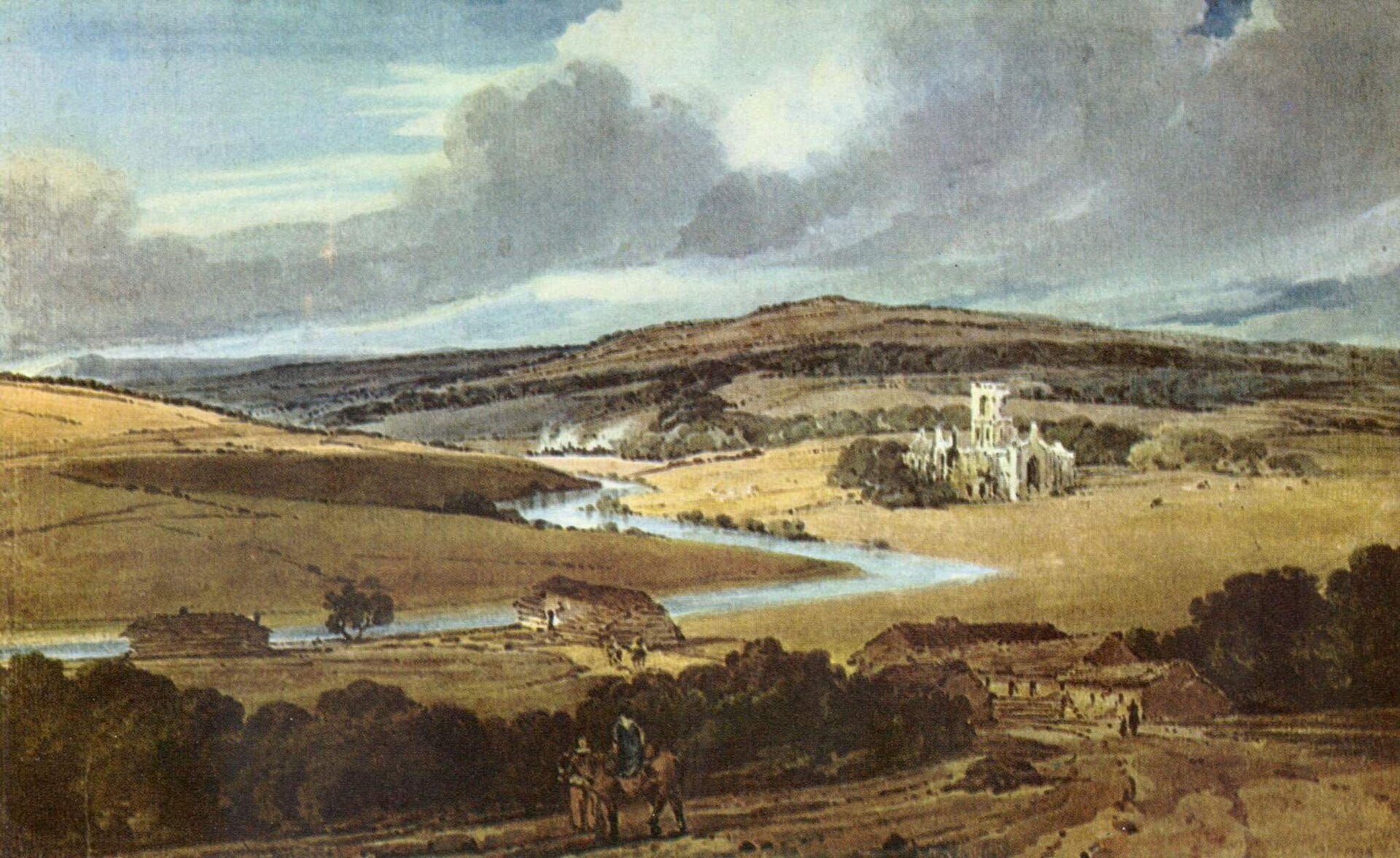
Late in the 1790s, two young men of the same age spent their evenings in the London house of a doctor who collected drawings, copying other artists' sheets for a few shillings a night. One traced the outlines. The other washed in the light and shadow. The grandest patrons of the day watched both at work, and they wanted to back the one who drew the outlines against his partner.