
John William Waterhouse painted women out of old poems and myths, and he often caught them at the very moment their stories are about to turn. He started out with scenes of ancient Rome. When he died in 1917, the canvas on his easel showed summer roses in full bloom in the middle of a snowbound January, and he never finished it.
Cool Stories About Art is a newsletter to learn art the fun way.
Join 200,000+ readers and get:
10 new art stories / month
The entire archive of content (140+ articles)
Comment, ask questions, and chat with other readers
Painting a Story Everyone Already Knew
Waterhouse was born in Rome in 1849, the son of a painter, and studied in London at the schools of the Royal Academy. He is often grouped with the Pre-Raphaelites, though he belonged to the generation that came after them.
His subjects came mostly from books his public had already read: Homer, Ovid, Shakespeare, Tennyson. That raised a real difficulty. Viewers walked up to the canvas already knowing how the story ended, so each picture had to pick a single moment and let the whole tale be read from it.
I chose twelve canvases that run from his Roman scenes of the 1880s to the picture he left unfinished in 1917. Most are well known, and a few seldom make it into surveys of his work.
12. The Enchanted Garden (1916 to 1917)
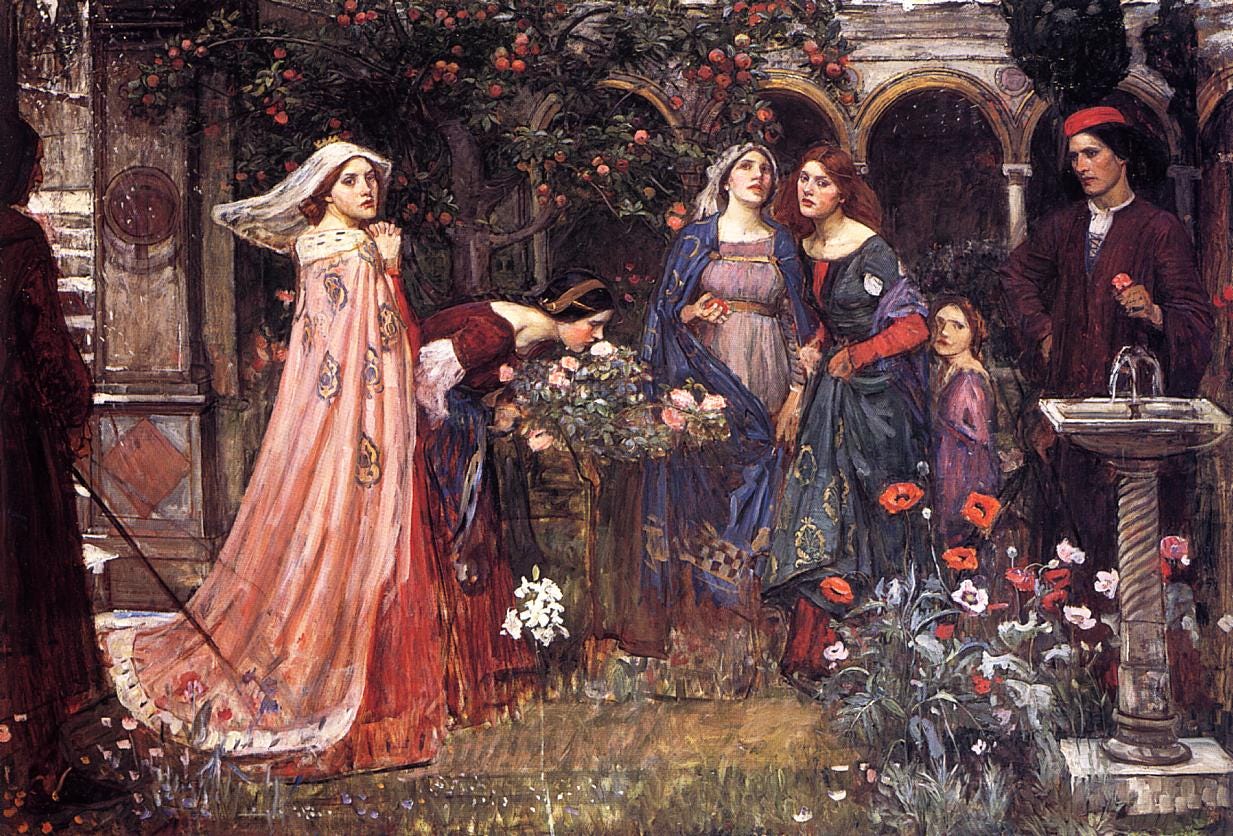
Behind the roses and poppies, snow covers the steps and arches beyond the garden. Bending toward the flowers, a girl in a trailing gown and a man watches her from the right. The Enchanted Garden was still on Waterhouse's easel when he died in London in February 1917, and he never finished it.
The scene comes from the Decameron, a collection of tales by the Italian writer Giovanni Boccaccio. In it, a woman named Dianora is pursued by a suitor called Ansaldo. She promises to become his lover if he can give her, in January, a garden with all the flowers and fruits of summer. With a magician's help, he does.
Waterhouse paints the moment Ansaldo shows her the garden, when her bargain comes due. He does not hide the winter. It waits just beyond the arches, beside a summer that should not exist. Anthony Hobson, an art historian who wrote a book on Waterhouse, saw in those roses and that snow the two sides of all his work, desire and restraint.
At a Glance
Artist: John William Waterhouse (1849 to 1917)
Painted: 1916 to 1917, London (unfinished)
Medium: Oil on canvas
Size: Not published
Where to see it: Lady Lever Art Gallery, Port Sunlight
11. Saint Eulalia (1885)
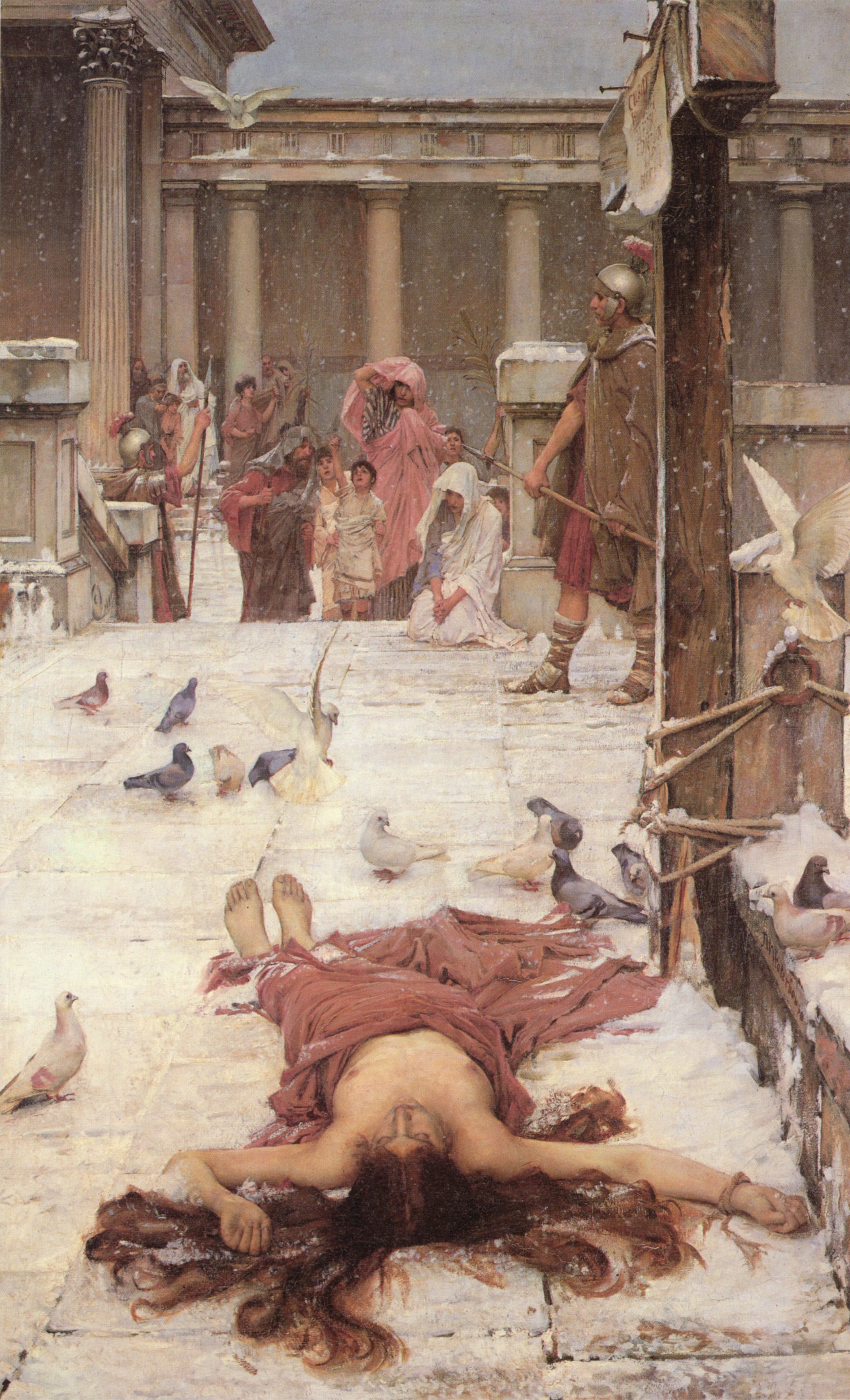
Her head and spread hair are the nearest things in the picture, and the rest of her body runs back across the snowy paving of a Roman square at a steep angle. Pigeons walk around the girl, and a soldier stands guard farther off. In the old story of her death, snow fell from the sky to cover her body. Here it lies all around her and leaves her uncovered.