
Feet caused more trouble in painting than nudity did. Caravaggio was accused of indecency for painting dirty soles at the front of an altarpiece, and Mantegna built an entire composition around the fact that a dead man’s feet are the closest part of him to you.
The quick tour
A pair of filthy soles in an altarpiece got a Caravaggio rejected by the people who commissioned it.
Mantegna shrank the feet of a dead Christ so they would not swallow the picture, which is a deliberate cheat.
Bare feet on a saint mean poverty. Bare feet on a goddess mean something else entirely.
Van Gogh painted a pair of worn boots so often that philosophers argued about whose they were.
In one famous marriage portrait, the shoes are off for a reason.
Learn art the fun way
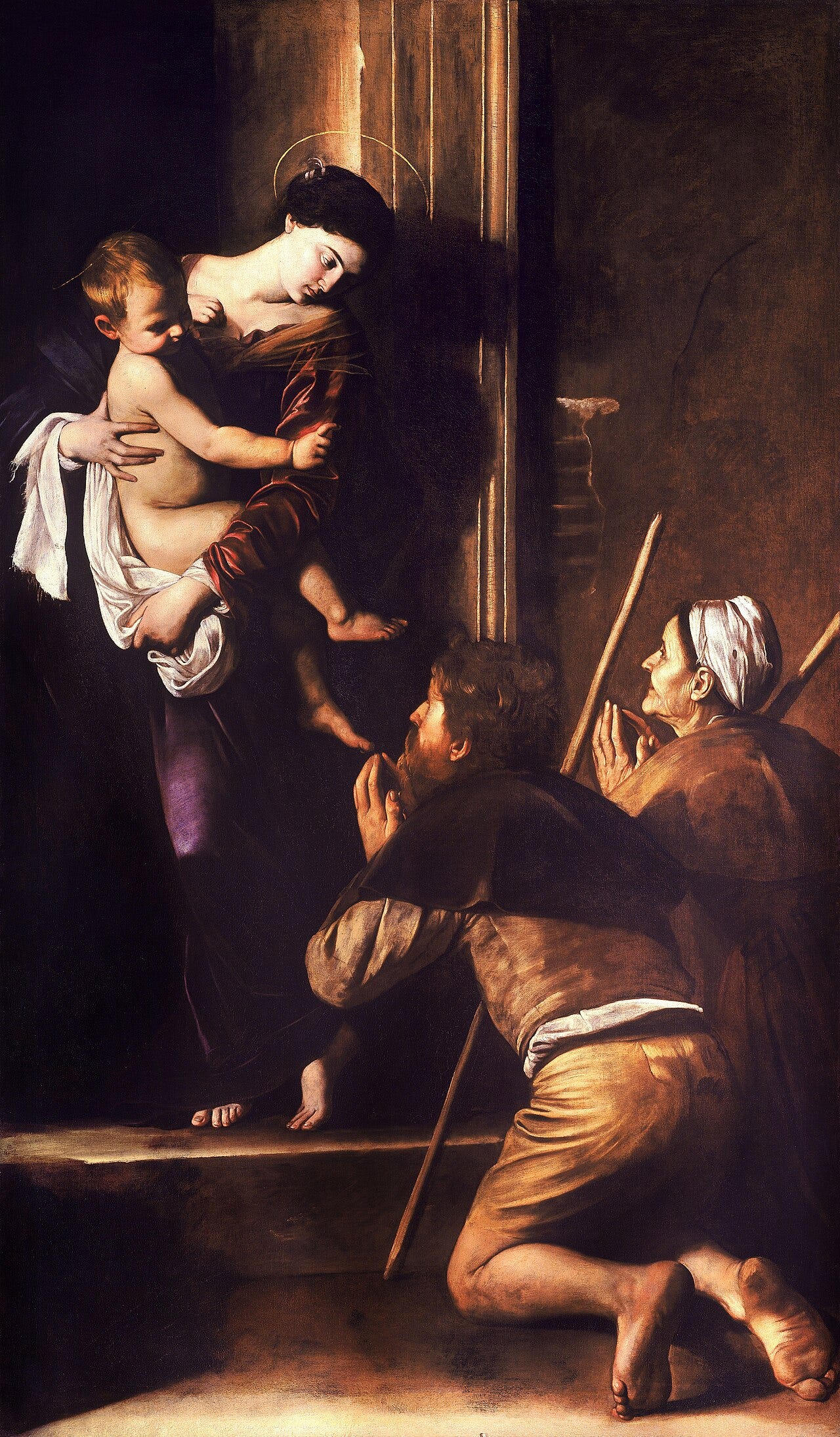
1 | The Madonna of Loreto, Caravaggio (1606)
Two pilgrims kneel at the Virgin’s door, and the nearest thing to us is the sole of a foot, cracked and dirty. Contemporaries complained about exactly that detail.
It is still in Sant’Agostino in Rome. More on him in Caravaggio.
Caravaggio used real bodies and real dirt on purpose. I follow that argument through his work in the Caravaggio code.
2 | The Lamentation of Christ, Andrea Mantegna (around 1480)
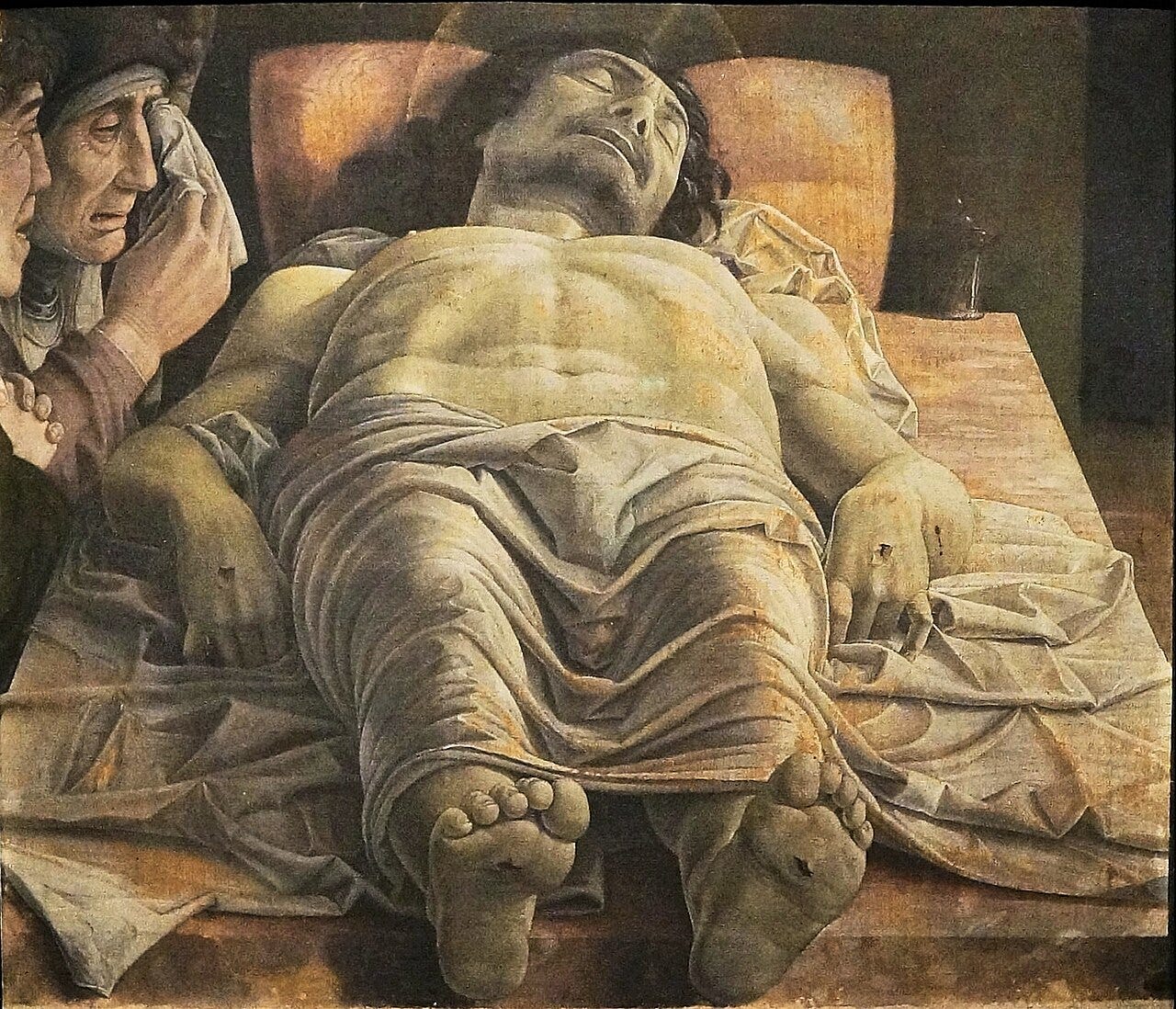
The body lies feet first towards the viewer. If Mantegna had drawn the feet at their true size in that perspective they would have filled the panel, so he made them smaller.
The technique is explained in what is foreshortening. More on him in Andrea Mantegna.
3 | The Arnolfini Portrait and the discarded clogs
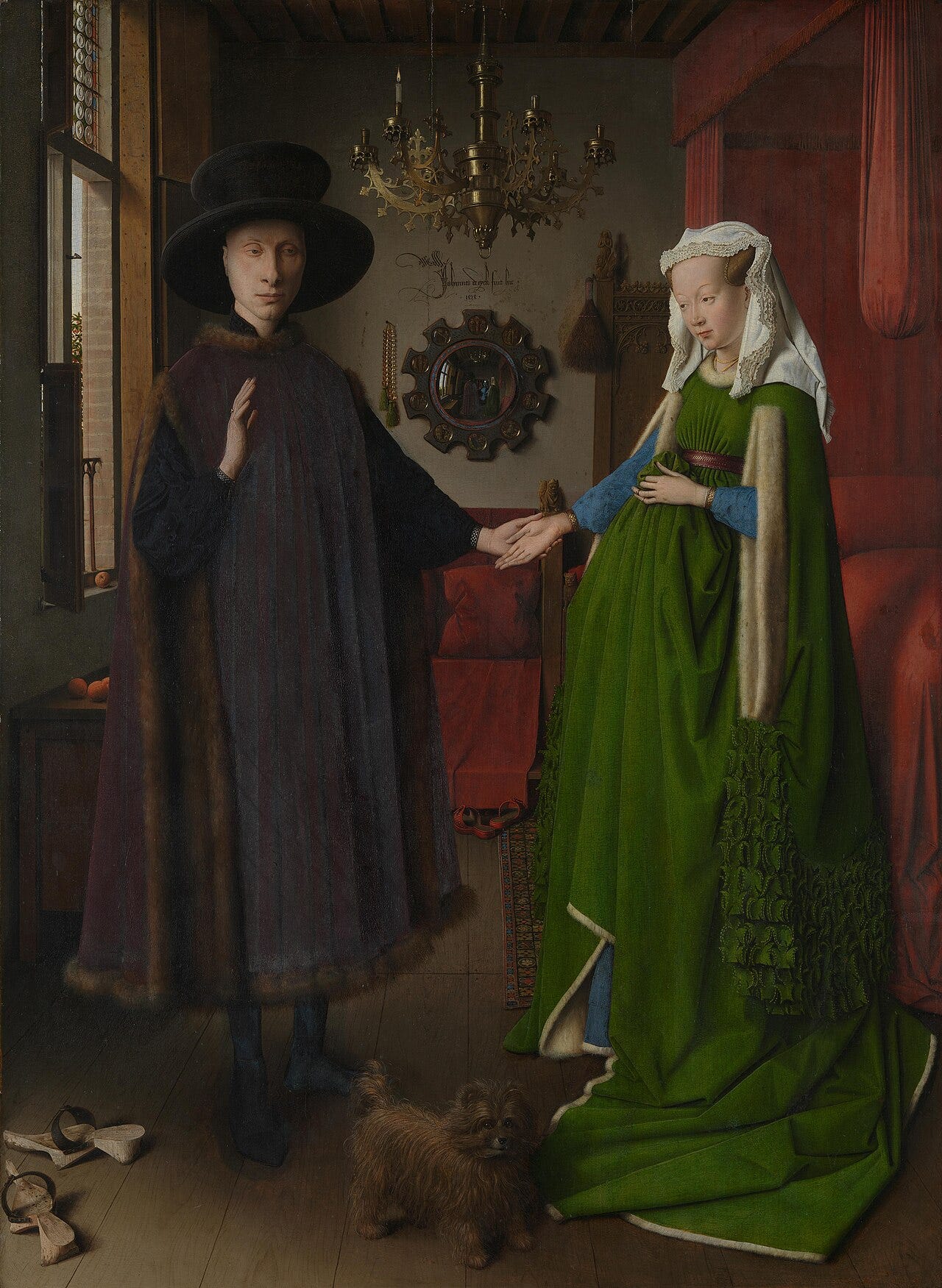
Van Eyck put wooden pattens on the floor in the foreground. Removing shoes marks holy ground, so the room is being framed as a sacred space.
More on him in Jan van Eyck.
The pattens lie discarded in the lower left, and a second pair sits under the bench at the back. Removing shoes marks holy ground in Exodus, and van Eyck signed the wall above the mirror in 1434.
4 | Christ washing the feet of the disciples
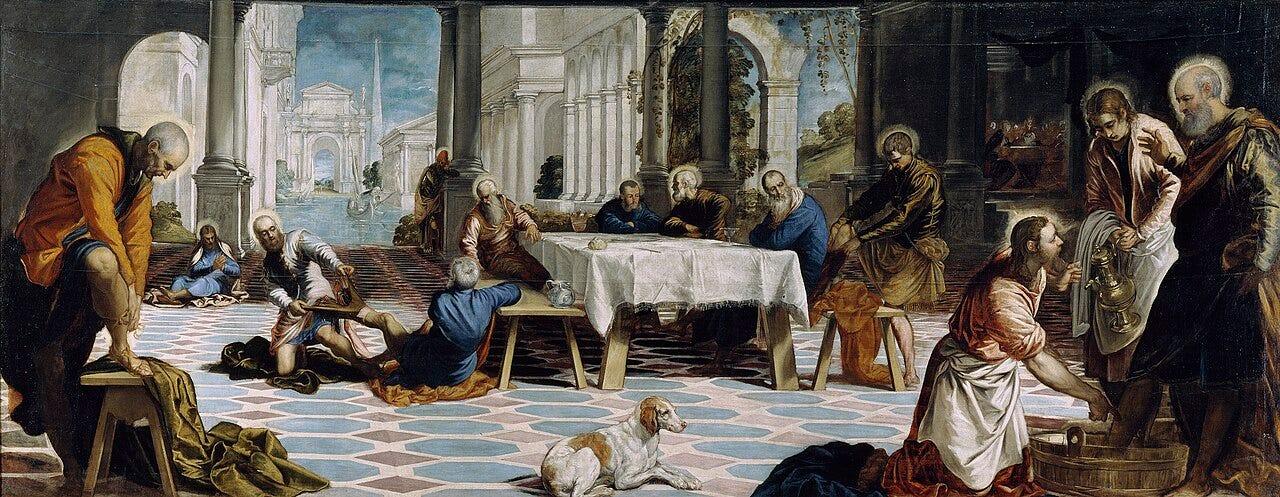
Painters returned to this scene because it inverts rank in one gesture. Tintoretto made whole rooms out of it, with the perspective pulled sideways.
More on him in Tintoretto.
The scene is John 13, and it was acted out in cathedrals on Maundy Thursday by bishops and kings. Tintoretto painted it several times, once with the perspective pushed so far to the side that the room slides away.
5 | Van Gogh’s boots
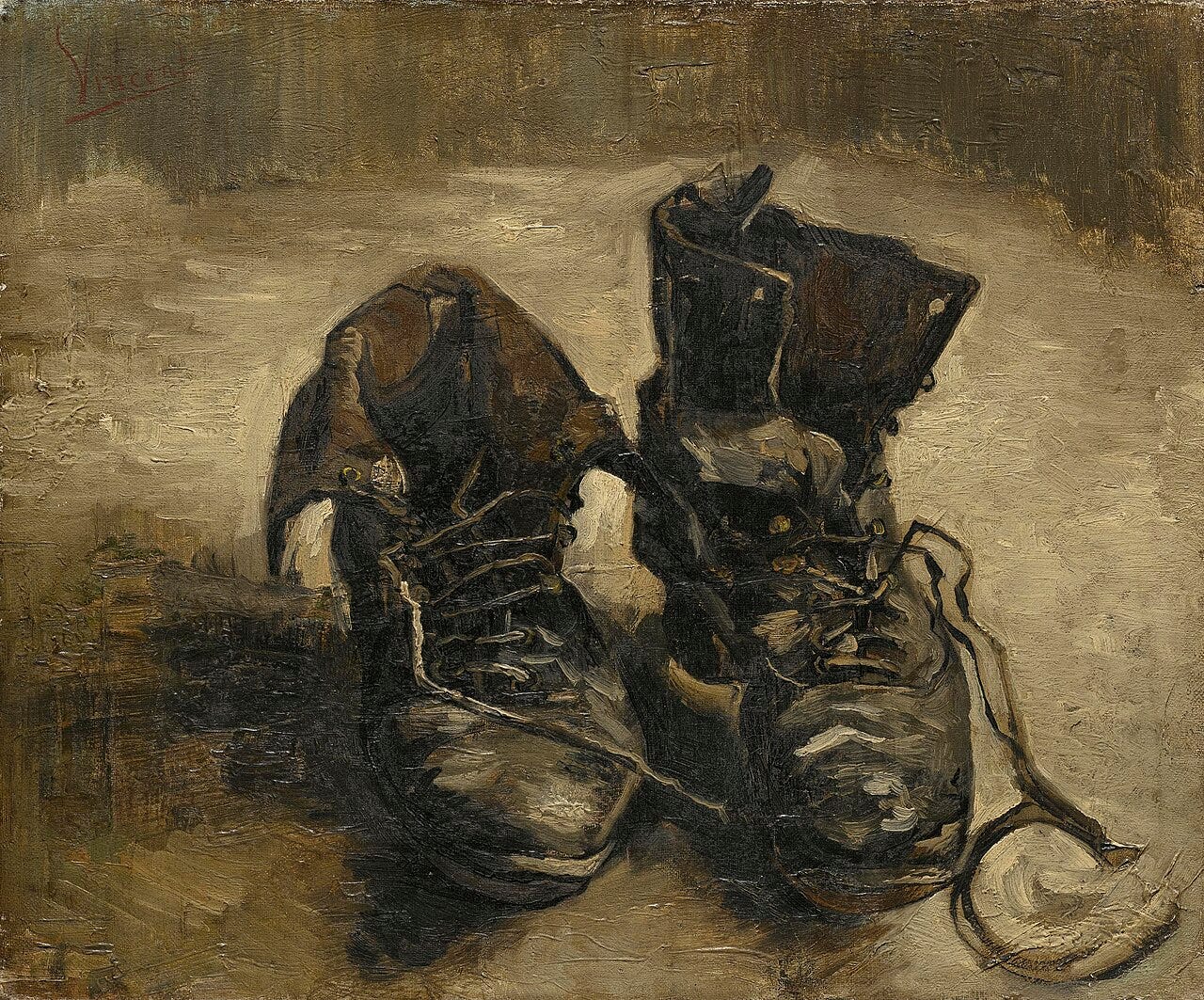
He painted worn boots at least seven times. Heidegger read them as a peasant woman’s, the art historian Meyer Schapiro answered that they were Van Gogh’s own, and the argument ran for decades.
More on him in Vincent van Gogh.
He bought them at a flea market in Paris and walked them through mud so they would look used. Heidegger wrote about them in 1935, Meyer Schapiro corrected him in 1968, and Derrida wrote about the argument in 1978.
6 | The bare foot as poverty
Mendicant saints are painted barefoot on purpose. Francis, Dominic and their followers gave up shoes, and the painter uses the foot to state the vow.
The system is set out in what is iconography.
The Franciscans and the Carmelites split over precisely this, which is why some orders are called discalced, meaning unshod. A painter shows the bare foot to tell you which branch he is depicting.
7 | Venus and the classical foot
Ancient sculpture set the standard: a long second toe, a high arch, no dirt. Renaissance painters copied it, which is why goddesses have feet that no walking person has.
Compare a Botticelli foot with a Caravaggio foot and you have the whole argument of the period.
8 | Feet in the Sistine Chapel
Michelangelo painted feet as anatomy lessons, tendon by tendon, and the flayed skin held by Saint Bartholomew in the Last Judgement hangs beside a body drawn with the same precision.
More on him in Michelangelo.
Michelangelo dissected bodies at Santo Spirito in Florence as a young man and the anatomy shows in every extremity. The flayed skin in the Last Judgement, held by Saint Bartholomew, carries his own face.
9 | The foot that identifies a saint
Wounds in the feet identify the crucified Christ and, in a different way, Saint Francis after the stigmata. The foot is a name tag.
It is the reason painters keep them visible even when the pose would hide them.
The five wounds are hands, feet and side. Francis received the stigmata on Mount La Verna in 1224, and painters show the marks on his feet even when he is fully dressed.
10 | Degas and the dancer’s foot
Degas drew feet in fifth position, in pain, being rubbed, being bandaged. The ballet pictures are about labour, and the feet are where the labour shows.
More on him in Edgar Degas.
11 | Shoes as portraits
A painted shoe carries class instantly: a red heel meant court rank in seventeenth century France, and a clog meant field work.
More of that in shoes in painting.
12 | Why painters found feet hard
A hand can be hidden behind a cloth, one reason painters lean on it so often as a separate test of skill in famous hand paintings. A foot has to stand on something, and the moment it does, the floor, the perspective and the weight of the body all have to agree.
Bad feet are the fastest way to spot a weak workshop copy.
Feet on canvas, questions readers send
Why was Caravaggio criticised for painting feet? He put dirty soles in the front plane of altarpieces, which patrons read as indecent for a sacred image. The Madonna of Loreto of 1606 is the clearest case.
What does Mantegna do with the feet in his Lamentation? He reduces them. At true scale in that perspective they would dominate the panel, so he cheated to keep the head visible.
Why are saints barefoot? Mendicant orders gave up shoes, so bare feet state the vow of poverty without a caption.
Whose boots did Van Gogh paint? Most likely his own, bought secondhand and worn on walks. He painted worn boots at least seven times.
Where is The Madonna of Loreto today? Sant’Agostino in Rome for Caravaggio, the Brera in Milan for Mantegna, the Van Gogh Museum in Amsterdam.
Whether the feet are clean. A clean foot means the painter is working from sculpture and ideals. A dirty one means he is working from a person who walked to the studio.
Search either of these and you will turn up dozens more: the Met and the Rijksmuseum.
This subject is one thread in a wider theme. See how it fits into Portraiture and the Human Figure in Art.