
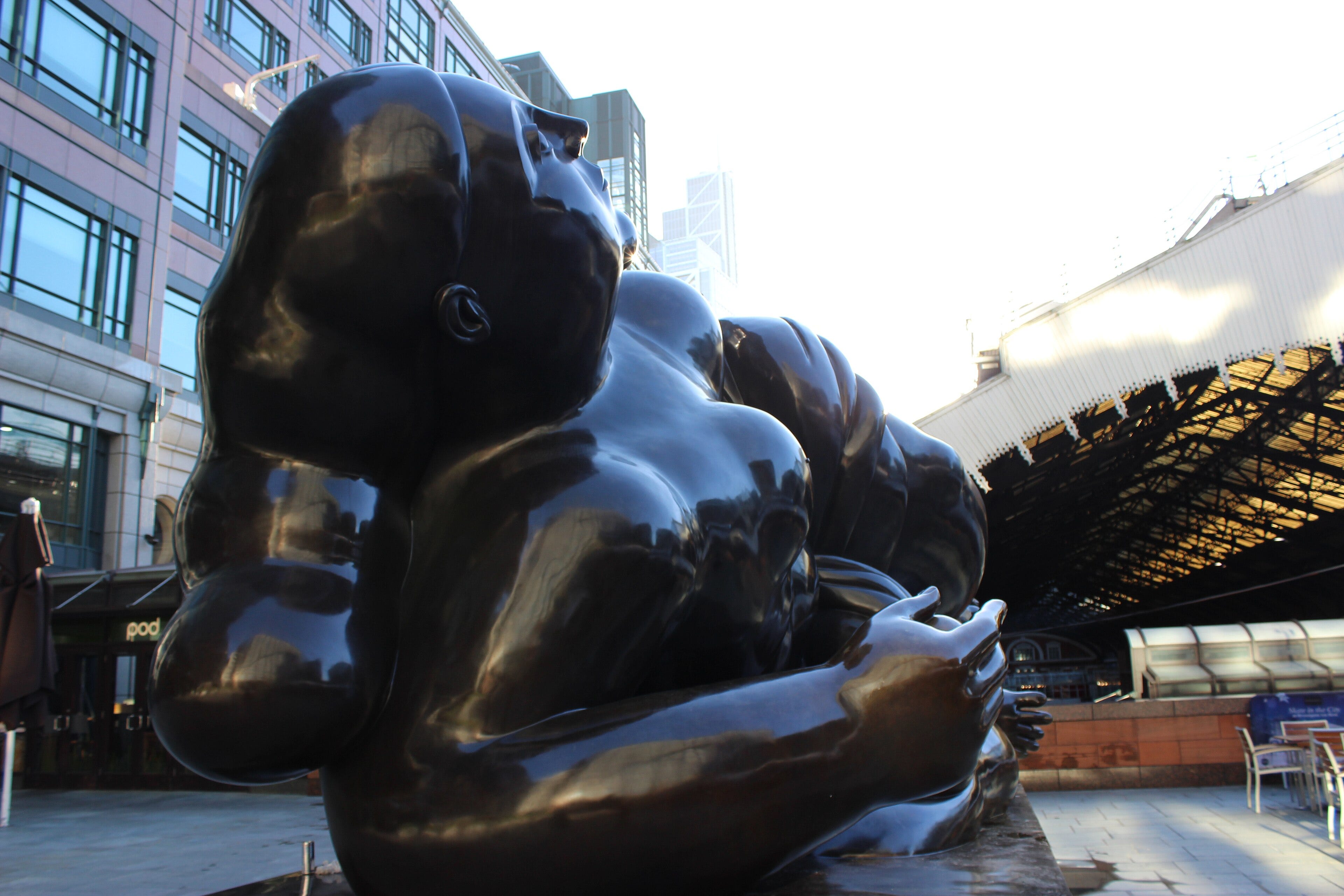
Fernando Botero (1932-2023) was a Colombian painter and sculptor, born in Medellín, who made people, animals and fruit swell into monumental volumes. He is the most recognized Latin American artist of his time. The style has a name, Boterismo, and a claim that Botero repeated all his life: he did not paint fat people, he painted volume.
He also painted the torture at Abu Ghraib and the death of Pablo Escobar, and he gave hundreds of works to museums.
Cool Stories About Art is a newsletter to learn art the fun way.
Join 200,000+ readers and get:
10 new art stories / month
The entire archive of content (1,000+ articles)
Comment, ask questions, and chat with other readers
For seventy years Botero was asked the same question, and for seventy years he gave the same answer. "I don't paint fat women," he told the Spanish newspaper El Mundo in 2014.
What he painted, he said, was volume, the sensual swelling of form he had learned from the Italian masters. The proof was in everything he touched. Oranges, horses, priests and mountains all grew to the same weight as the women.
The roundness read as comedy, and Botero let it. Then, in 2005, he turned it on a prison. Working from the accounts of survivors and from photographs of American soldiers abusing Iraqi prisoners at Abu Ghraib, he painted hooded, bound, swollen bodies.
The New York Times wrote that the paintings "restore the prisoners' dignity and humanity without diminishing their agony." In 2009 he gave 56 of the paintings and drawings to the University of California, Berkeley.
The painter of mandolins and bishops had a second subject, the violence of Colombia, and he held both in the same hand. The way to see how starts in Mexico City in 1956, with a musical instrument.
What You'll Discover
How one mandolin changed his art.
Why a matador school lost him.
What a twelve-year-old Mona Lisa earned.
What the car crash took from him.
Whose death he painted twice.
What stood in the plaza after the bomb.