
A painted meal is almost never about hunger. It is about who sits where. The Last Supper is a seating plan, a Dutch banquet piece is an inventory of imported goods, and a peasant wedding feast is a joke about how much a village can eat in one afternoon.
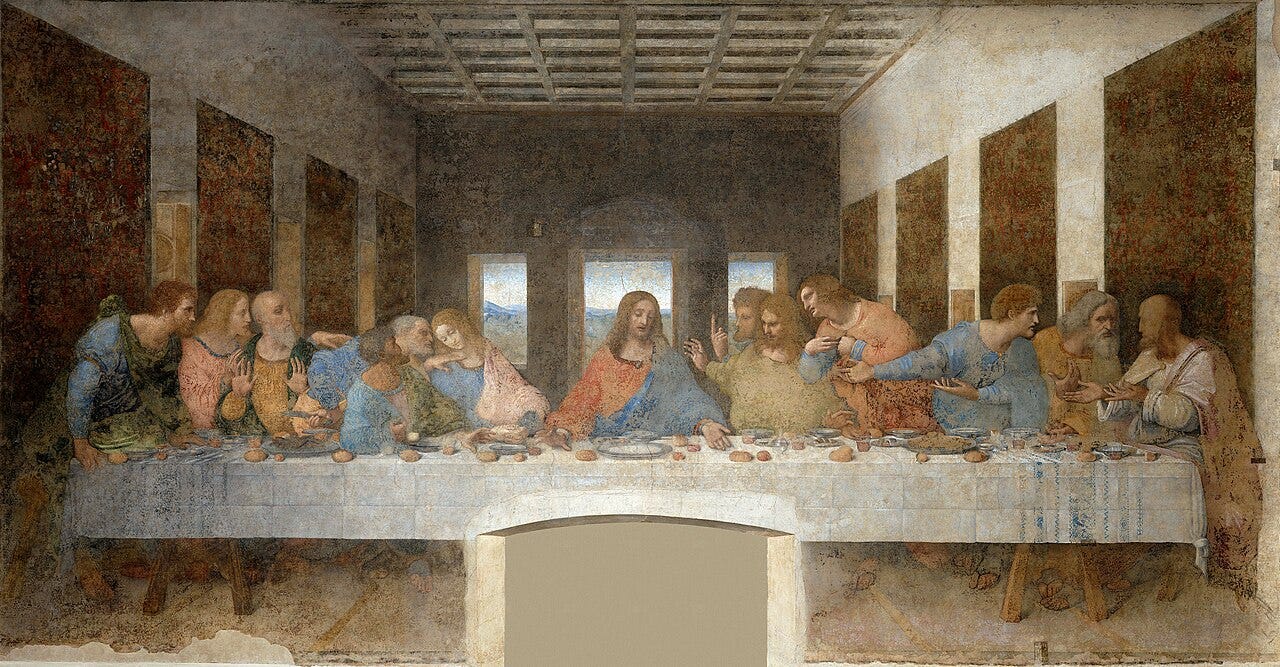
Twelve meals, in one look
Leonardo painted the moment of an accusation, not the meal.
A Venetian painter was called before the Inquisition for putting dogs and drunks at a sacred supper, and solved it by changing the title.
The bride at Bruegel’s wedding feast is easy to miss, and she is not eating.
The meal that changed painting fastest was breakfast on the grass, in 1863.
Learn art the fun way
1 | The Last Supper, Leonardo da Vinci (1495 to 1498)
Leonardo picked the second after Christ says one of you will betray me, so the table becomes twelve reactions instead of a dinner. The food on it is sparse and the hands do everything.
He painted it in tempera on dry plaster, which is why it began flaking in his lifetime. More on him in Leonardo da Vinci.
He worked on it between about 1495 and 1498 for Ludovico Sforza, in the refectory where the monks actually ate, so the painted table extends their own room. Because he used tempera on dry plaster instead of true fresco, it was already flaking within twenty years.
2 | The Feast in the House of Levi, Paolo Veronese (1573)
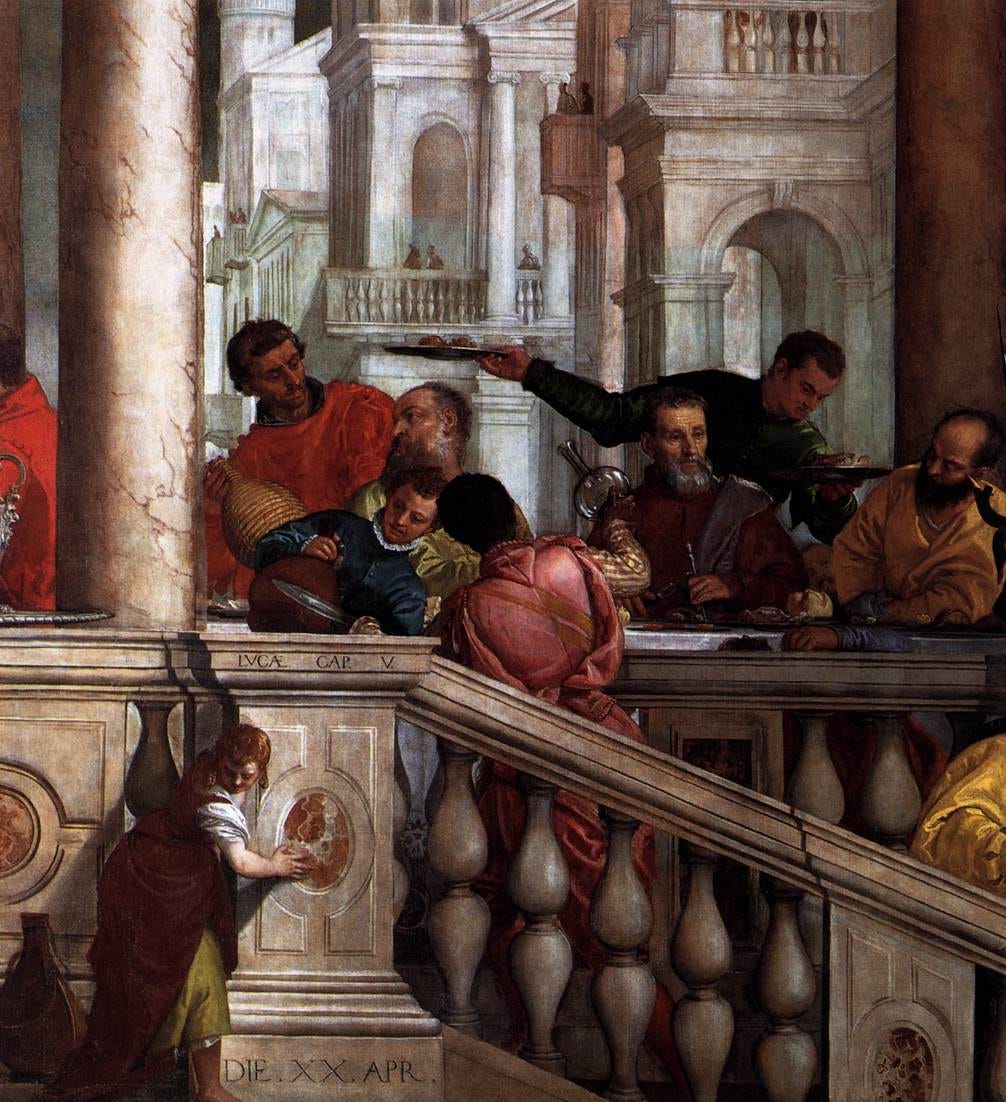
Painted as a Last Supper, full of dwarfs, dogs, servants and Germans. The Inquisition summoned Veronese, who refused to repaint it and simply renamed the picture.
The transcript of that hearing survives. More on him in Paolo Veronese.
The tribunal met on 18 July 1573 and asked him why he had put buffoons, a bleeding nose and Germans at a sacred supper. He was given three months to fix it at his own expense and simply changed the title instead.
3 | The Peasant Wedding, Pieter Bruegel the Elder (around 1567)
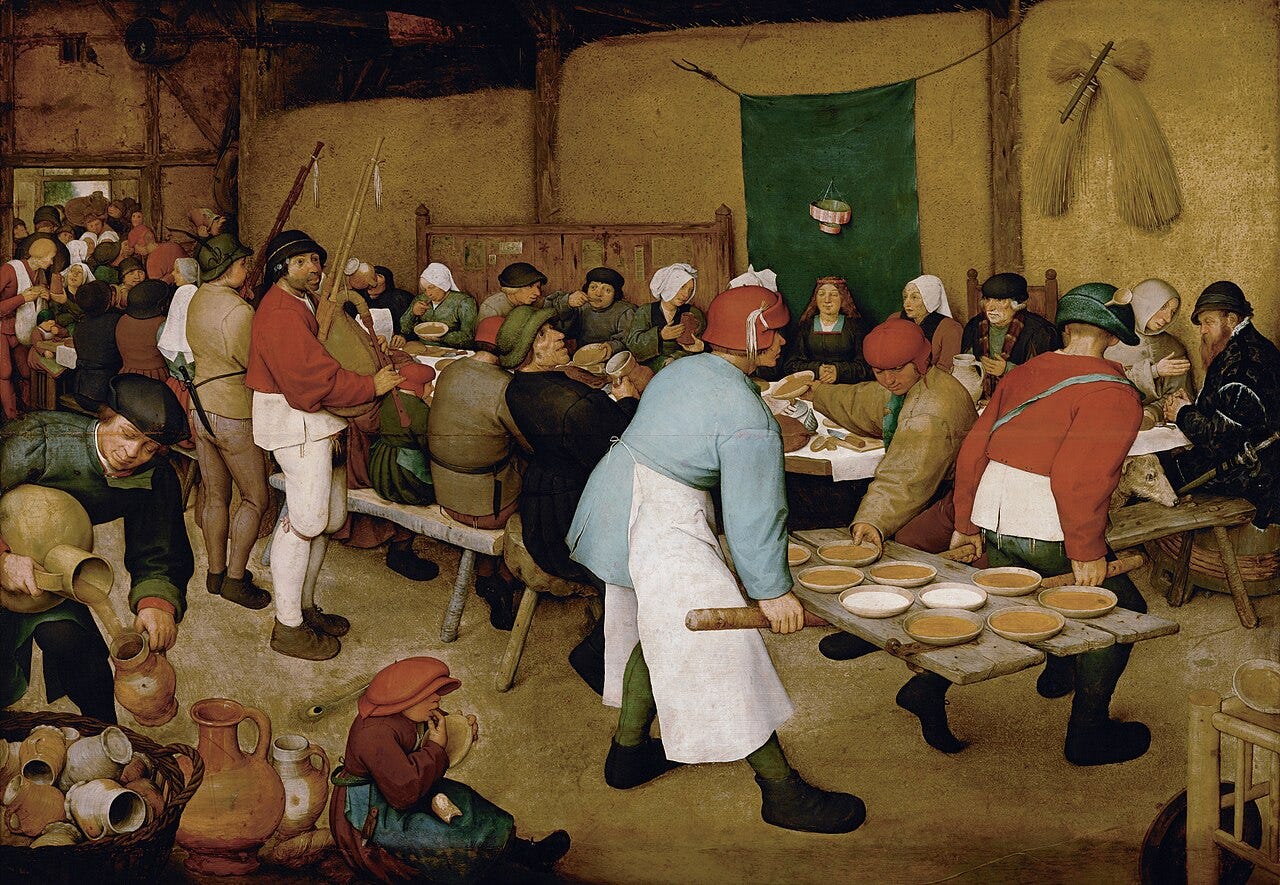
A barn, a door used as a serving tray, porridge going round, and the bride sitting still under a paper crown while everyone else eats.
More on him in Pieter Bruegel the Elder.
The dish being carried on the door is bread pudding or porridge, not a roast, which tells you the level of the household. The bride sits under the paper crown with her hands folded, and the groom, by local custom, is probably not even at the table.
4 | The Dutch banquet piece
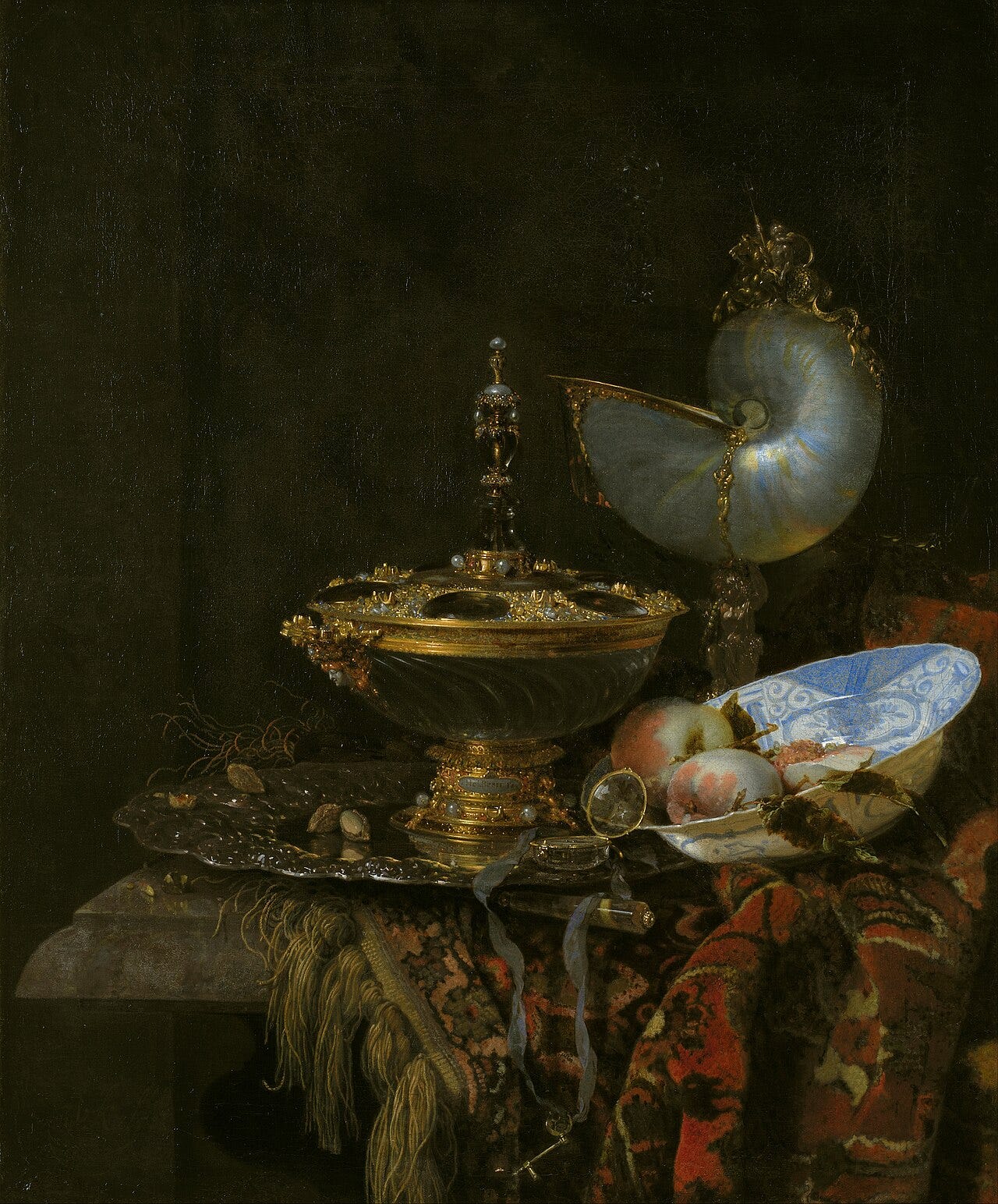
A half peeled lemon, a nautilus cup, a pepper cone, an overturned glass. Every object was imported and expensive, and the peel spiralling off the table is the painter showing what he can do.
More on the genre in what is still life painting.
5 | Luncheon on the Grass, Edouard Manet (1863)
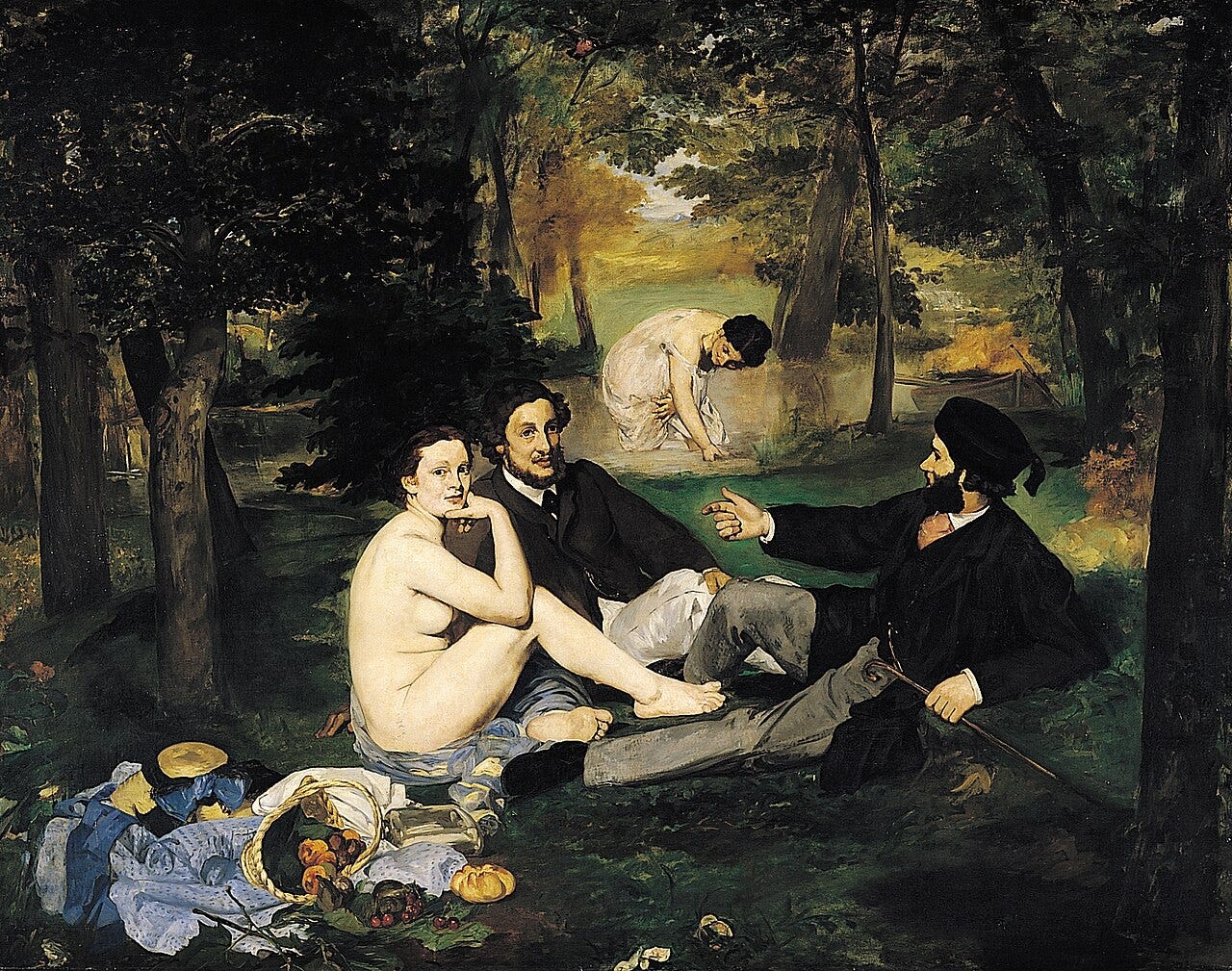
A picnic with a naked woman looking out at you and two dressed men ignoring her. In the foreground, a spilled basket of fruit painted as carefully as any still life.
The food is the alibi. More on him in Edouard Manet.
It was refused by the 1863 Salon and shown at the Salon des Refuses that Napoleon III ordered for the rejected works. The composition is lifted from an engraving after Raphael, which is exactly what made the modern clothes so shocking.
6 | Luncheon of the Boating Party, Pierre Auguste Renoir (1881)
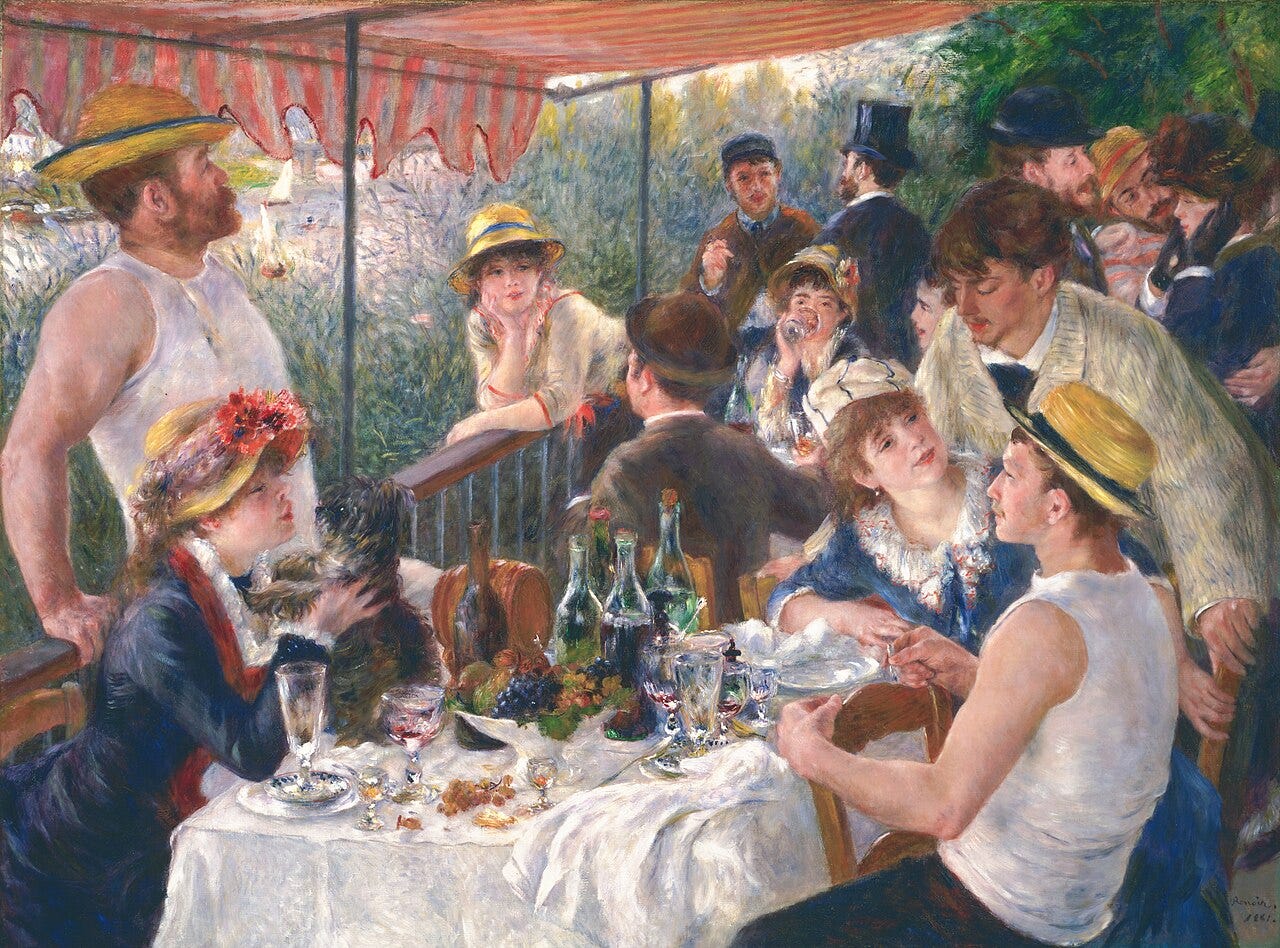
The end of a long lunch on a terrace at Chatou, painted from friends, with bottles, grapes and a small dog on the table.
More on him in Pierre Auguste Renoir.
7 | The Potato Eaters, Vincent van Gogh (1885)
Five people eating what they dug themselves, in lamp light the colour of a dusty potato. He said he wanted the picture to smell of bacon, smoke and steam.
More on him in Vincent van Gogh.
8 | Kitchen scenes and the bodegon
Spanish painters made a genre out of the kitchen: Velazquez put Christ in the background of a scene about frying eggs, so the sacred story is behind the servant.
More on him in Diego Velazquez, and in kitchens and cooks in painting.
9 | The Supper at Emmaus, Caravaggio (1601)
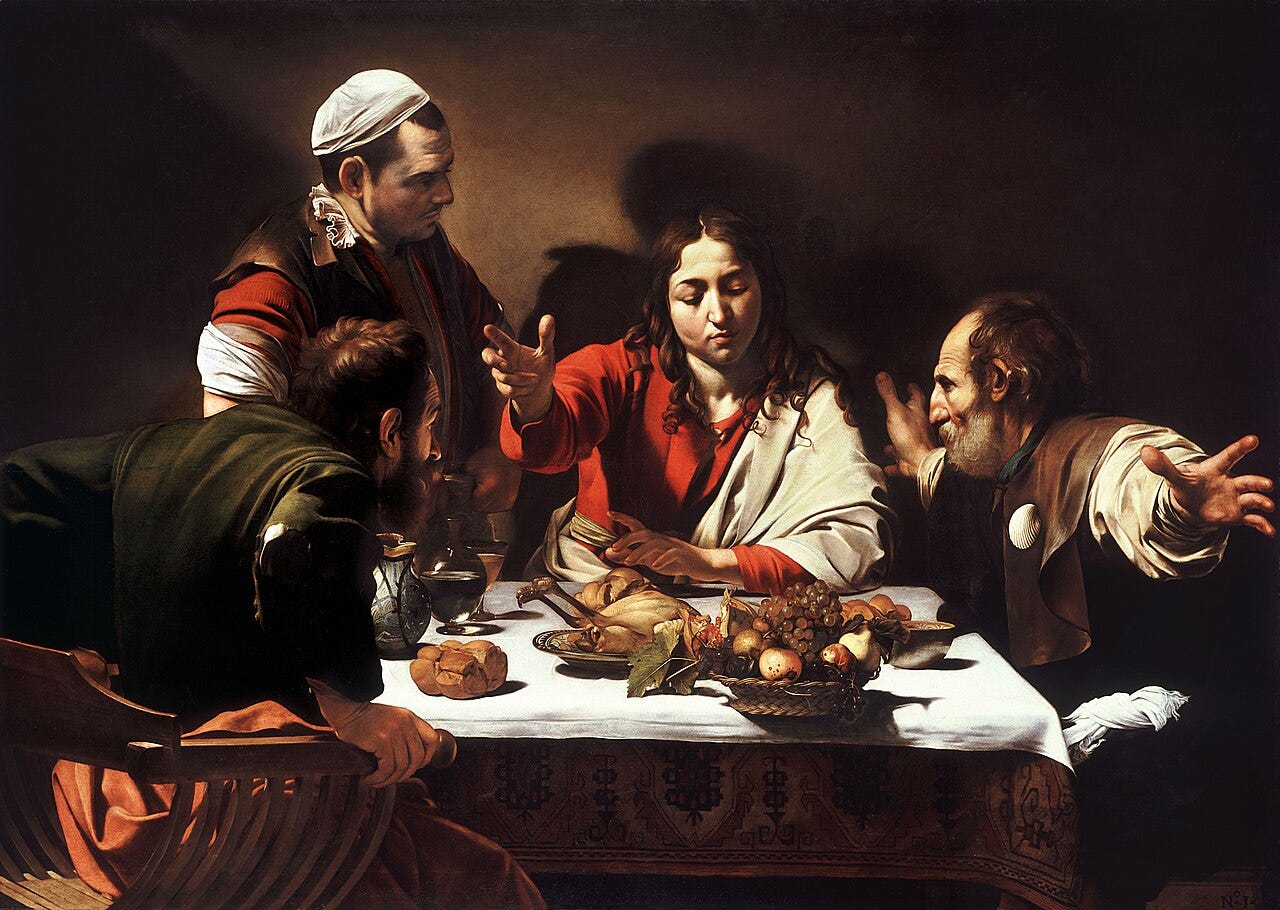
A roast chicken, a basket of fruit tipping over the edge of the table, and the moment two men realise who they are eating with. The bad fruit was noticed by contemporaries.
More on him in Caravaggio.
There are two versions. The 1601 one in London is loud and theatrical, the 1606 one in Milan, painted while he was on the run for murder, is dark and almost silent. The same subject, five years and one killing apart.
10 | The tavern and the alehouse
These are genre paintings with a moral attached, and the moral is usually aimed at the person who could afford the picture.
Northern painters used eating and drinking scenes to moralise without saying so: the food is generous, the behaviour is not, and the viewer is invited to judge.
More in taverns in painting.
11 | What the table tells you about the century
Sugar, lemons and pepper mark a seventeenth century Dutch table. Potatoes mark the nineteenth century poor. Oysters and champagne mark a Paris terrace. You can date a picture by its groceries.
Painters recorded a food economy without meaning to.
Sugar was a luxury imported through Antwerp and Amsterdam, lemons came from Spain and Italy, and pepper came round the Cape. A Dutch banquet piece is a map of the trade routes of its decade.
12 | Why meals are so useful to a painter
A table gives you a fixed geometry, a reason for everybody to be still, a light source and a hierarchy. Almost every great group portrait is somebody eating.
Look at who is served first, and you have the subject.
Veronese and Bruegel both painted a feast as an argument. Veronese crowded his canvas with dwarfs, dogs, servants and Germans until the Inquisition made him defend every guest. Bruegel went the other way, showing a village wedding with one dish of porridge carried in on a door, and made the smallness of the meal the whole point.
The Dutch banquet still life and the Potato Eaters are the same subject at opposite ends of wealth. Kalf paints a lemon peel and a nautilus cup to advertise money the sitter has. Van Gogh paints potatoes his sitters dug themselves, and the picture is harder to sit with because there is nothing decorative to hide behind.
If one meal has to stand for excess in painting, it is Veronese, since the Inquisition record proves his contemporaries saw it as too much rather than admiring it from a safe distance. If one has to stand for restraint, it is the Potato Eaters, five people and one pot, painted in 1885.
The most asked questions on food
What is the most famous meal in painting? The Last Supper by Leonardo, painted between 1495 and 1498 in Santa Maria delle Grazie in Milan.
Why was Veronese summoned by the Inquisition? For filling a Last Supper with dogs, dwarfs and drunks in 1573. He refused to repaint it and renamed it The Feast in the House of Levi.
What is a banquet still life? A Dutch genre of the seventeenth century showing costly imported food and tableware, meant to display both wealth and painting skill.
What do the Potato Eaters eat? Potatoes they grew themselves, with coffee, painted by Van Gogh in 1885 in deliberately dirty colours.
Where is The Last Supper today? Santa Maria delle Grazie in Milan, the Accademia in Venice, the Kunsthistorisches in Vienna, the Van Gogh Museum in Amsterdam.
In Caravaggio’s Supper at Emmaus the fruit basket sits half off the table edge, and the fruit in it is going bad. He painted rot into a picture about resurrection, on purpose.
For the rest, go to the Met and the Rijksmuseum.
This subject is one thread in a wider theme. See how it fits into Food and Drink in Art.
These meals sit inside the still life genre, ranked lowest by the old academies and painted for centuries anyway. The full genre breakdown is in Genres of Painting: The Complete Guide.