
Form in art is volume: the illusion that a flat shape has become a solid you could walk around. Painters build it with light, shadow, and modeling. Here are twelve works: ten that show the leap from outline to object, and two that refuse it.
Form in 30 seconds
Shape is flat, two dimensions and an outline. Form is the same thing with volume: a circle is a shape, a sphere is a form.
Light makes form. A gradient from highlight through halftone to shadow tells your brain the surface turns.
Geometric forms are spheres, cubes, cones. Organic forms are bodies, fruit, clouds.
The core shadow and the cast shadow do different jobs: one curves the object, the other seats it in the world.
Some great painters skip form on purpose and let the line rule. Flatness can be a choice, not a failure.
Egypt, the tomb of Nebamun (c. 1350 BC): the world before form
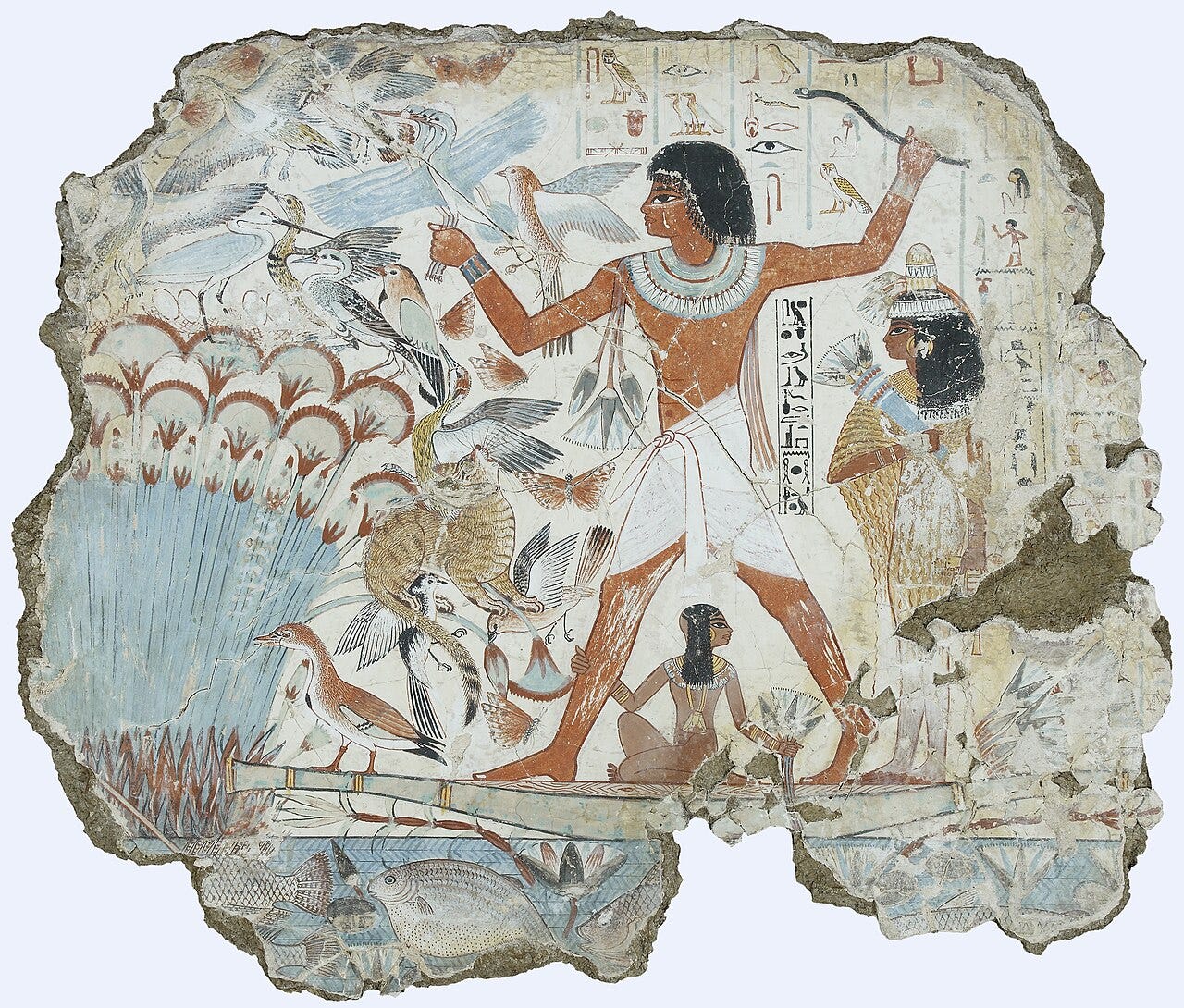
Hunters, birds, and cats stand in perfect profile, flat as pressed flowers: shape without volume, by convention and by choice. Egyptian painting held that rule for three thousand years.
Everything the rest of this page celebrates had to be invented against this baseline. Flatness was the default of most of art history, not the exception.
Michelangelo, the Sistine ceiling (1508-1512): painted sculpture
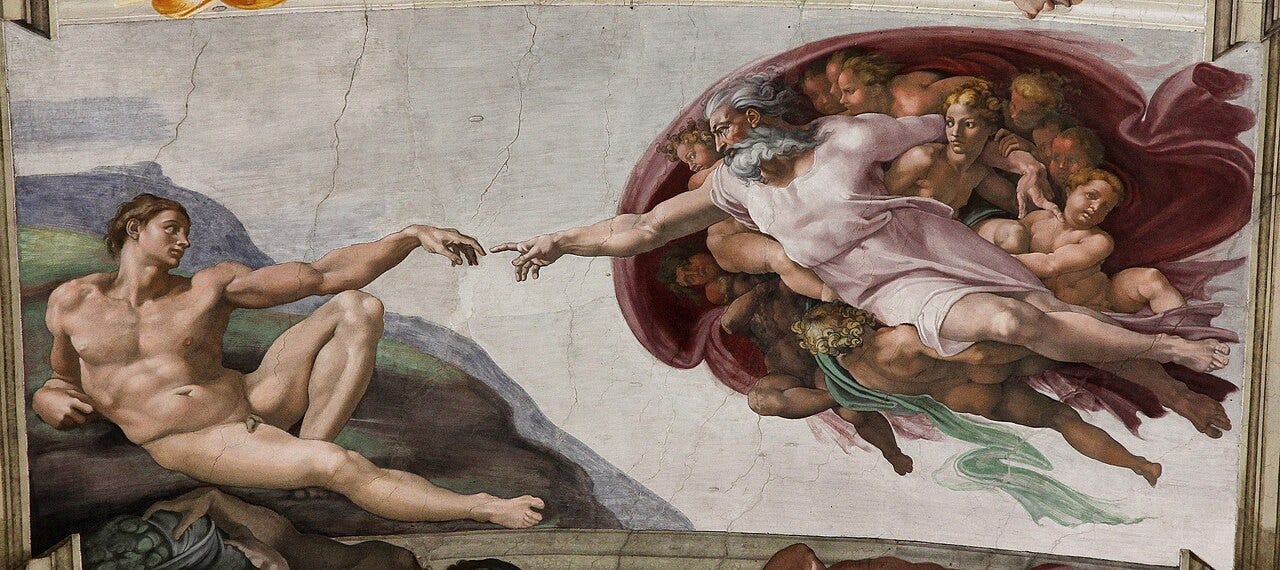
Adam's body is modeled so completely, muscle rolling into muscle, that the fresco reads as carved stone. Michelangelo never stopped thinking in marble: painting, for him, was sculpture by other means.
While painting the ceiling he kept signing his letters Michelangelo scultore. The greatest painted forms in history were made by a man insisting he was not a painter.
Piero della Francesca, the Brera Madonna (c. 1472): geometry made holy
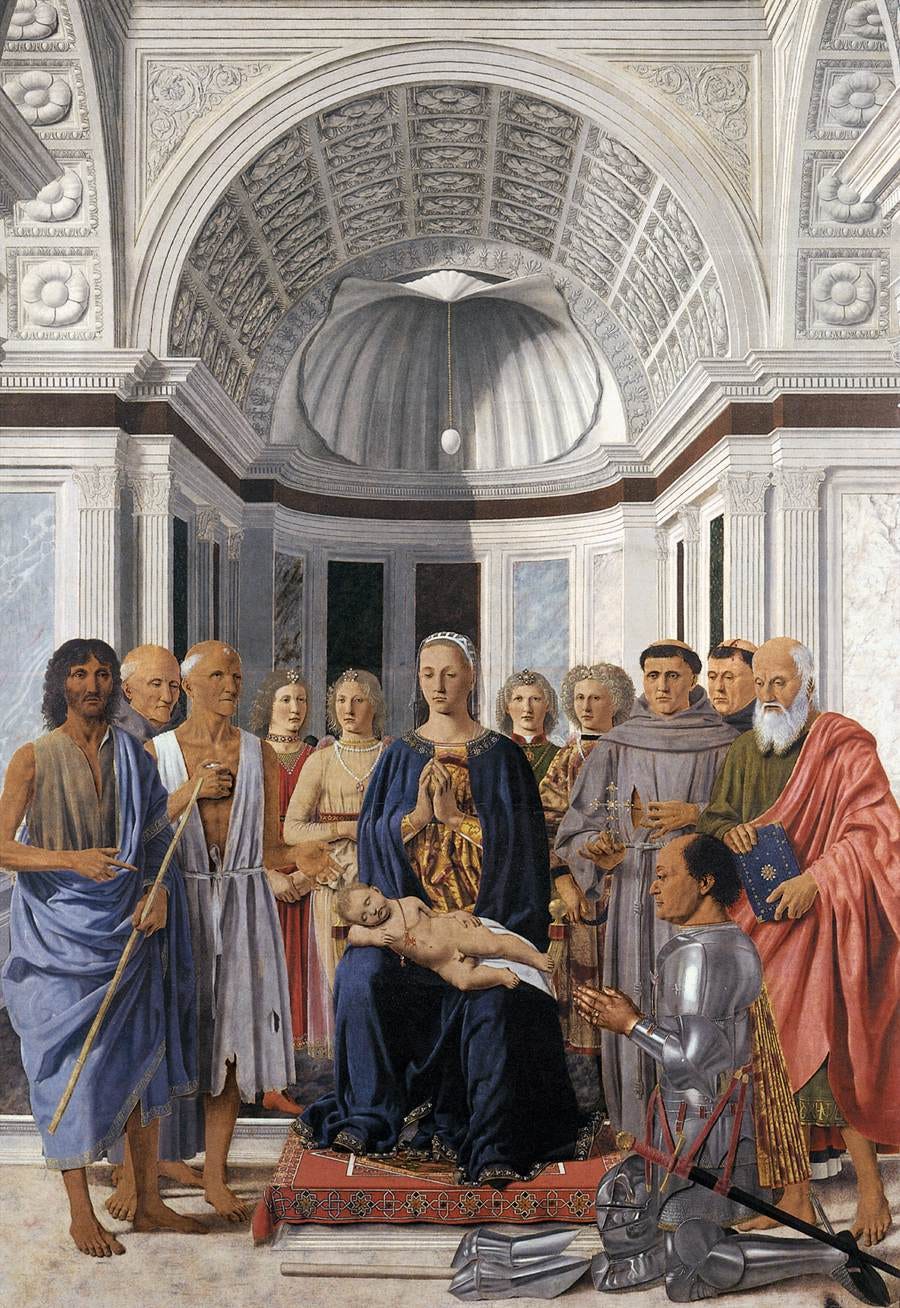
Every head is an egg, every column a cylinder, every fold obeys. Piero treated the sacred scene as an arrangement of pure volumes in measured space.
An ostrich egg hangs from the apse shell above the Virgin, the geometer's signature. In old age Piero gave up painting for mathematics and wrote a treatise on the five regular solids.
Learn art the fun way


Caravaggio, The Calling of Saint Matthew (1599-1600): form carved by light
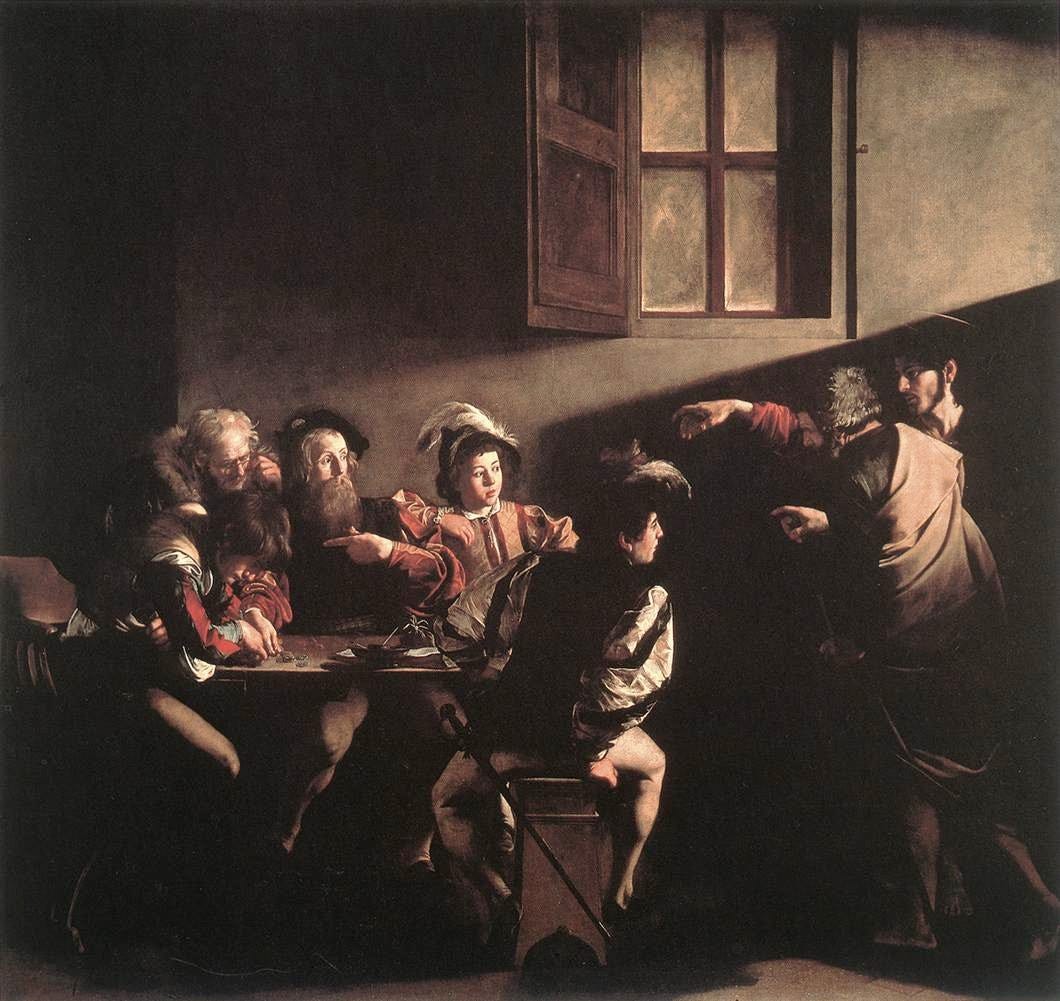
One raking light models every face and hand out of darkness, hard as relief sculpture. This is chiaroscuro doing the sculptor's work, and Caravaggio pushed it so far that critics sneered he painted everything by cellar light.
Zurbarán, Saint Serapion (1628): the habit as architecture
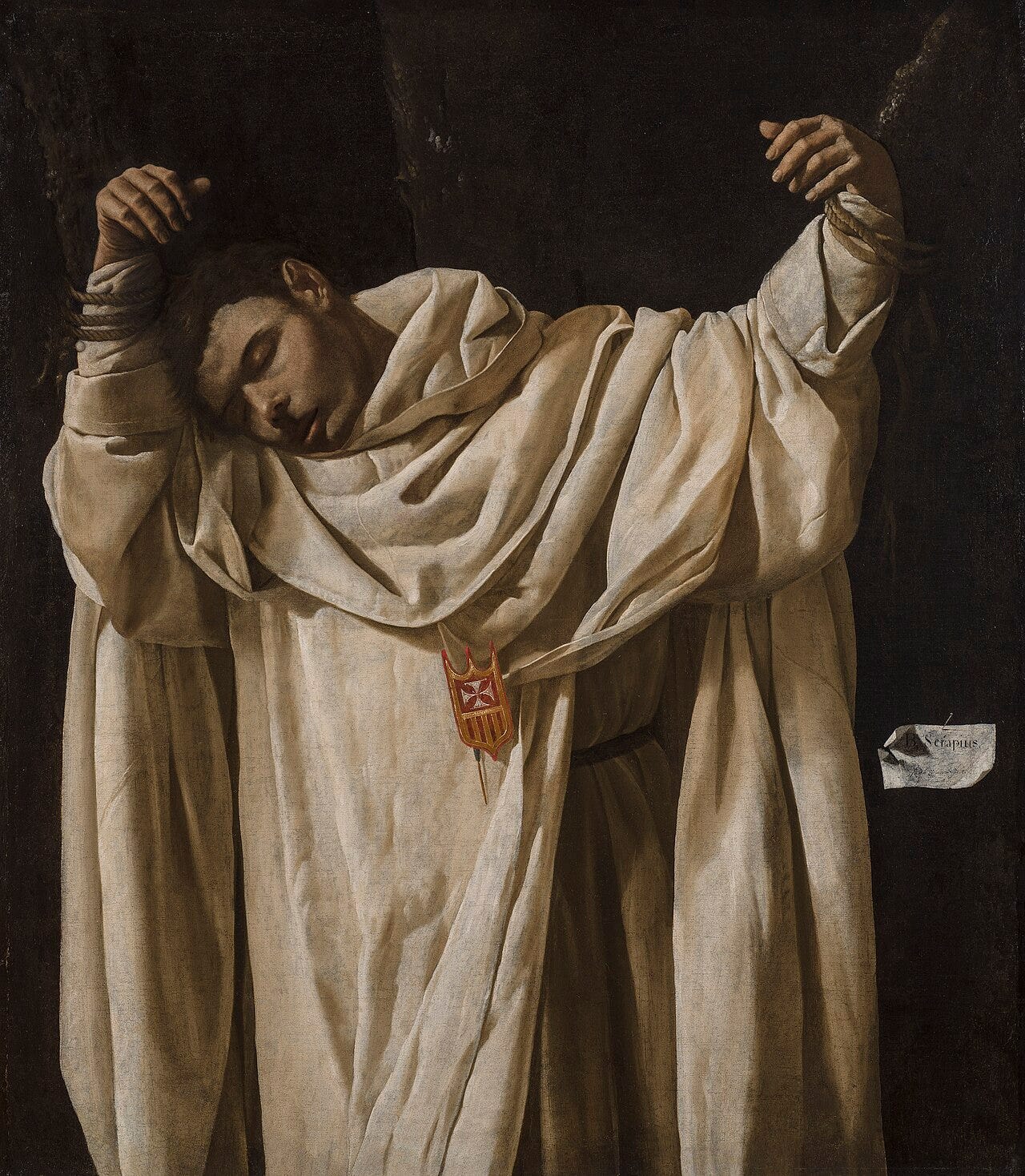
The white robe falls in folds so full and simple they could be fluted stone: a single human column against the dark. Zurbarán built volume out of almost nothing but cloth and light.
Vermeer, Girl with a Pearl Earring (c. 1665): a sphere in two strokes
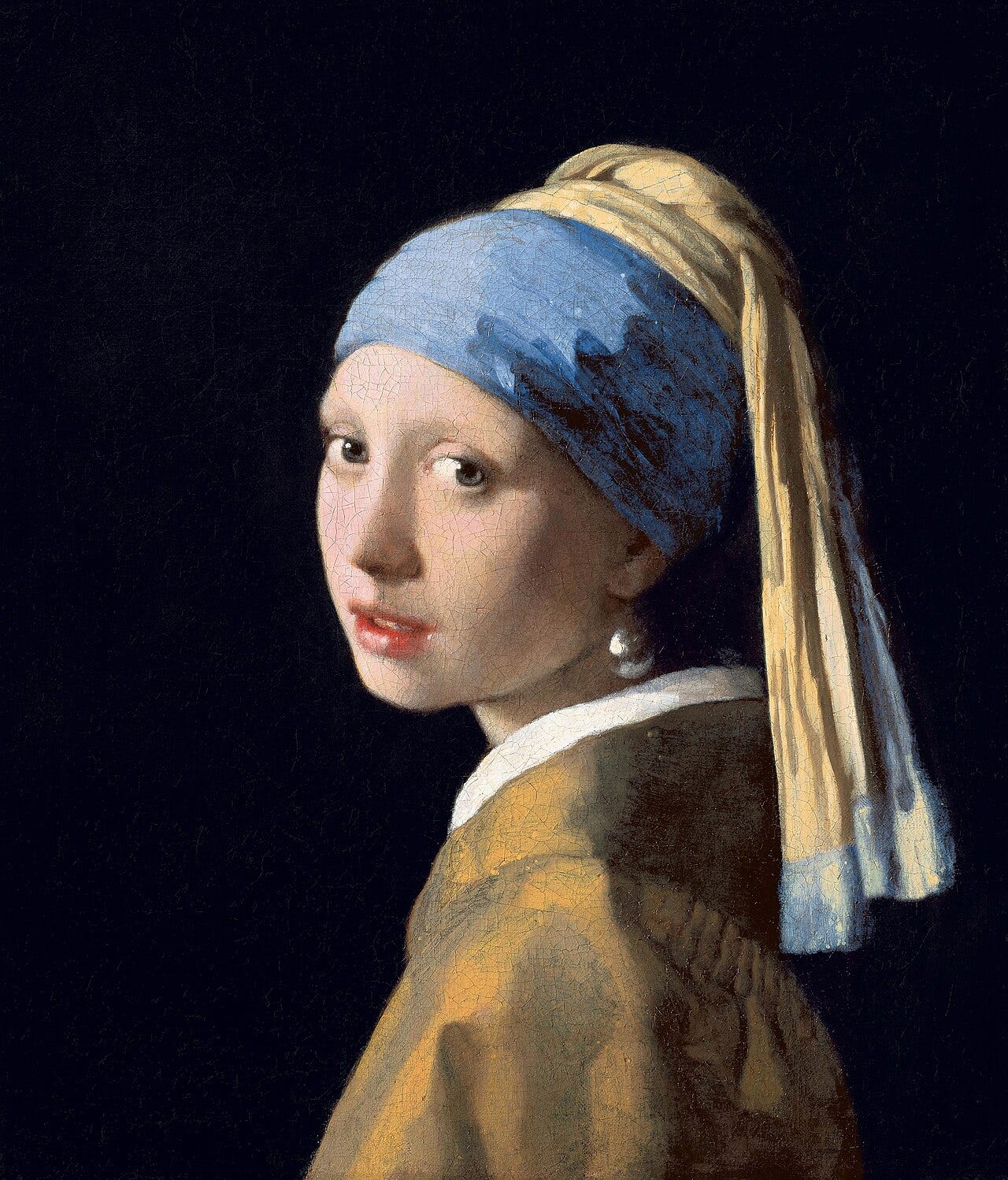
The pearl is the smallest lesson in form ever painted: one soft reflection below, one sharp highlight above, and your brain builds the entire sphere. Vermeer modeled a world in two touches of white.
Chardin, the still lifes (1760s): every peach a sphere first
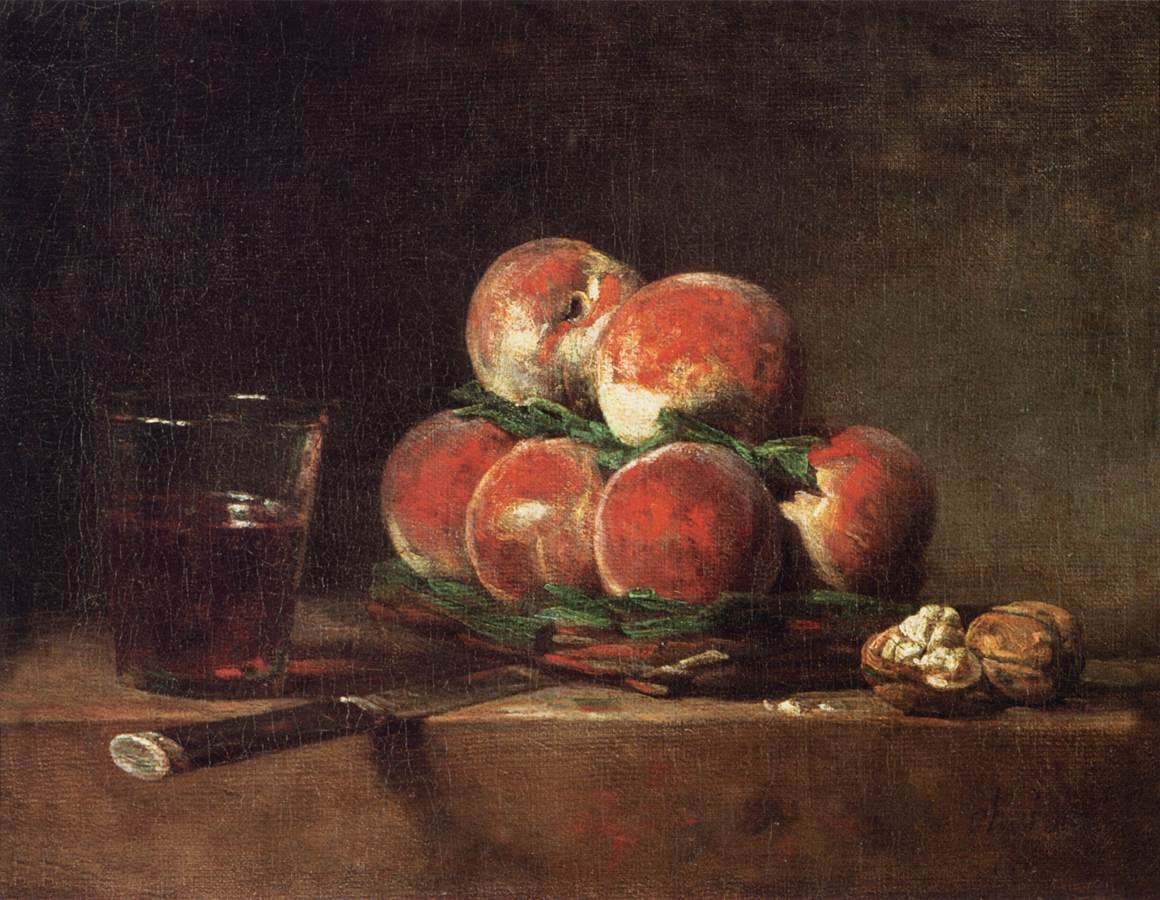
Under the fuzz, each fruit is a modeled ball of light and halftone; under the basket, a cylinder. Chardin understood the volumes first and let them wear their costumes afterward.
Cézanne, Still Life with a Curtain (c. 1895): the famous three solids
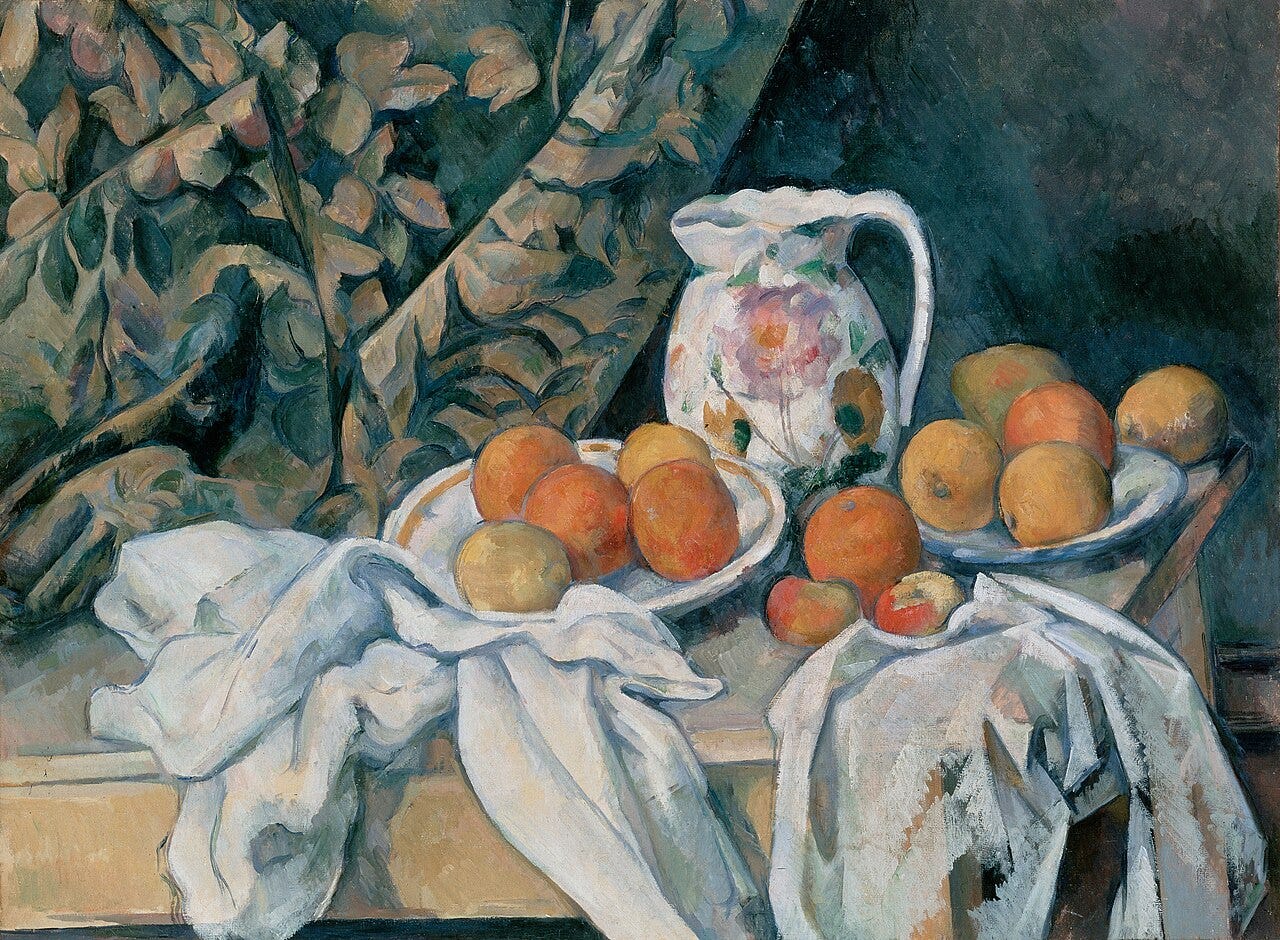
Treat nature by the cylinder, the sphere, the cone: Cézanne wrote the sentence to a young painter in 1904, and his apples show the doctrine, volumes first, fruit second. Whether that makes him the father of everything after is a fight we have picked before.
Seurat, A Sunday on La Grande Jatte (1884-1886): people as solids
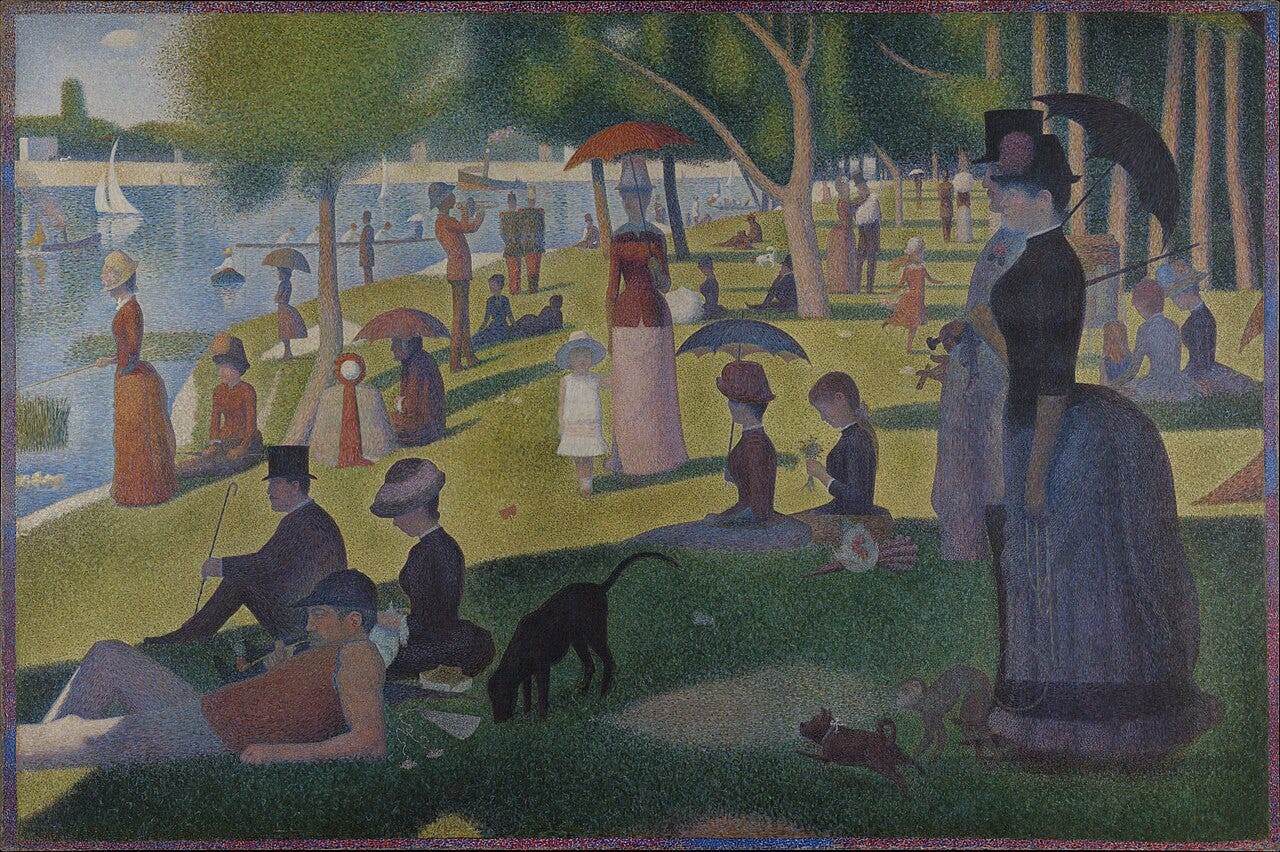
Every stroller is simplified toward a stable volume, cylinders in bustles and top hats, so still that critics compared the crowd to an Egyptian procession. Seurat took the compliment.
Botticelli, The Birth of Venus (c. 1485): the counter-example
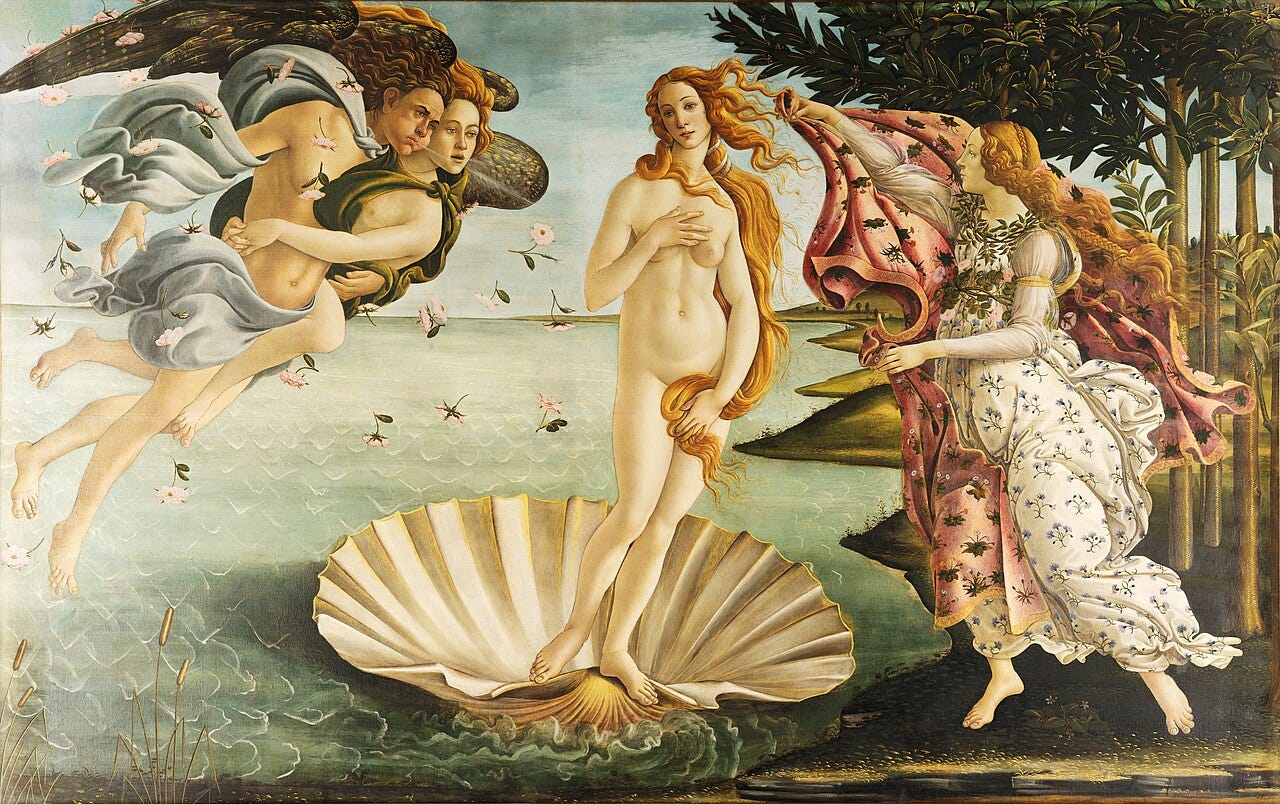
Venus has almost no shadow on her body: the anatomy is impossible, the neck too long, the shoulder sloping like wax, and none of it matters. Botticelli let the line rule the volume, and the line wins.
Put her beside a Michelangelo and you see the fork in the road: form or contour, sculpture or song.
Léger and Dalí: the modern solid
In the 1910s Fernand Léger rebuilt bodies as polished tubes and cones, so mechanical that critics coined the nickname tubism. Four decades later Salvador Dalí pushed the other way, rendering volumes with a hallucinated precision sharper than photography.
Both are recent enough that reproduction rights still apply in some countries, so no images here. Both prove the same point from opposite ends: form survives every style.
You Might Also Like


Form is one of eight elements that shape a composition. See how it connects to the rest in our complete guide to elements and principles of art.
Quick answers
What is form in art? The illusion of three-dimensional volume on a flat surface, or actual volume in sculpture. It is what makes a painted apple look graspable.
What is the difference between shape and form? A shape is flat: two dimensions and an outline. A form has, or appears to have, volume. A circle becomes a sphere the moment light models it.
What are geometric and organic forms? Geometric forms are the regular solids: spheres, cubes, cylinders, cones. Organic forms are irregular and living: bodies, fruit, clouds, hills. Most paintings hide geometry under the organic.
How do artists create form? With light: highlight, halftone, core shadow, reflected light, cast shadow. That five-step gradient, called modeling, is the whole trick.
Where to see these works
The Nebamun paintings are in the British Museum, the Sistine ceiling in the Vatican, and the Brera Madonna in Milan. The Caravaggio is in San Luigi dei Francesi in Rome, Saint Serapion in Hartford.
Girl with a Pearl Earring is at the Mauritshuis, Chardin at the Louvre, Cézanne's still lifes from the Hermitage to Philadelphia, La Grande Jatte in Chicago, and The Birth of Venus at the Uffizi.
One last fact
Cézanne's cylinder, sphere, and cone became the most quoted sentence in modern art, credited with launching Cubism. Read it again: there is no cube in it. The most famous list of forms in art history is remembered wrong by almost everyone who repeats it.