
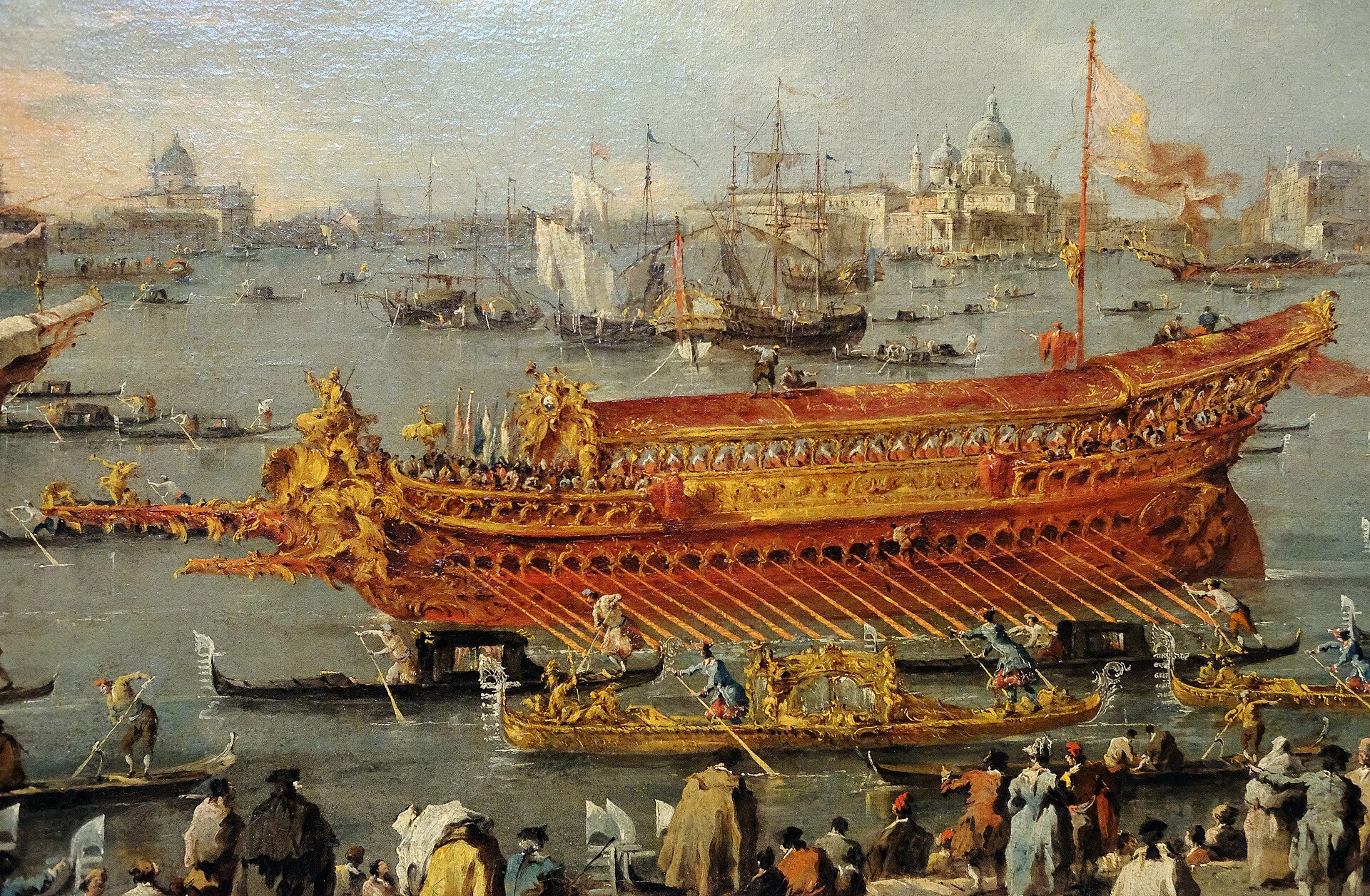
Francesco Guardi (1712 to 1793) was a painter from Venice, then an independent republic, famous for his views of its canals and festivals and for his imaginary landscapes. In The Departure of the Bucentaur, at the Louvre in Paris, the doge sails his golden barge.
Cool Stories About Art is a newsletter to learn art the fun way.
Join 200,000+ readers and get:
10 new art stories / month
The entire archive of content (140+ articles)
Comment, ask questions, and chat with other readers
For thirty years, Francesco Guardi painted in the shadow of others, first in his older brother's workshop, then behind Canaletto, the great painter of Venice in his day. In his old age, no dictionary of painters mentioned him, and some of his finest canvases were long taken for Canaletto's work.
Francesco Guardi was born in Venice on October 5, 1712, the son of a painter, Domenico Guardi. The Guardi family came from the Trentino, a mountain region north of Venice.
Domenico Guardi died in 1716, when Francesco was four. The eldest son, Gian Antonio, thirteen years older than Francesco, took over the family workshop.
Francesco and a younger brother grew up working beside Gian Antonio. The workshop painted pictures for churches, and copies of old Venetian masters for anyone who ordered them.
In 1731, a Venetian nobleman, Count Giovanni Benedetto Giovanelli, listed in his will some copies "made by the Guardi brothers," without saying which brother had painted them.
While the Guardi brothers copied old masters, Canaletto painted views, vedute in Italian: precise pictures of real places in Venice. Rich British travelers on the Grand Tour, a long educational journey through Italy, carried them home as souvenirs.
In 1746, Canaletto left Venice for London and stayed there nearly ten years, then came home. Around 1758, in his mid-forties, Francesco Guardi began to paint views of Venice too.
His brother Gian Antonio died in January 1760. From then on, views of Venice became Francesco's whole work.
How could a painter who had started so late, in the city of Canaletto, ever make a name of his own?
In the rest of the story
What the government of Venice demanded before paying the painter for a pope's visit.
Which unusual point of view Guardi chose for Venice's first balloon flight.
What became of the doge's golden barge after the painter's death.
How the painter's festival canvases finally came back under his own name.