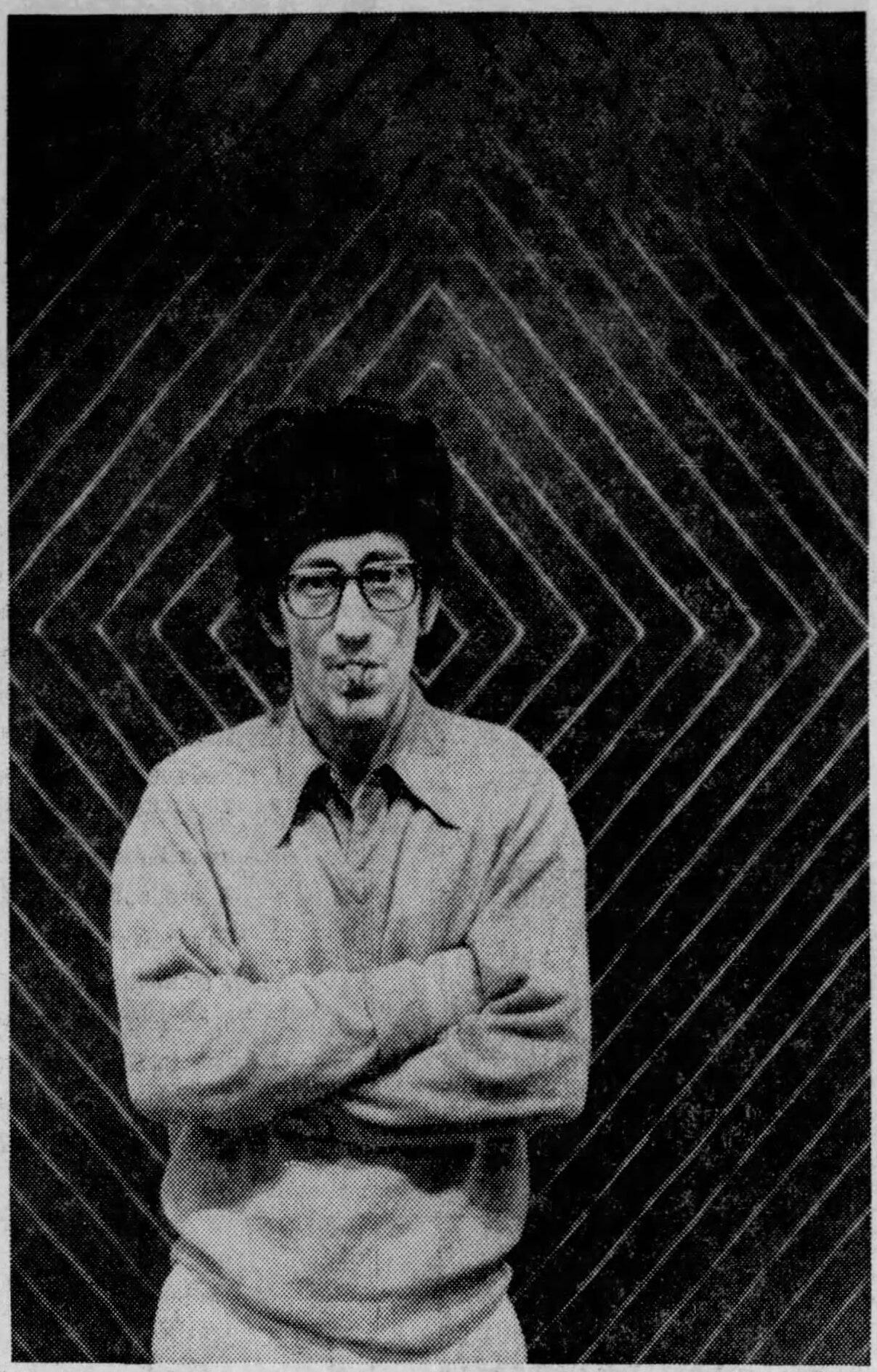
Frank Stella: The Complete Story
A large canvas covered in nothing but black stripes, separated by thin lines of bare canvas. No image, no message, no feeling smuggled in.
When Frank Stella showed his Black Paintings at the end of the 1950s, he stripped art down to almost nothing, and changed the direction of American painting.
He was an American artist whose stark early work helped launch minimalism, before he spent decades pushing painting off the wall and into wild three dimensional reliefs.
If you want the secrets, not the labels
Three worth opening next:
The secret behind Hopper Soir Bleu, the clown picture that went wrong
Titian, Sacred and Profane Love, which of the two women is which
The Last Supper, detail by detail, the detail hiding at that table
What you see is what you see
Stella famous line about his early work was that a painting is a flat surface with paint on it, nothing more: what you see is what you see.
His Black Paintings, with their plain bands of colour, pushed abstract art to a point where there was no hidden meaning to decode, only the object itself.
Breaking the rectangle
Stella soon grew restless with the plain square canvas and began making shaped canvases, paintings cut into notches, triangles and irregular forms.
If the painting was just an object, he reasoned, then its shape was open to change, and he freed oil painting from the box it had always lived in.
Into the third dimension
From the 1970s his work exploded off the wall into vast, colourful reliefs of twisted metal, mesh and swirling shapes.
The artist who started with the plainest stripes ended up making some of the most crowded, energetic objects in modern art, almost sculpture as much as painting.
The Moby Dick years
One of his largest projects was a huge series inspired by Herman Melville novel Moby Dick, with a separate work for every chapter.
These wild, swirling reliefs showed how far he had travelled from the silence of the Black Paintings, restless to the end.
A few questions about Frank Stella
What is he known for?
The Black Paintings, shaped canvases and later huge three dimensional reliefs.
What did his famous line mean?
That a painting is just an object, with no hidden meaning.
Did he only paint flat?
No, his later work burst into vivid three dimensional forms.
When did he die?
In 2024.
Why his restlessness matters
Stella refused to repeat himself, moving from the plainest art imaginable to the most exuberant over a single long career. He proved that an artist could question the very idea of what a painting is, and then spend a lifetime answering in completely different ways.
He had a major retrospective at the Museum of Modern Art while still in his thirties, an honour almost unheard of for so young an artist, and another grand survey crowned him near the end of his life.
His work now anchors collections worldwide, and his journey from austere stripes to baroque metal remains one of the most surprising arcs in American art.
His influence on younger artists was enormous, helping to clear the ground for both minimalism and the later return to colour and exuberance, so two opposite movements can both claim him.
Across more than sixty years he never stopped experimenting with new materials, from aluminium to printed steel, treating each decade as a fresh problem to solve rather than a style to defend.
His giant Moby Dick reliefs, one for each chapter of the novel, are among the most ambitious works of his late career, filling whole galleries with looping, painted metal.
His work now hangs in the great museums of the world, a record of one of the most restless minds in American art.