
Frans Post (1612 to 1680) was a Dutch landscape painter from Haarlem, a town near Amsterdam. He is known for his views of Dutch Brazil, such as View of Olinda in Amsterdam and A Brazilian Landscape in New York.
From 1637 to 1644, Post lived in Dutch Brazil, the northeast coast that the Dutch held from 1630 to 1654.
Back home, Post never saw Brazil again. Yet he kept painting it for twenty-five more years. Nearly all of his 150 or so pictures of Brazil were made in Haarlem, and the sugar plantations in them look calm.
Cool Stories About Art is a newsletter to learn art the fun way.
Join 200,000+ readers and get:
10 new art stories / month
The entire archive of content (140+ articles)
Comment, ask questions, and chat with other readers
Brazil had belonged to Portugal for more than a century. But Portugal was then ruled by the king of Spain, the enemy of the Dutch, and in 1630 the Dutch West India Company seized Olinda and Recife, on the northeast coast.
The West India Company was a private business of Dutch merchants, with its own ships and soldiers. It wanted the region's sugar, grown on plantations worked by Africans who had been captured, shipped across the Atlantic and sold into slavery.
In 1636, the Company sent a new governor, Johan Maurits of Nassau-Siegen, a German count and officer in the Dutch army. He took scholars and artists with him. One of them was a landscape painter of about twenty-four, Frans Post, the son of a Haarlem glass painter.
The colony was still at war with Portuguese troops, and the young painter would follow the governor on several military campaigns.
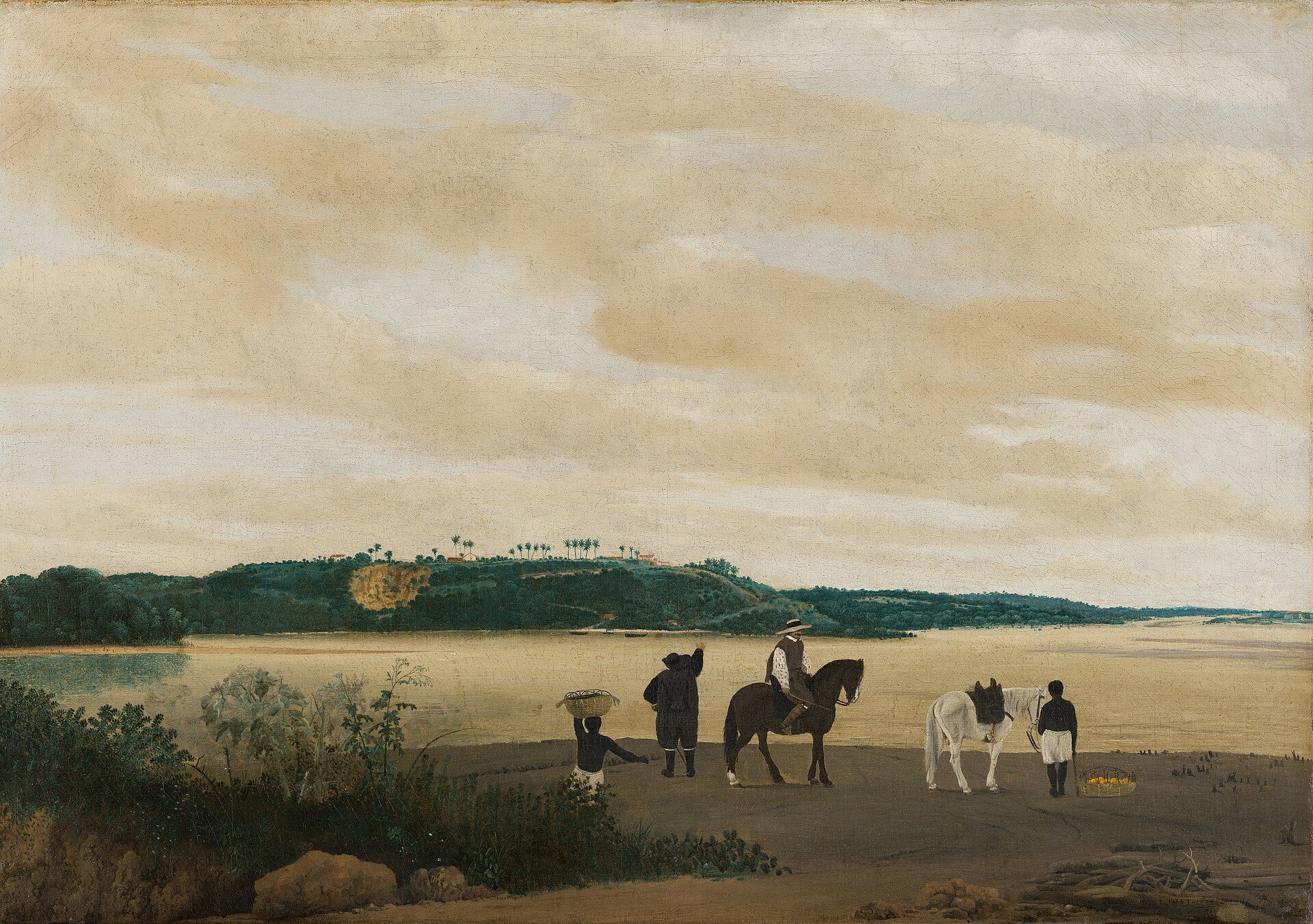
The governor's fleet reached Recife in January 1637. That same year, Post painted the shore of Itamaracá, an island north of Recife, and signed it in the bottom right corner: "F. POST 1637."
On the sand stand two Portuguese men. Many Portuguese planters had stayed after the Dutch conquest, because the Dutch needed them to run the sugar mills. Beside the two men, two enslaved Africans carry baskets of fruit on their heads.
In Post's earliest known painting, the color of a man's skin already marks who stands at ease and who carries the load.
Johan Maurits had brought Post to the colony to paint its riches for people back home. Those riches came from the sugar mills, where enslaved Africans worked day and night during the harvest.
In more than thirty years of painting Brazil, would Frans Post ever paint the work inside those mills?
In the rest of the story, you'll find out:
why a wild animal in one of his paintings once wore a rope collar
why he may have stopped painting ten years before he died
why the king of France received twenty-seven of his paintings
how eight of his paintings ended up in a museum in Rio de Janeiro