
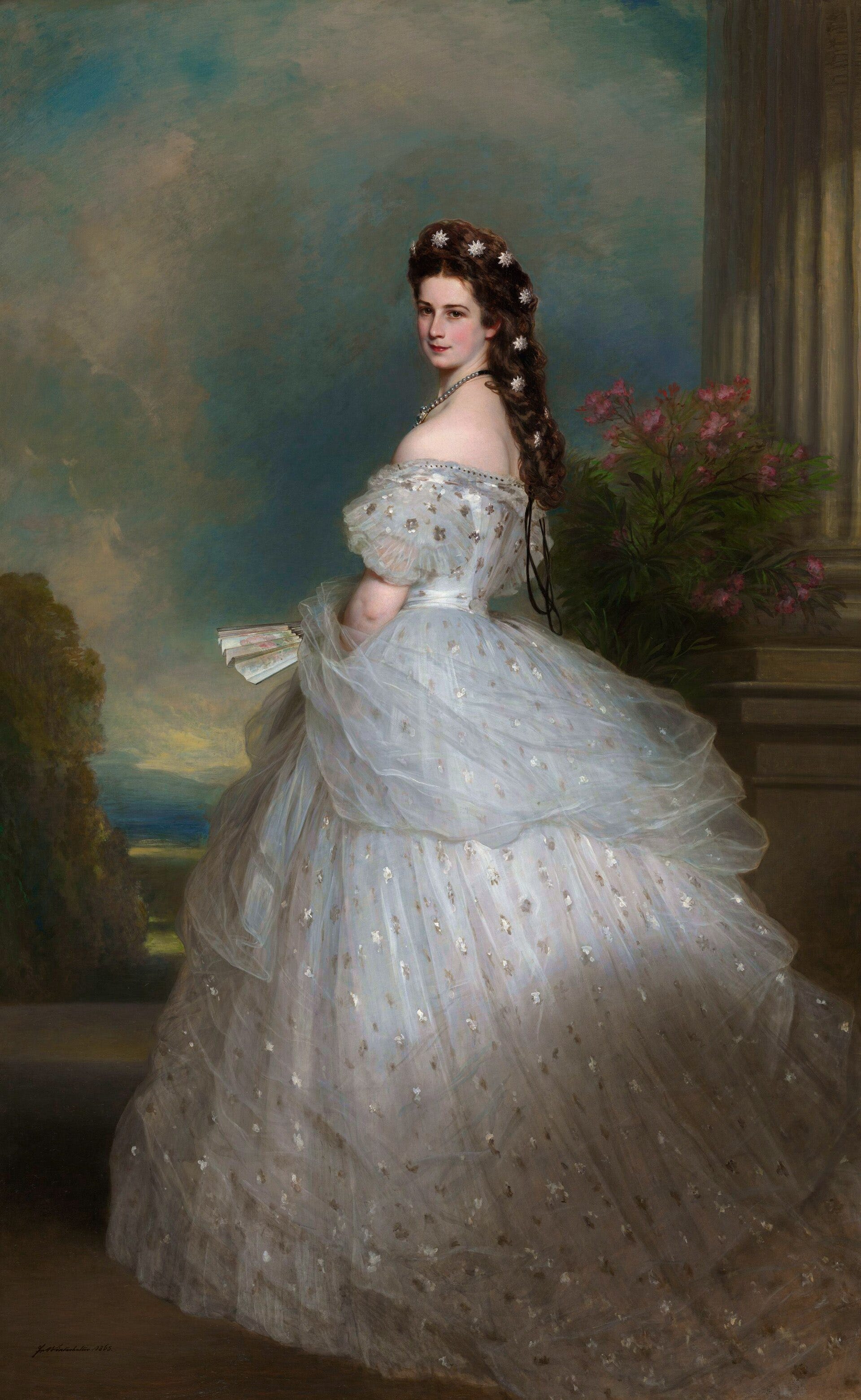
Franz Xaver Winterhalter (1805 to 1873) was a German painter who worked for the royal courts of France and Britain. His best-known portraits show Queen Victoria, Empress Eugénie of France and Empress Elisabeth of Austria, known as Sisi, with diamond stars in her hair.
Cool Stories About Art is a newsletter to learn art the fun way.
Join 200,000+ readers and get:
10 new art stories / month
The entire archive of content (140+ articles)
Comment, ask questions, and chat with other readers
Kings and queens competed for Winterhalter's time. He worked for the French king, Louis-Philippe, and Queen Victoria once had to ask the king's permission to borrow him. Yet the critics of Paris, who had cheered his first big picture, came to dismiss him as a painter no one could take seriously.
Winterhalter was born in 1805 in Menzenschwand, a village in the Black Forest, the wooded mountains of southwestern Germany. A priest at his school noticed how well the boy drew, and at thirteen Franz Xaver left home to learn engraving in Freiburg.
Five years later, with help from a wealthy industrialist, he moved to Munich, in the kingdom of Bavaria. He paid his way with lithographs, prints drawn on a flat slab of stone, and took lessons from the city's most fashionable portrait painter.
Germany was then a patchwork of separate states. In 1828, Winterhalter became drawing teacher to Princess Sophie of Baden, one of those states. Her husband, Leopold, became grand duke, the title of Baden's ruler, in 1830, and in 1833 he paid for the young painter's journey to Italy.
In Italy, Winterhalter painted young Italian women and peasants. The grand duke named him court painter of Baden in 1834, but the young man set off for Paris, the capital of European painting. At the Salon of 1836, the great official art exhibition there, one of his Italian scenes drew attention.
The next year, he sent the Salon a picture that told a story: The Decameron.
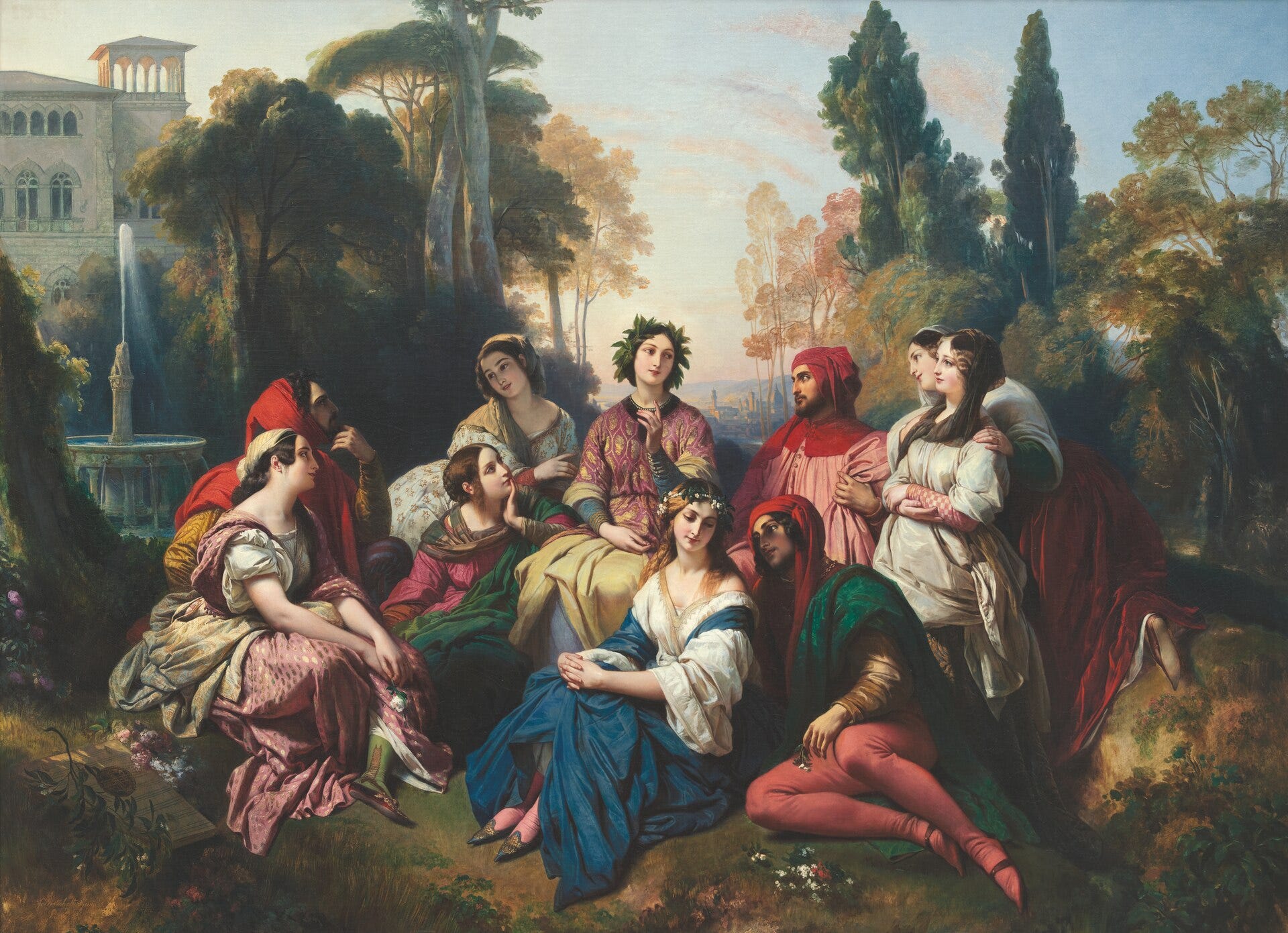
The Decameron is a book of tales by the Italian writer Boccaccio, in which ten young people flee the plague in Florence and tell stories in a country villa. Winterhalter painted them in a garden, around a young woman crowned with laurel, the sign that it is her turn to speak.
The French art weekly L'Artiste judged The Decameron the most successful picture of the Salon. It won a first-class medal, and a collector bought it during the show.
A year later, Belgium's queen, Louise, posed for Winterhalter with her son, a little boy of three. The portrait caught the eye of Louise's mother, the French queen, and soon he was painting the whole family of Louis-Philippe, the king included.
Why did the critics of Paris turn against the painter whom the royal families of Europe wanted most?
In the rest of the story
What Queen Victoria hid from her husband until his birthday.
Why an old general kneels before a baby in one of his paintings.
Why about 100,000 people came to a London palace in 1847.
Why the painter never went back to Paris after the summer of 1870.