
Frédéric Auguste Bartholdi was a French sculptor, born on August 2, 1834, in Colmar, a town in Alsace, the region of eastern France on the German border. He died in Paris in 1904.
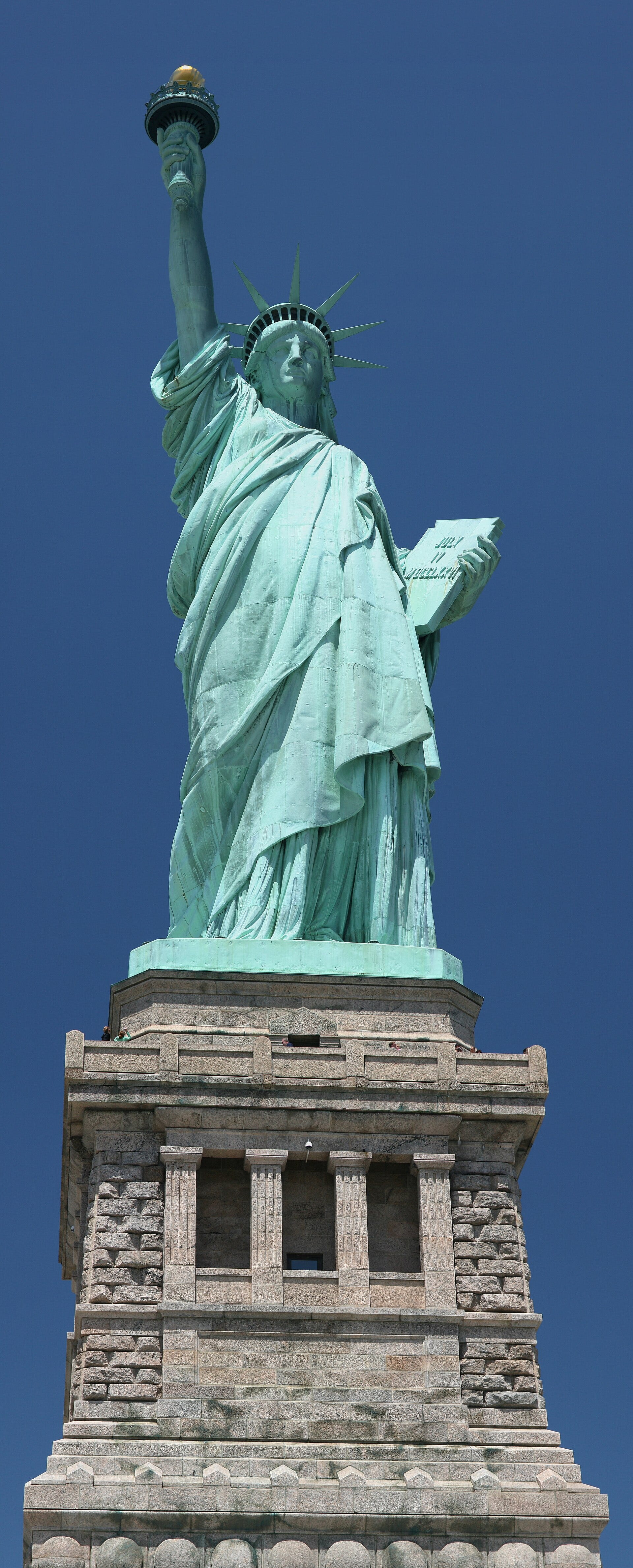
Bartholdi made the Statue of Liberty, the copper woman who has held up her torch in New York Harbor since 1886. Without its pedestal, the statue is 151 feet tall.
In 1871, Germany took Alsace from France, and Bartholdi's hometown became German. That same year, on his first trip to America, he chose the island in New York Harbor where his statue would stand.
Cool Stories About Art is a newsletter to learn art the fun way.
Join 200,000+ readers and get:
10 new art stories / month
The entire archive of content (140+ articles)
Comment, ask questions, and chat with other readers
Bartholdi's family called him Auguste. He was two when his father died, and his mother, Charlotte, raised him and his older brother alone in the family house on Merchants' Street.
In 1843, when he was nine, his mother moved the family to Paris to send her sons to one of its best schools.
There, Bartholdi studied painting, then turned to sculpture. In 1855, he traveled up the Nile, and the giant statues of ancient Egypt made him want to build giants of his own.
In 1867, Bartholdi offered the ruler of Egypt a lighthouse for the Suez Canal, the shortcut from Europe to Asia. The lighthouse would be a giant Egyptian peasant woman holding up a light. In 1869, the ruler turned it down as too expensive.
In 1870, France went to war against Prussia, the German kingdom that was uniting Germany. Bartholdi, an officer in a citizens' militia, helped defend Colmar, but German troops took the town.
France lost the war. By the peace treaty of May 1871, Alsace became part of the new German Empire, and Bartholdi's mother, back in Colmar, now lived in Germany.
Bartholdi later wrote: "When the war was over I could not go to my native land, Alsace, which was shut against me by the Germans." From then on, his visits home were rare and short.
A friend in Paris, the law professor Édouard de Laboulaye, admired the United States for ending slavery after its Civil War. He dreamed of a monument the two countries would make together. "Go to see that country," he told Bartholdi.
In June 1871, Bartholdi sailed for New York with letters of introduction to Laboulaye's American friends.
How would a sculptor shut out of his own hometown turn a professor's dream into a giant standing in New York Harbor?
In the rest of the story
Why a French town that held out against a long siege got a giant lion.
Why the statue's arm stood alone in a New York park for six years.
How a New York newspaper saved the statue when the money ran out.
Which two women were allowed on the island the day the statue was unveiled.